
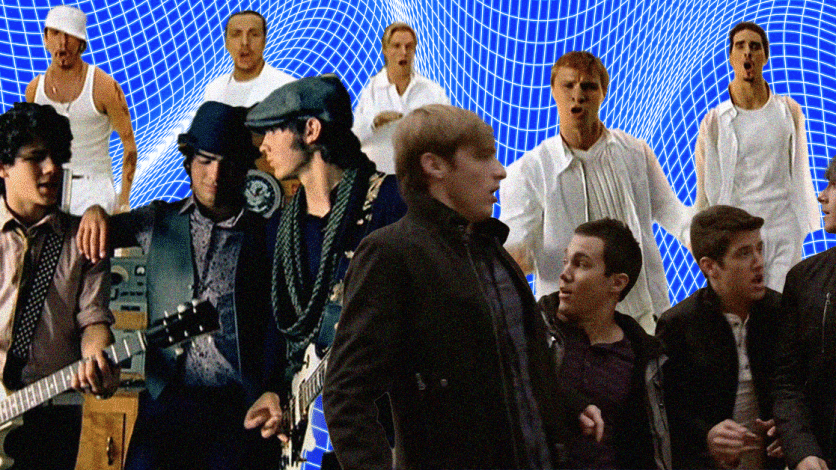
Boy bands have had a prominent impact on the music industry. Creating and maintaining a distinct image and sound that has continued to evolve throughout history. Each decade has a boy band that defines a generation. From The Jackson Five to New Edition, *NSYNC to One Direction, but as we enter the halfway mark of the 2020s, it seems the reign of boy bands in the industry has ceased.
Growing up in the late 2000s and early 2010s, I listened to every boy band on the market, but my favorite was always One Direction. Originally formed on the British reality television show, The X-Factor, they quickly became one of the most popular boy bands in the world.
They opened for Big Time Rush, who later also went on hiatus in 2014. When the Jonas Brothers first broke up in 2013, One Direction was releasing their third studio album. For a while, One Direction was the epitome of what a boy band was, minus the dancing, and like them, we got bands like The Vamps, Forever In Your Mind, and New Hope Club.
I am distinctly leaving groups like 5 Seconds of Summer out of this discussion, because while they situated themselves amongst the genre’s general audience, it has been a running debate whether they count as a boy band within the genre’s context. They did, however, tour with One Direction and had a general overlap of fan bases, but still weren’t in the same category of stardom.
A post-One Direction world
In 2016, One Direction went on what was supposed to be a hiatus, but almost ten years later, I am still devastated at the loss of what could have been. Their disappearance from the genre left a space open for new bands to try to fill the void.
One Direction’s hiatus left the industry scrambling, and fans were looking for a new group to satisfy their needs. Bands like Why Don’t We and PRETTYMUCH became popular, but never truly reached the level One Direction had set. It is important to note that throughout this time, K-pop had made its way to Western media, and BTS was ruling the charts. But K-pop is a completely separate genre with intricate choreography and music that blends genres in ways Western boy bands of the time didn’t.
Starting new
The industry wanted “traditional” boy bands. The teen heartthrobs that girls would fawn over, while also maintaining a certain look. They became obsessed with the idea of the next big boy band. Enter the 2017 reality competition show Boy Band. The show was hosted by Rita Ora and judged by three music legends. Nick Carter of the Backstreet Boys, Emma Bunton of the Spice Girls, and songwriter/producer Timbaland. The show was 10 episodes of young, up-and-coming male vocalists competing to become members of a five-piece boy band.
That was when In Real Life was born. Unfortunately, they never broke through to the mainstream. In 2021, they too got the same fate as many other bands of that era did and broke up.

Now, I don’t want to diminish the work of boy bands that have been able to fight through the noise, continue making music, and build loyal fan bases. However, the cycle of these bands reaching new heights of popularity has dwindled. No “traditional” boy band could compete with the way K-pop has taken over the world. The industry soon realized that trying to manufacture new bands was not working. That is where the need for nostalgia came in.
Guess who’s back?
If I had a nickel for every boy band that has reunited in the past few years, I would have a lot of nickels. The Jonas Brothers have reunited and are making new music, touring, and acting together like it’s 2008 all over again. Similarly, Big Time Rush has begun touring again. *NSYNC made a song for a movie. Even New Edition is going on tour with Boyz II Men and Toni Braxton.
The demand is there, but it is based on the preexisting relationship between these artist and their fans. There’s nothing new and fresh in the boy band industry that has people saying, “they are the next big thing.”
It leads me to wonder if people aren’t yearning for male pop stars and boy bands anymore. If the demand for new artists is there momentarily, but not strong enough to launch people into stardom. Creating the next generation’s One Direction has not happened yet, and it is not for a lack of trying.
The new age
When Netflix launched Building The Band, people were drawn to the creation of new bands. The show got tons of exposure, and people were ready to see fresh faces in the industry. The girl groups obviously dominated, as female artists have been dominating the industry for a while now. However, groups like Soulidified and Midnight Til Morning were still able to captivate the audience. Potentially submitting themselves to be the next big boy band. I found myself drawn to Soulidified as they attempt to bring back the ’90s boy band sound, but as they start their career, I wonder if and hope it will be enough.
The cycles of the music industry are unpredictable. Maybe in the next few years, a young, fresh-faced boy band will emerge and give the teens and pre-teens the fangirl feeling I spent years having. I know Simon Cowell is trying to make that happen now. His latest boy band creation is already getting One Direction comparisons, but will it last?
I feel I took for granted the amount of boy bands I had to listen to and fangirl over growing up. Especially now that I find myself longing for a new one. There are many boy bands still out there, circulating amongst other small artists, cultivating magical experiences for their fan bases. Still, when I turn on the radio, I can’t help but ask myself: Where have all the boy bands gone?