Henry Nowak was an 18-year-old British-Polish university student who was stabbed in Southampton, England, in December 2025. This incident can change the future of the UK, as the suspect and the police body-cam footage that was later released caused a massive outrage.
The tragedy sparked nationwide debates regarding British knife laws and operational actions. British citizens were enraged before the trials, and those feelings were only intensified after the trials concluded. British citizens want stricter revisions to police operational training.
“Justice in the eyes of the law has been served but justice alone is not enough,” Mark Nowak said. “We are calling on the government to treat knife crime as the national emergency that it is.”
On Tuesday, June 2, 2026, a large-scale protest broke out in Southampton Central Police Station.
What happened i
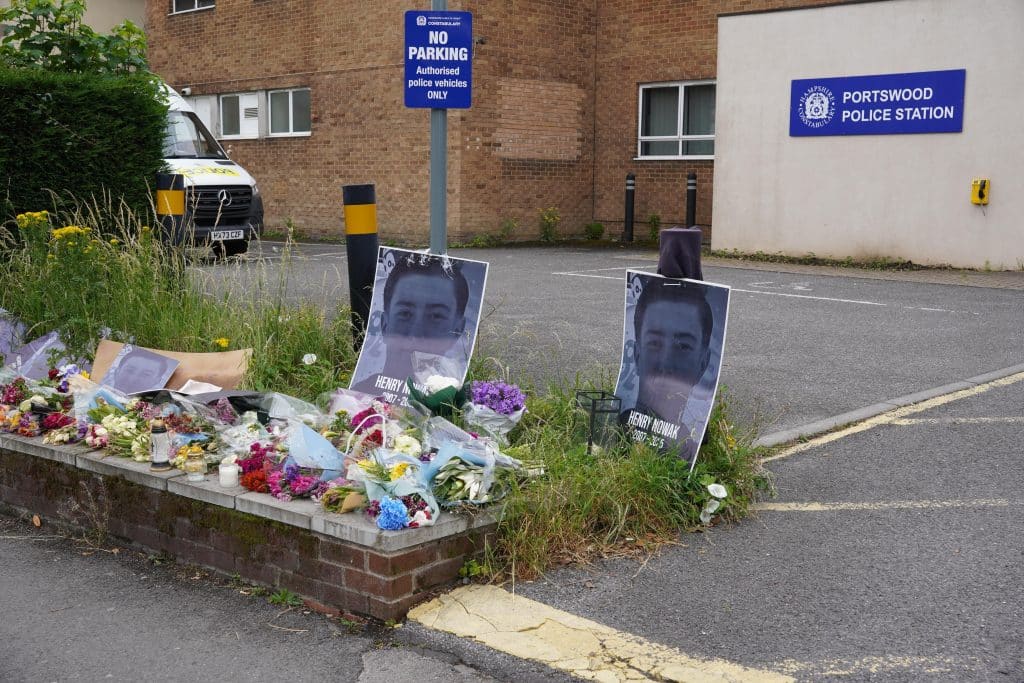
The night of the incident, Nowak was walking home alone after a night out with his friends, when he ran into 23-year-old Vickrum Digwa and, according to reports, noticed Digwa was carrying two ceremonial knives in a sheath, one with a small blade and another with a larger blade.
Concerned about his safety, Nowak started to record on his phone. On the recording, it can be heard Nowak asking Digwa if he was a “bad man,” but his tone did not sound aggressive or rude.
Nowak was stabbed in his chest, with a depth of 8 cm from the skin surface. It is said that he lost over 2 pints of blood. In addition to the chest wound, he was stabbed twice in the upper leg and once in the lower abdomen area. His face was also slashed, but it’s not clear if that part was intentional.
What the suspect had to say and what the police did
Digwa said he grabbed Nowak’s phone, which led to a fight where Nowak allegedly said: “I’m going to kill you.”
In addition, he lied to his brother once he arrived at the scene, claiming he had been attacked and it was out of self-defense. He joined his brother in relaying those lies to the police once they arrived at the scene.

He said that Nowak had called him a “paki,” an offensive and racist slur, particularly in the United Kingdom.
“I am sure that Henry had said nothing racist. You are the only person to make that claim and it is completely at odds with his previous character,” said Judge William Mousley K.C.
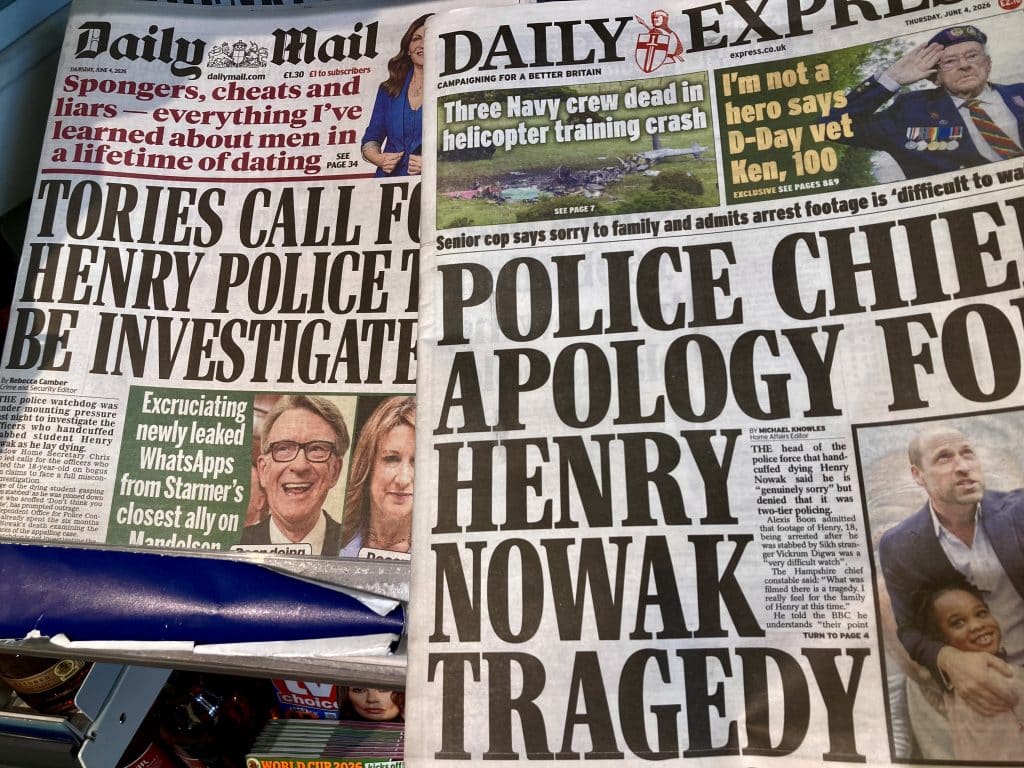
The officers who reported to this scene treated the wounded 18-year-old Henry Nowak as the suspect. As a result, they handcuffed him and pinned him to the ground while he repeatedly pleaded that he had been stabbed and could not breathe. It took several minutes for officers to realize the severity of his injuries.
What citizens are doing about it
The protests started after the release of the police bodycam footage on June 1, 2026, right after Digwa’s trial sentence. With the help of social media, the bodycam video was viewed by millions of people across platforms like X, TikTok, and Instagram.
The footage of Nowak pleading that he could not breathe while officers believed his attacker’s claims caused widespread fury. Within 24 hours, hundreds of people gathered to demonstrate outside the Southampton Central Police Station.
A ln the minimum term sentenced.
This incident played into the hands of far-right groups who already felt that immigration levels were too high and that the government had not been prioritizing its own citizens. Many people saw this incident as exactly what they had been warning authorities about, a system that bends laws to accommodate others because it is too afraid of being called racist.
With the rage many protestors felt, it quickly became violent as crowds fought with local authorities. According to AP news, police said 11 people have been charged with disruption at the Southampton protest.
Aftermath of Nowak’s case and potential rise of anti-immigration laws in the UK
The Southampton protests exposed the failure in public safety and police conduct in the UK. According to CBS, Nigel Farage of the Reform UK party, stated that this was evidence of “two-tier policing.”
British citizens and Nowak’s family pointed out that the exemptions made for carrying bladed articles on religious or ceremonial grounds need to be reviewed. Henry’s father has talked about how this incident highlighted a loophole that compromises public safety.
This, along with citizens calling for immense pressure to reform the National Police Chiefs’ Council’s anti-racism guidance. Additionally, the government’s “Halving Knife Crime Plan” is being adjusted to review knife controls regarding ceremonial weapons.
Regarding immigration, instead of the five years, now the UK is making the process for foreign nationals to relocate for permanent residence much harder and longer. In addition, the government is cracking down on businesses hiring workers from overseas for lower-paid jobs. They are checking paperwork more closely to make sure local workers get hired first, and overall immigration numbers decrease.
The murder of Nowak and the Southampton protests highlight a much bigger national argument on institutional policing and rising racial tensions. It has put the UK government in a position to think about future policies that could put immigrants at a disadvantage and cause harm, while playing into the hands of nationalists, especially against the backdrop of ongoing anti-immigration protests across the country.