Most Gen-Zers know that a majority of the assigned books they read in school were not published recently. In fact, most of the assigned literature was published long before the 2000s. Due to this, the language of these books makes it difficult for students to read and comprehend the content, causing a lack of interest. But, with a little help, these books can feel less like assignments and more like life lessons.
As the world is constantly changing, these books hold a timeless quality. While the books themselves continue to grow older, their takeaways hold true today. With their unique lessons in mind, they bring both a sense of nostalgia and relevance to today’s world.
So, here are five books you may have read in school that are worth revisiting.
1) Hamlet by William Shakespeare
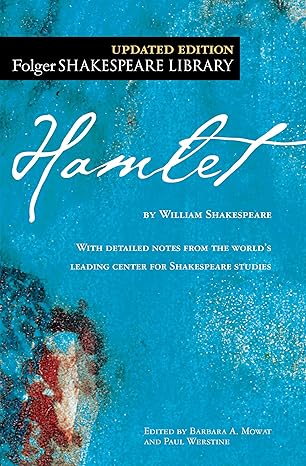
Unsurprisingly, William Shakespeare’s works always manage to appear in English education, and his famous play, Hamlet, is no exception. This tragedy focuses on Prince Hamlet’s vow of revenge against his uncle, who murdered his father and took the throne.
Instead, Hamlet is stuck in a battle of contemplation. He constantly overthinks, so while he plans to avenge his father’s death, he can’t seem to take action. This leads to a never-ending cycle of doubt and chaos, which leads him to supposed madness. Through this madness, he not only negatively impacts the well-being of others but also diminishes his own self-worth.
“To be, or not to be–that is the question.”
After many erratic interactions within the kingdom, the play ends in chaos and ultimately, death for many involved. While the play ends tragically, it also reveals many important warnings to the reader. But how, you may ask, could this centuries-old play be relevant today? Well, the play teaches that overthinking and waiting for the perfect moment to take action can lead to great harm.
Think about it this way: if you are setting a goal for yourself on a timeline, taking action is crucial. Rather than sitting around filled with doubt, you should take action before overthinking creeps in. While thought is equally important to action, an overabundance of it can be dangerous.
For example, many of you are procrastinators. Overthinking plays a large part in procrastination, and if you let it win, it can derail your schoolwork, job, and relationships. Like Hamlet, overthinking destroyed his relationships, his view of himself, and his perception of the world. Reality is that it is better to take action than to wait for a ‘perfect’ moment to achieve a goal. There is no such thing as the perfect moment for anything; life is unpredictable.

Additionally, many people struggling with mental health disorders experience overthinking. Associated with this are various avoidance behaviors, causing a downward spiral of fear and turmoil. Like Hamlet, you may feel overcome with thought, feeling as if you’ve gone mad.
So, how can you avoid this problem? Hamlet is a guide on what exactly not to do. Instead of avoiding major problems in your life like Hamlet, maintain clear communication not only with others, but with yourself. Set realistic goals with achievable timelines; hold yourself accountable. Rather than continuing to spiral in thought, move! Whether that means moving physically or changing your thoughts, take action.
So, revisiting Hamlet can allow you to become more aware of your own patterns of doubt and overthinking. In turn, you become a more productive and healthy individual.
2) The Crucible by Arthur Miller
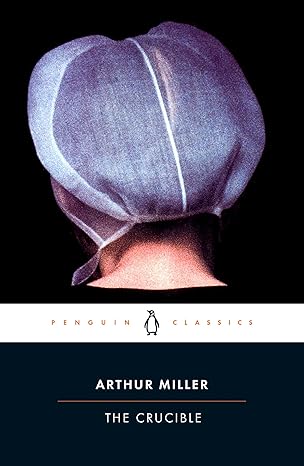
Based on the Salem Witch Trials and the 1950s Red Scare, Arthur Miller’s The Crucible is a bold play. Centering on a Puritan civilization, the play focuses on a group of young girls caught in the midst of mass hysteria over witchcraft.
While the town tries to find someone to blame, Abigail Williams, a young girl, causes chaos by blaming innocent people. She claims they bewitched her and her friends, producing a mob mentality in the town. In a story filled with illicit affairs, mass hysteria, and undeniable consequences, the characters are ultimately forced to come to a brutal realization: what has been done cannot be undone.
Although the play ends darkly, it serves as a lesson to the current state of the world. The Crucible is actually very relevant to modern media. For example, cancel culture is a very well-known term in the contemporary media sphere. An example of this includes shunning people on social media for certain beliefs and behaviors.
While it is important to hold people accountable for disrespectful actions, cancel culture is often more harmful than helpful. By using fear and the majority to censor others, it becomes a form of mob mentality. Like Abigail, people tend to project their own faults onto others to divert attention from themselves. It is important to know that everyone has flaws, and minor inconveniences should not be a cause for cancelling someone.
Not only has there been self-censorship on social media, but it also occurs on governmental levels. The First Amendment exists to protect freedom of speech and other liberties, but many people are too afraid to speak about their beliefs for fear of social disapproval and retaliation.
So, to avoid this, be less of an Abigail and more of an honest, knowledgeable human being. By picking up habits of careful research, justice, and respectful dissent, you can keep the general public good in mind (Walters 11). And through this, you can help prevent larger-scale communication chaos.
3) The Great Gatsby by F. Scott Fitzgerald
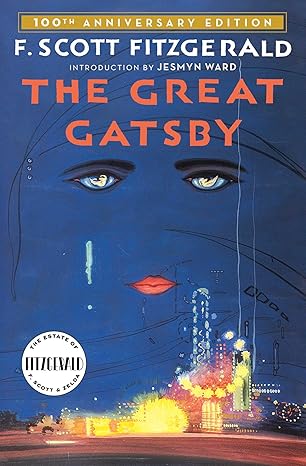
Written in 1925, The Great Gatsby boldly illustrates the American Dream in the midst of the Roaring 20’s. Labeled as a tragedy, the book focuses on millionaire Jay Gatsby and his passionate obsession with his ex-lover, Daisy Buchanan. Gatsby recklessly aims for her attention, powered by his intense fantasies. Narrated by his neighbor, Nick Carraway, the story reveals Gatsby’s unrealistic dreams, fueled by his murky past.
“Can’t repeat the past? He cried incredulously. “Why of course you can!”
After attempting to recreate his past with Daisy, Gatsby’s shady involvements are revealed, leading to an unfortunate chain of events involving betrayal and death. In the end, Gatsby’s dream shatters, leaving him to realize that he was following an illusion all along.
There is something to be said about the dire consequences of destructive illusion. Scott Fitzgerald wrote his book to critique the American Dream by demonstrating the dangers of distorting reality. Dreams have the power to either bring about positive change in your life or completely damage your worldview.
It is well known that society prides itself on hard work and achievement, no matter the processes behind them. The Great Gatsby teaches that this lifestyle is harmful, often leading dreams and reality to clash. This collision ends with the shattering of the human resolve, causing feelings of meaninglessness and hopelessness.
Revisiting this book will not only make you aware of your own illusions, but it is also a call to action to get real with yourself. You can do this by confronting your fears, misperceptions, and biases. Hold yourself accountable and challenge your delusions. Rather than forming dreams based on pure emotion and past experiences, root your aspirations in reality. If you want your goals to hold strong, they must have a mix of both practicality and fantasy.
So, take it from Fitzgerald. If you have a dream, be bold enough to root it in reality. Take the present and future in mind, not solely the past. When you’re ready, take practical steps to ensure the dream doesn’t stay as it is. Let it become part of your reality– this is when you can fight for your goals.
4) Their Eyes Were Watching God by Zora Neale Hurston
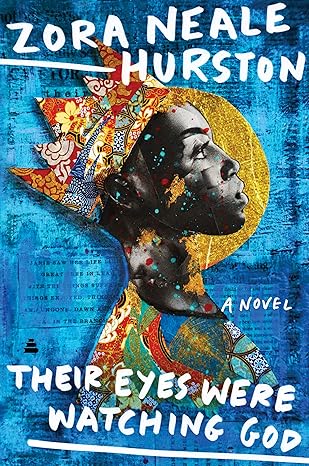
Written in 1973 by Zora Neale Hurston, Their Eyes Were Watching God is a timeless Harlem Renaissance novel. Situated in the all-Black town of Eatonville, Florida, Janie Crawford returns home after years of being away. Janie then recounts her past, starting from her childhood to the present day.
The novel flashes back to Janie being raised by her grandmother, a former slave. The story progresses as she ages, focusing on her three different marriages. Through these experiences, Janie discovers her voice and learns to express her individuality. At the climax, a hurricane threatens everything she has, causing her to face the memories of her journey. While the hurricane ends in devastation, Janie finds peace and has a secure understanding of her autonomy.
This hopeful closure is not just the ending of a beautiful story: it represents a lesson that impacts how you use your voice to rewrite your narrative. Although Janie went through many hardships, such as the hurricane, she maintained a thoughtful outlook on her life. Rather than choosing to be bitter or treating herself and others poorly, she chose to rise above those temptations. Ultimately, she found peace in her complexities.
“Some people could look at a mud puddle and see an ocean with ships.”
There is something freeing about this outlook on life, in which you realize what you can control versus what you cannot. Janie realized that she could not control her grandmother’s strict behavior, nor could she control her husband’s behavior. She couldn’t control the hurricane either, but you know what she could control? Her reactions to these situations. You can do the same by visiting each of your experiences with honesty and curiosity. Knowing that you have the power to control each of your reactions and outlook on life is a game-changer.
This doesn’t mean you have to be toxically positive. In fact, Janie’s story teaches that you don’t have to sit by and do nothing if something is wrong. With each of her experiences, she gradually took control of her autonomy and became a stronger woman in the end.
In a world that struggles to define freedom, Their Eyes Were Watching God teaches that you can shift your narrative with your internal and external voices. Rather than stressing over other people’s behavior, this book teaches the importance of focusing on what you can control. By viewing each of your complexities with an honest and unshaking lens, your life will change drastically.
5) To Kill A Mockingbird by Harper Lee
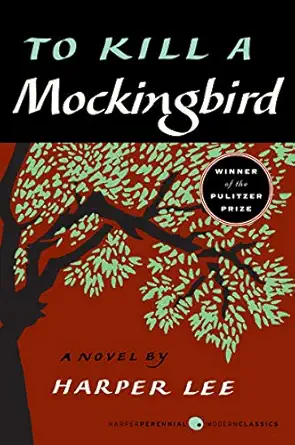
To Kill A Mockingbird by Harper Lee is one of the most well-known literary works in education. Narrated by Scout Finch, the story is set in Alabama during the Great Depression. The story describes her life with her brother and her father, a lawyer who takes on unwanted and challenging cases.
During the timeline of the book, her father defends Tom Robinson, a black man who is falsely accused of raping a white woman. Due to this, the Finches receive many threats for choosing to defend the man. However, they stand strong, and each learns the importance of empathy and standing up for what is right. The book explores outcomes of prejudice, racial injustice, and ignorance, all of which cause the trial to end darkly.
While the trial comes to an unjust verdict, this book is important to revisit because it demonstrates the power of empathy. When you gather the courage to step outside of your own worldview, you allow yourself to view a perspective you may never have experienced before. Specifically, with cognitive empathy, you allow yourself to understand how others feel, even if you don’t actively feel those emotions yourself.
Due to their difference in skin color, the Finches couldn’t directly relate to Tom’s struggles. However, they still stepped outside of their privileges and attempted to help him out in any way they could. This took a lot of courage, as they received many threats. In relation, while stepping outside your comfort zone to empathize can be uncomfortable, it is a powerful move to further understand differing situational factors.
All things considered, interacting with different perspectives outside of your majority is a form of justice. In a politically polarized world, this book sheds light on hatred and calls you to respectfully engage with the unfamiliar and uncomfortable. Life is not meant to be lived on the sidelines; sometimes you have to put your beliefs at risk to grow. Who knows, you may form lasting relationships with people you would’ve never imagined.
In conclusion, although these books were written more than 30 years ago, their lessons resonate today. They each hold a timeless quality, making them worth revisiting no matter how old they are. Hopefully, you learned something from each of these books, and if you haven’t read them, check them out! There was so much to be unsaid, and individual interpretation is just as important! With their stories and themes, they each are guides to living upright lives.