Disclosure Day feels like a world event—one that requires everyone’s attention—and it certainly is. Steven Spielberg is the king of “wonder and adventure” and a master of extraterrestrial cinema. He hits all his same notes here, but this time he stretches the music gradually, insomuch that there’s not a bit of a generic alien invasion touch to it. Disclosure Day is Steven Spielberg’s summation of his lifelong wonder of UFOs, and now he delivers a plea for empathy to reconcile our divided world.
Spielberg’s Tension Before the Wonder
As I first entered the theater room where Disclosure Day was playing, I felt a sense of tension and solemnity amongst the people who were already seated down. Before I walked to my reserved seat, I took a look around the theater room and realized I was surrounded by elderly people, and then the immediate thought came to me: Spielberg’s legacy is one of many reasons people are so eager to embrace this film.
“The world cannot accept what we know” is the driving force that moves the audience away from watching a casual, violent “extraterrestrial invasion.” Instead, Spielberg prompts his leading question: What does it take to disclose this type of serious information?
The start of the movie carries us through with an unknown object—a mysterious black artifact ferried by the characters. They’re fighting over this unknown artifact intentionally, as if one wrong move provokes something beyond their control.
Spielberg’s characters also have this special attention where the mentality is scrutinized with the help of Spielberg’s signature internal close-up and over-the-shoulder camera angles. The “what” of the object they’re gripping onto dearly and the “why” aren’t given away to the audience on the spot. However, what’s keeping them overwhelmed and restless gives the audience a reason to stay. The sharks in Jaws and the malevolent demon in 1982’s Poltergeist manifest in the comfort places of Spielberg’s characters—but in Disclosure Day, Spielberg has a restraint where he waits to provide answers because this time we’re peering at how humans will react before the extraterrestrial arrives.
Emily Blunt’s weatherwoman Margaret Fairchild and John O’Connor’s reformed hacker and cybersecurity expert Dr. Daniel Keller are two human beings with normal conversations, insecurities, and hopes and dreams. Margaret wants to move, starting over with something big waiting for her, while, despite running away from private government agents, Daniel handles a conflicted situation. Although there are unanswered questions in the first act, Spielberg sneaks in a bit of that extraterrestrial wonder audiences were waiting for—a cardinal flies into Margaret’s open apartment window, and shortly, Margaret begins to speak Russian.
Action, Wonder, and the Mystery of Why Them
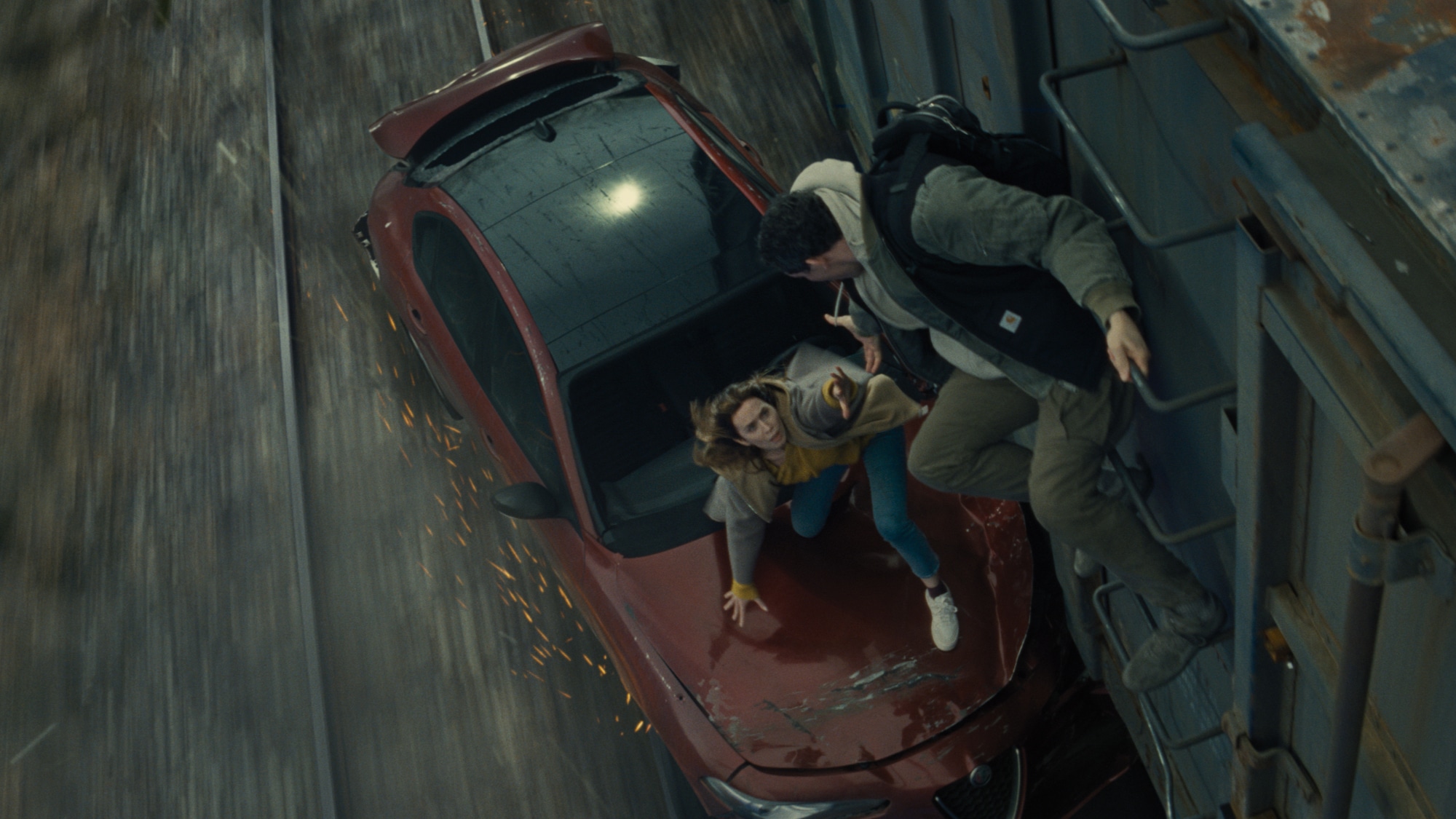
Chase scenes. Gunfire. Glass shattered. Spielberg paints action all over this film. Daniel and his girlfriend Jane Blankenship, played by Eve Hewson, spend most of the first act running and hiding from the independent government contract agency that goes by the name Wardex Corporation. Colman Domingo’s Hugo Wakefield is the former whistleblower who leads both Daniel and Margaret to a secret warehouse—Spielberg places Domingo as the shelter for his main protagonists. But even with this mature action, Spielberg still sprinkles some of his signature wonder in between these fast-paced scenes—like when Daniel locks eyes with a deer standing outside the house he’s hiding in.
Spielberg reveals this awaiting extraterrestrial activity through Margaret and Daniel in an intriguing way that still focuses on the psychological effects it has on them both. In Margaret’s apartment, she too experiences this hypnotic stare where she locks and holds eyes with the cardinal that flies into her open window. Margaret is still standing, holding eye contact with the red bird, but the strangest part isn’t the long stare battle; it’s her mannerisms that look uniquely alien. Then she speaks Russian. You may not believe what you’re watching on the other side of the screen, and it may be more difficult to watch it firsthand, like Wyatt Russell’s Jackson, Margaret’s boyfriend, who is stunned throughout the entire film.

On the way to her job at the Kansas City television station, Margaret gets pulled over by a cop and is subsequently demanded to give her ID and driver’s license up. Then he doesn’t because she does this psychic-ability thing where she tells him about his rough morning—something only he should know. Minutes later, she enters her job, scurrying around her superiors and co-workers, speaking Korean, and then broadcasts a speech in an alien click-and-math language.
People of Kansas City witness the clip, including Hugo, who shares it with Daniel. Daniel’s confused about why it’s such a big deal. Hugo tells him it’s gibberish. Daniel responds, “Don’t be afraid of what you don’t know is what she said.” Then the theater goes silent—something strange is coming, and then it does. “It’s always been the two of you,” Hugo replies.
The audience has to hold on to this provocative statement—but whether you’re confused or ready to understand what it all means, the constant pursuit that Colin Firth’s heartless Noah Scanlon does in Disclosure Day attempts to hint at Margaret’s and Daniel’s abilities. Spielberg evokes a lot of wonder through these intriguing moments; however, it’s not a good feeling to leave a theater with unanswered questions. “It’s always been the two of you,” is one line that stuck with me, because why them?
An Emotional Plea, Not Spielberg’s Best Film
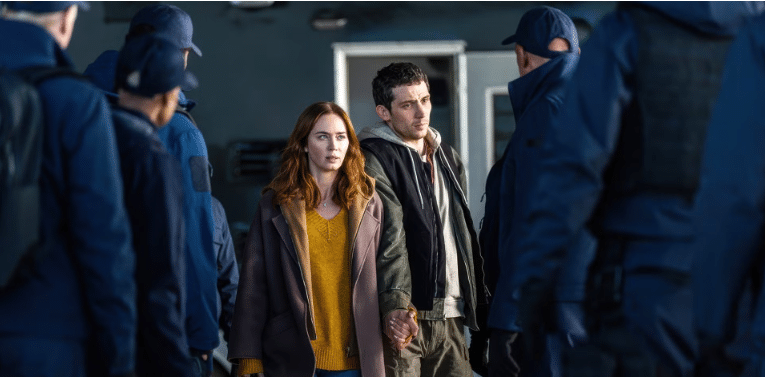
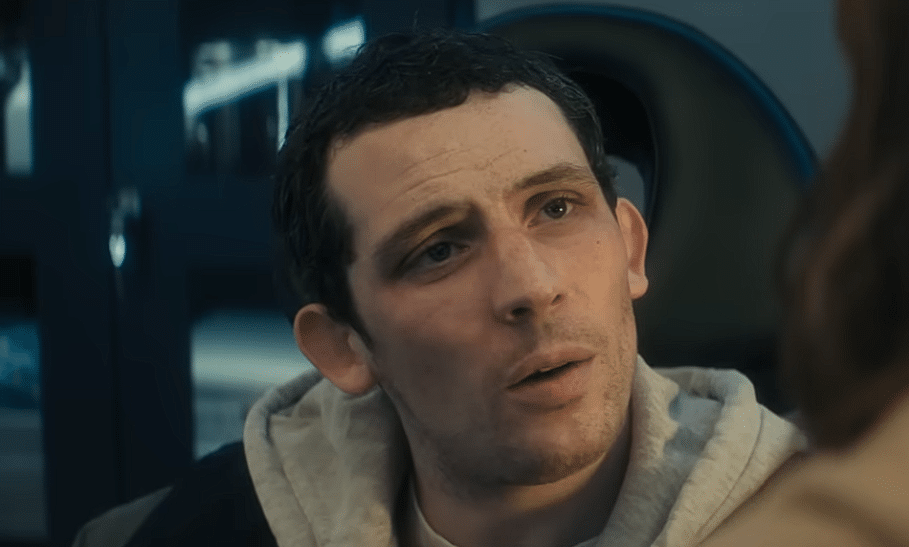
Despite the lack of answered questions to bold statements, Emily Blunt delivers an emotional portrayal of her character, and so do Josh O’Connor and Colman Domingo. Spielberg returns to a sci-fi adventure, but this time with more maturity that helps its adult actors carry on the emotional weight. As they lean closer to the life-changing experience they encountered as children—the day they’re taken by the extraterrestrial—the characters become pure, almost as if they’re experiencing an out-of-this-world feeling. Think of when the extraterrestrial touches Elliot with his glowing hand in E.T.—it’s close to that pain-free feeling.
Disclosure Day explores the anxiety humans can suffer once they disclose life-changing information to entire civilizations, like Noah Scanlon and even Jane, who at first believes that Daniel is doing something morally wrong. “What do you think it’s going to do to people?” But once Daniel shows her 107 hard drives containing classified archives of the U.S. government’s history with extraterrestrial encounters, the film moves to an empathetic place. Spielberg lets us know that we’re not alone in God’s vast universe—humans are his supreme creation on earth, but there’s more space for other creatures.
Rather than giving the audience his usual cosmic themes, Disclosure Day is his emotional plea to the world. There’s empathy between some of the characters and the extraterrestrial, an understanding that humanity rejecting empathy will lead to its own complete destruction. “Don’t be afraid of what you don’t know” is Spielberg’s call for empathy, forcing his audience to understand that there’s other intelligent life. Spielberg brings on a new perspective on what we’re actually after when it comes to UFOs and the extraterrestrial.
Is Disclosure Day Steven Spielberg’s best film? No. Is it his worst film? Absolutely not. Steven Spielberg is a genius in what he creates; he’s the type of filmmaker who never runs out of ideas. People may hold high expectations because this guy’s been in the film business for more than 55 years—they might complain about the lack of character development, unanswered questions, and little backstory. However, Steven Spielberg, along with David Koepp, who wrote the screenplay, and a talented cast, made Disclosure Day exactly its name—don’t go expecting another alien movie; that is not the case.
GRADE: A
Disclosure Day is now playing in theaters.