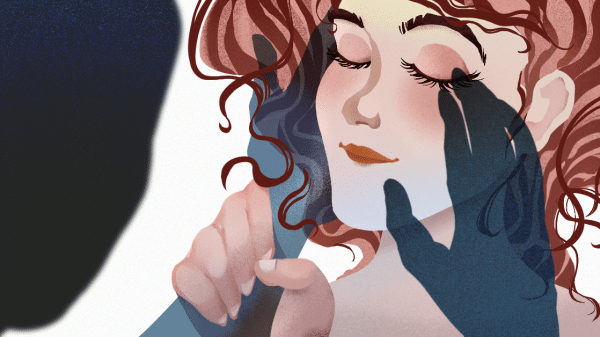


Some genuinely had trouble getting out of bed for days. On TikTok and Twitter, the grief was so loud and so specific that outsiders assumed these kids must have known him personally. They hadn’t. They’d just watched him play Minecraft for four years.
When Technoblade died in 2022, thousands of teenagers who had never met him, never spoken to him, never so much as had a comment liked by him, cried like they’d lost a friend.
That reaction wasn’t an overreaction. It was a parasocial relationship doing exactly what parasocial relationships do, just louder, and to more people at once than almost any generation before has experienced.
Milo is 19. He watches the same three streamers most nights before bed, has “known” his favourite YouTuber’s voice longer than he’s known some of his university housemates, and can tell you what his top creator had for breakfast because she filmed it. He’d never call it a relationship, exactly. But if she stopped posting tomorrow, he says, “it would genuinely feel like a good friend left.”
Multiply Milo by tens of millions, across a dozen platforms, several hours a day, and you start to understand why this generation’s emotional lives are so wrapped up in people who don’t know they exist.
What “parasocial” actually means
The term isn’t new. Psychologists Donald Horton and R. Richard Wohl coined it in 1956, when television first became widely available, describing how viewers developed an “illusion of intimacy” with the people on their screens. The bond exists only in the mind of the person feeling it, who experiences a real sense of connection despite there being no reciprocity at all.
That’s the useful distinction from ordinary fandom: loving an artist’s music without caring about their life off-screen is fandom; a parasocial relationship is when it starts to feel like the connection runs both ways, like you and the persona are, on some level, peers. What’s changed since 1956 isn’t the psychology. It’s the scale, and how convincing the illusion of being seen back has become.
The mechanics: why it feels mutual when it isn’t
A parasocial bond used to require sitting down at 6 pm to watch the same anchor deliver the same broadcast. Now the “broadcast” never stops. Algorithmic feeds surface a creator’s face dozens of times a day, in formats built to feel casual and personal: a selfie video talking straight into the camera, a 2 am livestream, a reply to a comment.

That last part matters most. Comments, live chats, and DMs create the illusion of a two-way relationship. A creator might reply to one comment out of ten thousand, but the possibility of being seen is enough to keep the bond feeling active rather than one-directional.
Media is, in a fairly literal sense, built to mimic face-to-face relationships. Over enough shared time and content, the audience starts to feel a genuine sense of intimacy and friendship with the person on the other side of the screen.
That illusion isn’t automatic, though. A 2020 study of young Gen Z women and the influencers they follow found interviewees only felt close to influencers who showed something ordinary and unpolished about their day-to-day lives, replied to comments often enough that it felt two-way, and stayed consistent with the persona they’d come to recognise: anything staged or dishonest actively damaged the bond.
The relationship isn’t just something that happens to an audience; creators are, consciously or not, engineering the conditions that produce it. And researchers haven’t actually found strong evidence that social media increased how often these bonds form in the first place. Beatles fans in the 1960s were just as consumed as any fandom today. What’s changed is how much viewers know, and how intimate that knowledge feels.

The scale argument
Older generations might have had one or two parasocial attachments in a lifetime, a favourite actor, a beloved anchor. Gen Z can rack up a dozen in a single week without noticing: a gaming streamer, a fitness influencer, a comfort-content YouTuber, a group of podcast hosts who feel like friends in the background of daily chores.
Instagram, YouTube, and TikTok aren’t occasional entertainment for this age group; they’re the default, near-constant backdrop of the day. More exposure, starting younger, across more creators, means more of these bonds form, earlier in life, before most people have the vocabulary to recognise what’s happening.
They’re not all carrying equal weight, either. The same study identified three types among young followers: close friendships, where someone feels they genuinely know the influencer and would be upset if they vanished; “ex” friendships, where a bond has curdled, usually because the influencer stopped feeling authentic, leaving real disappointment behind; and casual friendships, low-stakes follows kept mostly for entertainment. One person’s average week can easily contain all three.
The upside nobody mentions enough
It’s tempting to treat all of this as a problem to be solved, but that’s not quite fair. There’s no chance of rejection in a parasocial bond, no arguments to smooth over, which is part of why, for people navigating strained relationships in real life, the one-sided version can come as a relief.
Despite decades of assuming these relationships were a symptom of loneliness, researchers have repeatedly failed to find a real link between how lonely someone is and how intense their attachments become. Some have found the opposite: highly social people who already form plenty of real-world friendships are often just as likely to form strong parasocial ones too.
The benefit shows up most clearly for specific groups. LGBTQ teenagers in particular often get real value from a parasocial bond with someone who shares their identity, since it can enrich a social world that otherwise might feel limited. Clinicians have largely moved away from treating these relationships as inherently unhealthy, now viewing them as something that can broaden a person’s social network rather than restrict it. It tends to work best as a supplement to real relationships, not a swap for them.
Where it gets risky
The trouble starts when the one-sided bond crowds out the two-sided ones. Researchers generally agree that these relationships tip into unhealthy territory when they become consuming, when someone stops maintaining real-life relationships, or their daily functioning starts to suffer. It can also quietly warp expectations: real friends interrupt, disagree, and have bad days, in a way a curated feed never does.
There’s even a name for what happened after Technoblade’s death: psychologists call it a “parasocial breakup”, when the subject of the relationship disappears from public view, whether through retirement or death, and people can genuinely grieve it the way they’d grieve a real relationship ending. Research on Gen Z followers specifically found that even an unexplained break from posting can trigger real anxiety while people wait to see if the person comes back.
In rarer cases, that intensity tips into something darker: obsessive fixation, boundary violations, even stalking. The most extreme documented case remains John Hinckley Jr., who was fixated on actress Jodie Foster and, while also dealing with untreated psychiatric illness, shot President Ronald Reagan in 1981 in an attempt to get her attention. It’s worth naming without dwelling on it: the same mechanics that make a bond feel comforting can, for a small number of people, make it feel entitling.
The reframe
None of this means Gen Z is uniquely fragile for feeling close to people who’ll never know their name. It means this generation is running an old psychological wiring pattern through new hardware, built for constant exposure, engineered to feel reciprocal, and available at a scale no previous generation had to manage.
That’s not a failure of judgement.
It’s just worth noticing the next time a stranger’s face on your screen feels like a friend’s.