There is nothing quite like the feeling of a new book. The spine hasn’t been cracked, none of the pages have been turned. In your hands you are holding an adventure yet to be taken, an exploration of a different time, or a gateway to seeing the world differently. The weight of possibility hangs over you as you exit the bookshop (or more likely these days, open the Amazon package).
Despite all the anticipation, many books end up resigned to the same fate: a stack on the bedside table where literature is used in lieu of a coaster. Here, your new book will remain in perfect unread condition… except for the coffee ring on the front cover.
This collection of books “TBR” (to be read) will grow without reprieve. You may even feel pangs of guilt before promptly switching on the next episode of Love Island instead of tackling the tower of literature. Sound familiar? It certainly does to me.
Many would describe this habit as procrastination. However, it can be defined a different way with the Japanese term: tsundoku. Rooted in optimism, it will make you feel better about any unopened books currently on your bookshelf.
Understanding tsundoku
Tsundoku literally means to acquire books and let them pile up instead of reading them, hopefully returning to them one day. The term combines tsunde-oku (letting things pile up) with dokusho (reading books).
Japanologist Professor Andrew Gerstle explained to the BBC that whilst the term may sound insulting, it carries no stigma in Japan. Instead of shaming bibliophiles for buying books they don’t read, it finds joy in the possibility this habit creates.
We often buy books at a rate faster than we can read. Life increasingly gets in the way of sitting down and getting lost in a story, and dwindling attention spans certainly don’t help. Those who practice tsundoku believe that the intention to read is good enough. By looking at it from this perspective, we start to see the positives amongst the stacks we promise to get around to later.
Embracing the “antilibrary”
It turns out, the concept of tsundoku isn’t alone in its choice to celebrate, rather than condemn, the book-buying paradox. According to statistician Nassim Nicholas Taleb, books which are read are ultimately less valuable than those which aren’t.

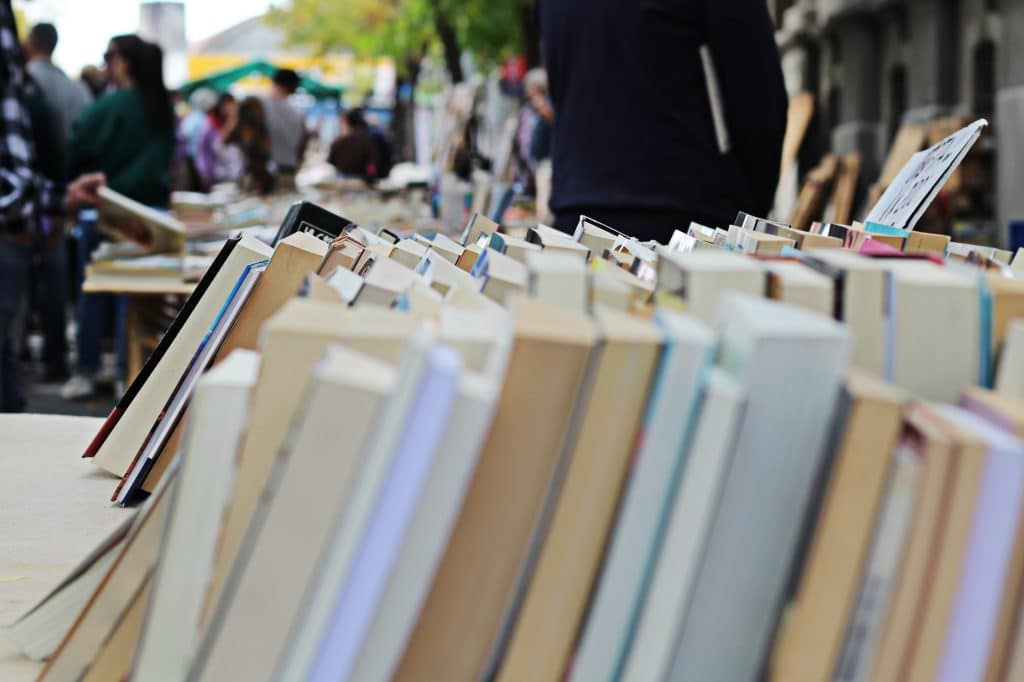
Embracing the contradiction, Taleb calls it an “antilibrary.” He argues that we should, in our lifetimes, own as many books we haven’t read as financially possible. Ironically, this came from his own book The Black Swan, which his philosophy dictates we should own but not read.
Taleb used author and scholar Umberto Eco as his prime example of the “antilibrary” and with good reason. Eco boasted a personal library of over 30,000 books, many of which he hadn’t read. The spectacle wasn’t a testament to how much he had read. Instead, it represented his desire to read a whole lot more. Therefore: an “antilibrary.”
Tsundoku and the “antilibrary” have a shared optimism, placing value on our intentions and desires rather than the follow-through. Perhaps those aforementioned pangs of guilt as we glance at our bookshelves are misplaced?
BookTok and how to curate your bookshelves
Book hoarding habits of recent years have been accelerated by the boom of BookTok. What started as a microcosm nestled in a corner of social media has exploded into a global community.
Earlier this year, TikTok revealed that the #BookTok community contributed to 50 million books being sold across Europe in 2025. It’s also what more than a third of 16 to 39 year olds rely on to discover new titles for their libraries. With the expansion of the #BookTok Bestsellers list, sharing the most successful titles each month, its influence over what books we buy is real. However, much like any other internet trend, it had pitfalls.
Many have accused BookTok, and the book influencers within, of collecting books en masse without reading them. Accusations of performative reading are also being thrown around. According to critics, influencers are hijacking the idea of “notes in the margin” with an array of highlighters and corresponding sticky notes for aesthetic purposes.
Viewers are constantly questioning their intentions. Are they actually interested in their collection of feminist literature or are they interested in how it makes them appear? Did they buy that copy of War and Peace for the musings of Tolstoy or the decorative book cover that came with it?
Tsundoku encourages us to look at these criticisms differently. Collecting books doesn’t have to be problematic; it can be an intimate reflection of the owner. That feminist literature may well reflect their political views and the copy of War and Peace, their desire to tackle the literary canon. Suddenly the colour-coordinated bookshelves represent something different: ambition. Whether it materialises or not is irrelevant.
The psychology of hope
The psychology behind tsundoku is totally optimistic. When buying a book, it opens our minds up to an array of intellectual possibilities, investing in who we may become when we read them. It’s a mindset that is not exclusive to book collecting. Anytime we bookmark a tab for “later,” it’s usually much, much, much later before we find our way back to it (if at all).
New Year’s resolutions are made on the foundation of hope that our future selves will change. We join gyms, buy journals, start a Duolingo streak… all in the pursuit of our imagined future selves. Buying books makes this determination visible on our shelves, like a paperback mood board.
There is also a level of FOMO when it comes to the books that everyone is talking about. When BookTok and influencers alike recommend a title , there is an impulse to buy it, even if it’s just to say you have it. As long as you know who Shane Hollander and Ilya Rozanov are, reading about them can come later. Even here, tsundoku is being practiced.
A change of perspective: it’s not that you haven’t read it, you just haven’t read it yet
It is a truth universally acknowledged, that today we are reading less. The first half of that sentence, of course, is from the familiar opening lines to Jane Austen’s Pride and Prejudice. Despite that book’s seemingly unwavering popularity over two hundred years (thank you Colin Firth), today it can be found on many bookshelves, untouched and unread. This is tsundoku in action.
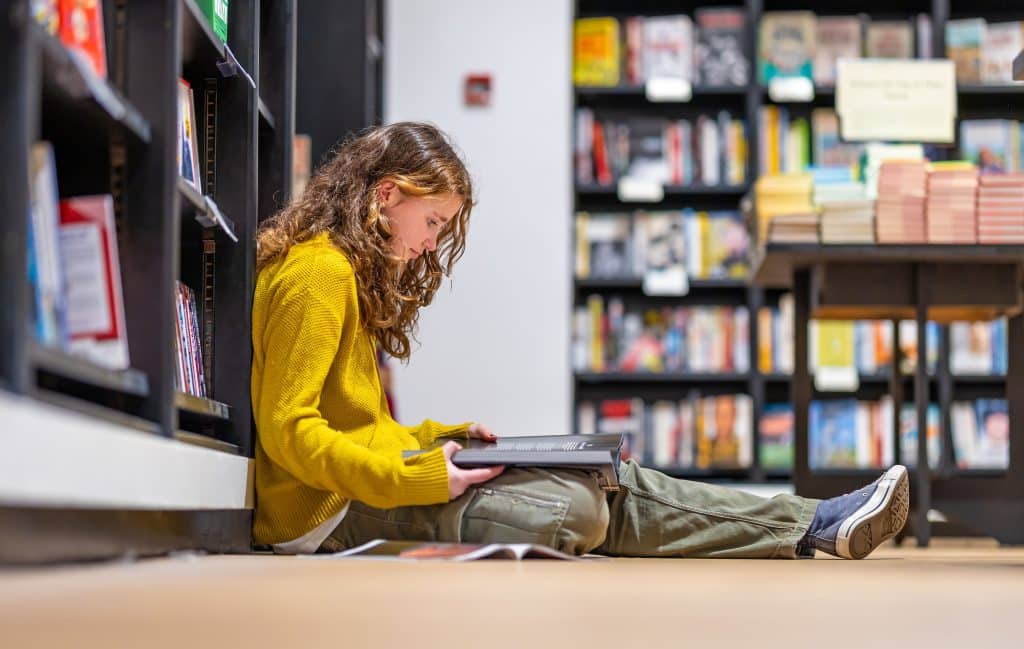
A survey by YouGov last year found that 40% of Britons hadn’t read or listened to any books in the previous 12 months. Within this statistic, there are undoubtedly those who go as far as to buy books but fall short of opening them up. Tsundoku deems this procrastination positive, telling us you don’t need to read the book in order to get something from it. Rather than being a symbol of failure, it’s a measure of intellectual humility. We are accepting we don’t know everything but stating we want to know more.
In one scene from Pride and Prejudice, Mr Darcy explains how (according to him) a young woman becomes accomplished. His criteria includes but is not limited to, “the improvement of her mind by extensive reading.” If we decide to embrace tsundoku, that shouldn’t matter. We can leave books unread and still cherish the possibility they represent, adding them to our “antilibrary.”
Mainly, it’s a lesson in optimism, but it’s also a more realistic way of looking at things. Besides, did Mr Darcy read all the books at Pemberley? Probably not.