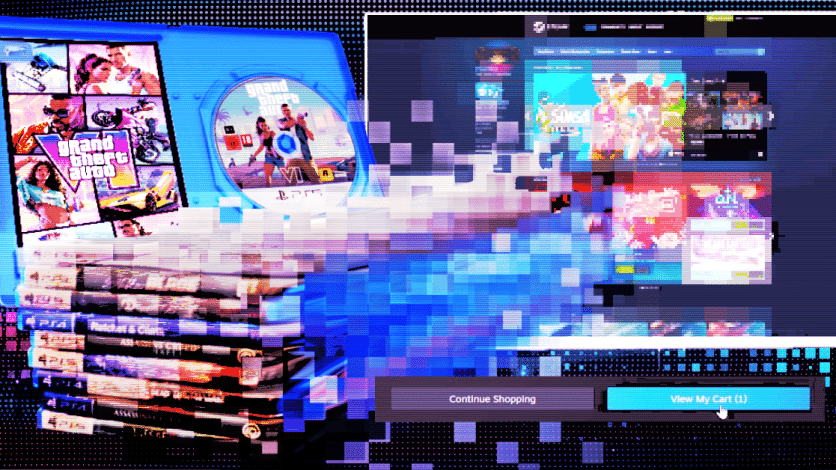
Sony is done with physical game media. Gamers are divided and outraged. What’s next for the future of gaming?
Sony has officially pulled the plug on physical disc production starting in January 2028. The shift itself wasn’t surprising. Over the past six years, the gaming industry has been slowly shifting toward digital releases, with Sony and Microsoft’s current-generation consoles offering fully digital versions at launch in 2020. Since then, more and more games have launched strictly digital, such as Alan Wake 2 (2023) and Senua’s Saga: Hellblade 2 (2024) (although Alan Wake 2 received physical copies almost a year after its release).
Yet even with this steady decline, Sony’s announcement still came as a shock. Many people, including me, thought that we were still years away from this significant decision. Now that it’s here, people are wondering what’s next: Will Microsoft and Nintendo follow suit? Or will companies reverse this change? Whatever happens, this decision will come at a cost for both the industry and the consumer as a whole.
With that being said, when it comes to what’s best for the consumer, taking away physical game media is totally the wrong choice.
The Reason Sony Is Moving Away From Physical Media
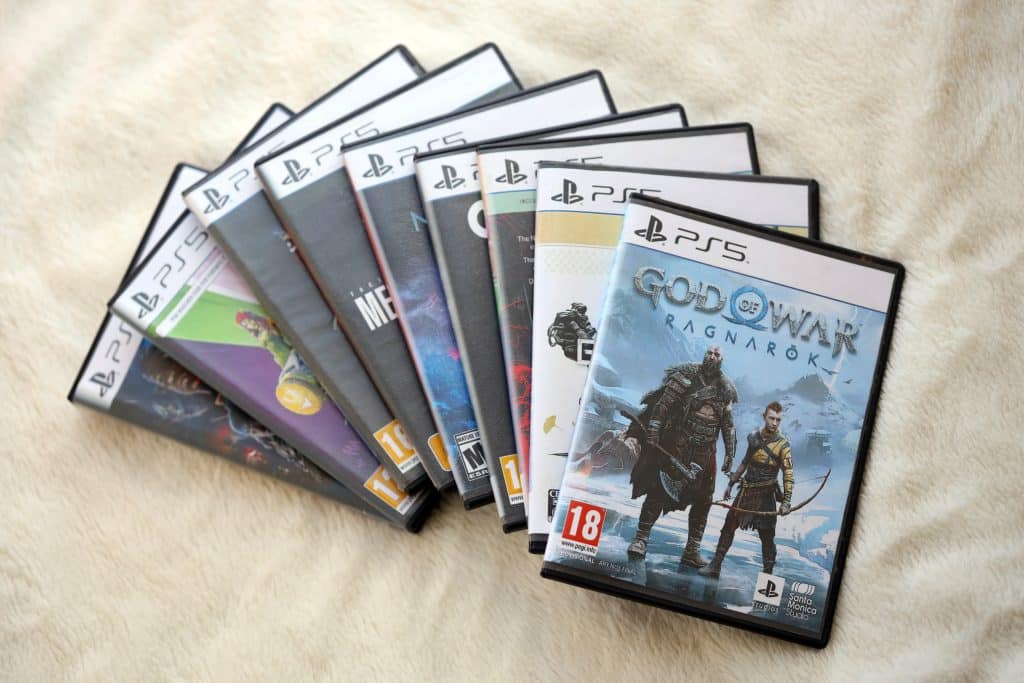
Sony stated in a recent blog post announcement that, due to consumers’ preference leaning more toward digital media, they will be abandoning physical game disc production by 2028—but was this the real catalyst? As I discussed earlier, physical game media has been in decline for many years. However, while consumer preference obviously played a role, the COVID-19 pandemic greatly contributed to that decline.
During the early stages of the COVID-19 pandemic, Sony saw a massive spike in digital sales. According to Sony’s financial reports, the company’s full-download digital ratio jumped from 53% in fiscal quarter 3 to 79% in fiscal quarter 4. By the end of 2020, digital purchases accounted for 65% of full-game sales. That number has continued to rise ever since, reaching 85% in quarter 4 of 2025.
From a financial standpoint, Sony’s decision is understandable. Digital distribution reduces manufacturing, packaging, shipping, and retail costs. Then comes the point in the subject: licensing vs. ownership. This is by far the most discussed (and heated) topic over going fully digital. Instead of physically owning the disc you buy—and being able to trade or resell it—a digitally owned game doesn’t really (legally) belong to you. What does this mean? Digital media “ownership” is subject to the platform’s terms and conditions. Think of it like an exploitative contract: You must follow it, but the offeree can make changes whenever needed or take it away.
Truly, Sony may be valid from a business standpoint, but is it correct from a consumer viewpoint?

The Case For Digital Media
The “physical vs. digital” debate has been a long-standing argument within the entertainment industry. Even before Sony’s announcement, Reddit threads (dating back six years) have discussed and given valid viewpoints on what’s better for the consumer. The debate intensified when Rockstar Games announced that GTA VI would only be available digitally across all platforms. People’s opinions sparked. Some players welcomed the move, while others were disappointed that they wouldn’t be able to own a physical copy of what many consider “the most anticipated game of all time.”
Sony’s announcement became the tipping point—and it took the internet by storm overnight. Waves of posts from across the webspace exploded online, with everyone giving their take on the subject. Of course, I have my own opinion on this matter (which I will share later), but it’s important to consider what both sides have to say.
Among the claims that lean toward digital media, the most common one I’ve seen is that digital purchasing is convenient. Instead of leaving your home and driving miles into town to your local GameStop, users can buy games instantly from their couch. One Reddit user, u/Weddz, shared this preference for staying home, though they still believe losing physical media would be a loss for everyone.
Another prevalent take is losing discs. On the r/videogames subreddit, user u/LoSouLibra shared how they lost a collection of games in a house fire. Since then, they’ve shifted their preference to digital media and are again highlighting its convenience. In their comment, they stated that,
“Digital unlocks as soon as it’s available, don’t need to wait for shipping or go to the store. Downloads faster than installing from disc in most cases.“
The Case for Physical Media
Digital media unlocks a level of accessibility that physical copies simply can’t match. But that doesn’t mean discs are worse off.
The most common criticism people have of digital games is the fact that you don’t truly own them. Yes, you purchase the game like anyone else, but you don’t get the same freedom as you would with a physical copy. There is no selling or trading of your digital games, nor is there a guarantee of your copy’s access staying in your console library.
There’s also the pricing. Since Sony has decided to close the door on physical media, that eliminates all retailers that would sell their games at discounted prices. This gives Sony full control over their market. Trying to skim the web to find a reduced price for a new or old game? Too bad. You must now buy (usually at full cost) the game from their store.
Additionally, physical games play a role in preserving game history. While digital storefronts close and licenses expire, physical copies often remain playable years later. Other companies like the Video Game History Foundation have highlighted this issue and argued that game media needs to be preserved for future generations.
What hurts many gamers the most, however, is what this transition means for collectors. Given that physical copies will be disappearing in the near future, collecting new games (like GTA VI, which I was especially excited to have a hard-copy of) will be impossible. As someone who also collects video games (and to help me stay tidy about what games I have or have finished), this change was a punch to the gut.
Whatever opinion you may have, you have to agree that both sides have compelling arguments. But, like everyone, I also have my own stance.
The Matter of the Fact: Digital and Physical Media Should Remain Your Choice
Sony made the wrong judgment. Taking away a choice from the consumer limits the consumer. And limiting the consumer makes the experience of buying your product worse. It’s ridiculous that we live in an age where this is a conversation. Will Sony take the hint? I surely hope so. Ever since they announced this, thousands of gamers across social media have been flooding PlayStation’s comments, outraged with their decision. People are actively protesting against this choice, and rightly so.
What makes matters more embarrassing for PlayStation is that other companies, like Domino’s Pizza UK, have openly made fun of their “only digital declaration”.
What’s even funnier is that, in a follow-up post, Domino’s Pizza UK said they’ve sold “172,288,912 pizzas since PlayStation last posted.”
Consumers should continue making their voices heard. We should have the right to choose physical or digital media. The irony of Sony’s decision is that they’re entirely dependent on the community they are alienating. They don’t make games if we don’t play them. This is a problem Sony has had since 2020, with the introduction of digital-only consoles. Sony has lost sight of appealing to the consumers as a collective. They are deciding what’s best for them rather than what’s best for us, but in reality, what’s best for us is what’s best for them.
One final argument in favor of physical media is game preservation. Unlike PC gaming, where platforms such as Steam compete with other storefronts like Epic Games and Green Man Gaming, console ecosystems are far more centralized. When a digital game is delisted, or a storefront closes, access to the title becomes much more limited for future players. Left 4 Dead 2 on the Xbox 360, for example. Left 4 Dead 2, like many other games, was wiped from the map digitally on consoles, and now the only way to experience that game is through physical copies.
The Final Verdict
Giving gamers the option to buy digitally or physically opens the market for everyone. People should also have the right to truly own what they purchase. The idea that I’m spending $80 on a digital license that could be lost is unsettling. Having physical copies of your games not only preserves the game itself but also strengthens the trust we have in you as the seller.
What’s the final verdict? Keep both physical and digital media available to the consumers. Sure, more people may prefer digitally bought games, but that doesn’t mean we want physical copies gone forever.
If enough players value physical gaming, it’s important companies hear that message. The choices they make shouldn’t be dictated by money but by our voices that choose digital or physical freedom. Digital media has made its place in gaming, but so has physical. We shouldn’t be forced to choose one or the other when both are good.