Greek mythology is ripe with opportunities for writers to weave ancient tales into stories that today’s readers can’t get enough of. Books like The Song of Achilles and reinterpretations about Hades and Persephone dominate the market, but there are dozens of other Greek myth retellings that deserve the same praise.
I adore how these retellings reinterpret the stories and expand upon new themes. It’s a comforting mix of classic mythology and modern ideas. Additionally, readers who might not be familiar with the mythology can be introduced into a whole new world of stories and characters. So whether you’re a huge fan of Greek mythology or you know nothing about it, I promise that the following books will guide you through ancient stories in an enjoyable way.
1. A Thousand Ships by Natalie Haynes
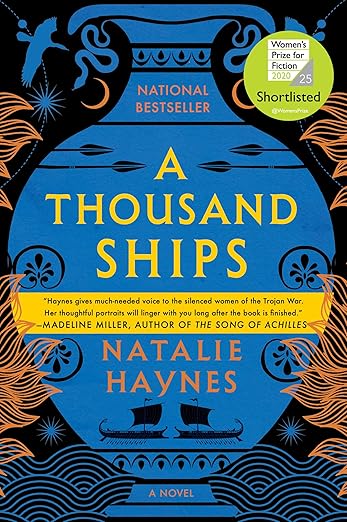
Homer’s The Iliad has given rise to epic figures like Achilles, Hector, Agamemnon, and more–but what of the women? Who were the women of Troy? What happened to the women when Troy was ransacked and destroyed? Are they unimportant to the story, or simply ignored?
Natalie Haynes is a master at weaving brilliant, gut-wrenching stories like this one. Told entirely from the perspective of the women and goddesses involved, Haynes reimagines The Iliad and sheds light upon the forgotten. Women such as Hecuba, Cassandra, Andromache, and Clytemnestra are finally given the attention they deserve. Whenever I think of the Trojan War, I always think back to this retelling and the perspective it provided.
2. The Penelopiad by Margaret Atwood
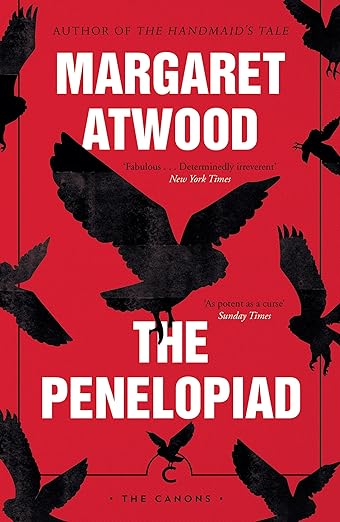
The Odyssey is one of the most famous ancient Greek myths–and rightfully so. It’s a remarkable epic of Odysseus’ misadventures as he tries to return to his home and family. But while much attention is given to Odysseus, his wife Penelope is often ignored, despite her own struggles with Odysseus’ absence.
In The Odyssey, Penelope’s role consists of waiting for her husband to return while she quietly suffers the unwanted presence of suitors fighting for her hand. In Margaret Atwood’s novel, Penelope takes center stage as she recounts her life with, and mostly without, Odysseus. She proves to be a snappy, layered protagonist. She is more than the patient wife awaiting her husband’s return – she’s a frustrated mother, a bullied girl, a quick-witted narrator. I flew through this book and utterly adored every page of it. If you’ve read or heard of the Odyssey but haven’t picked this book, I highly recommend checking it out!

3. The Shadow of Perseus by Claire Heywood
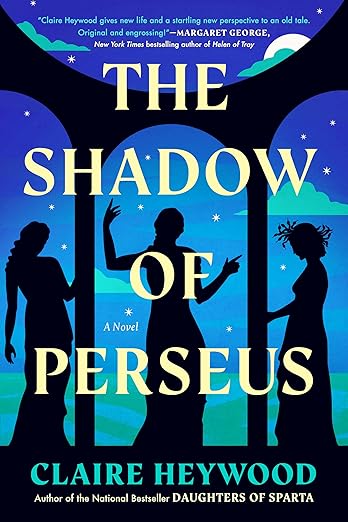
Who doesn’t love the story of Perseus? The young hero who beheads the ferocious Medusa and slays the monster in order to save the princess. It’s a classic, right? Well, although it’s a well-known myth, Perseus might not have been the hero we thought he was.
Told from the perspective of his mother, the princess Andromeda, and even Medusa herself, Perseus’ story is painted in a new light. Claire Heywood does a phenomenal job of portraying this myth in a more tragic, grounded way. Unlike many of the other books on this list, the gods and monsters don’t actually appear in the story. You might be curious about how Perseus’ journey occurs if there are no gods to help him or monsters to kill, but trust me, Heywood’s retelling pulls it off perfectly.
4. The Witch of Colchis by Rosie Hewlett

If you’re not familiar with Medea, the sorceress and wife of Jason the Argonaut, this book will introduce you to one of Greek mythology’s most complex characters. You might not entirely like her, but you’ll certainly understand her.
Medea is most known for killing her children to get back at Jason, but what leads her to this point? Who is she outside of Jason? What happens that turns her into such a divisive figure? If any of these questions entice you, I highly recommend checking this book out. Medea’s story is complicated and riddled with hardship, but all the while, I kept hoping that it would somehow work out for her. As with many Greek myths, however, the ending wasn’t very happy.
If you prefer to listen to your books, the audiobook of this novel was fantastic! Listen here on Amazon.
5. Stone Blind by Natalie Haynes
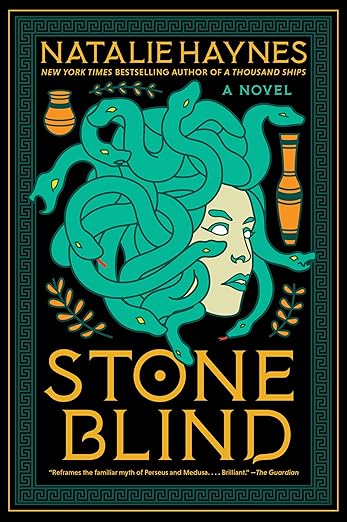
I’ve already gushed about Natalie Haynes’ talent for providing new perspectives on age-old stories, but this time, her subject is Medusa. Hailed as one of the greatest literary monsters, Medusa has a bad reputation. She is a foe for the heroic Perseus to conquer and a trophy for him to win. But Haynes argues that there is far more to her story.
This book is absolutely phenomenal. Told through a variety of perspectives, from Medusa and her sisters to Athena and a dozen more, Haynes outlines a heartbreaking tale. I mean, when a chapter told from the perspective of an olive branch can make you cry, you know the book will wreck you. Expertly written and painfully tragic, Stone Blind is hands-down one of the best Greek myth retellings I’ve ever read.
6. Ithaca by Patrick Dillion
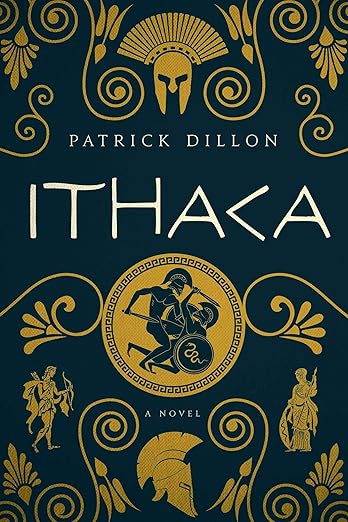
This is the second Odyssey retelling on the list, but the focus is now on Odyssey’s young son, Telemachus. Telemachus has a minor role in The Odyssey, but Patrick Dillion gives him space to be his own hero. Growing up without a father, Telemachus struggles to understand his purpose as his home is overrun by suitors. Will he be up for the journey ahead when he leaves his home to gather clues about his father?
It’s always fascinating to read stories told from another perspective, and this book is no exception. I loved the focus on Telemachus as we watch him grow into himself. I also loved how it felt like a fresh story while still aligning with the events of The Odyssey. It’s the perfect example of how to do a Greek myth retelling. If you’ve ever wanted to learn more about Odysseus’ son, you should definitely read this book!
7. Clytemnestra by Costanza Casati
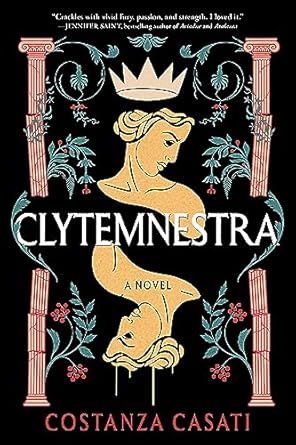
If you thought that Medea was one of Greek mythology’s most complex characters, wait until you meet Clytemnestra. She is the embodiment of feminine rage, and it’s completely justified. This book doesn’t shy away from the painful and unjust parts of Clytemnestra’s life; it dives deep into them.
Constanza Casati depicts Clytemnestra wonderfully–as a young girl and sister, then as the wife of a king. Her relationship with her sister Helen (yes, that Helen) is particularly poignant and stands out as a defining feature of the novel. Anyone familiar with Clytemnestra and her husband Agamemnon know that things don’t end well for anyone, but the novel expands upon the story in such a captivating way. I already knew quite a lot about Clytemnestra; yet I found myself desperate to keep reading.
8. Spin by Rebecca Caprara
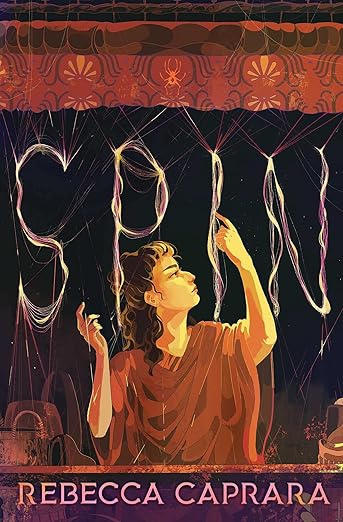
Remind me to never challenge Athena to a contest–I have a feeling it wouldn’t end well. Arachne’s story proves how merciless the gods can be. You might be familiar with the girl who challenged Athena to a weaving contest and was transformed into a spider. But as with all of these retellings, a new side of the story is shown.
Told through poetic prose, the novel artfully details Arachne’s life as a young girl who would grow into the greatest weaver known. She is more than a prideful human who becomes a spider; she is a daughter and a friend, struggling to make sense of her world. Rebecca Caprara’s writing is simply wonderful and perfectly crafts the image of Arachne before she gained the attention of the gods. This is one of the most unique Greek myth retellings that I’ve seen, and it deserves more attention.
To tell it in another way…
Greek myth retellings rank among my favorite books, because they expand upon the myths they are sharing. I have learned to care for so many characters that I formerly deemed to be one-dimensional. If you love Greek mythology, or if even you’re vaguely curious about it, all of these books are fantastic reads.