Societies evolve themselves out of existence. Or so says Enrico Fermi, the physicist who, upon witnessing the destructive potential of the atomic bomb, developed his famous self-titled explanation for the apparent absence of alien life. According to the Fermi Paradox, the reason humans have yet to encounter extraterrestrial life is because, once civilizations reach the point at which they are capable of interstellar travel, they have been destroyed by their own technological advancements.
It goes without saying that the implications of the Fermi Paradox are bleak. If all extraterrestrial species have obliterated themselves in their continuous pursuit of improvement, it seems to follow that people on Earth will do the same. Our daily deluge of increasingly depressing news stories could feasibly convince one that we already are. And we don’t even have interstellar travel yet.
Tech products
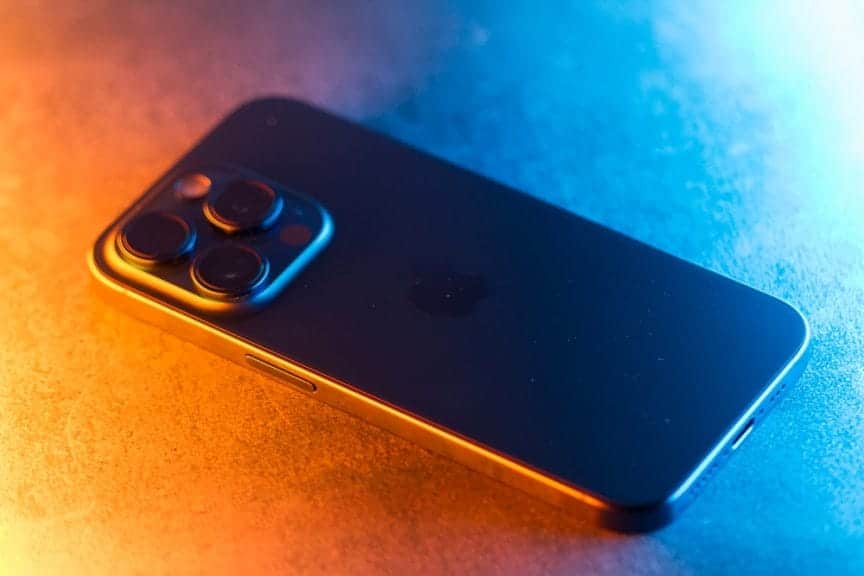
On a small scale, the tendency toward annihilation is manifested in tech products. Earlier this year, Apple released an array of iPhone 16 products, and is rumored to unveil its iPhone 17 models in September. It’s not unusual for Apple to push out slews of new devices, nor is it out of the norm for the products to be quickly discontinued after hitting the shelves (think pretty much every MacBook, spurred by the company’s shift to Apple Silicon).
While the lifespan of an Apple device can be maximized, the average functionality extends to about three years. Even if an iPhone–and its associated kindred, like the iPad, the Apple Watch, the HomePod, et cetera, et cetera–is maintained properly, chances are it will stop receiving updates once a set period of time has passed.
Trends
The adage that nothing is built to last rings particularly true in the modern era, in which a Luddite-esque opposition to “innovation” has a certain appeal. In spite of implorations to slow down, to take time for oneself, to turn one’s focus inward, everything is fast, from the food to the fashion to the fundamentals of basic connection. It doesn’t help that each “fast” product is redolent with some ethical concern—brands like Temu and Shein have come under fire for their purported use of child labor. Less conspicuously, Apple, Tesla, and companies that build rechargeable products rely on lithium mining, which is environmentally taxing and supported by the exploitation of laborers in non-Western countries.
Of course, all I’m describing here is the nature of trends, which are themselves rooted in mass production and the many varieties of exploitation that accompany it. Trends operate in vicious conjunction with planned obsolescence, the phenomenon of manufacturing devices and other products, like furniture and clothes, to deteriorate rapidly or become irrelevant. Planned obsolescence is largely the reason for the 347 million metric tons of electronic waste that seep mercury into landfills, toxic pavement for cityscapes of trash and whatever plastic monstrosities went viral on TikTok last year.
Planned obsolescence weaponizes mortality as a marketing scheme. Regardless of product, the trend is extinction.
The social consequences
The negative consequences of planned obsolescence are obvious: It degrades the environment and costs buyers millions in the name of negligible improvements made necessary by design. Like consumer culture itself, planned obsolescence mirrors a larger and more sinister zeitgeist, a theme of material demand that underscores even the simplest aspects of daily life. Still, the complete impact of prearranged irrelevance is not readily observable.

How does planned obsolescence apply to social issues and relationships? How does it affect the way we interact with each other? Does it encourage us to view others as disposable? I believe that the influence of planned obsolescence reaches beyond the damage it wreaks on the ecosystem and customers’ pockets, perturbing the social sphere and raising questions about the discrepancy between capital and life.
It makes people lonely
In Japan, a phenomenon of loneliness arose as a result of the COVID-19 pandemic. Accounting for roughly 2% of Japanese residents ages 15 to 62, hikikomori–socially isolated people–reflect a larger issue.
Gen Z is lonely. Despite our almost obsessive engagement with a global network of peers, most adolescents and young adults report feeling unusually isolated or socially withdrawn. Digital culture facilitates endless interaction. Paradoxically, “real” connection is rendered practically impossible as the development of necessary social skills is hindered by constant media exposure.
And it’s no help to Gen Z that our society forces us away from itself. The movie theater is phased out by streaming services, the restaurant and grocery store by food delivery apps, the mall by online shopping. An entire world is lost to the “Add to Cart” button. With nowhere else to go, with every alternative subsumed by digitalization, it makes sense that we would be, too.
Social media is a common culprit for the “loneliness epidemic” for good reason. Overlooked, however, is the role played by marketing and mass production in Gen Z’s inability to forge connections beyond the superficial ones offered by a comment section.
How it skews identity
Identity and products are linked. A person is a brand. That is the message churned out by influencers. Sandwiched between reels, advertisers become conflated with what they are advertising. Celebrities rapidly become their product line. A personality is an item. Internet “aesthetics” are attended by a slew of products, all of which convey a hazardous certainty: to own is to be.
Identities are not manufactured to become obsolete, not like products. But young people on social media are primed to treat themselves and their worldviews as objects. There may not be any merit to the proposition that identity is blurred by marketing. Television, books, movies, and general interaction with one’s social circle also influence personality. A human quality is present in all those things, though.
Social issues
How can one conduct a human relationship when one is not human oneself, when the substance of one’s being is bought and sold, when a mode of existence is an avenue for capital? I wonder sometimes if Gen Z is too afraid to have a discernible identity. Maybe we feel we will not survive long enough to stake our names in personalities, or that our survival will not be of a high enough quality to justify an experience that is not commodified. After all, our lives have been defined by existential crises: climate change, impending international warfare, etc. Apathy is perhaps so prevalent among our generation because we do not want to explore emotions, do not want to become attached to the richness of our humanity. A prepackaged understanding of oneself is much cheaper, easier, and far more difficult to preserve.
When an identity is difficult to preserve, it is disposable. Thus, planned obsolescence manifests ourselves in our being (outside of death, of course, which is nature’s planned obsolescence). And the disposable identity has societal repercussions. In the wake of George Floyd’s death and the subsequent Black Lives Matter protests, everyone saw—and was mortified by—instances of activism turned into misguided TikTok stunts. Real social issues like police brutality became fodder for views. Movements are dropped and picked up again, and, as a result, concrete changes are not made. A social justice effort stops where the word count in an Instagram bio ends.
The question arises at every instance of injustice: Why isn’t anything being done? Social media platforms suggest that everyone is angry; social media also allows everyone to transmit said anger into a void, and no action is taken.
The effects of AI
It may be a bit of a stretch to say that planned obsolescence leads people to view others exclusively in the short-term. The advent of generative AI, though, has broken the last social link that digital culture had, until now, managed to retain.
On social media, technology is simply a medium. AI lends digitalization far more involvement in the communication process than traditional elements of social platforms. The chatbot is recipient and responder, but it fulfills both roles as an echo chamber. (ChatGPT has since its inception received criticism for reflecting users’ inputs.) The problem with an echo chamber is less that it regurgitates thoughts and more that it’s indifferent to what it spits back up. AI does not argue. Without opinions, but disguised by an illusion of the inherent objectivity of machines, AI isolates the user inside their own thoughts. Their way of thinking begins to convincingly present itself as the only way to think.
When people contemplate the singularity, they imagine a physical melding of man and machine. Socially, we have reached singularity. AI reportedly affecting our speech and even our thoughts, inspiring delusions in those who depend on it as a therapeutic device.
AI facilitates planned obsolescence
From a more pragmatic standpoint, AI quite literally acts as a tool of planned obsolescence. It occasionally appears like the sole purpose of AI is to spur further product development. Generated en masse, items now have extensive AI capabilities. Perfectly functional services, like Google, are implementing AI as an unremovable, irreversible feature. To use virtually anything today is to use AI, which, incidentally, has an environmental impact as egregious as that of electronic waste.
It seems like companies are desperate to push AI onto the masses. The most ridiculous example is probably Oral-B’s AI toothbrush, which doesn’t appear to do much except collect data on your teeth. Realistically, generative AI has very little utility in public life. A regular search engine accomplishes most of what generative AI companies claim to offer. Sure, Microsoft Edge probably can’t assist with cancer research, but, as a certified Average Joe, I’ve never really needed to identify carcinogenic cells.
AI and identity as product
Maybe AI is part of the commodification of identity set into motion by marketing trends. AI marches in as education is forced to recede. The artificial minds and mutable attitudes of our generation collapse together into an unresistant debris.
Or maybe I’m being too harsh on AI and technology as a whole. I’m almost certainly being too harsh on Oral-B’s overpriced toothbrush. Is it fair to blame planned obsolescence, AI, the numerous byproducts of an intensively capitalist laissez-faire society for what could just as easily be attributed to a natural tendency toward entropy? Maybe human beings have already become obsolete. When, exactly, did it happen?
The central dilemma of contemporary society is perhaps that humans continue to exist in a post-human world, or a world that is, at least, increasingly hostile to humans, by fault of the humans. It’s a nihilistic viewpoint to take, but it also has a great capacity to compel change. There’s the matter of realizing that one is not a member of the most important race in the ecosystem, because there is no most important race in the ecosystem (except maybe phytoplankton, which honestly deserves to dominate Earth’s creatures). As a consumer, one is not subjected. It is possible to morph our civilization to accommodate us again.
What can we do about planned obsolescence?
Commercially speaking, Right to Repair laws, corporate commitments to product durability, and sustainable manufacturing products diminish the effects of planned obsolescence. Past litigation has deemed planned obsolescence an unethical practice in some instances, and, with more stringent environmental regulation, the strategy may become less prevalent.
But what can be done about the devastation marketing tactics have wreaked on our social lives and how we think about ourselves? Do we drag an identity out of a landfill, distill it from an advertisement, squeeze it from the space between two short-form videos? We don’t know who we are; can we count on social media and an excessive selection of superfluous products to define us, remember us, understand us?
It’s undeniable that marketing influences social perceptions, sometimes going so far as to create standards for behavior and appearance, guidelines that become ingrained in culture. In a more subtle way, the qualities with which products are designed determine our social reality, especially as we become more like products ourselves.