October 10th, 2025, marked the beginning of a ceasefire between the State of Israel and Palestinian Resistance forces. It followed two years of total war waged by Israel in response to the “Al-Aqsa Flood” attacks carried out by the Al Qassam Brigades on October 7th. The United States brokered a peace deal meant to end the violence.
Since 2023, Israel’s conduct in Gaza has faced mounting international scrutiny. Numerous violations of the Geneva Convention have been reported — including illegal settlements in the occupied West Bank, the bombing of hospitals, and mass displacement. Despite ongoing international criminal investigations, including a warrant out for Benjamen Netanyahu’s arrest. The West has been relaxed in it’s condemnation of the Israeli state, especially in comparison to how America and many european countries have been so critical against other nations that commit crimes similar to the ones that their longtime ally stands accused.
That alliance stands in sharp contrast to America’s long-standing hostility toward the Islamic Republic of Iran, a feud dating back to 1979. Tehran and Tel Aviv have backed opposing sides in the Gaza war. The two even exchanged fire for 12 days in June. Iran faces Western criticism for developing nuclear weapons, supporting Palestinian Resistance, and committing alleged human rights abuses.
The contrast between how the US treats Israel and Iran shows a major political double standard.
“Israel bombs, USA pays”

Despite the international condemnation of Israel over the course of the Gaza War, Washington has been unwavering in it’s support of the Zionist occupation. The US has given over 21 billion dollars to Israel since October 2023.
Israel holds deep influence in American politics. The Israeli lobbying group AIPAC, or the American-Israel Public Affairs Committee, wields major power in Congress. Shared investments between the US and Israel further strengthen their close diplomatic and military ties.
On the world stage, the US has consistently backed Israel at the United Nations. According to the UN Watch Database, 93% of American votes on Israel-related resolutions have supported Tel Aviv. The US has opposed it’s ally in the Levant only about 1% of the time.
For decades, Washington has invoked international law and human rights to justify military and political interventions, from Korea to the former Yugoslavia. Yet when it comes to the ICC and ICJ warrants for Benjamin Netanyahu, the response has been silence. Both the Biden and Trump administrations rejected the warrant outright. In nearly every case, America’s alliance with Israel outweighs it’s stated commitment to justice or human rights.

Rogue nations: Iran and Israel
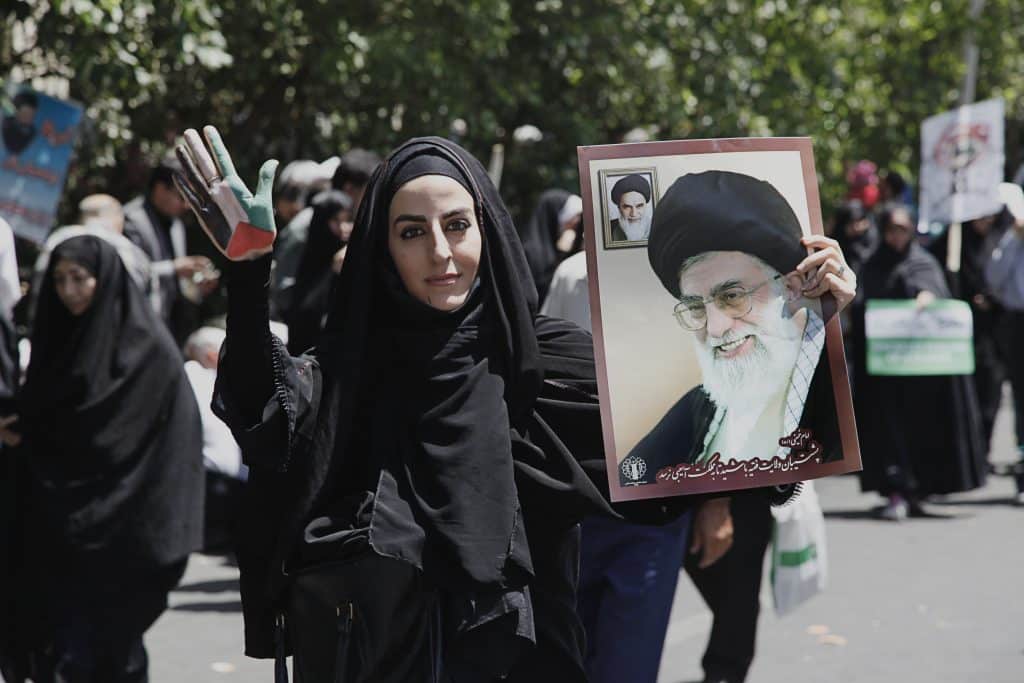
.America’s relationship with Iran has remained tense since the 1979 Islamic Revolution. During the 1980s, the US backed Saddam Hussein in the Iran–Iraq War. In recent years, Washington has escalated hostility through sanctions, assassinations, and support for Tehran’s rivals.
Politicians and political scientists often use the term “rogue nation” to describe governments seen as dangerous or dismissive of human rights and international norms. Ronald Reagan first applied the label to Iran in 1985 when he described it and several other countries hostile to US interests.
The image of Iran as a global menace has long served to justify US aggression. Iran does fund and arm militias across the Middle East, including Hamas. The government uses surveillance and artificial intelligence to tighten control at home and secure national interests. These practices have alienated many Western states, prompting EU sanctions in response to Iran’s nuclear program.
The West ostracizes Iran for it’s conduct, domestically and internationally . Labeling Tehran a “rogue nation” implies that it threatens world peace. Yet the standard for what counts as a global threat has always been deeply inconsistent.
Many of the offenses used to isolate Iran are even more extreme in the case of Israel. Tel Aviv faces international trial for ethnic cleansing in Palestine, supports criminal groups in Gaza that loot aid from starving civilians, bombs hospitals, and kills thousands of men, women, and children. Despite this, it maintains strong ties with Europe and the United States, facing little real consequence.
The eagerness to punish Iran and the refusal to confront Israel reveal a blatant double standard in Western foreign policy. Israel serves as a key instrument of US power in the Middle East, a region the West has long destabilized through colonialism, invasions, coups, and military interventions. Holding Israel accountable would be against to Western political, military, and economic interests. The behavior of states that claim to uphold international justice shows that, when profit and power are at stake, their principles are often the first to go.
Changing times
Despite the long-standing relationship between Israel and the West, the ever-present popular outrage might begin to change how Israel is engaged on the international level.
Much of the European Union has been hit with general strikes and protests in the last few months, with Palestine being a common rallying cry. These nations include Italy, Spain, Greece, and the Netherlands. Despite various governments’ attempts to crush the pro-Palestine movement, the actions in support of those under siege from Israel has not ceased since the start of the Gaza War.
In previous months, several EU nations have recently recognized a Palestinian state at the most recent United Nations General Assembly, including Malta, France, Luxembourg, and Belgium. These new recognitions followed other Western allies such as Canada, Australia, and the United Kingdom.
The formal recognition of a Palestinian state would allow more diplomatic opportunities to the Palestinians, and could eventually have Israel to be held accountable for it’s actions. However, these declarations won’t have any immediate significant effects. The small victory for the European pro-Palestine movement could be the first step to ending the double standard, and for international condemnation to based on justice, and not geo-political interests.