

The world is in danger now more than ever because of climate change.
Planet heating methane is starting to emerge from the Arctic ocean floor. More than 80% of the world’s reefs are bleached. Even whole islands are sinking.
Knowing this, you might feel like something fundamental needs to change in our lives in order to save the planet.
Often however, that’s easier said than done.
Why is it so hard to change the world?
At some point, you have probably heard advice on how you can help create a sustainable world.
Some of these suggestions can be very unhelful. Examples include buying an electric car or going on an all vegetarian diet. Even walking to work was most likely a piece of advice given.
While it is true that this can all be helpful, this advice seems to only be doable for people who have a lot of time and money on their hands.
The cheapest new electric car you can get is about $29,280. In addition, walking to work takes up a lot of time. All of this advice can require a huge change to your lifestyle. A lifestyle that, in the long run, is probably unsustainable to fulfill. Ironic, isn’t it?

In reality, this advice is literally impossible to follow for most, and frankly unhelpful.
However, what if there was a way to easily help the environment? Well, Jane Goodall might give just the right advice for how to do just that.
Jane Goodall
“Think about our ecological footprint,” is one of the last messages Jane Goodall recorded to a group of students before she died on October 1, 2025.
You probably know Jane Goodall, or at the very least have vaguely heard of her.
As an influential primatologist, anthropologist, and conservationist, she spent her life studying chimpanzees. Her discoveries have forever changed the way we view animal behavior.
In addition, she has traveled on an average of 300 days a year, speaking out for the environment at events and schools.
Final advice
Her last speech was about how we could all contribute to helping the environment. She said that simply being more aware of the small actions that you take can contribute to it is a positive or negative way.
She stated,
“I think the … key thing is to realize that every day on this planet, you make a difference, and if you start thinking about the consequences of the small choices you make — What you buy? Where did it come from? How was it made?”
It’s great if you are willing to sacrifice a significant amount of your time, money and energy to make your contribution to the environment. However, Jane Goodall seems to say that its not so much what exactly you do to help the environment that matters, but more that you are doing something.
So…what can I do?
You probably already have a few ideas of what wouldn’t be sustainable to the environment. An example is taking a two hour shower, or leaving the freezer door open on all night.
The thing about being aware of the little differences you can make however, can sometimes be difficult. If they are small, it’s probably hard to notice how significantly they can impact the environment.
Luckily, most of the small things that you can do to help the environment, once you get used to doing them, are so simple that doing them does not really involve a huge effort on your part. Like brushing your teeth, it’s about implementing habits into your life, so at some point, it becomes almost second nature to live life in a more environmentally sustainable way.
As a bonus, following this advice could help you save a lot of money!
Energy
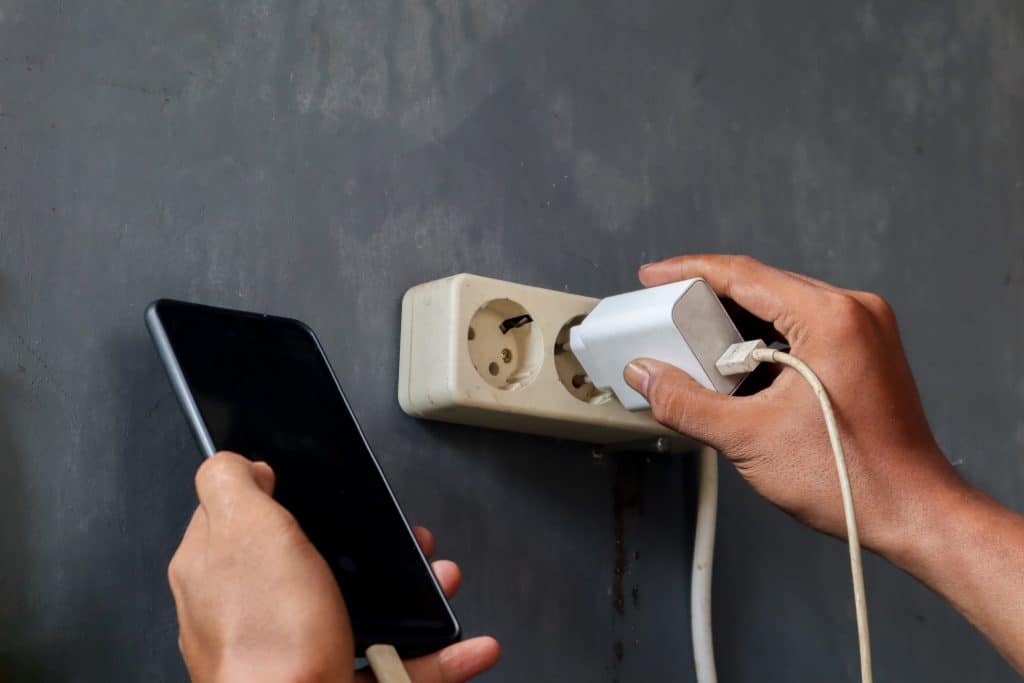
One of the main contributions to climate change is our collective waste of energy.
According to the UN, 35% of global emissions come from the energy supply sector, with much of it coming from homes.
Below are a few things that you can do to help reduce the energy that you spend in your home.
Don’t charge electronics such as your phone or computer to full battery.
Believe it or not, doing this actually actually wears down the lifespan of your battery even more. By charging it only to 80% you might even be able to save your phone for an extra year! Additionally, doing this can save about $100 per year!
Don’t leave the lights on in rooms that you are not in.
While pretty self-explanatory, it can be easy to forget this important step. In 2011, it was recorded that in the UK, 10% of people leave their lights on when they are not in the room. This resulted in about 14,950,00 pounds being wasted per day due to this, and 37,440,000 kg of carbon emissions per day. That’s equivalent to 62 flights around the world.
In addition, if you are able to, switching your lightbulbs to LED bulbs reduces a significant amount of energy use (about 80-90%) and one single bulb can save about $55 dollars until you have to replace it.
If possible, make sure that you wash your clothes with cold instead of hot water.
Interestingly, a washing machine spends about 90% of its energy heating the water that it uses to wash your clothes. In addition, microfibers from your clothes are more likely going to come off in hot water. This can get into your water supply and contribute to pollution.
Choosing to instead wash your clothes with cold water means that microfibers are less likely to come off. It also saves a huge amount of energy.
Moderate how much you use your heating and air conditioning.
Leaving them on all of the time uses up a significant amount of energy. This contributes to the production of greenhouse gases which heat up the planet. Doing this can also save about $150.
Food

According to the EPA, almost ⅓ of food in America is completely uneaten. 96% of wasted food going into sewers, landfills, or other locations.
Being more knowledgable about the food that you are buying and consuming is incredibly important to helping sustain the environment.
A few things that the EPA recommends you doing are:
Planning what you are going to eat a week before going to the grocery store.
According to a Harvard research paper, making a pre-determined plan about how you will do a task means that you are more likely to stay on goal.
This means, for example, that if you take the time to create a grocery list, you are less likely to waste money or resources on food that you do not need.
Make sure to properly store food in the refrigerator.
If food is not properly stored where it should be, germs and bacteria are more likely to get into your food. This is a huge waste of money and resources.
Another huge thing to consider is making a compost bin for your fruit and vegetable peels. According to the US composting council, making the effort to compost can help: prevent soil erosion, assist in stormwater management and wetland reclamation, promote healthier plant growth, conserve water, reduce waste, and improve soil health.
Keeping a Compost Bin.
Compost bins are great!
They can help reduce waste and greenhouse gas emissions, and provide nourishment to any plants or vegetables that you might decide to grow if you want to take up gardening.
What’s even better is how many things can go into a compost bin, such as: fruit and vegetable remains, eggshells, grass and plant clippings, paper towels, and cardboard.
While you might have seen a few compost bins outdoors, a compost bin can be as simple as getting a bucket indoors and setting it in a easy to access spot where you can put the remains of your fruits and vegetables.
Plastic
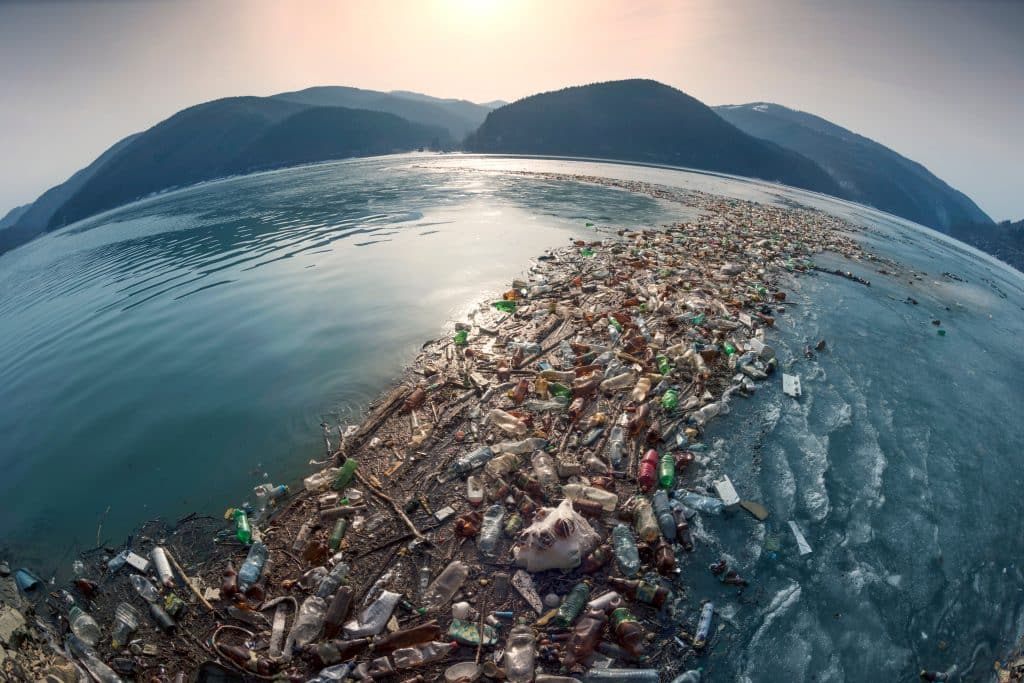
On average per year, about 20 million metric tons of plastic result in being in the environment.
Plastic that is no longer used ends up in landfills and the environment since it takes a long time to decompose. By 2050, it is estimated that there will be more plastic than fish in the ocean.
In addition, plastic is harmful to our health as well. These bottles contain microplastics, which if in our bodies could harm our digestive, reproductive, and respiratory system. In addition, microplastics might potentially be responsible for colon and lung cancer.
Because of this, one key thing to keep in mind is not using plastics as much. While it is practically impossible to escape plastic, here are a few things that can be done to help:
Do not use plastic water bottles if possible.
On average, about 1.3 million plastic water bottles are used every day. These bottles start to degrade after repeated use, which releases microplastics. Since they also do not decompose until 450 years after they were made, tossed bottles can end up in nature, damaging the ecosystem, atmosphere, plants, and animals.
An easy solution to this is simply don’t buy plastic water bottles. Instead, just use a water bottle at home. More likely than not, you probably already have one. In fact, about 71% of Americans drink both from plastic and refillable water bottles. Doing this can also help you save a lot of money. On average, drinking 8 glasses of water per day costs about $0.49 per year, but doing the same for plastic water bottles costs about $1,400.
Don’t use plastic bags as storage.
Plastic bags are also incredibly harmful, however, there might not be much you can do about it if your grocery store only has plastic bags and you need to carry a lot of things.
You can however, control how you store and save food and other resources at home.
Opt for using a glass container if possible when packing your lunch or putting food away in the fridge. Glass is a sustainable material and can be used multiple times, meaning you could save some more money by using a few jars consistently instead of continuing to buy more and more plastic bags.
Additionally, when getting glass jars from the grocery store (such as pickle jars), washing and reusing them after original use might be a good idea as it can save money from purchasing other jars and containers.
Will this really help?
The world is a big place and climate change is an enormous problem. You might feel as if these changes won’t do anything, or won’t make any big difference in the world.
To be fair though, nobody, not even the biggest activist or the richest person on Earth would be capable of solving this issue.
Not even Jane Goodall.
Maybe, however, the point of doing this isn’t to save the world, or make the biggest difference towards helping climate change.
What matters most, is not one person doing all of the work to solve this problem, but that everyone is doing a small part. The results of everyone doing something to help stop climate change is where we will see the biggest results.
Jane Goodall agrees, stating,
“if you think globally you become filled with gloom. But if you take a little piece of the whole picture: my piece, our piece, this is what i can do here, I’m making a difference, and ‘hi wow! They’re making a difference over there! And so are they! And so are they!’ and so gradually, the pieces get filled in, and the world is a better place.”
Climate change cannot be blamed on one person. We are all actively contributing to the detriment of our planet. And while the polar opposite, perhaps instead of relying on a few people who have the money and resources to solve the problem, we can all collectively work towards making the world a more sustainable place for future generations.