Have you ever gone somewhere exciting and felt the urge to pull out your phone before you even had a chance to take it all in? Whether it’s a vacation or just a night out with friends, many of us reach for our phones to document the moment before it passes.
As Gen Z, we have grown up with technology and social media in our hands. It is normal for us to take photos and videos of moments we want to remember forever.
Not only do we record everything through our phone cameras, but we also screen record or screenshot memories that happen in our phones. Whether through texts, live streams, or FaceTime calls, we tend to over-document a lot of our lives.
For many of us, our whole lives are on our phones, and we share a lot of it on social media. We constantly search for the next photo opportunity to share with our followers.
This has led us to record a lot of our lives. It’s a second nature for Gen Z. We record something because we might want it later.
With storage upgrades, we are able to keep as many memories on our phones as we want, no matter how insignificant or ordinary they are.
However, documenting so much of our lives can be negative.
Why we document everything
Older generations always say to live in the moment and that we should spend less time on our phones or other technology.

For Gen Z, the idea of not documenting a moment can feel unnatural.
Our parents and grandparents documented their lives, too, but not in the same way. They may have filled photo albums with photos from birthday parties, family gatherings, holidays, and vacations. Many of those photos are candid and unposed because they were meant for actual memories and not intended to go on social media.
Today, a single weekend can fill our phone galleries with hundreds of photos and videos. We have access to a phone camera at all times, meaning we can record everything if we want.
Gen Z didn’t grow into social media later in life as millennials or older generations did. We already had it by the time we started forming memories.
Snapchat streaks were normal before we even understood what it meant to curate our lives. Instagram was the place to post your vacations, milestones, and friends. TikTok and YouTube became places where it was normal to film your everyday life, such as just running errands or getting ready for the day.
Naturally, documenting became part of how we experienced things.
A vacation wasn’t just a trip anymore; it was a photo dump. We were always looking out for photo-worthy locations to post. Even just hanging out with friends became a task of making sure you got photos or something usable to post later.
It was never a bad thing; it was just normal for us.
I think we feel the need to take photos and videos because we are scared that we won’t remember these moments, or we need proof that they happened.
We keep a digital diary of our lives so we never have to leave a memory behind.
The content mindset
Even when we aren’t trying to be content creators, sometimes we still think like one.
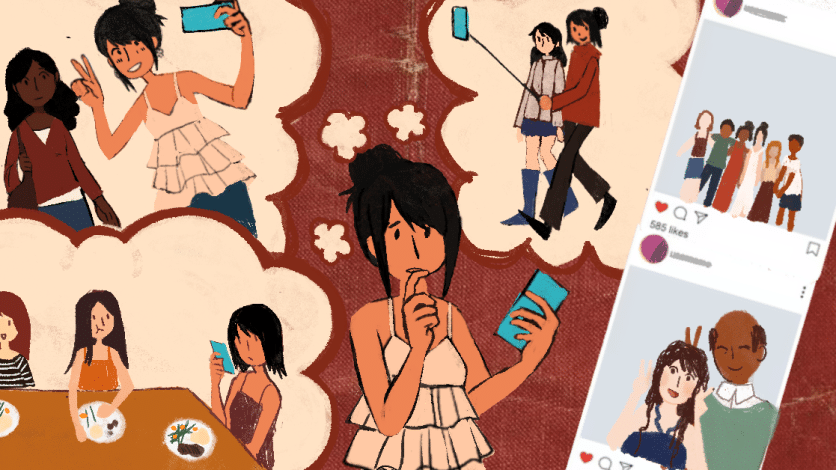
We pay attention to lighting, we move distracting things out of the background so it doesn’t ruin the shot, and we retake photos because the angles made us look funny.
Social media completely changes the meaning of documenting our lives. Sometimes we are filming things just for content, even if it isn’t something we care to remember later on.
As a teenager, my friends and I always posted random things on social media just to show we were out at a restaurant or at the mall. We documented many insignificant moments to post online.
Looking back, a lot of these posts were not things I wanted to remember later on. They were just proof I was doing something or was with somebody.
I wasted so much time posing for photos of just myself to go on Instagram. I spent hours on trips finding the perfect photo-worthy locations.
If I had not been so focused on documenting for social media, I would have spent more time creating meaningful memories.
Social media has created the feeling that you have to post what you are doing for it to matter.
We decide what we capture based on whether we think we might post it later or if it is something we might want to remember.
Unfortunately, the trade-off of this mindset is that we are not being fully present in the moment.
Are we experiencing things anymore?
There’s a strange contradiction to documenting everything. The more you try to hold on to the moment by recording it on your phone, the more you risk stepping outside of it and not creating a meaningful memory.
For example, when someone records the whole concert, they typically watch the show from their screen and do not fully immerse themselves in the experience. They might not sing or dance because they want to get the perfect shot.
The same thing happens with many other experiences. People film fireworks on their phones instead of watching them, or hold up their phones while someone is blowing out their birthday candles. While these recordings can be fun to look at, many of us never revisit them. They sit in our camera roll untouched, and the memories fade.
Sometimes people spend more time trying to find the perfect angle to capture the sunset rather than enjoying it. The moment is still there, and it’s happening, but your attention is split.
For some of these experiences, maybe it would be better if we put our phones away and just be present.
Psychologists have talked about how taking photos can help memories, but there’s also research showing that over-documenting can reduce how deeply we feel when taking in that experience.
In other words, you may remember what it looked like but not how it felt.
As a teenager, I remember being excited to go on a trip because I wanted to take tons of photos to post on social media. I wasn’t focused on the actual trip and memories themselves; I just thought it would look cool on my feed.
As I got older, I realized I needed to make a change in the way I documented my life. I wanted to be fully present and enjoy traveling or other experiences.
We can document our lives without having to put them on social media. When we record things for personal use only, we are less focused on making content and more on making memories.
How to shift away from that lifestyle
As we have gotten older, Gen Z is shifting how we document our lives.
There have been trends where some people switch to a flip phone or delete all social media because they realize how it affects their life negatively.
Most of Gen Z, however, is not fully rejecting social media. There is just a growing awareness of burnout from always performing a version of yourself online and trying to make your life look perfect.
We are realizing that not everything has to be posted, and not every memory has to be filmed.
People are shifting away from this habit in different ways:
- Putting their phone away during certain moments.
- Choosing to record one intentional video instead of 20 versions of the same thing.
- Posting after the fact instead of during the experience.
- Only documenting some memories.
- Taking mental notes instead of digital notes.
- Take photos on a disposable camera instead of their phone.
- Hiding the camera shortcut on their screen.
Practicing these habits can help you be fully present during special moments.
Shifting your mindset is the biggest tip to avoid over-documenting. Instead of thinking “I need to preserve every memory that I can,” you can switch to “I should be present in this moment and only take a photo if it is very important to me.”
Where does this leave us?
Gen Z is the first generation to grow up with the instinct to document everything. This means growing up inside social media.
Now, we’re starting to question it. We have to decide what parts of life are actually worth documenting. Not every moment needs a post, and some things are meant to exist quietly without an audience.
I think we will continue to go in this direction and be more intentional with what we share online.
In my opinion, documenting our lives is still important to do. There are special memories we will want proof of to share with our families later on. We may also want photos to reminisce on “the good days.”
You should not stop taking photos and videos of your life experiences or your loved ones. But there are changes we can make to only document what really matters to us.