Layered in rings, decked out in charms, and rarely seen without at least three necklaces, Gen Z is leading the over-accessorization fashion trend with confidence. After years of minimalist styles and neutral tones dominating the mainstream, maximalism is making a bold comeback. But this time, it’s different. From Labubus hanging off bags to stacked pants chains, today’s over-accessorization isn’t just about style—it’s about self-expression.
So what sparked this shift? And what does it mean for the wider fashion scene? Let’s break it down.
What is over-accessorization?
Over-accessorization is the intentional style choice of piling on accessories, and then adding some more. Think rings on every finger, three chains, and multiple charms on a pair of pants, and a bag with charms and whatever else can fit on it. It is a personal spin on maximalism. However, in this case, the accessories don’t enhance the outfit; they are the outfit.
Maximalism is not something new. The mainstream has seen this style in the 1980s and the early 2000s, but now it is different.
History of maximalism
In the 80s, maximalism took the shape of huge clunky jewelry, bold color palettes and patterns, and belts over everything. Cheetah print, geometric patterns, and fishnets dominated this decade, showcasing what maximalism meant at the time. What is over-accessorization?
Celebrities like Madonna were maximalist icons of this time, wearing layered jewelry, teased hair, and lace gloves. Prince and David Bowie also contributed to the maximalist style by wearing gender-bending, over-the-top looks.
MTV also made a contribution to fashion throughout the 80s by turning music videos into a fashion runway, showcasing more is more.
The 1980s maximalist style wasn’t just about aesthetics; it was also about self-expression, rebellion, and status.

As the 1990s came, a more minimal style was adopted by the mainstream, and the maximalist style was gone until the turn of the century.
Entering the 2000s, the maximalist trend was brought back, but in a new way. Rhinestones, metallics, and glitter were seen everywhere. Brands like Juicy Couture and Miss Me were extremely popularized during the time and fit right into the maximalist style. Layering clothes was also very popular; wearing skirts over jeans or tank tops over shirts were some of the most common layering pieces.
Celebrities like Gwen Stefani, Britany Spears, and Paris Hilton defined the decade with loud prints and bold styles.
Y2K maximalism is something to be remembered, and the rebirth of it in the past few years has contributed to modern maximalism.
Just like the transition from the 80s to the 90s, the transition from the 2000s to the 2010s, a more minimal style was adopted again.
Transitioning away from the minimal style of the 2010s is where we begin to talk about modern maximalism in the form of over-accessorization.
What maximalist fashion looks like in 2025
Over-accessorization is all about personalization and self-expression. No two outfits are the same, and that is the whole point. There is no right or wrong way to participate in over-accessorization. This modern maximalism takes many shapes and forms.
Let’s get into what some of those forms look like.
Over-accessorized jewelry
Jewelry is one of the most noticeable and defined pieces of this trend. Rings on every finger and up to the knuckle, 20 bracelets, a watch on one wrist, and 10 necklaces are just some of the ways jewelry is used in this style. It is not about having everything match and fall into place perfectly. It is about storytelling and personalization.
Mixing modern with vintage, hand-made with designer, and over-accessorizing jewelry has no definition. It can be all silver, all gold, or a mixture of both. Boho, Y2k, gothic, and punk are some of the most prevalent jewelry styles seen in over-accessorization.
Adding personalized pieces from Zoe Lev helps ground these bold layers with a touch of individual meaning. This focus on high-quality customization ensures your maximalist stack feels intentional.
From here, the trend spills over into bags, pants, and even headphones. Over-accessorization turns every piece of an outfit into a statement.
Over-accessorized pants
But next, let’s talk about over-accessorizing pants. From pant chains, charms, and pins, these elements are making pants a canvas for more self-expression. We are seeing patches and carabiners added as intentional design pieces. Whether it’s denim, cargo pants, or sweatpants, the base doesn’t matter as much as what is hanging off of it. Belts are another staple element of over-accessorized pants. Studded belts, western belts, and chain belts are some of the most popular looks in this trend. Pants charms are also a big part of this trend. Carabiners serve both function and style, often clipped to belt loops with car keys and charms hanging from them. Labubus aren’t just figurines—they also appear on pants, adding flair in unexpected places.
But now let’s get into one of the most defined and unique parts of this trend: the bags.
Over-accessorized bags
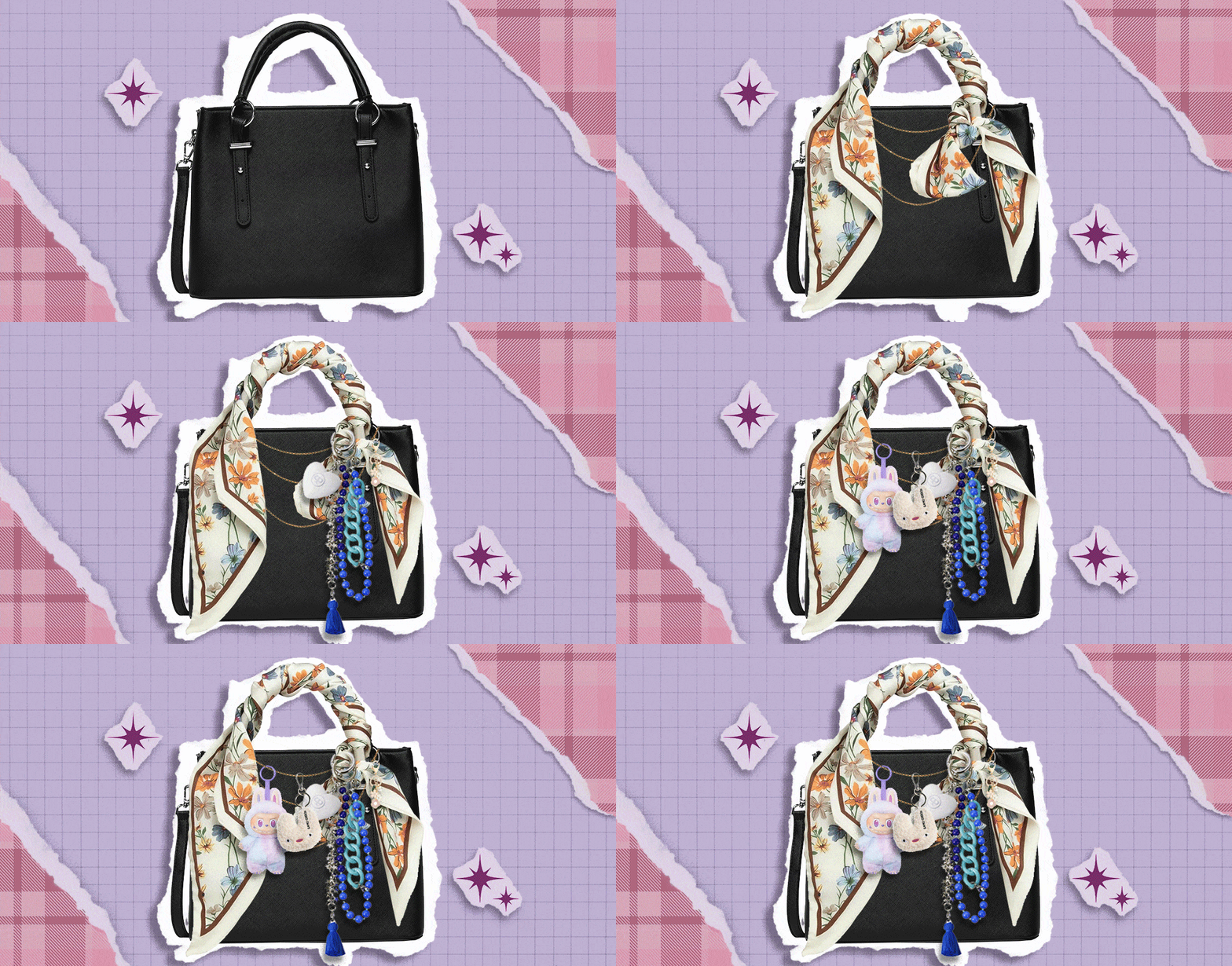
In the world of over-accessorization, bags are not just functional; they are a focal point. Just like jewelry and pants, there is a defined look to bags. They are all about personalizing them and adding what is important to you. Chains, charms, pins– there is nothing that is off the table when it comes to accessorizing bags. Bags have turned into a statement piece of outfits, but in a different way than before. It is not about who made the bag or where it came from. What matters is how you made it yours and created something personal to you.
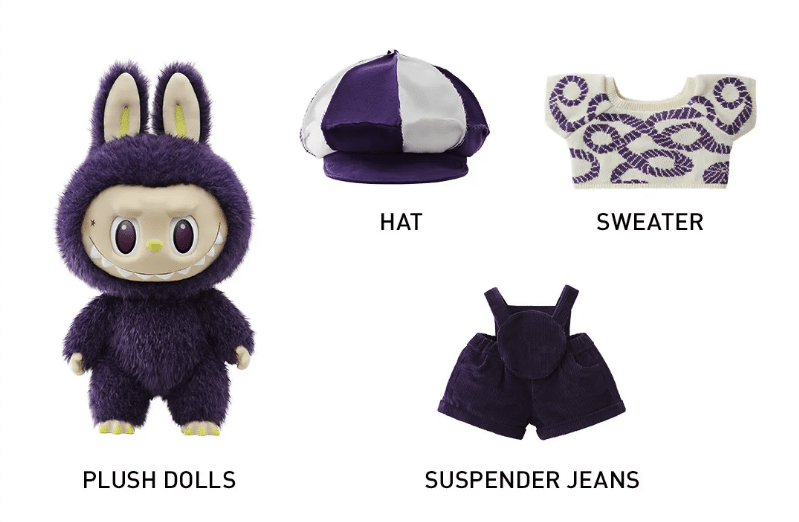
While there is no definition of what your bag has to look like, there is one trend that has taken over. That trend is Labubus. These little stuffed dolls encapsulate what this trend is about. Something small that adds a lot of style and sticks out, deemed as a toy, drawing the line nowhere.
Now that we have defined what this trend looks like, we need to discuss where it came from.
The rise of over-accessorization
It is hard to pinpoint exactly where this trend came from or where it started. But one universal application to fashion is a pendulum. The fashion pendulum means what’s deemed in or out right now was also in or out at some point. For example, take skinny jeans versus baggy jeans. In the 90s and 2000s, baggy jeans were what was hot, but after that, the pendulum swung to the other side, and skinny jeans were in. And now baggy jeans are back in. This can also be applied to minimal versus maximal style. And in this case, over-accessorization. We are currently coming out of a more minimal style, with things like “clean girl” aesthetics dominating the mainstream. And like most things in fashion, the pendulum swung the other way. Which leaves us where we are right now. This trend is not permanent; eventually, the mainstream will fall somewhere else.
The pendulum is one reason for this shift in the mainstream, but there is another cause. That other cause is something I see referred to as the “2020 aesthetic“. This style was especially popular amongst Gen Z. Seen most often on TikTok during the COVID-19 pandemic, people were dressing in bright colors and accessorizing heavily. Personalization was also a cornerstone of this aesthetic; people began making everyday items special.
The influence of the “2020 aesthetic” and the fashion pendulum, set us up perfectly to see over-accessorization today.
While I believe there are a lot of good things to take away from this trend, there are also some concerns.
Too much of a good thing?
With maximalism comes concerns of over-consumption. While there is a huge market for vintage and second-hand clothing and jewelry, we still have issues with fast fashion and environmental impacts. More being more also comes with walking the fine line of buying and consuming without true purpose. It is up to us as individuals to be conscious buyers and participate in sustainable consumption practices. Feeling like everything you wear has to be accessorized a slippery slope. It can lead to over-consumption and waste.
There are a lot of great things coming out of this trend, however. One of the most positive, in my opinion, is people trying to personalize their clothing. This is super beneficial for individuals as well as the environment. Repurposing items or garments is one way we can participate in mindful consumption. For example, taking a broken necklace that was purposeless before and adding it to your bag. Using an unworn bandana in the back of your closet and adding it to your outfit. Adding patches of old denim to your jeans. These are just a few of the endless ways that over-accessorization can be sustainable and beneficial.
This trend does not seem to be going anywhere for the time being. There are lots of upsides, but still some concerns. In my opinion, it is beautiful to see people expressing themselves through clothing and personalizing their wardrobes.
But what do you think? Is over-accessorization a healthy step forward in self-expression, or is it contributing to over-consuming? Either way, the trend isn’t slowing down—and it’s clear Gen Z is making fashion personal again.