Every year, the Met Gala arrives wrapped in the same language. Spectacle. Excess. Camp. Chaos. People rank looks before the carpet is even over, tweet “nobody followed the theme,” then spend the rest of the week debating whether fashion deserves to be taken seriously in the first place.
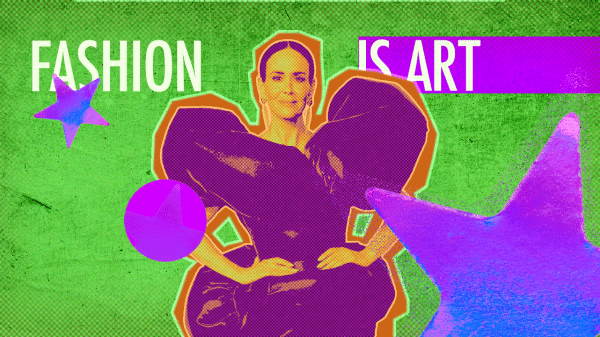
This year’s theme reopened a conversation fashion circles never really stop having: is fashion art?
Other art mediums are not challenged in this way. People don’t interrogate architecture because developers sell buildings commercially. Film studios mass-produce movies yet still maintain artistic legitimacy. Music dominates streaming platforms and continues to carry emotional and intellectual weight. Fashion, though, occupies this strange cultural middle ground where people obsess over it while pretending it means nothing.
It begins when fashion behaves too much like art: art disturbs, art exaggerates, art communicates emotion before explanation arrives. Fashion does this constantly—which is precisely why people react so emotionally to clothing in the first place. And why fashion embarrasses people in a way that painting or film never quite does.
The body is not treated like a gallery wall.
Paintings hang safely on walls. Novels live hidden inside books. Fashion walks directly into public space attached to actual bodies. Discussions about clothing quickly become discussions about beauty, gender, desirability, status, and self-worth—whether people intend this or not.
Historically, fashion has been tied to femininity and decoration. People consume beauty endlessly while refusing to grant it intellectual seriousness. Once something becomes pleasurable, emotional, decorative, or associated with vanity, critics suddenly struggle to view it as conceptually meaningful.
Clothing immediately exposes the wearer’s emotional interiority—before the wearer has authorized the translation. Desire appears there. Aspiration too. Insecurity, fantasy, loneliness, class performance, self-perception—all legible to others before the person has consciously composed them. This is what makes fashion so strange as an art form: participation in it is largely involuntary. People dress, and in dressing, they make expressive decisions they would not always call their own. But the artistic instinct is already at work; it just hasn’t been claimed yet.
If this is true—if the artistic instinct operates unconsciously in dress—then fashion is not a trivial choice layered on top of living—it is woven into the fabric of how people experience and present existence. Philosophers built entire schools of thought around beauty. Color changes mood. Lighting reshapes memory. Sound alters perception.

Clothing influences both how people move through the world and how the world responds to them. The fact that this happens without full conscious awareness doesn’t diminish it, but deepens it entirely. Fashion belongs inside that philosophical conversation, whether institutions approve of it or not.
Nobody cries over something they believe means nothing.
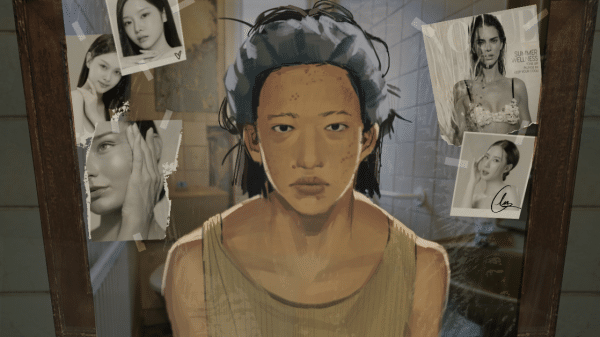
People claim clothes do not matter. Then they stand frozen in front of mirrors before seeing someone they used to love. A woman chops off her hair after heartbreak and suddenly feels capable of breathing again. Someone redesigns their apartment after a depressive episode because the old room carries too much emotional residue. Humans attach enormous meaning to aesthetics, then act embarrassed about it afterward.
At some point, the performance collapses. People care about beauty too deeply, too emotionally, too instinctively to register fashion as simply a superficiality.
Memory clings to objects. Clothing carries memory especially well because people move through life inside it. A winter attaches itself to a coat. Someone remembers an entire relationship through one perfume. Years later, the scent drifts through the air and suddenly opens a locked room in the chest. I don’t know anyone who experiences these emotional moments and genuinely believes aesthetics mean nothing.
Even grief alters aesthetics. Loss changes how people dress. Heartbreak shifts silhouettes, colors, makeup, and even posture. During transitional periods, many people change externally before they fully understand what has changed internally. The visual transformation offers something tangible to hold, particularly when the emotional transformation still feels abstract.
Instead of announcing, “I am constructing identity through aesthetics,” someone changes outfits six times because one version of the self feels too fragile while another feels dishonest.
That tension matters more than people admit. It is, in fact, the same tension at the center of any serious creative act—the gap between what one wants to express and what one can bear to show. That people experience it while getting dressed, without recognizing it as such, is not evidence that fashion is shallow. It is evidence of how naturally it does the work of art.
The algorithm packaged the instinct and sold it back.
Every style now arrives pre-labeled and ready for consumption. Algorithms transform emotional texture into branding almost instantly.
Someone is still figuring out who they are, and the internet has already named it, tagged it, and populated a shopping list beneath it. The feeling comes first: a pull toward something new. And before it has been lived in or understood, it has become an aesthetic category with a target demographic.
Meanwhile, the brands and price points attached to that category do their own work. Wearing the wrong version (the fast-fashion approximation instead of the original) is immediately read as a class signal. The emotional interior that clothing always expresses becomes a legibility test. What started as a private negotiation ends as a public classification.
Consumer culture exploits that gap. Brands continually convince people that identity can be purchased outright, and the manipulation works precisely because the emotional need beneath it remains real. Humans need symbols to hold feelings. Endless aesthetic consumption offers the symbol while hollowing out the intimacy, which only deepens the need and accelerates the consumption.
Something important disappears in that process. Users often build visual identities faster than they build actual selves.
The performative male is one clear example: someone assembles the aesthetic of confidence, taste, and desirability because the algorithm confirmed it works. The clothing is perfectly legible—it just has no interior. The tragedy isn’t that it looks good; it’s that it was never really tried on.
What do you keep in the back of the closet?
Still, the instinct underneath remains deeply human. People continue romanticizing life constantly; the language simply changes every few months. Underneath the trend forecasting sits the same ancient desire: humans want life to feel textured. Before seeing someone they love, people spend extra time getting dressed because anticipation deserves atmosphere.
Research on emotional regulation consistently shows that sensory environments influence mood and perception. Lighting changes one’s emotional state. Scent alters memory recall. Clothing reshapes confidence and self-perception. Certain outfits genuinely make people feel more like themselves because identity never exists purely internally. Humans experience the self physically, socially, and visually. Fashion matters because embodiment matters.
Somewhere in your closet hangs an item you cannot throw away. Maybe the fabric faded years ago. The fit might’ve stopped working long ago, too. Still, you keep it—because getting rid of it feels strangely similar to erasing evidence that a former version of you once existed.
Clothing absorbs emotional residue in a way that photographs don’t quite accomplish—it was present on the body, moved with it, carried its temperature. Before difficult conversations, people reach instinctively for outfits that make them feel protected. Before joyful moments, people dress toward expansion.
That truth explains why fashion conversations always become larger than clothing itself. When people say they want to “find their style,” they often mean they want to recognize themselves more clearly. Style, at its most honest, is not about looking a certain way. It is about finally feeling legible—to others, and more importantly, to yourself.
The red carpet was never the point.
The Met Gala did not invent fashion as art. It simply placed the instinct under brighter lighting.
Celebrities walk the museum steps wrapped in symbolism and spectacle while ordinary people perform smaller versions of those same rituals every single day. Birthday dresses. Funeral outfits. Graduation shoes. Lucky rings before interviews. Tiny, aesthetic ceremonies for emotionally significant moments.
Fashion becomes art whenever it carries emotional truth instead of functioning purely as consumption. Sometimes designers achieve that truth through couture. Sometimes ordinary people achieve it in bedroom mirrors while trying to dress themselves into the next chapter of their lives.
Nobody wants life to feel emotionally flat. People want texture. Symbolism. Recognition. They want to look at their own lives and feel something looking back.
That instinct has always belonged to art.