Wellbeing has remained one of the most influential and profitable lifestyle industries in 2025, shaping how people eat, move, work, and cope. From social media feeds to workplace policies, wellness language has framed everyday life. It offers solutions to stress, burnout, anxiety, and declining trust in health information online.
This year’s dominant trends reveal an apparent tension between genuine care and commercialisation. Some practices addressed real needs, helping individuals feel calmer, healthier, and more grounded.
Others were supposed to be impractical, misleading, or quietly absurd. This exposes how easily well-being can slide into performance. Looking back at the year’s most visible wellness trends offers insight not only into health culture but also into the anxieties shaping modern life.
The ones that actually worked
Nervous-system regulation goes mainstream
One of the most visible and effective shifts of 2025 was the mainstreaming of nervous-system regulation. Practices once confined to therapy rooms or trauma-informed spaces, such as breathwork, grounding techniques, and somatic awareness, entered everyday conversation.
Unlike many wellness fads, this trend resonated because it met people where they were. With stress levels high and attention spans fractured by constant digital stimulation, simple tools that helped calm the body felt practical rather than aspirational.
Importantly, many of these practices were free, low-effort, and backed by psychological research. This is a rarity in influencer-led wellness culture.
Eating fewer ultra-processed foods
Calls to reduce consumption of ultra-processed foods (UPF) gained momentum in 2025, driven by growing public awareness of links between diet, mental health, and long-term physical wellbeing.
Rather than promoting restrictive “clean eating,” much of the messaging focused on small, realistic shifts. For instance, cooking more at home, recognising food marketing tactics, and prioritising whole ingredients when possible.

For young adults navigating both financial pressure and health anxiety, this approach felt achievable. It also marked a subtle but important shift away from moralising food choices toward understanding structural issues. Such issues include affordability and time scarcity, which shape how people eat.
The return of running
Running experienced a noticeable resurgence in 2025, particularly among young adults seeking affordable, accessible ways to support both physical and mental health. Unlike boutique fitness trends or expensive wellness memberships, running requires little more than a pair of trainers and some time, making it appealing during a period marked by cost-of-living pressures.
Social media played a role in its popularity, but not in the hyper-competitive way seen with other fitness trends. Instead, running content was increasingly focused on community, consistency, and mental wellbeing rather than pace or aesthetics. Run clubs grew in popularity across cities. They offered social connection alongside movement. Additionally, many runners spoke openly about using running as a tool to manage anxiety, clear their minds, or establish a routine.
Importantly, the 2025 running trend moved away from the idea of constant self-optimisation. Walking-running hybrids, slower paces, and rest days were normalised, challenging the notion that exercise must be extreme to be effective. For many, running worked precisely because it was simple, flexible, and adaptable. This reinforced a broader shift toward sustainable, realistic wellbeing rather than performative fitness.
Reduced alcohol consumption
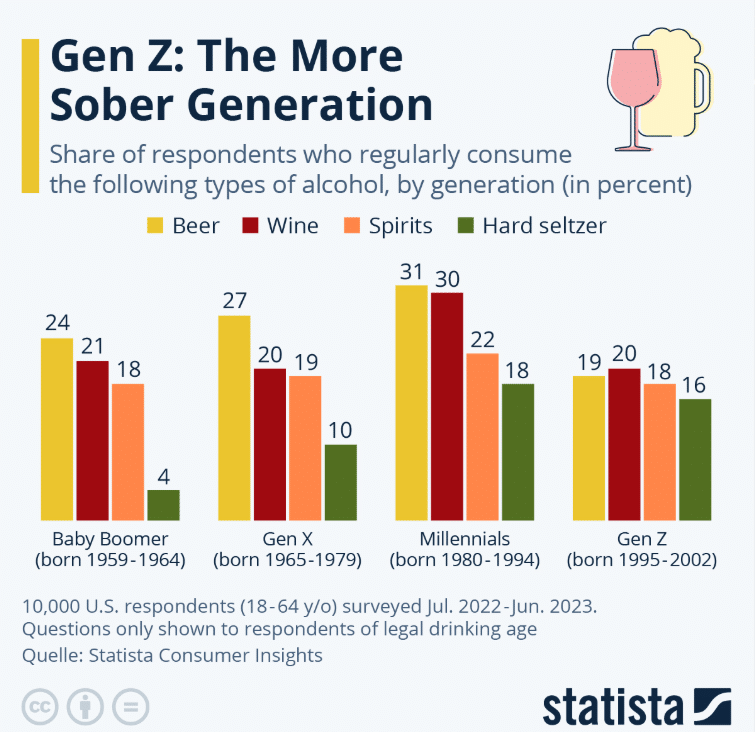
The continued rise of sober curiosity proved less like a trend and more like a cultural recalibration.
Rather than total abstinence, many people experimented with drinking less. They questioned social norms around alcohol and prioritised mental clarity over hangovers.
What made this shift stick was its flexibility. Non-alcoholic options improved, social stigma softened, and the narrative moved away from willpower toward wellbeing. For many, drinking less wasn’t about self-denial, but about reclaiming energy, money, and emotional stability.
The ones that half-worked (with caveats)
AI-powered wellbeing apps
AI-driven mental health and wellbeing apps promised personalised support at scale, and for some users, they delivered. Mood tracking, guided reflections, and gentle reminders helped normalise emotional check-ins.
However, cracks quickly appeared. Over-reliance on algorithms raised concerns about data privacy, emotional oversimplification, and the gradual replacement of human care with automated reassurance. In particular, calorie-tracking apps that prescribe behaviour without medical or psychological oversight pose significant risks. Research has consistently linked such tools to disordered eating patterns, body dissatisfaction, and heightened anxiety, especially among young users.
For people already overwhelmed by digital life, adding yet another app to “manage” wellbeing often felt less supportive and more counterproductive.
Wearable health-tracking fatigue
Smart rings, watches, and sleep trackers have become increasingly sophisticated. They offer detailed insights into heart rate variability, sleep stages, and stress levels. Initially empowering, this constant self-surveillance soon led many users to burnout.
However, as sleep expert Tracy Hannigan shared with us, those devices can deepen anxiety and make us extremely self-aware, which actually hinders sleep.
When rest becomes another metric to optimise, wellbeing can become performance. By mid-year, a quiet backlash emerged: people choosing intuition over data, or abandoning wearables altogether.
The ones that did not stay with us
Extreme morning routines
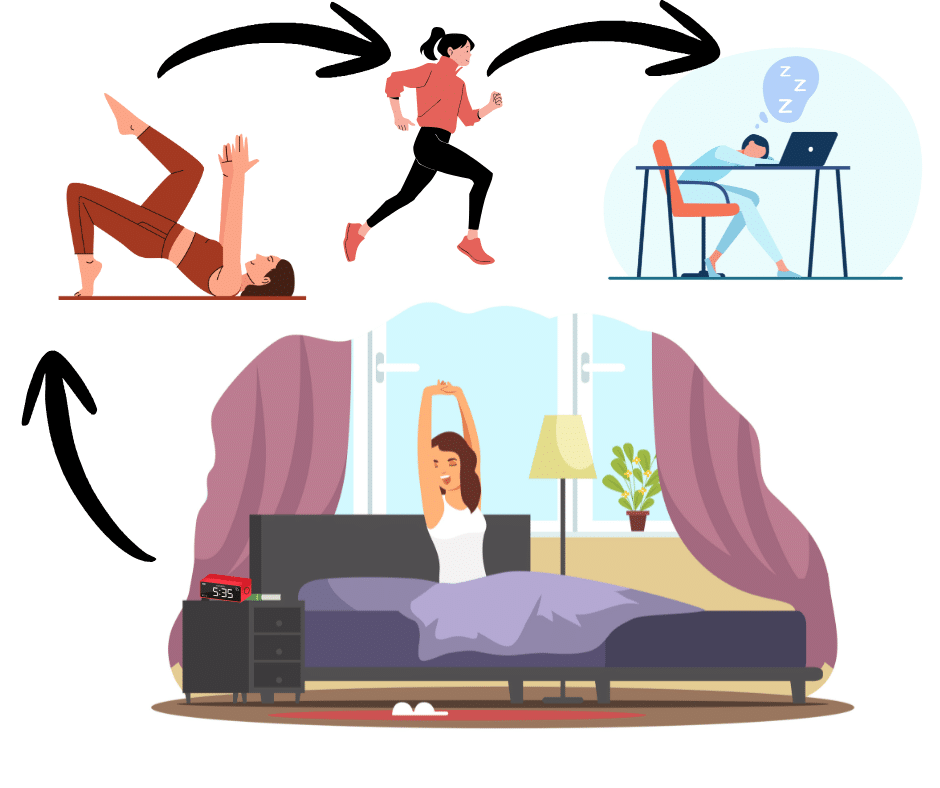
If early-2025 social media was to be believed, success depended on waking before dawn to journal, ice-bathe, meditate, stretch, and drink a suspiciously green beverage, all before breakfast. These routines were framed as universal solutions, promising productivity, clarity, and self-discipline.
In reality, they proved inaccessible, unrealistic, and often disconnected from genuine wellbeing. For shift workers, students, parents, or anyone already operating on limited energy, the pressure to “win the morning” felt more shaming than inspiring.
Crucially, people are not wired the same way. While some thrive in the early hours, others perform best in the evening or overnight. Productivity and health are shaped by individual chronotypes, lifestyles, and responsibilities. They are not shaped by a one-size-fits-all routine. The insistence on a “perfect” morning risks turning self-care into another benchmark for failure. Wellbeing should adapt to people, not the other way around.
Overcomplicated gut-health rules
A healthy gut is very important, and there is some basic information that can help you maintain a healthy balance.
Nevertheless, gut health became a fixation, and advice for maintaining became increasingly convoluted. Avoid this food; eat that one only on Tuesdays; and combine supplements in precise order. What began as legitimate science quickly spiralled into confusion.
Rather than improving health, hyper-fixation on digestion fuelled anxiety and disordered eating patterns. This highlights how easily wellness messaging can slip into harm when nuance is lost.
Pseudoscientific cortisol ‘hacks’
Perhaps the most unintentionally funny trend of the year was the demonisation of cortisol.
Influencers blamed it for everything from bloating to relationship problems, offering “hacks” that oversimplified a complex and essential hormone.
The irony? Stressing about cortisol likely raised cortisol levels. This trend became a case study in how misinformation thrives when scientific language is stripped of context and repackaged for clicks.
So what is the conclusion?
Looking back, the wellness trends of 2025 reveal less about health and more about collective anxiety. In uncertain times, people gravitate toward solutions that promise control, clarity, and relief, even when those solutions are impractical or exaggerated.
Yet the trends that endured shared a commonality: they were boring, evidence-based, and adaptable. Fewer rules. More realism. A recognition that wellbeing isn’t about performance.
As 2025 draws to a close and collective exhaustion begins to ease, it’s worth remembering that meaningful lifestyle change doesn’t need a perfect starting point. It is never too late to move toward healthier habits. If 2026 offers anything, let it be a fresh page, shaped by realism, compassion, and practices that actually fit real lives.