I asked over 200 people aged 18–35, and the majority of them admitted that they either lack sleep or struggle to get it.
One of them, Zoe 27 years old, shared “Sometimes you can be really tired, you had a busy day, but you just sit in bed for hours and you are not able to switch off mentally.” She’s not alone in feeling that way. We are restless and yet we rest less.
Stressful jobs, endless commitments, and restless minds keep them awake at night, leaving them exhausted the next day. But what’s really behind this sleep crisis? Are some of us truly born “morning birds” while others are destined to be “night owls”? And, most importantly, how can young adults regulate their sleep patterns in the busyness of everyday life?

Sleep in numbers
Let’s start with the science. Sleep isn’t one long stretch of rest — it’s made up of repeating cycles that last about 90 minutes each. We go through four to six of these cycles every night.
- Stage 0 (NREM): You’re technically awake, with your brain showing relaxed “alpha” rhythms.
- Stage 1 (NREM): Light sleep — the drifting-off stage, where you can still be woken easily.
- Stage 2 (NREM): Deeper sleep, marked by sleep spindles and K-complexes.
- Stages 3 & 4 (NREM): Also called “deep” or delta sleep, when your body repairs itself and your brain slows into deep-wave activity.
- REM sleep: About an hour to an hour and a half after you nod off, vivid dreaming begins. Your brain looks almost awake, but your body is paralysed — except for your eyes and breathing muscles.
Together, these stages repeat through the night, gradually shifting to include more REM sleep in later cycles.
Think of sleep like charging your phone. The first stages of NREM are the slow trickle charge, laying the foundation for subsequent stages. Deep sleep is the fast charge that restores your body and brain. REM is like a software update — it sorts, refreshes, and boosts memory. Without all the stages, your battery never hits 100%.
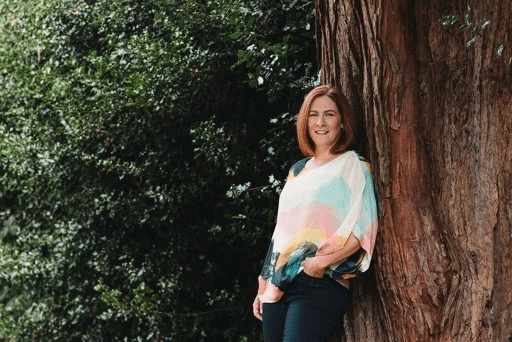
To better understand why we struggle with sleep and how to improve it, I spoke to Tracy Hannigan, a sleep expert and therapist for adults with insomnia. She shared her insights on common sleep myths and practical strategies for getting better rest.
Sleep myths debunked
Sleep advice is everywhere — but not all of it’s true. Some common beliefs can do more harm than good:

- Hannigan’s favourite myth to debunk is the idea that “a watch can tell you how well you slept”. Sleep trackers can offer rough estimates, but they mostly rely on movement or heart rate rather than brain activity, so the results aren’t always accurate. Ultimately, how rested and alert you feel is a far better measure of sleep quality than a number on your wrist.
- “I can catch up on sleep at the weekend.” Oversleeping can further disrupt your circadian rhythm.
- “Everyone needs eight hours.” Needs vary — some people feel rested on seven hours, while others need nine. Quality matters as much as quantity.
- “I’ll just scroll one more video and then fall asleep.” The problem isn’t only the screen — it’s the emotional stimulation that it provides. Endless feeds, videos, and messages keep your brain alert when it should be winding down.
- “Lying in bed awake will help me drift off.” Tossing and turning builds anxiety, which only prevents sleep.
Night owls vs. early birds
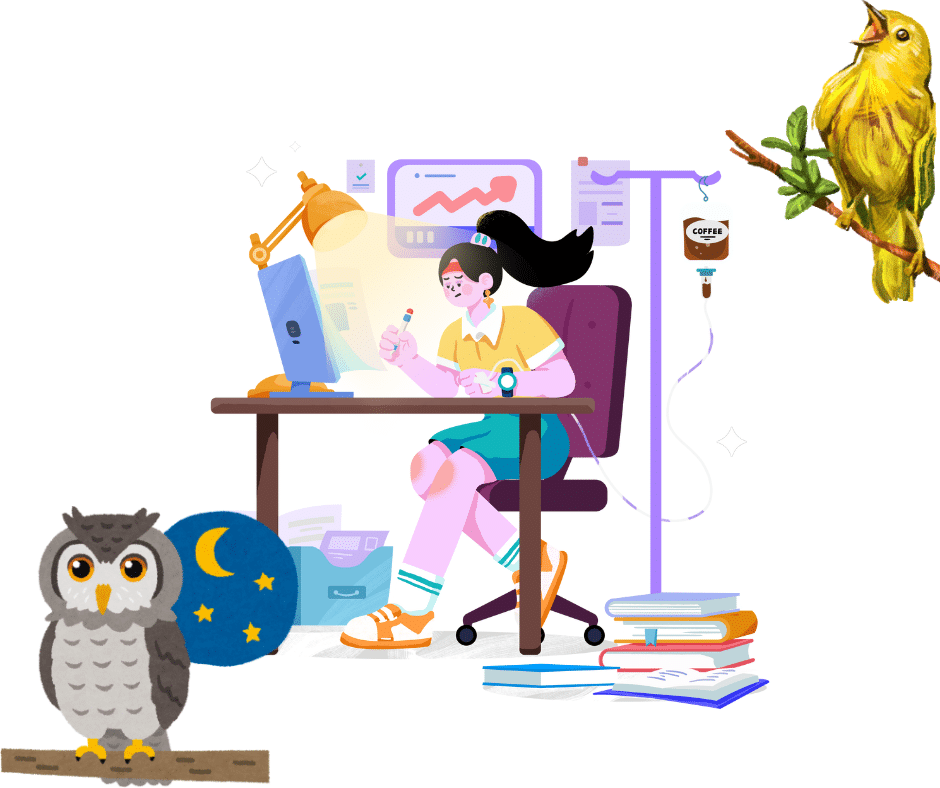
Not everyone’s body clock ticks the same way. Some people are naturally “larks” — up early, most productive in the morning, and winding down by evening. Others are “owls,” whose brains come alive later in the day and who struggle with early starts. These chronotypes are shaped by biology and genetics, not just lifestyle.
Tracy points out that society tends to celebrate early birds as motivated and disciplined, while night owls are unfairly labelled as lazy. In reality, she explains, these differences are biological — and many night owls thrive when they work to their natural rhythm, often through self-employment or entrepreneurship.
For young adults, there’s an added twist: research shows that teenagers and people in their early twenties often shift toward being more night-oriented. Staying up late feels natural, but early lectures or work shifts feel brutal. The problem is that society still runs on an early-bird schedule, leaving many young people in a constant state of “social jet lag.”
The pressures of modern life
Our use of social media and constant access to information only adds fuel to the fire. A UK study of 1,043 participants aged 18–30 found that smartphone addiction was significantly associated with poorer sleep quality — 68.7% of those classed as addicted reported poor sleep, compared with 57.1% of non-addicted users.
A further research now in the US shows that it’s not just how much you use social media — it’s how emotionally invested you are. In one study, emotional investment in social media (how much you care about your presence, comparisons, and engagement) predicted worse sleep more strongly than just the number of hours spent online.
These findings suggest that social media can trigger a cascade of effects — increased comparing, rumination, and mental arousal just when your brain should be winding down — which then interferes with sleep.
Hannigan’s top 7 sleep tips
So what can Zoe — and so many others struggling with restless nights — actually do to improve their sleep? Tracy Hannigan shared these 7 tips to help you get better sleep:
- Know what kind of sleep problem you have. Insomnia isn’t the same as other disorders (like sleep apnea). Getting assessed first is crucial, as using the wrong techniques can exacerbate the issue.
- Don’t try too hard to sleep. “The number one thing that gets in the way of good sleep is trying to sleep,” said Hannigan.
- Wake up at the same time every day. The expert adds “One of the most important behavioural things people can do is to get up at the same time every day, no matter how badly they’ve slept.”
- Avoid clock-watching and trackers. Watches and apps aren’t very accurate and often create anxiety. Checking the time at night only signals “danger” to your brain.
- Forget the ‘8 hours’ myth. Everyone’s needs differ. What matters is how you feel during the day — your energy, focus, and mood. Don’t let anxiety about the number of hours you slept fuel further sleep problems.
- Create flexible, enjoyable evenings. Do calming activities you enjoy — reading, puzzles, crafts. Don’t rely on one “magic” ritual.
- Steer clear of quick fixes. Pills, melatonin, or miracle products rarely solve the root problem. Evidence-based approaches, such as CBT-I, are safer and more effective.
The bottom line
Conclusion
In the end, our generation’s sleeplessness isn’t just about late nights or busy schedules — it’s about the pressures of living in an always-on world. Between social media, constant comparisons, and the weight of responsibilities, it’s no wonder so many young adults feel too wired to switch off.
As sleep expert Hannigan puts it:
“We are bombarded with so much information and misinformation — about things we should care about, but often can’t influence. That can make people really anxious… and it’s fuelling an epidemic of insomnia.”
Her words are a reminder that good sleep isn’t just about habits, but also about protecting our minds from overload. While there may not be a single fix, learning to listen to our bodies, setting healthy boundaries, and treating rest as essential — rather than optional — might be the first step toward finally recharging our empty tanks.