


The relationship between Gen Z and AA is toxic and alienating. Changes must be made to account for the growth and differences that this generation faces.
Loving someone with addiction forces you to confront not only their pain, but the systems meant to help them. I love someone who struggles with problem drinking… well, alcoholism and drugs.
Chances are, most of us do, and yet the only option for recovery that I’ve ever heard of was from watching Shameless when I was 12 years old, and it was Alcoholics Anonymous (AA). Most people in the world only know about AA from the media.
Trying to break the cycle
In my experience, as someone who identifies as a multi-racial woman in her early 20s, I really found AA to be troubling. I believe the generation we’re born into shapes how we view recovery and pursue healing. Addiction treatment should reflect that reality. I don’t think AA serves as the best option—especially for Gen Z, a far more diverse generation than those that came before it.
Interdisciplinary scholar, queer and addiction recovery ally, Dr. Danielle Bacibianco, aided in researching the history of addiction recovery rhetoric and community literacy. The sinister history of Alcoholics Anonymous was uncovered.
The awareness of its white-male, exclusive, patriarchal, bordering on conservative Christianness might give people more of an opportunity to make unbiased choices on best treatment plans that work best for them.
Across disciplines and throughout news and media, society often markets Alcoholics Anonymous as the only option. I believe that an individualized model, with mental health support, family and friend relationships, and practices like yoga and meditation, roots itself in addressing emotional struggles, familial dynamics, trauma, and community building. Recovery should be collaborative.
Holding out for a miracle
Before taking a whole semester to research said struggle, I began to feel hopeless when the people I cared about detested my suggestions to attend an open AA meeting. For instance, my brother, who almost overdosed two years ago.

The night I found him in his car, high on drugs, drunk on liquor, the summer air became so thick it wrapped around my neck, blocking any air passage to breathe. I had arrived at a place I had never attended; instead of home, I had arrived at my brother, or some fragmented version of him.
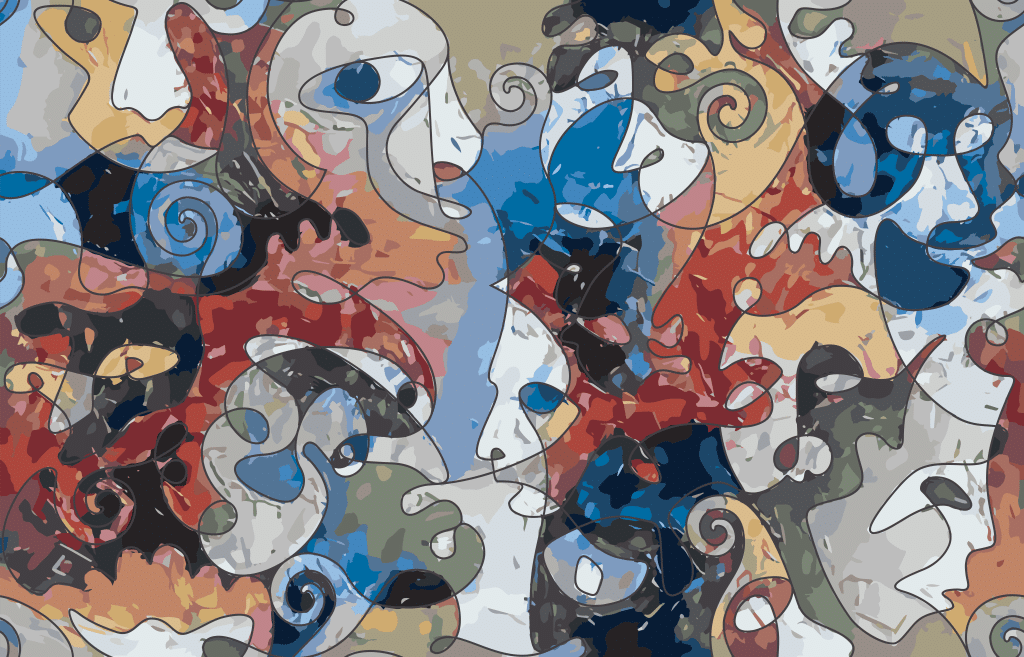
When you see someone you love so incoherent, night becomes day. It is so dark they don’t see you–they never do! But you see them. You become the lightning bug in a dark tunnel; a Picasso painting in real time.
The details leading up to seeing him intoxicated are blurry. Everything that night seemed to blend so much together that it ultimately disappeared entirely, including the smile on my face. I felt the crease of my frown lines slowly undo itself, muscle by muscle, vertebrae by vertebrae, until the curve of my mouth was palpable only by reflex.
Where had I been walking from? The store? No, surely it would’ve been closed by then. My best friend’s house, who used to live down the block from me? Her aunt still lived there, but why would she be visiting so late? Was it a weekend? Yes, yes, it was. Ok, good, at least I remember that.
At least I knew the difference between day vs. night; sober vs. not.
Usually, my mood would stick beside and despite his condition. That quiet fact hurt too deeply within me to ever say so (even now). We were bridges away from one another; a couple of feet felt like an ocean when it came to us. I built it so. How else does a little girl get used to a hurricane, if not by ignoring it each time it nearly drowns her while she tries to understand it?
When you grow used to someone never being sober, their sobriety feels abnormal. At that point, you expect them to act as if the world has collapsed on them and them alone, their speech to slur like a water slide, and every corner of their underlying mental illnesses/traumas to spill out once drugs enter the mix. With no idea what to do, you start to do nothing.
I didn’t know how to help… I guess I never have. It’s not that I didn’t think of AA, it just seemed like such a ridiculous option for my circumstances.
The first and only time I mentioned an AA meeting, he shut me down by saying, ‘I’m not going up in front of a bunch of strangers and telling them my business.’” He was adamant about not speaking to strangers. Once I reached my brother’s car that night, one hand on a half-working window, I became a whisper. Any pleas would have been as fleeting as the wind, barren by the time I opened my mouth anyway.
My fear that night, along with a whole semester’s worth of investigation, led me to historical facts that would force me to confront the origins of the only recovery model I thought existed. And through that and personal reflection, I realized that AA was not the best recovery option for Gen Z.
The story of AA: minorities had to include themselves
So, let’s start with the facts: Alcoholics Anonymous was created by these two white, middle-aged religious dudes, Bill Wilson and Dr. Bob Smith.
The importance doesn’t only fall on the identity of who created it, but also on the context of when it was created. Both men joined forces in 1935, at the height of the Eugenics movement, before almost any oppressed groups’ rights were won: 30 years BEFORE Jim Crow was dismantled, and only 10 years after women’s suffrage, not to mention various other forms of discrimination against people’s identities who do not fall within the box of the white male.
AA was originally an attempt to ‘save’ people from their sins so they could go to heaven. Correction —an attempt to help save white men.* 1935, remember? The program thrived on the idea that even one sip of liquor led to complete, utter damnation. Minorities: women, POC, and the LGBTQ+ community were not allowed to be saved.
That’s not to say AA never tried to include these marginalized groups. Bill Wilson would famously speak at prisons that were predominantly African American populated.
Several weeks after this one visit, two Black men at the prison came to an AA meeting in Manhattan, NY. There was an obvious negative reaction from its all-white group members. Wilson asked those objecting to the Black men’s presence, “…whether these men had the right to receive help getting sober?”
All the white men, including Dr. Bob, were ‘compromised’ by allowing Black people to attend, BUT only as guests and not as equals. Aw shucks, thanks for the inclusion, I guess? Wilson’s scary ass complied, convinced that racial equality would not be achieved in his lifetime.
Thankfully, he was wrong. In 1945, physician Dr. James Scott organized the first all-Black AA meeting. Because local churches refused to open their doors to Black attendees, he held it at a YMCA instead. Women later created their own 12-Step spaces during the 1970s in places like feminist bookstores.
Gen Z is diverse and not religious
This forced inclusion continues today, as meetings with religious or identity-based distinctions persist. Whether labeled as an “all women’s meeting,” an “all Black meeting,” an “all LGBTQ+ meeting,” or even an “all Black LGBTQ+ women’s meeting,” these divisions do not foster spaces where different cultures thrive. Instead, they appear diverse only at the surface level and ultimately reflect an ongoing discomfort with true diversity and a continuation of past divisions.
This reality can no longer hide behind rose-colored glasses, especially when Gen Z is the least religious and most racially diverse generation in U.S. history. However, Christel J. Manning, a religious sociologist, makes an important distinction: “Non-religious does not mean atheist.”
Because Gen Z is culturally diverse and comes from varying religious backgrounds, many are opting to define their own relationships with their at-home raised faiths—celebrating holidays for cultural reasons or attending churches, temples, synagogues, and other services sporadically and on their own terms. Others identify as “spiritual,” believing in a higher power, open interpretation.
Despite AA’s encouragement for any spiritual guidance, much of its literature still reflects its Protestant roots. In an era marked by growing diversity, the youth do not align with the structured religious implications.
I realize now that my brother, being a 26-year-old Black atheist male with trauma, mattered more than I ever cared to admit when it came to accessing help.
The G.O.A.T that is Kimberlé Crenshaw
American civil rights activist Kimberlé Crenshaw reminds me that intersectionality, the way someone’s social identities (like race, gender, class, sexuality, and disability) interact, creates unique experiences of discrimination, privilege, and oppression. Someone’s identity literally affects their safety, resources, and, in this context, recovery:
I laugh now thinking about what my brother’s reaction would’ve been like that night if I told him to ‘find God’ in front of a bunch of white people. Would I have snuck the church in before his 5th drink or after his 7th?
I eventually walked away from his car that solemn night. I walked until I wondered, how the hell did a dark-skinned man with locs drive home, drunk off his ass, past Clark, NJ, a heavily surveilled and historically known racist city? All while not getting pulled over. I counted the lucky stars he made it home safe.
Going undercover in AA
Now, I wouldn’t be a true journalist if I didn’t get my hands a little dirty. Last month, I witnessed firsthand how outdated treatment approaches and a lack of diversity affect people at an open online AA meeting.
The meeting was open to all: race, gender, age, and sexuality. The only ‘requirement’ was to be a “dork” about a movie you loved. Though it appeared inviting, it quickly became clear that most members were white, middle-aged men. The only women there were a middle-aged white woman and me, a 22-year-old mixed Black girl. I felt out of place.
The two male hosts remained pretty talkative until the woman began to cry. She was told to follow the 12 steps and that “everything was alright.” But maybe things weren’t alright, and wouldn’t be for a while.
Writer, critic, and researcher, Susan Sontag, argues that the healthiest way of being ill is the “most resistant to metaphoric thinking.” The truth, then, might’ve been exactly what that woman needed to hear:
Yes, you’re suffering; no, you’re not completely powerless, and you don’t have to admit that to recover. No, you’re not alright right now; yes, the clouds will eventually break and let the sun in.
I wish I had unmuted my mic and told her that. If you’re still not in the best place, know I am thinking of you, and I’m sorry I didn’t speak up.
Powerlessness and struggle should not be synonymous
The meeting centered around step one, the whole time: admitting powerlessness, and with that, surrendering to a god or guide. But even in my deepest struggle, I am not powerless. Not completely, anyway, despite feeling so.
The meeting also focused on outdated literature previously mentioned, like ‘The Big Book’, AA’s textbook, which has not undergone much change. I mean, there’s legit a section called “To Wives,” instructing women how to not tempt their husbands to drink:
“Try not to condemn your alcoholic husband no matter what he says or does…” Yikes.
After the meeting, it was time for me to face the music. Gen Z and AA do NOT go together really well. AA is not trauma-informed, nor does it feel inclusive of gender, sexuality, or intersectionality.
A few days after the meeting, I did some additional research and came across a qualitative study. The study was about how traditional 12-Step models don’t align with young adults’ common goals for: normalcy, identity beyond addiction, mental health treatment, and multidimensional care. I learned that AA members at times described these programs as “culty” and disconnected from their lived realities. That’s when it clicked.
Not a single person during the entirety of the meeting actually spoke about what was going on in their lives. They only spoke about being sick alcoholics. And they kept their stories on the story of AA. Recovery in that space felt robotic and linear.
LET EM COOK
I would never tell someone not to attend an AA meeting when I know it has saved so many lives. And I would never say, “just stop drinking,” when it’s embedded into everything in our society. All I’m trying to do, with my truth and my experience of AA, is bring awareness with hope for more effective approaches. Hope breeds change.
I’m also a girl hell-bent on discovering what could provide comfort to her brother, who almost overdosed that night . . . I didn’t find out until the next morning.
When he shakingly made his way into my room, he let me know that if his friend hadn’t shown up to stop him, he’s sure he would’ve overdosed. He may have lived to tell me the tale, but a part of me died that morning.
When someone I love is going through it, I am unreadable. To some, I seem okay, and to others, I look like I’m falling apart. I don’t have the answers, and that kills me. But I find an inclination of solace in knowledge. True healing must consider the whole of the person, not just their problem. All of them.
My brother is more than drugs. He is someone who started using to cope with gangs, dropping out of school, police brutality, family trauma, mental illness, and prison. I know my brother is also someone whose smile resurrects me. Someone whose mere existence demands so much presence that you become afraid of his possible absence, every. single. day.
If someone in your world is struggling with drinking or substance use in general, let’s stay curious together about what healing looks like beyond the textbook. Let’s cook.











JeetcityaustraliaPlay
February 24, 2026 at 5:22 pm
Interesting title. What specifically makes Gen Z and AA such a mismatch?