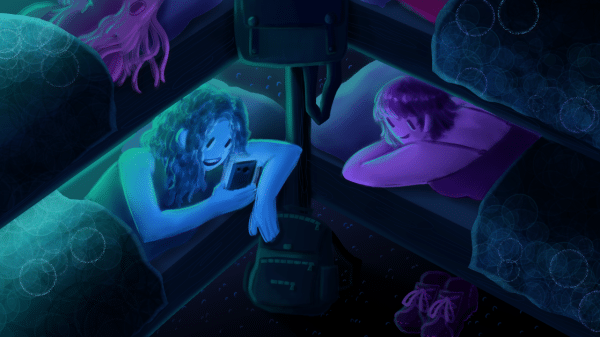


“You know, the first time I met you, I thought you were…” and that is where the conversation ends, or at least where I would like it to.
The inserted phrase is typically something of snark: I.e., I thought you were annoying, I thought you hated me, I thought you [insert adjective here]. Past first impressions, compared to what one thinks now, can lead to reflection on the current state of a relationship. You never know what someone’s reaction might be to, well, you.
Looking too closely into the history of a relationship isn’t the answer to figuring out what someone thinks of you. It’s scary, not knowing what’s to come in the future, or, in the worst outcome of things, how it’s going to end.
Baseline friendships are easy to maintain. You see each other a couple of times a week, brief passings; connecting just a step above acquaintances. As hangouts become more frequent, some might take the past into account. The playback of negative situations foil to how things are going with a new person.
In reality, no one knows the future. It may be hard to remind yourself of that.
But how do you keep that in mind?

Having some friends is a good start…
Going into college, some people may think that connections left at home will fade over the years, but that’s a choice. Staying in contact with people who bring you comfort and prioritizing familiarity gains momentum in proving that it is possible to trust and build new friendships, as well as maintain old ones.

When I first moved to college, I was terrified of others. I went to a small high school where everyone knew each other; my closest friends were and still are my coworkers. Branching out to a new community of 4,000 students was a lot compared to my high school student body (60 people). Pushing myself to go to pre-planned social events gave me the strength to talk to others and helped grow my sense of self in tandem.

Common piece of freshman advice: Everyone is trying to make friends, so don’t feel ashamed for trying to get some. But as you settle further into yourself, don’t kickstart your reassurance with the thought of what others are doing.
As adults, you’re always trying to find a common denominator in people while also learning about things you might have never heard of if you didn’t branch out. At the end of the day, you must rely on yourself. Wanting will inspire you, having will be a reminder.
It won’t always work the first time. The first person you meet may (or may not) be a future friend or foe. When navigating these ties, don’t limit yourself to talking to one group or person out of fear of finding no one else.
I stuck with a core group of people when I first moved into the freshman dorms. It was nice to be new, talk to people whom I haven’t met before, and broaden the spectrum of people I could connect with. Four years later, I talk to almost none of them. Change is constant, though you will find people who do stick by you.
Know yourself alone vs. yourself with others

There is a common fear among college students of doing things alone. Gravitating toward the majority of tasks being done in groups, until even eating alone feels odd to some, is a common event. Angela Haupt explores this phenomenon and advances the idea of self-fulfillment through independent tasks. To know what it feels like to be alone, not necessarily in a negative sense, but to get a feel of being the only one you can depend on creates positive growth in a person.
Constantly looking for your own satisfaction in others doesn’t grow friendships; more so, it diminishes them. Relying on yourself first and foremost strengthens how others rely on you. Building off of how you operate, a healthy relationship shouldn’t be sought out just for the sake of having one, as if it were a new accessory. Focusing on yourself before worrying about others promotes a longer-lasting connection.
When I find myself spiraling from the politics of friendship or just have been feeling really crowded with people in general, I walk. Granted, my school is in the middle of the city. It’s easy to get lost if you go far enough. I take myself through neighborhoods and train stations I haven’t been. Pass by restaurants I want to try or bookshops that I never knew were there.
Having that time alone to decompress serves as a reminder that doing things alone isn’t impossible. And as I graduate into adulthood, it may be more new new normal. That is not to say that I can’t do things with others, but making dinner for myself or figuring out my emotions can be a one-person job.
What he was scared of was not that maybe she was a creature who survived by drinking other people’s blood. No, it was that she might push him away.
John Ajvide Lindqvist, Let the Right One In
There’s no harm in trying

It’s easy to make friends in an environment where everyone is trying to connect. As years go by, meeting new people is a choice.
I met my close friend Stella by accident. Asking a stranger a question spiraled into the relationship we have now. It’s hard to imagine what life would be like if I didn’t get to talk to her; what could have been lost. Revisiting this topic, I asked her what the secret is to talking to new people.
You can always find at least one thing in common with someone, even if it’s just asking someone about their day. You can always build on it if you put in the effort to get to know them.
It’s easy to generate constant negative outcomes when talking to someone for the first time. A piece of advice I often say is: “I think we are thinking of ourselves too much.” Meaning, that in times of constant second-guessing, constant thinking of what someone else thinks of me, and if it tarnishes a relationship. You are never going to know, physically, what another person is thinking. So why waste time with it?
Remember who your friends are

People, by nature, are social. Communication is necessary in order for anything to happen in the world. Our brains send signals throughout the body, communicating and working so the day goes by smoothly.
It remains the same with little outside help.
Knowing who you are closest to and communicating it to them strengthens friendships, even if not said out in the open. Let your friends know you love them. And if you are like me and have trouble admitting sentences of that caliber, show it.