Hostel noun
“An inexpensive lodging facility for usually young travelers that typically has dormitory-style sleeping arrangements and sometimes offers meals and planned activities” (Merriam-Webster Dictionary)
If you’re reading this, then you’re probably planning your very own European adventure. Let me begin by saying: I’m jealous.
Lucky for you, instead of wallowing, I want to make sure you book the best possible accommodation to ensure maximum awesomeness. These are my 10 personal rules, which I’ve gathered from my past four years of Europe trips (solo and in groups), as a young woman on a budget.
1. Do. Your. Research.
Once upon a time, there was an impulsive nineteen-year-old who went on a last-minute trip to Copenhagen.
Unfortunately, there weren’t many accommodation options left, so she and her friends hastily booked a ‘fun’-looking option: a tent-style, co-ed hostel. It wasn’t until they arrived that she discovered they would be staying in one of twenty-plus tents lined up inside a building.
At least thirty people were sleeping in the same room, separated by nothing but tent flaps. There was minimal privacy, zero soundproofing, and in her tent was a smelly middle-aged man whom she could hear snoring from the other side of the building.
In that moment, as her nose hairs burned with the reek of BO and her ears rang with each snore, the impulsive nineteen-year-old learned a valuable lesson: never book a hostel without doing the research.
Know what you’re looking for and what you’re comfortable with, even if that puts you at odds with your traveling companions. And never book impulsively just because a place seems fun.


2. Use Hostelworld to Search but Not Necessarily to Book
When I’m looking for accommodations, I always start with Hostelworld for its extensive options and just how easy the website is to navigate.
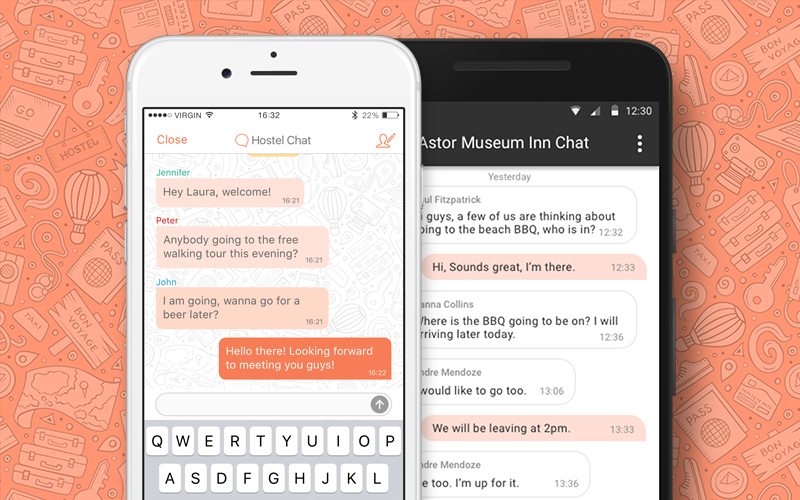
As a bonus, if you book with them, Hostelworld has an app of the same name, which provides chatrooms that connect you with other guests staying at the same hostel as you. Personally, I’ve never taken advantage of the app, but it’s there as an option to build friendships and go on group adventures if you’re interested.
However, booking with Hostelworld does come with its own fees, so I make sure to at least check the accommodation’s direct website or Booking.com to compare prices. Sometimes booking directly on the hostel’s website can get you free breakfast or other special amenities, so weigh your options.
3. Don’t knock Bed & Breakfasts
At the risk of sounding like a fifty-something-year-old Stepford wife with a styrofoam peanut personality husband, I want to introduce you to my favorite type of accommodation: Bed & Breakfasts.
I’ll admit it, I’ve only stayed in a Bed & Breakfast once while in Palermo, but it was my favorite place I’ve ever booked, and it was the same price as some of my hostel options. Granted, Bed & Breakfast prices won’t always be on par with hostels, but I want you to know they can be. It just depends on the Bed & Breakfast and the city (you’ll have better luck with less touristy destinations).
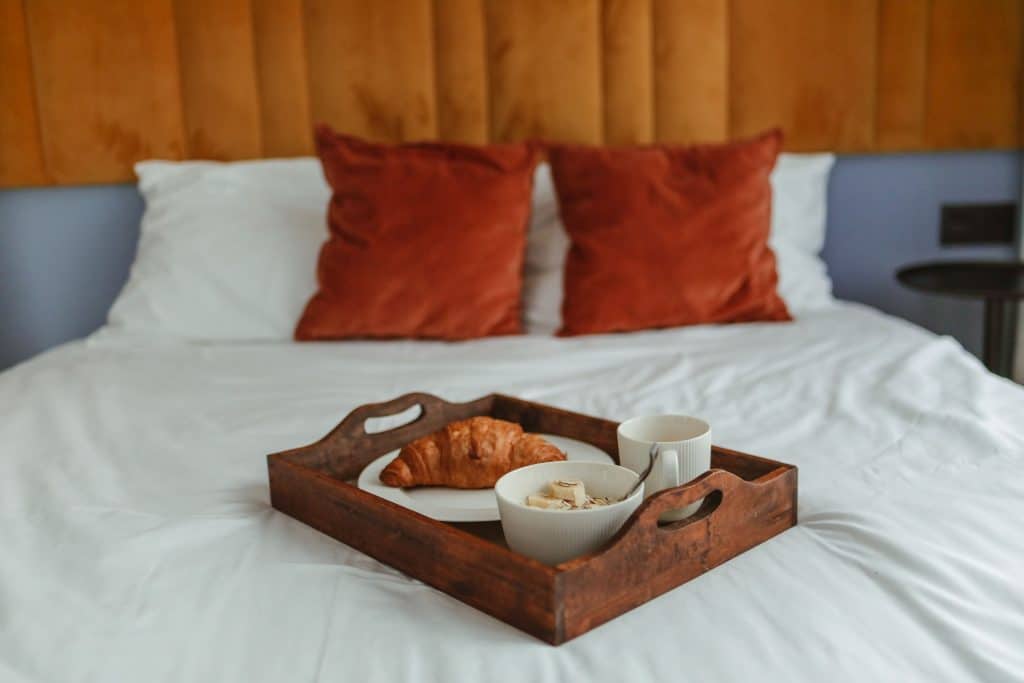
Bed & Breakfasts tend to be a package deal with cozy decor, comfier beds, private bedrooms, and personalized service – what’s not to like? (I should mention, though, that despite the name, they don’t always come with breakfast).
For my next Euro trip, I plan to add bedandbreakfast.eu to my list of search engines when booking my accommodations.
4. Co-ed or Female Only?
A common question. And an important one with no definitive answer. It all comes down to personal preference.
I’ve experienced co-ed bunking two and a half times (I managed to escape the smelly snorer) and survived, so if you’re feeling like you can give it a shot and the hostel is right for you, I say go for it.
In Amsterdam, while traveling with a male friend, I smoked my way through the streets too well to really think about the fact that I was coming back to a twelve-person room full of dudes.
But I don’t plan on rooming co-ed ever again.
Why? Well, for starters, when there is a man, the room will smell like one. And I just feel more comfortable in an all-female space, especially when I found out big co-ed dorms tend to have more male than female bunkers. (I didn’t see a single woman my entire weekend in my Amsterdam dorm.)
And worst of all, picture this: you come back from the bathroom in the middle of the night and make eye contact with a forty-something year old man shimmying back into his capsule in his tighty whities…
So yeah, I consider myself a female-only gal all the way. But that choice is up to the traveler.

5. Suss out the Facilities & Storage Situation through Ratings, Reviews, and Photos
The most obvious rule of all. It just has to be said.
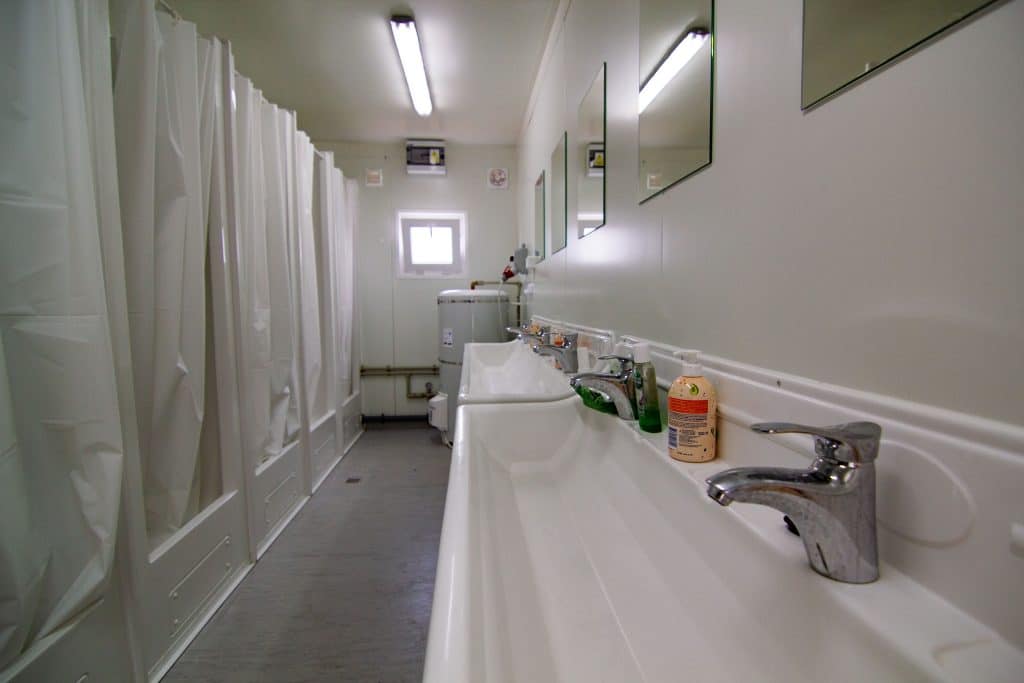
Specifically with hostels, I always look for photos and reviews (the good and bad ones) that speak about the shower and bathroom amenities, as well as the storage situation.
After spending the day exploring a new city beneath the summer sun, the last thing you want is a hostel shower that leaves you feeling less clean than when you walked in.
And if you want to be able to prove your parents wrong about the dangers of hostel thefts, you want to be sure that you’re booking a place with lockable storage. Check what kind of lockers, cages (yes, cages), or other storage amenities the hostel provides, and if they’re compatible with the lock you should be bringing with you.
I’ve never had anything stolen because my belongings are put under lock and key, literally.
6. Verify the Hostel Location
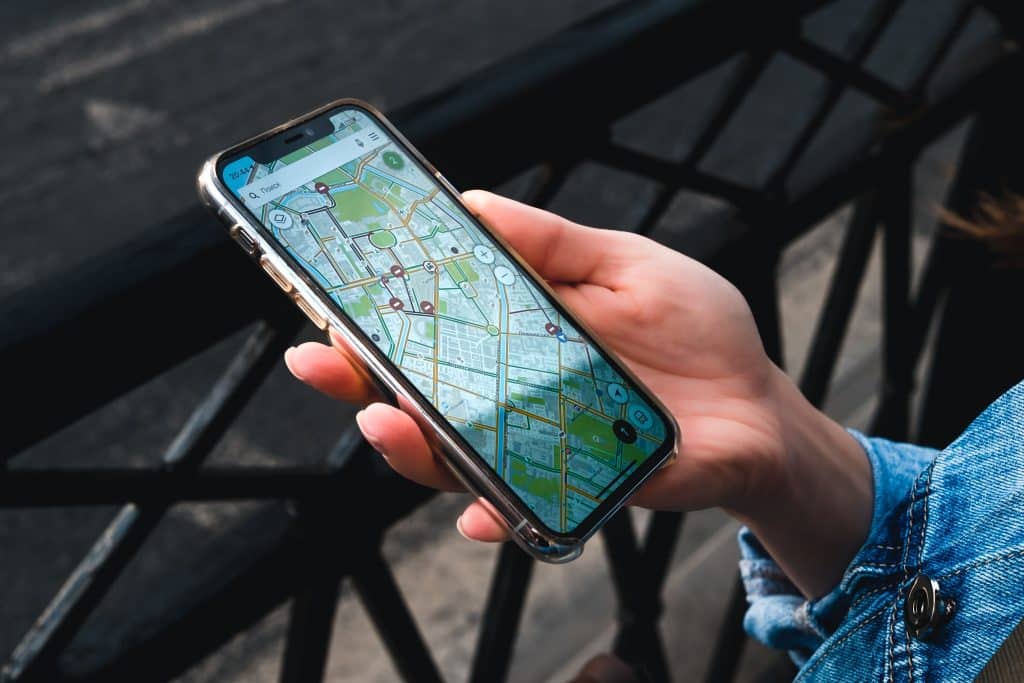
You’ve probably heard this one a million times, so I’ll make it quick: research where your hostel is located, for safety reasons and for proximity to anywhere you’re planning to go.
I made the mistake of booking the cheapest hostel I could find in Paris, wedged between the 8th and 9th arrondissements. Not only was it a less safe part of the city with nothing to do, but the cost of Ubers every single day amounted to more than if I’d gone with a better-located, more expensive hostel.
Lesson learned. Check the hostel website, maps, and reviews to know what you’re booking.
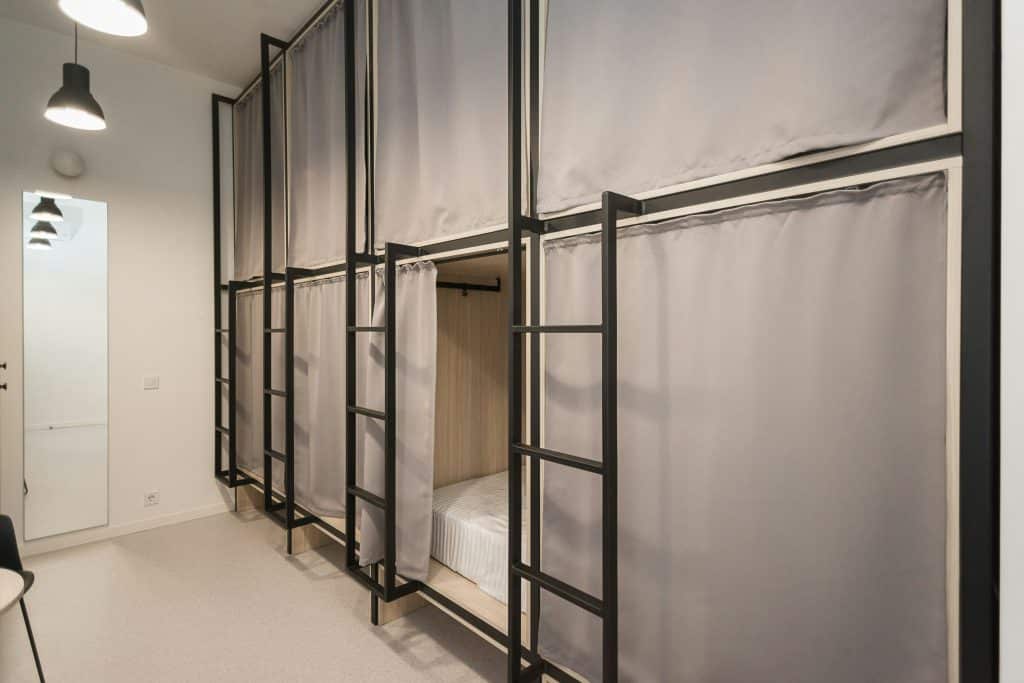
7. Capsule Bunks and/or Wraparound Curtain Bunks Only
This is my biggest rule that I pass on to all my friends.
Whether you’re traveling solo or not, or you’re staying in a co-ed dorm or not, after a long day of exploring, you’re going to want as much privacy as possible when you climb into your bunk (or at least I do).
Having walls or a curtain to shield you from the strangers you’re sleeping next to, whether you like them or not, can be such a relief.
If my first hostel ever hadn’t been a capsule, I doubt I would have been able to sleep so well in a co-ed room at seventeen years old.
What is a capsule bunk, you ask? Take a look at the photo below. It’s a bunk bed enclosed by four walls, which often has its own shelf, charging port, and reading light inside.
Obviously, you might not have a curtain or capsule option (especially with smaller destinations), but it’s definitely something I look for, particularly in dorms with 6 or more people.
8. If You’re Traveling with a Group, Evaluate the Cost-Effectiveness of a Private Room
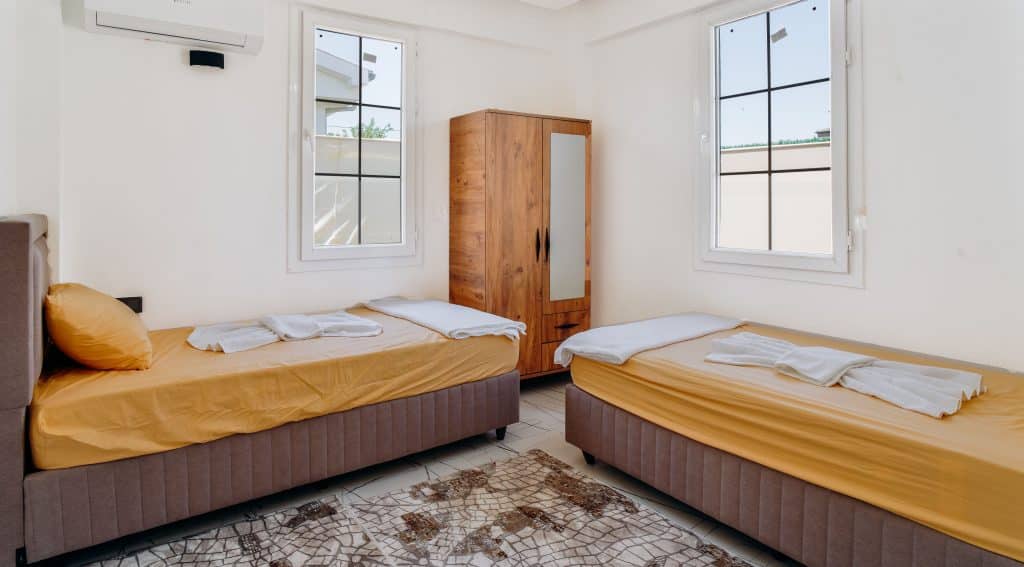
Traveling solo? You can skip this one, then. If you’re traveling with one or more friends, I suggest you don’t brush over the private rooms.
When traveling through France and Italy with a couple of friends, we largely booked three-person private hostel rooms, which were only a few bucks more than a regular bunk. It alleviated the pressure of keeping my belongings safe and, like capsule bunks, gave me the chance to decompress and not have to maintain my public persona as much.
Not to mention that private rooms often come with private bathrooms. Enough said.
It’s also worth noting that private rooms are more affordable and sell out less quickly in less popular tourist destinations (ex: Bordeaux, Porto) than more expensive, large cities (ex: Paris, London).
9. If you’re Looking to Make Friends, Book a Hostel with a Bar
Some of you who are looking to socialize on your trip may have read rule 8 and thought, ‘How am I going to make friends in a private room?’
Well, welcome to rule 9: check to see if the hostel has an in-house bar.
I can’t tell you how many times I’ve pregamed at the bar downstairs and ended up chatting, adventuring, and exchanging socials with hostel employees and other guests. In Lisbon, I skipped bar hopping to keep chatting with the hostel receptionist/bartender until morning. A hostel bar can be both a destination and a starting point if you meet the right people.
There isn’t always going to be a bar inside the hostel, but it doesn’t necessarily have to be one. Just a social space with games or seating can be enough to attract other travelers and inspire conversations.

10. The Six Bunk Sweet Spot
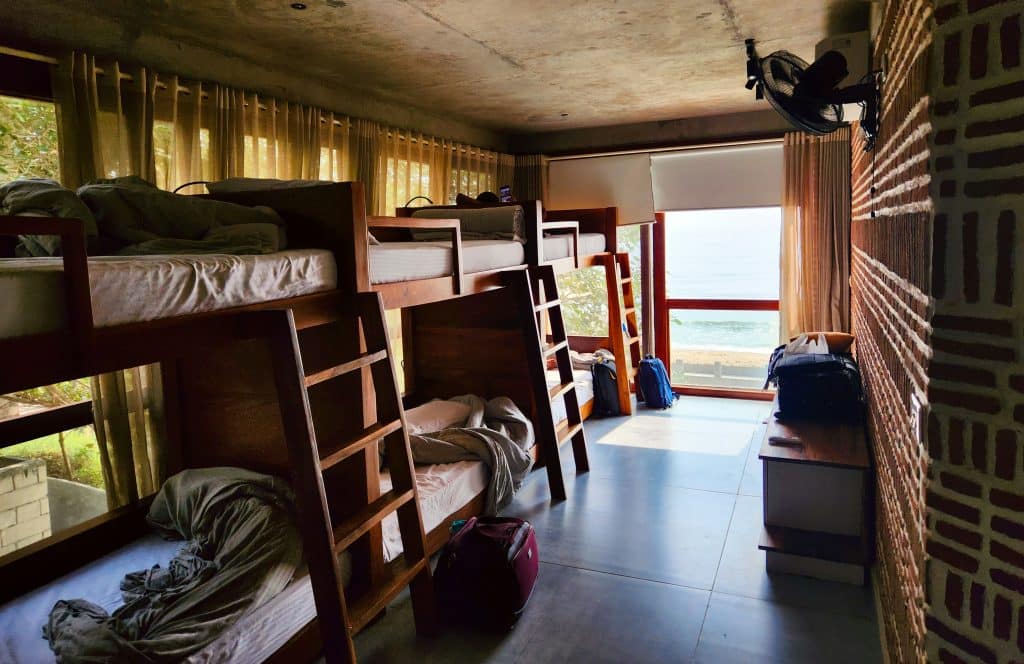
This rule is especially personal, since I’m sure there are tons of frequent hostel hoppers who appreciate a big room. But based on my experiences, I try to book a room with no more than six bunks.
Six people max lowers the likelihood of loud late-night entries, while improving odds of overall cleanliness, noise levels, and easy access to toilets and showers.
In London and Berlin, I stayed in twelve-person rooms and found them to be a bit socially daunting and cliquey. I chatted a bit, but no adventures came out of it. Then in Stockholm, I became fast friends with two of my six bunkmates, and we explored the city together.
Not surprising that six is my lucky number.
Well, I’ve prepared you as well as I can for your Euro adventure. Just remember that no matter how well you plan, shit happens. It’s all part of the journey, babes.