

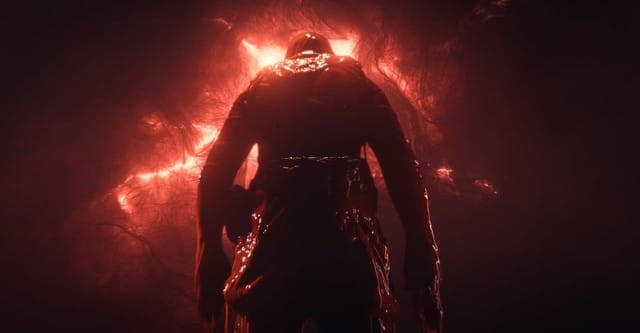
It’s 2026, and Markiplier just made his big screen debut with his smash-hit Iron Lung… or did he? A little over ten years ago, Markiplier was shown on the silver screen for the first time as a brief, antagonistic cameo in Smosh: The Movie. Both Smosh and Iron Lung were independent, big-budget films designed to prop up the careers of the biggest YouTubers of the time. One has been cherished and praised as a pioneer. The other has lived on as a cinematic disaster, a failed experiment from a bygone era.
This year is arguably the biggest year for YouTuber movies yet. The first half of 2026 saw the releases of Iron Lung, Nirvanna The Band The Show The Movie, and Backrooms. And with YouTuber Chris Stuckmann’s horror film Shelby Oaks releasing a few months ago, there has been a lot of talk of YouTuber movies. However, this isn’t a new trend; it has been attempted several times for over a decade.
These filmmakers are following in the footsteps of several other internet personalities who have tried (and failed) before them. But why are YouTuber movies only really blowing up now, despite the platform being around for over 20 years? YouTuber movies used to be a failed trend from a bygone era, but now they’re some of 2026’s biggest films.
To understand this phenomenon, we need to understand the complex and flawed history of internet-based entertainment. More specifically, by understanding the failures (as well as successes), we can understand why successful YouTuber movies are so important. Although things are looking up for YouTuber movies, we must reflect on our history, lest we be doomed to repeat it.
First contact
The true beginning of internet adjacent cinema is sourced from an unlikely hero: Fred Figglehorn. Fred was a character created by Lucas Cruikshank, essentially an overactive child with a pitched-up voice. The YouTube channel, aptly titled Fred, featured skits and vlogs of the character and became the first-ever channel to gain one million subscribers. Following the success of the channel, Lucas self-funded and produced a film adaptation. He then screened it to the president of Nickelodeon. Following this, Nickelodeon purchased distribution rights.
The film was released in 2010 and was a critical disaster. However, it found success on cable as well as on the Nickelodeon channel itself. Making a film, even a made-for-TV movie, about an internet property was undoubtedly a risk. The film only had a budget of four million dollars and yet boasted John Cena in a supporting role. Despite being such a risky venture, the film was deemed successful enough to greenlight two sequels.
Despite sounding ridiculous, Lucas Cruikshank was undoubtedly a pioneer when it came to bringing internet culture into the filmmaking sphere. Sure, these were low-budget TV movies, but they were moderate successes. In addition, they showed that big entertainment companies were willing to invest in internet stars. There is no doubt in my mind that the Fred trilogy paved the way for internet-based film.
The second coming
A few years later, more YouTubers would begin dipping their toes into filmmaking. Shane Dawson directed, produced, wrote, and starred in his film Not Cool, which flopped during its limited theatrical run and was condemned critically. However, this film was not nearly as infamous or as noteworthy as 2015’s Smosh: The Movie.

The channel Smosh, consisting mostly of skits starring Ian Hecox and Anthony Padilla, was massive on YouTube in 2015. The movie follows through with the traditional Smosh formula, with the film essentially being one massive Smosh skit. This movie might just be the most explicitly “YouTube” YouTuber movie, as Hecox and Padilla are journeying through YouTube itself, and the true antagonist is the CEO of YouTube, aptly named “Steve YouTube.” The film also features a variety of cameos from YouTubers.
Needless to say, this movie was definitely a disaster. Setting my own personal (and negative) thoughts on the film aside, the movie was almost universally panned upon release. The key takeaway from all of these movies is that they were reviled when they were originally released. The Fred trilogy was moderately successful but was critically despised. Not Cool was a financial failure and also considered a disaster. Smosh: The Movie was ultimately considered a disappointment. It seemed as though this age of experimentation was over.
Tradition of quality
Following Smosh: The Movie, internet-created media would begin to shift in ways I believe mirror the French New Wave of the 60s. Following World War II, French moviegoers were losing interest in mainstream, big-budget cinema. Films from this era, dubbed the Tradition of Quality, felt hollow, too polished, inauthentic, and too rigid. This sparked the French New Wave, or Nouvelle Vague, in which young filmmakers would create lower-budget, experimental films that relied on the personal vision of the auteur. It was an era of experimentation and defiance. Moreover, I think it mirrors the state of modern internet media around this era.
In order to understand the true significance of the internet’s new wave, we must look back at what sparked it. Besides KSI’s Laid in America and Logan Paul’s Airplane Mode, we wouldn’t get an auteur-driven YouTuber movie for quite a while. However, internet web series like Don’t Hug Me I’m Scared and Local 58 blew up online. These series were some of the founding fathers of internet horror web series.
Hollywood’s rejection
However, on the corporate side, it was looking dire. Hollywood wouldn’t push out an explicitly web-based or YouTuber-focused film for a while. Instead, they attempted to capitalize on the internet. In 2017 and 2018 respectively, we received The Emoji Movie and Slender Man, both based on internet trends and both critical and commercial disappointments. It was clear that Hollywood wanted to profit from the internet but didn’t understand how to do it.
In 2018, we also received YouTube Rewind 2018: Everyone Controls Rewind, the most disliked YouTube video in history. This video featured celebrities like Will Smith, but no mention of KSI vs Logan Paul or PewDiePie vs T Series, two of the biggest stories on the platform that year. This video was also released amidst the YouTube “Adpocalypse”, wherein advertisers pulled out of YouTube due to offensive content. As a result, YouTube would demonetize creators for anything “controversial.” It felt as though YouTube itself, and perhaps the internet as a whole, was caving into corporate pressure at the expense of its creators.
Nouvelle vague
It was clear that the big corporations pushed for sanitization and conformity first and foremost, while still trying to capitalize on online creators. However, original internet media began to explode around this time, especially web series. One of the most prominent series around this time was Petscop, a YouTube web series that relied heavily upon classic internet horror stories like Sonic.exe and Ben Drowned. The series plays off the tropes of “Let’s Plays” to create a unique horror experience that could only be pulled off on YouTube, utilizing the medium it was created in to the fullest.
Following Petscop, Don’t Hug Me I’m Scared, and Local 58, it was clear that horror-based media was extremely popular on YouTube. As such, many more creators took a crack at it. Local 58 and Petscop’s setups were mimicked due to how they utilized analog media to scare their audience. By using local news broadcasting and faux recordings, each series was able to tell nonlinear and cryptic stories in unique, non-explicit ways. Each of these series invited you to try and solve their respective mysteries, and as such, hooked audiences easily.
Introducing: analog horror
In particular, the weaponization of nostalgia also grabbed people. The old analog, grainy aesthetic combined with cryptic, tense storytelling and a distortion of the familiar/nostalgic is what birthed a new subgenre: analog horror. This genre began to blow up around late 2019 to 2021, with series like The Walten Files, The Mandela Catalogue, and Gemini Home Entertainment making waves online. All of these series were dependent on YouTube as a concept, as they would be short, untraditional narratives that oftentimes relied on ARGs (alternate reality games) and community theorizing.
Unfortunately, the analog horror genre is being oversaturated. Because these videos are so popular and so easy to make, there are so many to sift through. However, this is part of the beauty of this era of internet media. Because anyone can do it, everyone is experimenting and attempting to create because of their own passion. Even if this genre has grown stale, it’s worth respecting simply because it drives people to create. It’s certainly better than corporations milking the internet for all it is worth.
Destination: Hollywood
When we enter the 2020’s, the internet has begun to take its art much more seriously. Arguably one of the most important moments in all of this was the release of Talk To Me. RackaRacka was a YouTube channel run by two brothers, and when they released their A24 horror movie Talk To Me, the marketing did not rely on YouTube at all. It was simply marketed as the next big A24 horror film. Yet, it worked, becoming a massive box office success.
Despite my general dislike of the show itself, popular YouTube pilot Hazbin Hotel was also picked up by A24 as a full, legitimate TV series for Prime Video. At the same time, the creator, Vivziepop, was show-running another show called Helluva Boss over on YouTube. Around this time, we also got the formation of Glitch Productions, a YouTube animation studio that created shows like The Amazing Digital Circus and Murder Drones. The Amazing Digital Circus even got a Netflix release.
It’s clear that at this time, internet-originating art was being taken far more seriously. However, these creators also didn’t rely upon preestablished channels or simply being a YouTuber. These were artists who originated from YouTube, sure, but they aren’t defined by being YouTubers. This distinction is a far cry from Fred: The Movie and Smosh: The Movie, which almost entirely relied on their preestablished audiences.
There will always be a place for humble web series and skits, but filmmaking is clearly seen as the next frontier. However, do these distinctions not inherently devalue the art that remains on the YouTube platform? Whatever the case may be, it was clear that Hollywood was, and is, the final frontier.
The quiet rapture
Now, we’re in the present, and Markiplier just made one of the most financially successful YouTuber movies of all time. Backrooms hasn’t been released yet, but stars acclaimed actress Renate Reinsve. Nirvanna The Band The Show The Movie is one of the most acclaimed films of the year, and is based on the beloved web series Nirvanna the Band. It’s clear that this is likely to be the most successful year for YouTuber movies of all time.
And yet, the more we move forward, the more nostalgic grows for the past. I remember the days when YouTuber movies were a big deal, and even though they still are, it seems as though Hollywood may adopt this as their next big trend. I miss the days when Logan Paul’s Airplane Mode was seen as a once-in-a-lifetime monstrosity, or when Iron Lung was seen as an exciting prospect of the future.
There will always be scrappy young creatives on the internet trying to create something fresh. But there will also always be studio heads and elites looking to exploit artists. I just hope that these creators stay true to themselves and what YouTube is, not what YouTube (and the entertainment industry as a whole) is trying to be.
And now, here we are in the future, and I’m honestly a little anxious. I’m glad that more opportunities are being offered to new artists, but I know there’s a catch. As more and more of these movies come out, there’s always going to be a lingering question in my mind. Are we in for another New Wave, or are we hurtling towards another Tradition of Quality?









Lindley C
March 21, 2026 at 4:21 pm
Truly enjoyed this article! Well written and thought out.