

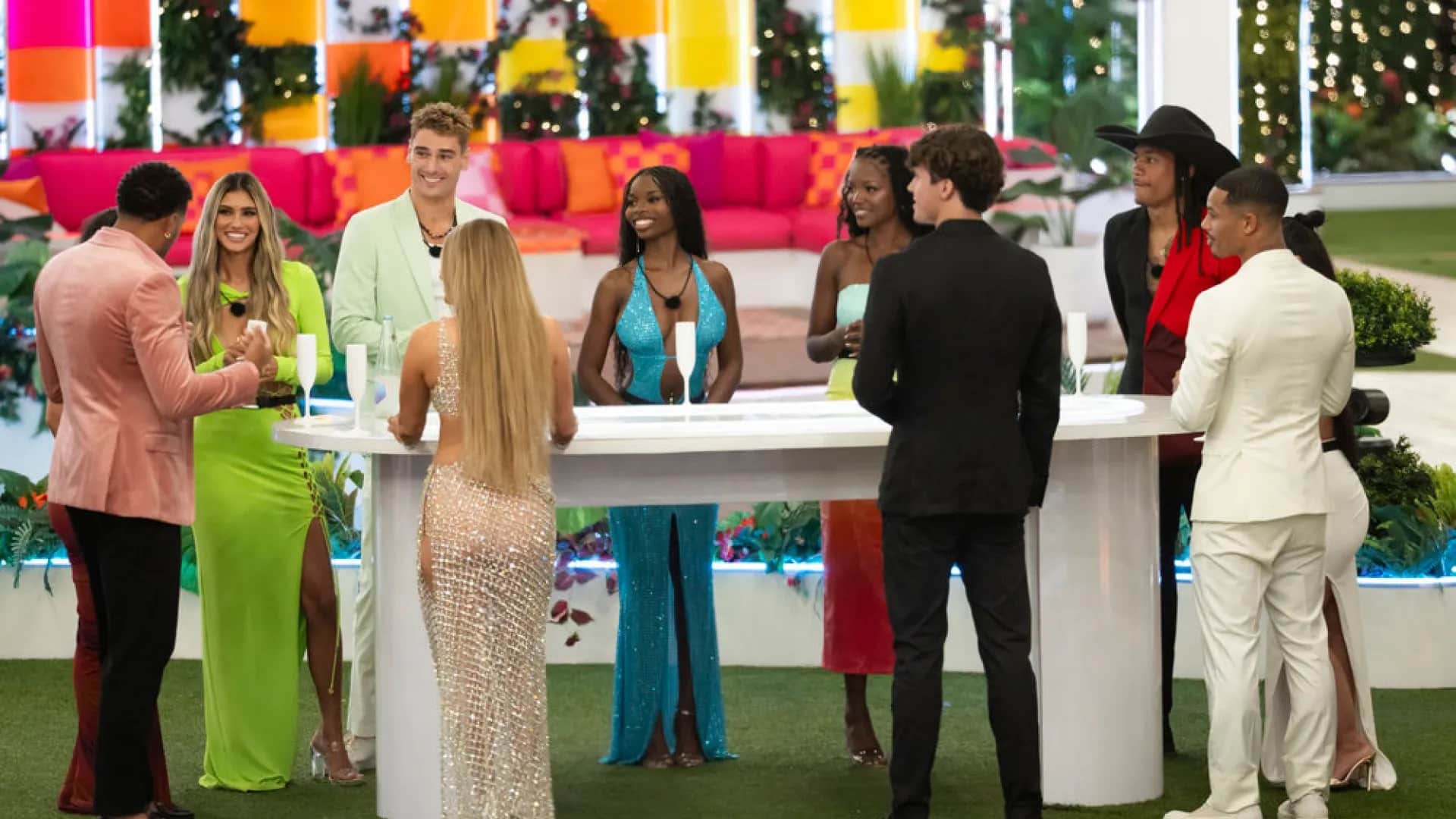
Even if you’ve never watched an episode of Love Island USA, you’ve likely felt its cultural ripple effect.
If it’s from TikTok, your friends talking about it, or even seeing little This or That polls on tip jars in coffee shops…Love Island USA has undoubtedly become the talk of the town.
Since its debut in 2019, the franchise has become a summer ritual for fans of romance, drama, and unpredictable twists. With each season, the show promises sun-soaked flings, cheeky challenges, and emotional rollercoasters that keep group chats buzzing and TikToks dissecting every kiss, betrayal, and bombshell arrival.
But this year? Something feels…different.
Season 7 of Love Island USA is louder, faster, and arguably messier than ever before. Between lightning-speed recouplings, heavily edited conversations, and casting choices that feel more about clout than connection, fans are split: is the show adapting to Gen Z attention spans and the impact of social media, or losing the very charm that made it iconic?
The classic love island formula: what made it work.
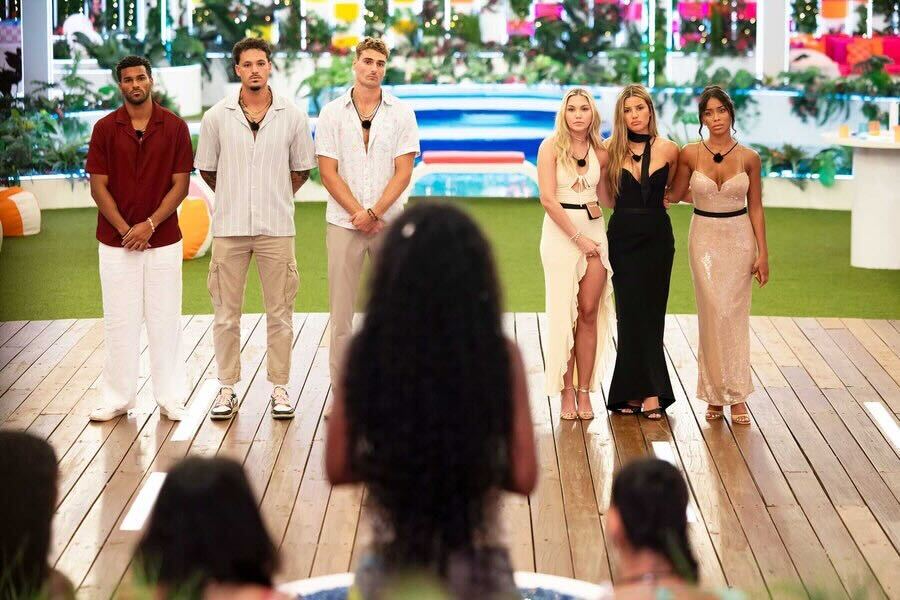
Now if you have never heard of Love Island USA…that’s a lie. You’ve likely come across a video or two on your timeline of Season 6’s stars Serena Page, Kordell Beckham, Leah Kateb, Miguel Harichi…the list goes on, of course. Does it ring a bell now?
At its peak, Love Island USA was a masterclass in reality romance. The formula was simple but addictive: throw a group of singles into a luxury villa, let connections form organically, and add just enough chaos to test those bonds with U.S viewers being able to vote on what goes on in the villa. The show is not only in real time, but islanders also don’t have any phones or access to anyone outside the villa in Fiji.
What set the show apart wasn’t just the dating drama—it was the slow burns. The will-they-won’t-they arcs, and the friendships that blossomed in between all the coupling. The end leaves four remaining couples that viewers rank from their favorite to least: the top couple? Gets a prize of $100,000.

Think back to Love Island UK Season 5, where couples like Amber and Greg or Molly-Mae and Tommy built tension over time. Or Love Island USA Season 2, where Cely and Johnny (despite their flaws) captured hearts with their chemistry. Justine and Caleb made history as the first Black couple to win the franchise that season.
Season 6 of the U.S. series carried on that spirit. Winners Serena and Kordell took their time navigating trust, while Leah and Miguel’s story was about compatibility built through mutual respect. Even the friendships—like the beloved “Powerpuff Girls” trio—added emotional grounding.
The key was patience. Viewers weren’t just watching hookups; they were investing in love.
There’s always pros and cons:
Love Island USA S6 did numbers. It skyrocketed to the most-watched series for the entire summer on Peacock and became the most-watched season. But at what cost?
Season 6 also became a fan phenomenon all over social media. Stan wars were suddenly a thing again. Fandom communities dedicated their digital lives to shipping their favorite couples. TikTok sounds from the show trended for weeks. Islanders left the villa and immediately gained influencer-level status. The show felt like a cultural moment — something organic, messy, and alive.
Season 7 of Love Island USA debuted June 23, 2025, on Peacock, and only from the first episode…people noticed the change. From social media influence, to changing the formula, and creating edits of dramatized drama…it quickly became a long summer.
What’s different about season 7?

Faster recouplings, shorter conversations, and more “producer-led” drama are just the beginning. This season seems less focused on genuine connection and more on stirring the pot—and not always organically.
One clear example is Chelley being quickly labeled a “mean girl” after feeling a way about Huda pulling Ace, Chelley’s current couple, during the heart rate challenge. But what viewers didn’t see was the full clip—producers cut Huda’s part short to make it seem like she stopped dancing on Ace midway, when in reality she kept going. Chelley’s frustration, stripped of context, was painted as jealousy, fueling a wave of online backlash.
This kind of editing isn’t just misleading—it shifts audience perception and creates villains where there may be none.
And maybe that’s the real issue—Love Island Season 7 has become more about chaos than connection. Romance has taken a backseat to conflict, and the emotional build-up fans once loved is barely visible. This season, viewers weren’t watching love stories unfold—they were watching Islanders unravel under pressure.
The only major emotional breakdown we saw in the villa came from Huda, who broke down in tears after the public voted for her partner, Jeremiah, to couple up with bombshell Iris. Instead of sweet, intimate moments, we saw Olandria get strung along by Taylor—who, despite feeding her hope, jumped ship the moment Casa Amor hit and chose to continue with Clarke instead.
Or the love triangle that turned into a betrayal: Nic kissing both Cierra and Belle-A, promising Belle-A he’d pick her at the recoupling, only to blindside her and choose Cierra.
Even the rare couples that did seem to spark something real—like Iris and TJ, Jeremiah and Andriena, or Hannah and Pepe—were voted out by their fellow Islanders. It’s hard not to feel like the show isn’t just losing its romantic edge. The focus isn’t on watching love bloom; it’s on watching people break and making it to the end.
One of the clearest examples of the shift toward orchestrated drama came during the “Stand Your Business” challenge, where Islanders wrote notes to each other, revealing brutal truths and lingering grievances. In theory, it could’ve sparked honest conversations or emotional breakthroughs—but in reality, it escalated tensions and deepened divides. Instead of fostering vulnerability, the challenge encouraged petty call-outs and surface-level drama.
Islanders aired out resentment with no context or accountability, leading to confrontations that felt more performative than productive.
If Love Island was once about messy but meaningful connections, Season 7 feels like it’s prioritizing mess alone. And without romance at the center, can it still call itself a love story?
The plays of social media
The charm of Love Island used to be watching ordinary people stumble into love on national TV. But Season 7 replaced that charm with curated influencer lineups—people with massive digital footprints, built-in fanbases, and media training. Sure, there’s still a mix of “regular jobs” in the cast, but it’s clear that casting now prioritizes online presence as much as personality.
That shift has opened the floodgates for something Love Island USA has never faced at this scale: Stan culture weaponized by social media.
As someone who’s loved this franchise since its debut, Season 6 felt like the last breath of authenticity. It had its viral moments, sure, but the chaos mostly lived inside the villa—not in comment sections or DMs. This season, fans haven’t just picked favorites—they’ve gone to disturbing lengths to defend them.
Viewers have picked apart Islanders to uplift their “faves,” trending videos to paint certain people as narcissists, liars, or manipulators. They’ve diagnosed contestants with mental illnesses from hour-long episodes.
No one knows this better than Huda, who became the season’s most polarizing contestant. What started as a critique quickly spiraled into harassment. People tracked down her family members and even contacted the father of her child. Memes of her daughter began circulating, dragging an innocent child into the chaos.
One of her exes even DM’ed Jeremiah’s friend while he was still in the villa, warning him about her. A level of interference that should never happen for someone we only see for an hour on TV.
When fan obsession reaches this level of toxicity, it doesn’t just ruin the show—it ruins people’s lives.
Season 7 didn’t just play out on Peacock—it played out on TikTok, Twitter, and Reddit. Where the court of public opinion moved faster than any recoupling ceremony.
Evolution or identity crisis?
In today’s fast-paced streaming landscape, shows like Perfect Match and Too Hot to Handle have raised the bar for dramatic twists and viral moments. To stay relevant and attract new viewers—especially Gen Z—Love Island USA seems to be evolving. The shift isn’t necessarily a betrayal but a strategic move to survive in a crowded reality TV market. Especially, with more dating shows on the rise.
However, this new formula raises a crucial question: at what cost? Love Island built its legacy on emotional storytelling, gradual relationship development, and authentic connections that kept viewers invested beyond the surface drama. By prioritizing virality over vulnerability, the show risks alienating longtime fans who tuned in for the slow-burn romances and nuanced journeys.
When the focus is on creating highlight reels and villain edits, emotional depth often takes a backseat.
Moving forward, the show must strike a balance—offering the excitement of viral moments without losing the emotional journeys that made viewers fall in love in the first place. Otherwise, Love Island risks becoming just another reality show chasing trends, rather than telling real love stories.
How season 8 can do better
If Love Island USA wants to reclaim its heart next summer, Season 8 needs to get back to the basics—real connections, balanced storytelling, and fairness in screen time.
Part of what made earlier seasons so compelling was seeing every Islander’s journey unfold—not just the loudest voices or most dramatic moments. When producers hyper-focus on certain contestants, they open the door for public scrutiny and online harassment, while others fade into the background. Making the villa feel less like a shared space and more like a stage for select characters.
That means showing quieter conversations and slower-burn couples. Even the mundane bonding moments that remind viewers why they rooted for love in the first place. Romance needs room to breathe, and right now, it’s being suffocated by overproduction and social media.
Love Island USA Season 8, will be back on our screens next summer right in Fiji streamed only on Peacock.











Julia
July 16, 2025 at 7:35 pm
The hype around this season was amazing. The season itself….
sharon
July 17, 2025 at 6:04 am
this season was insane. i 100% blame not only production but fans too. we don’t know these people! just enjoy the show!!
dwayne
July 17, 2025 at 6:06 am
it lacked not only romance, but the screen time to build up these emotions. i didn’t feel as connected to people as i did last season. we spent so much time on drama, the romance came in at the very…very end.
Kaitl
July 17, 2025 at 3:23 pm
This season was just so insanely different I felt bad for all my friends who I put on it when there were no closed off couples going into the final four
Javaeh
July 17, 2025 at 7:24 pm
Hit the head on the nail!!! 4+4! This season can’t get its 10s but this article can!!!