


I have spent the past few months engrossed in the realm of Autism in modern media, and while looking at Love on the Spectrum and Elio, there was always another show being brought up: ABC’s The Good Doctor, which ended just last year. Unlike other shows, where there was back-and-fourth discussion, The Good Doctor was always seen as poor Autism representation, even being considered offensive or bad-faith. This show was practically begging for its own deep-dive, so let’s see why The Good Doctor is so hated in the Autism community.
Autism representation through television drama
Unlike the previous material I have looked at, The Good Doctor is a network television show, giving it different expectations. Airing before individualized streaming really took off, this show was meant to cater to a large, diverse audience. This has the inherent issue of needing to not be too nuanced or controversial, or risk driving away viewers. This inevitably conflicts with its aim to portray Autism, as Autism is a diverse condition that many do not understand. Ideally, The Good Doctor would clarify where its protagonist Dr. Shawn Murphy is on the spectrum, high or low. But it does not, only elaborating with him having Savant Syndrome, which is also a diverse and misunderstood condition. Shawn is set up as a vague catch-all for Autism, which ironically limits his ability to represent Autism’s subtleties.
The Drama genre of The Good Doctor also does little favors for its goal of Shawn being authentic representation. Dramas use exaggerated scenarios and characters to create fluid, emotional, and well, dramatic conflicts within an episode’s limited runtime. Like other genres, Drama characters have sets of traits that compliment or conflict with other characters’, creating varied interactions. This retrains Shawn’s character, as well as how episodes are plot-driven, focusing on how a patient will be saved. This is important because it means the story needs Shawn to make certain decisions, and audiences can recognize this. Many episodes see Shawn learn predictable lessons, both reducing his agency as the protagonist and arguably infantilizing him too. As the online discourse reveals however, this infantilization of Shawn may not be entirely on accident.
Autism speaks and representation through infantilization
The Good Doctor has been associated with Autism Speaks, an Autism representation organization regarded as being out-of-touch. For instance, it supports ABA therapy, which conditions Autistic minds to be more social through a reward/punishment scheme the Autistic community believes to be outright dehumanizing, and produced the infamous ‘I am Autism‘ program that still haunts their reputation. Reading through their webpages, like on ABA therapy, they use rhetoric that paints Autism as a problem to be solved. Even if they are well-intended, Autism Speaks is forwarding a reductive, stigmatizing depiction of Autism.
Regardless of Autism Speaks’ involvement in production, I think this detached approach contextualizes Shawn’s comical ignorance, especially for an adult. In one episode, he does not understand a transgander patient’s gender dysphoria, in another he accuses a Muslim patient of being a terrorist, and in many he bluntly tells patients their condition without regard for their feelings. I know very well that autistic people can be ignorant and blunt, but these childish lessons soon became ridiculous. Shawn feels more like an amalgamation of neurotypical perceptions of Autism than a character, with him having impeccable technical knowledge but completely lacking in social skills, with no in-between.
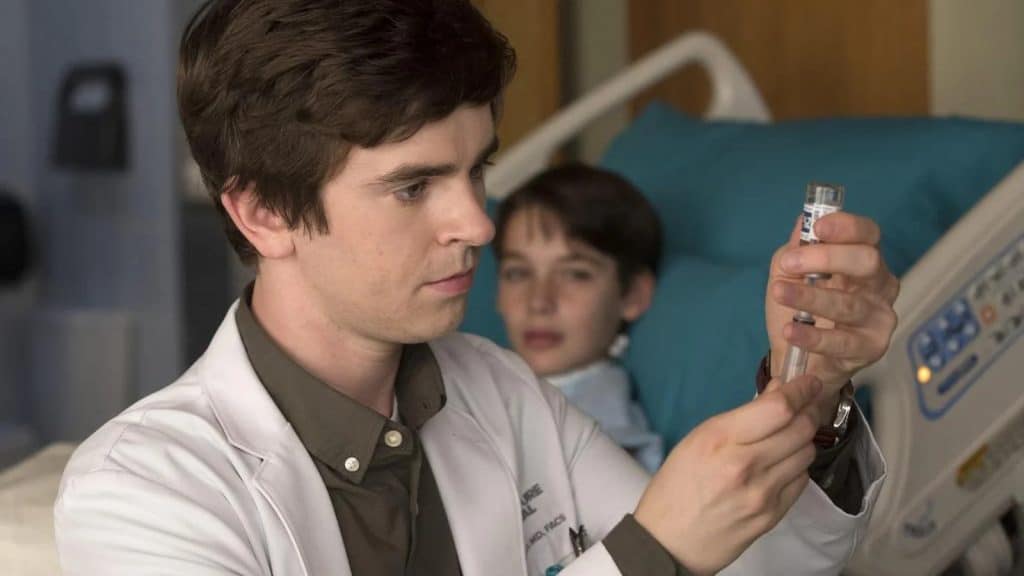
I find it hard to believe how Shawn is living alone in an apartment and keeps such a prestigious job. I also find Shawn’s lack of self-awareness unbelievable, my autistic friends are the most self-critical people I know. All of this makes a protagonist I only see the worst of myself in, if I see anything at all. Yes, autistic people need some help, but not the infantile hand-holding Autism Speaks and this show proclaim.
Dangers of autism as a superpower
Shawn is shown to have Savant Syndrome, where someone has exceptional capabilities in one area despite an intellectual disability. This of course explains his feats in the show, but it too has problems. On a surface level, I find it tiring that in episode after episode, Shawn correctly finds or predicts things that no other doctor or machine can, as after a while it has me questioning the competency of the hospital. However, the real issue arises when looking at how Shawn is treated by others and by the show itself.
In The Good Doctor‘s first episode, Shawn’s Savant Syndrome is used to get him into the hospital. This immediately establishes that he is being given a chance only because they see him as useful, which is a bad thing because it has a dehumanizing effect. This could be seen as realistic, but again, this is a drama series trying to play up its scenarios, so stark realism is definitely not the priority. This sort of message is very damaging, as it encourages the thinking of people as tools without human qualities. Shawn was allowed into the hospital only because he, in a way, would be worth the hassle.

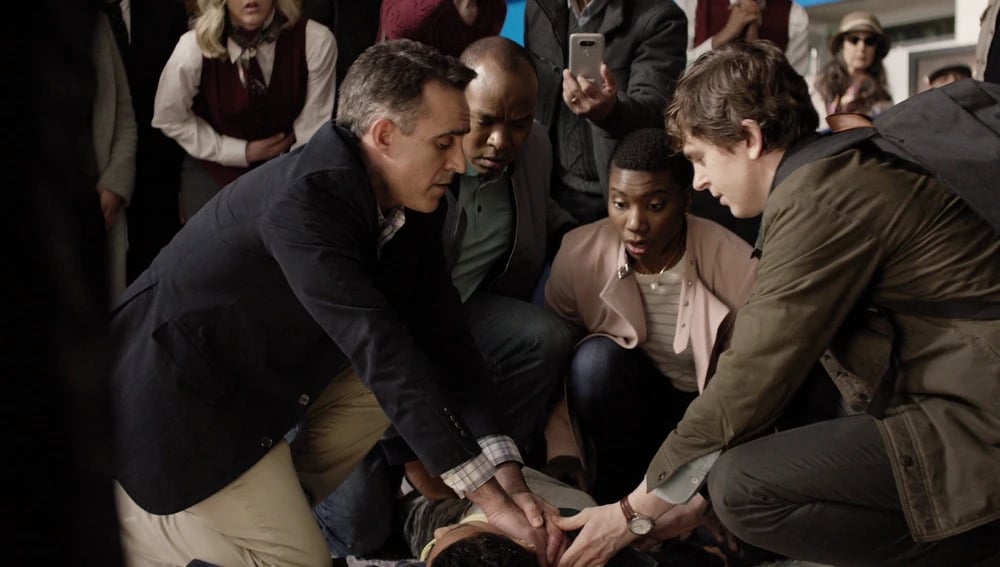
This part of The Good Doctor has been a big proliferator of the “Autism as a superpower” conception. Savant Syndrome is often left out of descriptions of Shawn online, leading to his feats being pinned solely on Autism. Thus, neurotypical people will see Shawn and think all autistic people are like him. This is a dangerous expectation though, as for many autistic people, it is a struggle just to live among neurotypicals, let alone be exceptional.
Conclusion: ‘The Good Doctor’ and the neurotypical gaze
Let us circle back to my earlier point that Shawn felt like an amalgamation of the neurotypical perceptions of Autism. I think that this “neurotypical gaze” is what dominates most of the decisions made during The Good Doctor‘s production. This includes everything said so far, plus a few other things that are small but still add up.
Chief among these is actor Freddie Highmore’s performance as Shawn, which is very hit-or-miss to me. Autistic people are of course known for stimming and having trouble with eye contact, but these behaviors are not random. Autistic people, especially adults, know this behavior is weird and try to curb it, like at least looking towards people and stimming in less conspicuous ways, like changing body positions or playing with their hair. Compare this to Highmore’s performance, where he randomly looks about and sometimes lightly flaps his hands when not occupied. Highmore is not a bad actor, but to me it is clear he is acting how neurotypical people expect an autistic person to, which obviously is counterproductive to authentic representation.
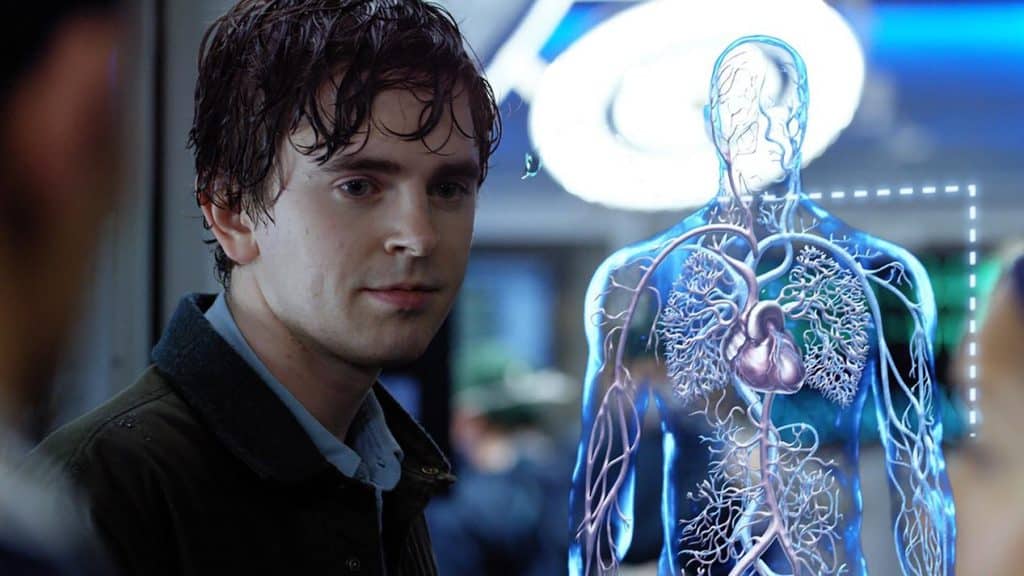
It just is rather clear to me that the show did not know how to approach Autism representation, if it even was a priority outside marketing. Outside of Autism Speaks, I could not find any other Autism-affiliated partners or consultants for the show. It should go without saying that proper Autism consultants, and ideally an autistic actor to play Shawn, was sorely needed. As it stands, The Good Doctor stands as one of too many examples of what happens when unknowledgeable writers tackle a sensitive subject, perpetuating misconceptions that the still underrepresented community is left to address.








Elle
September 12, 2025 at 2:47 pm
I’m autistic and would’ve loved to have someone like Shawn as a boyfriend. Though I do admit, an autistic person who made it through med school and residency would have, well by then, learned to be more “feeling” towards patients. And the scene where he totally melts down after a baby dies is unrealistic. He can handle everything ELSE but THAT? I’ve been around a lot of autistics and only a few have overtly avoided eye contact.
Connor Miga
September 23, 2025 at 7:20 am
A very good point about the eye contact. Shawn is treated like his characteristics are immutable, when in reality autistic people commonly ‘mask’ their urges to appear more approachable. This is yet another mistake by the show, and a pretty big one too since masking is very big part of the autistic experience. If you would like to talk more, feel free to reach out to me on social media!