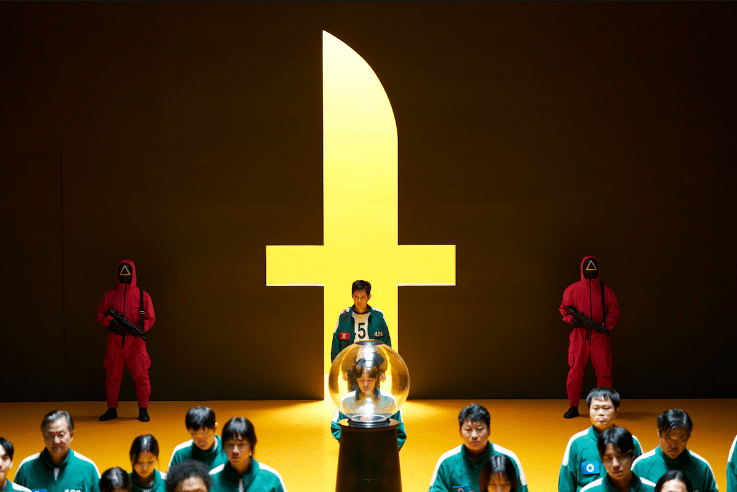
Filled with death, greed, and the abominable sides of the human spirit, Netflix’s Squid Game proves that there are some games nobody ever truly wins.
The third and final season of the acclaimed Netflix series dropped on June 27, following the much-anticipated release of the second season earlier this year. In Season 2, viewers witnessed Player 456, Seong Gi-hun (played by Lee Jung-jae), return to the Games arena approximately three years after reigning victorious in Season 1. With a vendetta to end the games for good, Gi-hun enlists the help of detective Hwang Jun-ho (played by Wi Ha-joon), who has personal stakes in seeing an end to the Games.
Series spoilers ahead!
Hide-and-Seek Horror
Season 3 picks up right where Season 2 left off: the last of the rebels facing their consequences, Gi-hun grappling with the reality of the failed rebellion, and a group of individuals still choosing to continue the Games.
The Hide-and-Seek segment in episodes 1, 2, and 3 certainly plays off as more of a dramatic plot filler to accomplish certain goals than an accurate rendition of a childhood game. Taking place in a labyrinth of locked doors and winding hallways, Hide-and-Seek players lacked the real opportunity to “hide” before the opposing team sought them out, wielding knives. Manhunt would have been a more appropriate name—literally. Of course, the idea that the Games are fair enough to present everybody with an equal chance at winning is simply an illusion, much like life outside of the Games. The 2 are innately one and the same. Hide-and-Seek, despite being one of the most drawn-out games in the series, is an exemplary depiction of this. However, some actual hiding spots could have upped the tension even more.
Season 3’s death toll
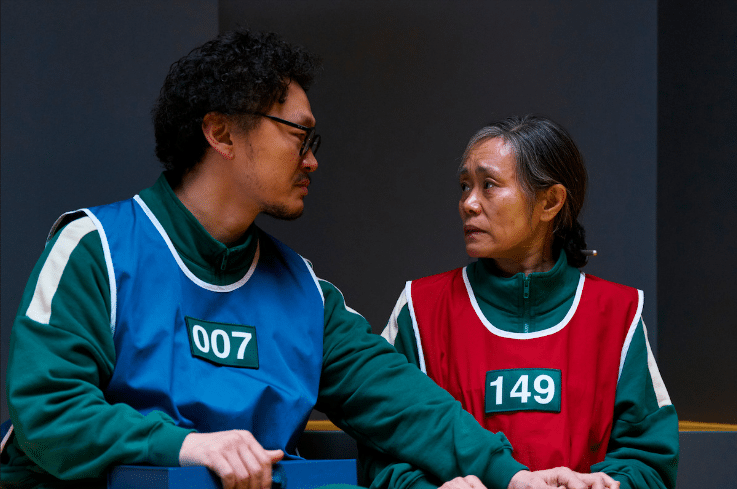
Four major characters die during this game, including fan favorite Player 120, Cho Hyun-ju (played by Park Sung-hoon), and Player 007, Park Yong-sik (played by Bag Yong-sig), the latter of whom is killed by his own mother to protect Player 222, Kim Jun-hee (played by Jo Yu-ri). The others included Player 044 Seon-nyeo (played by Chae Kook-hee) and Player 388 Kang Dae-ho (played by Kang Ha-neul). While Hyun-ju’s death could have been seen coming from a mile and a half away, Yong-sik’s death, coming from the hands of his doting mother, twisted the plot’s knife. Some people debate whether Yong-sik was in the right for attempting to kill Jun-hee, who had just given birth to her baby in the middle of the game. With now two mothers on the line, Squid Game showed that mothers do anything for their children—even if that means saving them from themselves.
The importance of Gi-hun’s death
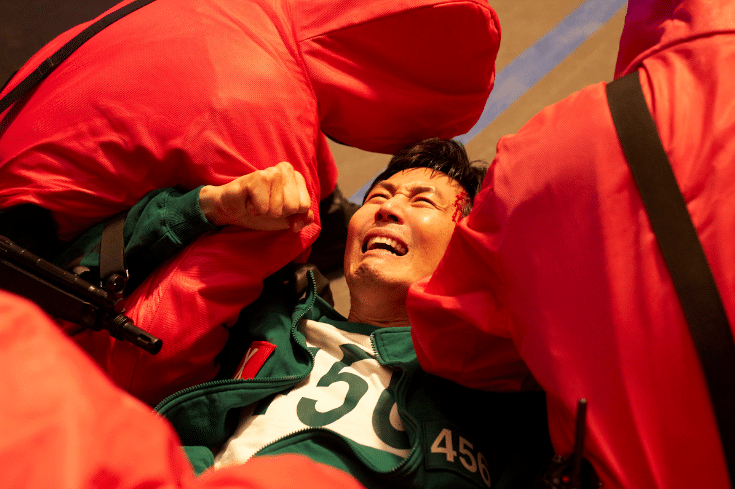
Much more occurs throughout the intricate plot of Season 3, such as Guard 011 Kang No-eul’s (played by Park Gyu-young)’s attempts to save Player 246 Park Gyeong-seok (played by Lee Jin-wook). Some of these subplots could have been cut and still upheld the integrity of the storyline [i.e., Choi Woo-seok’s (played by Jeon Seok-ho) entire arc exposing Captain Park Yeong-gil (played by Oh Dal-su)]. This also includes almost every scene with the VIPs’ painfully forced dialogue. Perhaps the most controversial moment of the entire series, though, is when Gi-hun sacrifices himself for Jun-hee’s baby girl. Rather than be a two-time victor in the game against death, Gi-hun places the baby down, looks in the direction of the VIPs and the Frontman, and says, “We are not horses. We are human. Humans are…” before deliberately falling backward off the tower to his death.
The incomplete sentence illustrates a full thought in and of itself and forces the audience to finish it themselves. In light of a number of actions demonstrated throughout the Games, humans are compassionate. Resilient. Willing to fight for what they believe in. But they are also greedy, corrupt, cruel, and selfish—all of which are more complex and multi-faceted than a horse dreams of being.

An alternate ending?
Squid Game creator Hwang Dong-hyuk revealed that he conceived an alternate ending for the series, one where Gi-hun comes out alive. Though definitely a less devastating approach—and providing perhaps a dim light at the end of the proverbial tunnel—it would not have shown the depths of Gi-hun’s character so effortlessly.
Much like the scene in episode 4, where Gi-hun refuses to kill the remaining players in a fit of survival, a canonical world should not exist where Gi-hun sacrifices the life of Jun-hee’s baby in preservation of his own. Throughout the series, viewers see Gi-hun put others first time and time again—so much so that he enters himself back into the Games for the sliver of a chance at ending them for good. He would rather die and save hundreds of ignorant lives than live affluently with the memories of what he let continue.
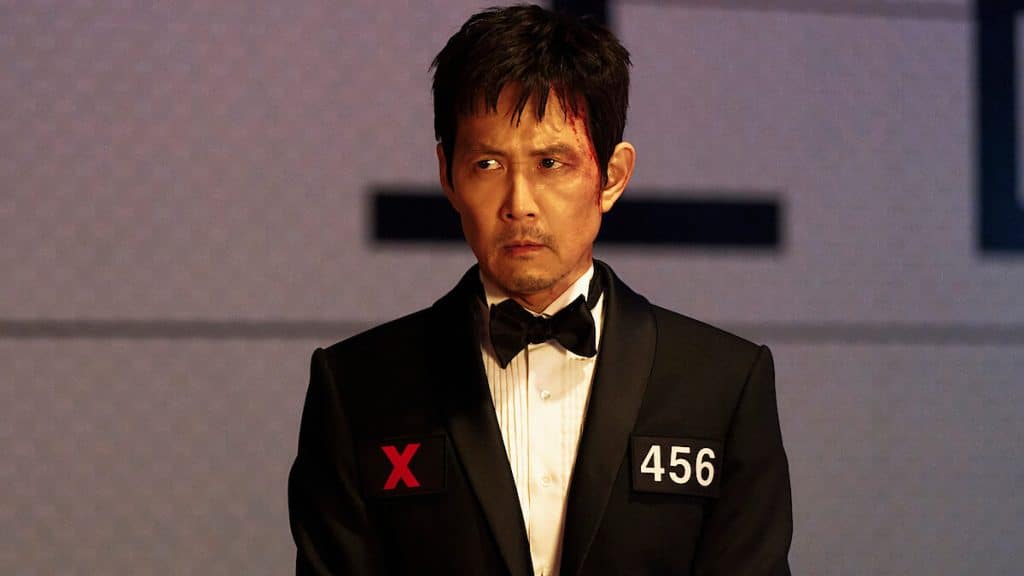
How Squid Game rejects media’s toxic positivity
Most media nowadays end with a message of hope, and rightfully so. The world is bleak and dreary, and slipping on the rose-colored glasses handed to us through a screen is the greatest distraction received. We’ve become used to it: the main character survives, the love interest says yes, the survivors move on to live happy and fulfilling lives. It lives less as a trope and more as an expectation from what we enjoy—an endless trauma, survive, rinse, repeat cycle of emerging through life’s trials stronger.
Squid Game breaks that mold and does so effectively. By allowing the main character to die—one that the audience rooted for since the beginning and even saw come out on top—the series douses viewers with just enough realism to remind us that sometimes, it doesn’t work out. Sometimes, a good ending doesn’t always mean it has to be happy.
Gi-hun’s death symbolizes the most tragic feat of all: putting yourself on the line for a result you will never get the chance to see, not knowing it it fails or succeeds. And though he failed, were his actions all in vain? Would he do it all again, if he knew the Games just continue elsewhere in the world?
Nonetheless, the scariest part about Squid Game isn’t the morbid twist on childhood games or the way that the blood of death seeps through the screen. It isn’t the faceless guards who decide the players’ fates or the prospect of leaving behind a loved one in need.
It’s the fact that despite all the horror, trauma, and greed, the games are what viewers want to deny the most: realistic.