Among Gen Z, many would argue that their favorite characters were the unapologetically and authentically evil villains rather than the heroic protagonist. That is certainly the case for me. But what is it that draws us to classic villains?
Before we dig into the meat of this question, I’ll first explain what I mean by ‘classic villain’ as it is used to describe a wide variety of character types. After all, not all antagonists are villains, and not all villains meet my criteria for a ‘classic villain.’
Classic villains are unapologetically evil characters who pursue selfish goals at the expense of others. Often with the specific intent to harm others. They serve as the antagonists in hero vs. villain stories, and they are always framed in a suitably dramatic, coded way as ‘other’ or ‘alternative’—that is, they are interesting to watch on screen. An important subcategory of the classic villain is the camp villain, who does all of the above, but with better style and a touch of campy coding.
Disney villains are probably the most famous version of this archetype—in part because classic camp villains have traditionally found their greatest success in the animated industry, which Disney has historically dominated—but they are hardly the only studio to produce them. Now, let’s delve into the nitty-gritty of why these characters appeal to us Gen-Zers more than the ‘hero’ characters of the plot.
The contrast
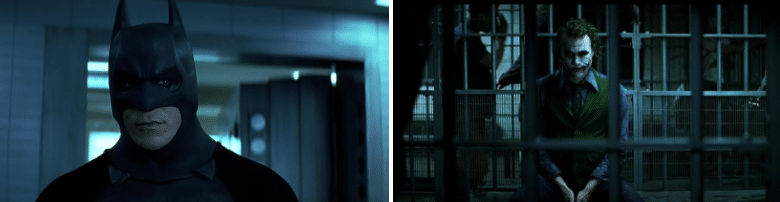
First and most obvious is the function of a villain. Heroic characters generally have a clear moral compass guiding their actions or are otherwise consistently concerned with the morality of their actions. Their morals generally lead to simple, clear-cut motives and goals. Their visual design and presentation are generally simple and clear-cut. Heroes are generally framed as resisting the immoral actions of their villains. Such is the case with the dynamic between Batman and the Joker. And like Joker, when constructed to oppose a hero fundamentally driven by their morals, the villain’s goals will generally be explicitly immoral or amoral. This is the group that you’ll find the greatest number of camp villains in, though not all of them!
As villains stand in opposition to the heroics of the morally righteous characters, their design and presentation are generally the inverse of those characters. If the heroes have a dark color palette, then the villains will be ostentatiously dressed in vibrant colors or made up. Visa versa for the inverse.
The foil
The personalities of the heroes and villains are designed to accentuate and complement one another. If the heroes are always serious, then the villains never seem to take anything seriously. If the heroes stand for order and the protection of others, then the villains will be chaotic, or their methods will harm people. If the heroes represent safety and trustworthiness, then the villain will be conniving and threatening. They will be charismatic and powerful. They represent a contrast and a foil. The reason that Joker is not just another of his ‘rogues gallery,’ and is instead his villain, is because he fits these criteria.
Anyone who’s ever watched the first of the trilogy will tell you that Joker is the highlight of the film.

You can’t look away
Villains fundamentally deviate in some way from what the audience will view as ‘acceptable.’ This is what makes them an unknown. It’s also what makes them so interesting. We would never want to meet a villain in real life. But in fiction, where the atrocities committed are entirely fictional? It’s obvious which an audience would rather see. Even in real life, if you’re shown two videos: one of cars safely navigating an intersection, and the other of a multi-car pile-up at that same intersection? Obviously, if asked, you would prefer the former over the latter any day. But could anyone honestly say that the crash was not the more ‘interesting’ of the two videos?
Presentation: The dark reflection
When a villain is not an explicit inversion of the heroic character, they are often a dark reflection of them instead. They are the hero or heroine if they had found themselves in more difficult circumstances. Or who they would be if they had made the wrong decision. They and the hero or heroine see themselves in one another, for better or for worse. For one another, they represent a life, a person who could have been. They force the hero or heroine to confront their own flaws and to question their past decisions.
Wolf in sheep’s clothing
These villains exemplify how even good people can become monsters if they make the wrong decisions. Their appearance is not inherently ‘other.’ Rather, it is their own choices that affect them (sometimes reflected in changes to their physical appearance). Both prior to and after any appearance changes, these villains tend to be very aesthetically pleasing to the eye, in the same way that the heroes or heroines are. They take full advantage of society’s lookism to wear the face of who they could have been.
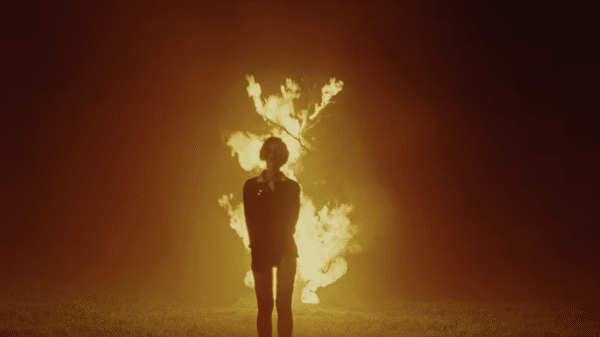
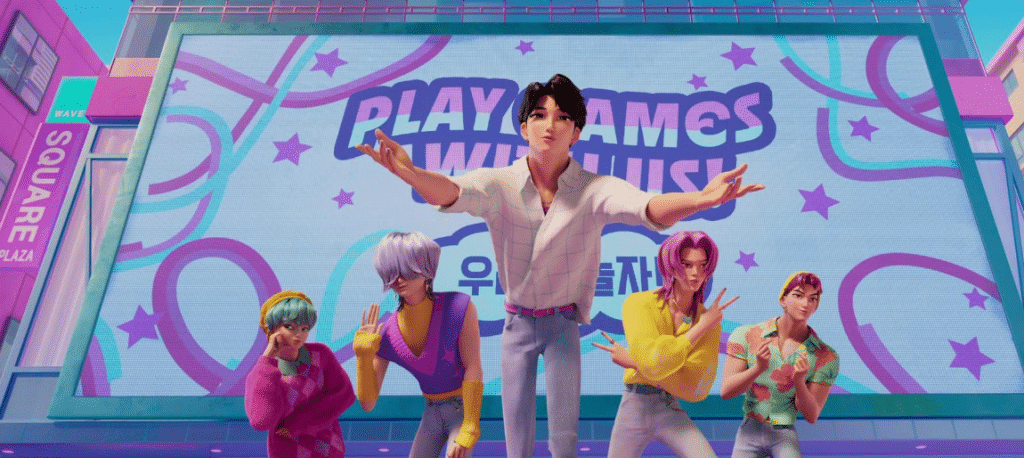
Jinu from K-Pop Demon Hunters is an excellent example of this group of villains. They are hot and great at convincing the heroes or heroines of just how similar they are. They are initially sympathetic to an audience, and eventually tragic or pitiable. And they look fantastic while committing their atrocities.
These characters are villains hidden under the guise of heroes or misunderstood rogues, who are consciously aware of and control their outward presentation. They are often nuanced characters, and are generally very likable or outright relatable for the audience. This is where we find the rest of the camp classics!
Ghosts of the past
These villains represent the ‘what if’ for both the heroes and the audience. ‘Could I have been a better person if I had not made those decisions?’ ‘Could I end up like that if I am forced to make harder choices?’ These villains are people who have prioritized their personal desires over what they know to be right. (Though they often come to regret their choices.) This is often shown via their capitulation to a corrupt system or authority. Generally, these villains redeem themselves through death, sacrificing themselves for the greater good. Darth Vader is an excellent example of a classic (comparatively) non-camp villain!
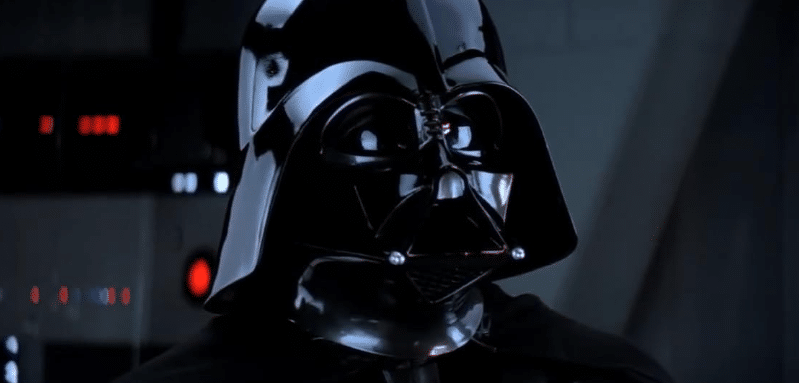
Sometimes, instead of a heroic or likable persona, these villains opt to wear literal masks, hiding their status as a dark reflection under the guise of a different villain subtype. The reveal for these villains is especially intense. This form of dark reflection relies on the sharp contrast between the aesthetic of villainy (think the Nazi look). Stormtroopers are a good example of villainous aesthetic, with Darth Vader himself being the poster boy for the hidden reflection.
These villains are a cautionary tale for the heroes and the audience. Most of us have made more right choices than wrong, but between looking at someone else who has made all the right choices and someone who has made all the wrong ones, who would evoke a stronger emotional reaction from you?
Framing and body language
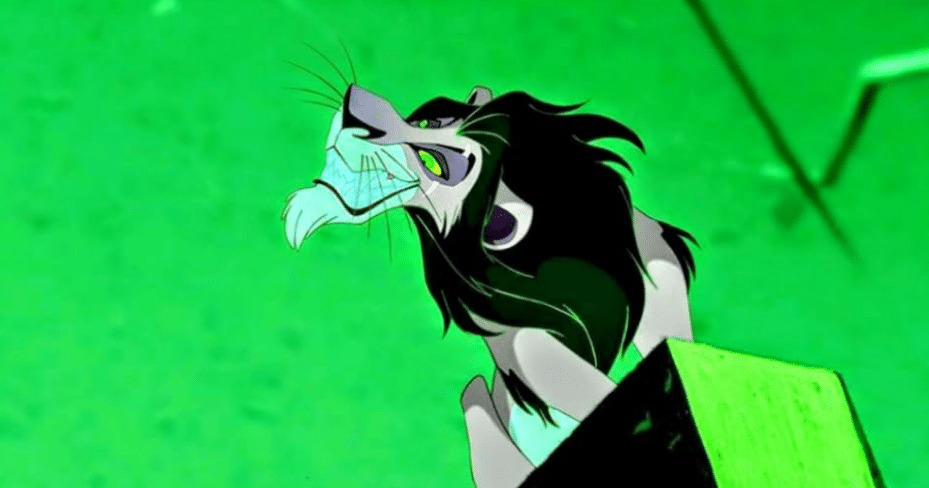
Now, onto framing and body language! While all the best villains are either foils or reflections of the hero or heroine of a story, this is not what tells a movie-goer who the villain is. Generally, the audience will know who the villain of a story is based on how the camera frames them and their body language. This element is particularly evident in animation, as anyone who knows of Disney’s historic coding of villains will tell you.
Femme Fatales and Effeminate Males
When it comes to camp classic villains, the girls are designed with the femme fatale archetype in mind, while the men will exhibit traits commonly associated with male homosexuality or femininity. A good piece of media to demonstrate this is the animated show Transformers: Prime. The Decepticon Arachnid is perhaps the easiest example of a femme fatale villain. She has dramatic ‘make-up,’ an accentuated feminine figure, and a violent obsession with torturing and killing members of the main cast. Her primary aim in the show is to sadistically torment the only other female transformer in the show, as the one that’ got away.’
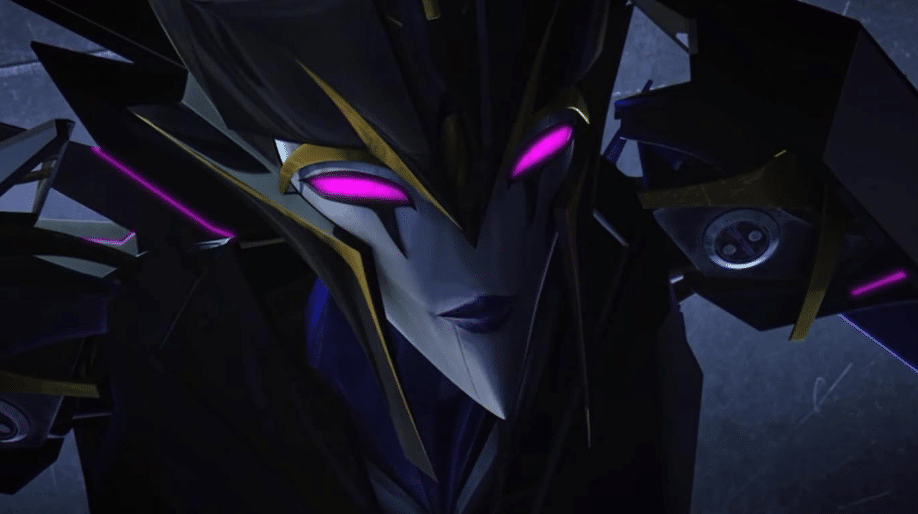
Likewise, the show’s characterization of Starscream and Knockout as campy (or outright queer in Knockout’s case) falls into the broader tradition of that othering, as seen in the two short clips below.
These stereotypical villain traits made these three some of the most entertaining to watch on the screen.
The camp-coding body count
While ethnicity, sexual orientation, and gender presentation obviously have nothing to do with villainy, queer-coding has become something of a call-sign for a classic villain over the years. Theatrics is an essential aspect of a classical villain. Batman’s Joker, Scarecrow, Riddler, and Harley Quinn. Disney’s… well. There’s Jafar, Ursula, Scar, Maleficent, Cruella De Vil, Captain Hook, Hades, Dr. Facilier, Tamatoa, Yzma, Prince John, Syndrome, Governor Ratcliffe, Professor Ratigan, King Candy, Queen Grimhilde, to name a few.
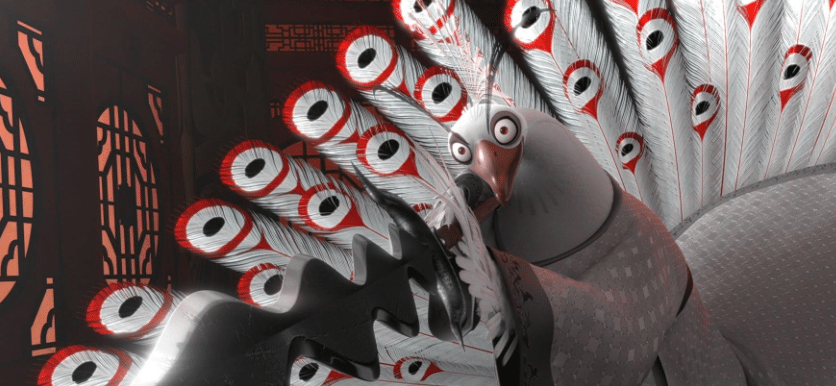
Other studios’ villains with the same type of historically ‘othering’ subtext include: Velvet & Veneer, Lord Farquaad, and Lord Shen from DreamWorks; Jenner from The Secret of NIMH; HIM from The Powerpuff Girls; Jesse & James from Pokémon, James Moriarty from Sherlock Homes, Dr. Eggman from Sonic (the movies), and Orochimaru from Naruto. It’s a very common practice. Every villain I’ve listed above has very clear elements of flamboyance or camp that no other character exhibits. It’s a very useful technique. Ask anyone who’s seen the movies featuring these villains, and nine times out of ten they’ll tell you the villain or villainess was the most memorable character.
Methods and motives
Coding aside, let’s take a look at motives. As I mentioned before, villains’ motives are always fundamentally selfish or harmful to those around them. They want to achieve their goal, regardless of the cost that others have to pay because of their efforts to do so. The four motives I most commonly see are a desire for wealth, a desire for power, an obsession with another character, a fanatical belief, and personal gratification. Generally, any one villain will have at least two of these in play at any given time.
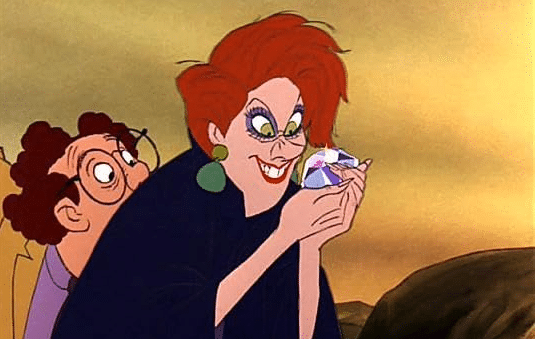
Madame Medusa and Mr. Snoops are a great example of a villainous duo motivated by a desire for wealth and the personal gratification it can bring them. Tzekel-Kan from The Road to El-Dorado is a good example of fanaticism and the power he derives from it. King Candy from Wreck-It-Ralph is an excellent example of a power-hungry villain. And Hisoka Morow from HunterXHunter is driven by his obsession with Gon.
Attitude and personality
Villains’ motivations are always selfish and generally egotistical. While a hero’s number one focus must always be to stop the villain or save people, the villain can be unapologetically themselves. They know what they want and are willing to do anything to get it. They are immensely driven and supremely confident in who they are and revel in their personal successes. This is where the villain monologue comes in. There are few things more enjoyable than watching someone confident in who they are and what they want try to achieve that, no matter how horrible the end goal is. Think Little Jack Horner from Puss in Boots: The Last Wish, or Hannibal Lecter from The Silence of the Lambs.
Another great example of this is the Vees from SpindleHorse’s Hazbin Hotel. They are unapologetically power hungry and evil and absolutely revel in it.
This drive and self-confidence generally give a lead villain a sense of presence or charisma that makes them incredibly entertaining to watch. To the point that there are plenty of movies and shows with the villain as the main character, like Death Note’s Light Yagami. Just look at Vox from Hazbin Hotel. Does this look like a man we want to lose?
Fleshed out
There is one other aspect of classic villainy (both antiquated and modern) which I have yet to touch on. Villains with clear, specific goals, distinct designs, and confident personalities often (though not always) have the most nuanced or fleshed-out personalities. Classic villains are often one of, if not the, singular forces driving the plot’s conflict. This means that they are often proactive, rather than reactive. In order to understand the nature and stakes of a conflict, you need to understand why that character is doing the things they are.
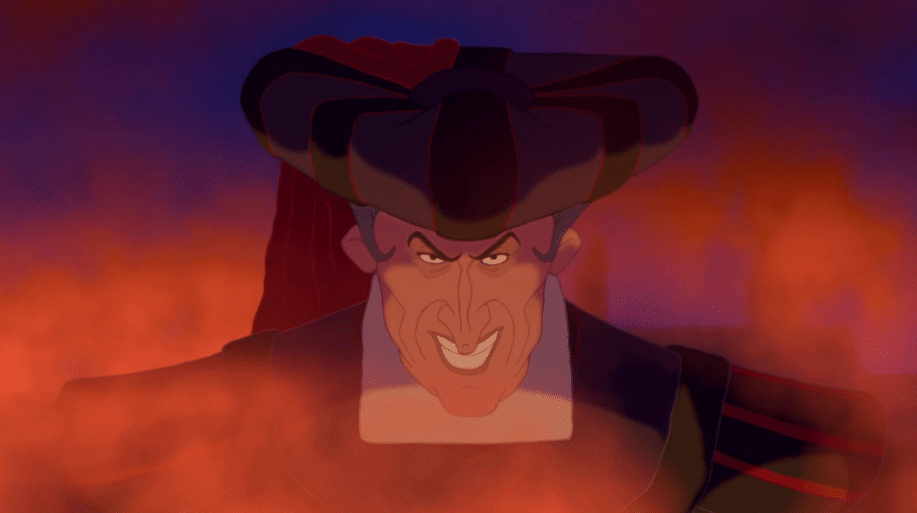
This necessitates a well-developed reason to be presented to the audience. It doesn’t need to be complicated, but it does need to be shown. In The Hunchback of Notre Dame, we see just how terrible he is by watching him act in a specific, consistent way.
Judge Claude Frollo is unquestionably a monster. But thanks to his screen time, we understand what motivates him to do the vile things he does. He is a racist, misogynist, self-proclaimed ‘righteous man,’ and a wannabe-rapist. He fully believes that he is the hero of the story. This is more detail and nuance than we get for any other character. And it’s with reason. The whole plot revolves around him; he raised the protagonist, and repeatedly tries to kill the secondary leads. He is the driving force behind everything that happens, and that makes him the most interesting character on the screen whenever he enters a scene. Villains are so interesting because they feel like real people. Horrible people, but real nonetheless.
They’re not right, but they are more fun
No one’s saying that the villains featured in the article are in the right. But those are all iconic! Almost always, the most iconic character of their film or show, in fact. These are characters with the charisma and pomp to hold the attention of the audience and the heroes alike. Each and every one of the villains on this list is fun to hate! And I invite you to join me in cheering at their downfall.