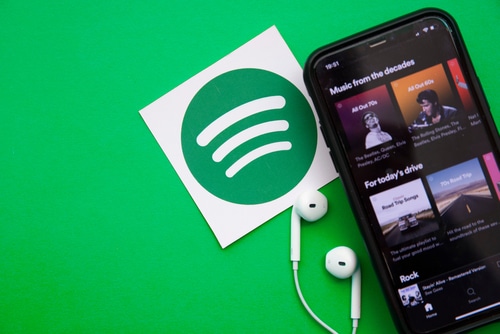
The competitive nature of fan culture in the music industry and the current desire to be more niche perpetuate gatekeeping, which holds back artists’ success. The database WhoSampled gives fans even more intel on their favorite songs. It has recently joined Spotify, scaring artists as it exposes uncleared samples and prompts copyright strikes.
While it might be fun for fans to learn about their favorite music, leaking uncleared sample data is detrimental to the affected artists’ careers. How our interest in music and one-upping those in our fan bases can bite artists in the butt.
What is WhoSampled?
WhoSampled is an online database holding information on samples, covers, and remixes. Founded in 2008, it allows fans to list the samples they find used in songs, making them publicly available. The collaboration was announced on November 18. WhoSampled will continue to function as a standalone app, with its information now appearing in the platform’s credits. The index holds about $1.2 million in songs, including 387,000 artists, 622,000 samples, and 460,000 covers.
“Every song is a collaboration, and every contributor should be seen. With expanded Song Credits, SongDNA, and About the Song, we’re giving fans a deeper look at the people and creative threads behind the music they love and giving creators the recognition they deserve,” says Spotify’s Head of Songwriter & Publisher Partnerships, Jacqueline Ankner. “It’s another step in Spotify’s work to champion the people, connections, and stories that bring every track to life,” but maybe we shouldn’t have access to everything.
Rapper and producer Al Shephard, known as Blueprint, made a podcast for the Super Duty Tough Work YouTube channel, highlighting how this collaboration draws samples into the mainstream. DJs have a history of hiding their tracks from the public to make their work stand out. Artists have always been very secretive about the samples they use to avoid legal trouble. WhoSampled exposes this by bringing them to one of the most popular music streaming services. This collaboration will put a lot of uncleared samples on blast, prompting major legal issues.
The history of sampling
This supposes a major moral grey area. It may sound like a positive that artists may get the recognition they deserve by exposing illegal usage of their tracks; however, copyright legality is tricky. While sampling originated in the 1940s with layering sounds on a tape, it became more of what it is today in the 70s, with the origins of hip-hop. DJs would play pieces of records live, while rappers apply vocals. With technological developments, sampling became the basis of the genre. In the 1980s, the first major copyright infringement lawsuits appeared.
A great example of this, told by Megan Lea Auger for the University of British Columbia, is the “Amen Break.” This widely popular sample, utilized in over 6,000 tracks, originates from The Winstons’ song, “Amen Brother” released in 1969. At the time, they did not have the resources to sue and have not received any royalties or payment from the usage of the sample. The article covers limitations regarding copyright in sampling. The Winstons did not know of any sampling usage until after the three years during which they could impose infringement, and never received a payout for their work.
Many artists avoid legalization for their sample usage due to its long, tedious process. Rather than dedicating time, funds, and negotiation for obtaining licenses, they hope that it will go under the table. Given this, it can be difficult for major labels to even find their uncleared works in an enormous music catalogue. Enforcement does not usually happen until the track has reached decent popularity, allowing profit from illegal usage.
Often, artists refrain from suing over the usage of samples due to the cultural significance. Auger continues, “Sampling is a key pillar of modern electronic music production, in many cases forming the basis for whole tracks.” If sampling is accepted as a necessary part of the creative process, this would discourage enforcement from the artist’s perspective.”

The problem
While WhoSampled’s intentions may have been positive, it has become a resource for record labels and copyright lawyers to identify unlicensed uses of their tracks. There is a major imbalance regarding sound rights. Copyright law never truly favors the artist’s compensation, with more detrimental effects on emerging creatives. Spotify has turned itself into a real-time sample snitching service. The data is now directly on the platform, putting music at risk for immediate erasure. This puts older releases in jeopardy, as finding samples in the past was very difficult, and being exposed for unlicensed usage was not as big a fear. When these samples become public knowledge, music will be removed due to copyright strikes that may be past resolving.
Anthony Fantano, a widely known and respected music critic, said: “Through this, fans are theoretically hurting the very artist and genres of music that they supposedly care so much about.” While WhoSampled was originally a fan-run database, the work done by its community is now owned by a streaming giant whose favors lie with the major labels funding it. Spotify’s “interests are, fundamentally, legal compliance, catalog control, and shareholder-friendly risk management,” says Hypehou.se. “It isn’t difficult to see how the ownership of such a database will turn into just another enforcement tool at the disposal of the music industry’s overtly litigious lawyers, hurting the artists in the process.” These legalities will mainly affect the hip-hop and electronic music scene, as their sound has been built upon sample usage.
The desire to be niche
So why has WhoSampled reached this level of popularity? WhoSampled is a fan-contributed database, utilized mainly by those wanting further insight into their favorite tracks. Everyone has this recent desire to be niche and underground, using knowledge of samples to place them above other listeners. Specifically, being a woman interested in underground music, I am constantly belittled by men who want to be niche. They look at you like you just shot their dog when you name-drop someone they haven’t heard of. “Whatever you like, I liked years ago,” they say after asking you to name five songs.
A discussion on “Perfectly Imperfect” explains why obscure interests are considered cool. “I get wanting to learn more about less known things but it starts to seem more about liking something someone else doesn’t know about for the aspect of seeming like a more interesting/experienced person,” says user @lawrence followed by, “I don’t really think that we can blame people for falling into ‘niche-ness’, it’s a symptom of the rise of hyper-individualism, growth of technology and social media. Globalization makes it possible to see everyone, all the time, and it only amplifies the mantra of ‘The more you are you and not like me, the better.'”
Competition in musical fanbases
We all want to be ahead, even at the cost of our favorite musicians. The music scene is insanely competitive, driving the desire for this collaboration, and further hurting our favorite artists for the sake of being “cooler.” Through this collaboration, “Spotify is also planning to roll out ‘About the Song,’ which will be swipeable cards that offer in-depth info about the origins of a track, such as the inspiration behind it or interesting stories about its creation,” says Music Business Worldwide. Fans’ entitlement can be blamed on our overexposure to information online. In today’s day and age, we have access to all the information we need, anywhere. But at what point does it make us greedy?
Rapper Osamason has faced immense exploitation by his most devoted fans. This overstep is exemplified perfectly through the constant leaking of his music and past digital footprint. Youtuber Dutie says, “Osamason still has a cult, the same dudes who clown him every day, expose him, leak him — are the same ones that play his music 24/7.”
Gatekeeping
During a time of mass information and a heavy mainstream, having lesser-known references provides a sense of superiority. Through gatekeeping, fans are given the power to feel more important within their chosen community. But it isn’t always with self-serving intent. After an artist blows up on social media, original fans will flock to the site, crying about their loss of individuality. For some, the music they hold dear is a strong part of their identity, and when less-appreciative people gain access, it loses what makes it so special. There are many psychological reasons behind why we gatekeep, such as fear of intimacy, identity, superiority and social validation. But by projecting our insecurities into the communities we align with, we limit expansion and stifle the music we love’s growth. At the end of the day, is prioritizing an ego-boost worth the jeopardization of our beloved artists?
Negative effects on the artist
Producer Statik Selektah discussed with TMZ that the entire culture of hip-hop was built on sampling. He said, “What’s going to happen with this whole WhoSampled/Spotify collaboration is that it’s going to be really bad [and unfair] for independent artists.” Dropping sample knowledge places us on a pedestal, shifting culture to the individual, rather than the collective. When we gatekeep, we limit artists from further success. And when we get too curious about samples, we expose our favorite artists to legal issues.
But freelance producer, Marco Valerio Romano, refrains from blaming curious fans, pointing fingers at the system. He believes, “The real problem is that the legal framework around sampling hasn’t evolved as quickly as the culture. When clearance is expensive, slow, and complex, smaller artists are left navigating a grey area.” Music, specifically rap and electronic, would be nowhere near where it is today without sample innovation. Without recognizing this, there will be no drive for change. “I really hope we’ll see the day when music institutions actually democratize sample clearance. There needs to be a simple and affordable way to clear samples. Otherwise, people will just keep using them without clearance.” Romano draws up a major issue within the industry, pivoting blame away from fans and calling for direct action.
Our desire to know more than our peers, especially in the music scene, has driven WhoSampled’s popularity. Gatekeeping just to be able to place yourself on a niche hierarchy, prioritizing your bragging rights above the artist you claim to love’s success and profit. An outdated legal system regarding sampling in the music industry frames pure curiosity as a negative. Competitive fans suck, but a system that provides them with genuine legal power must be adjusted.