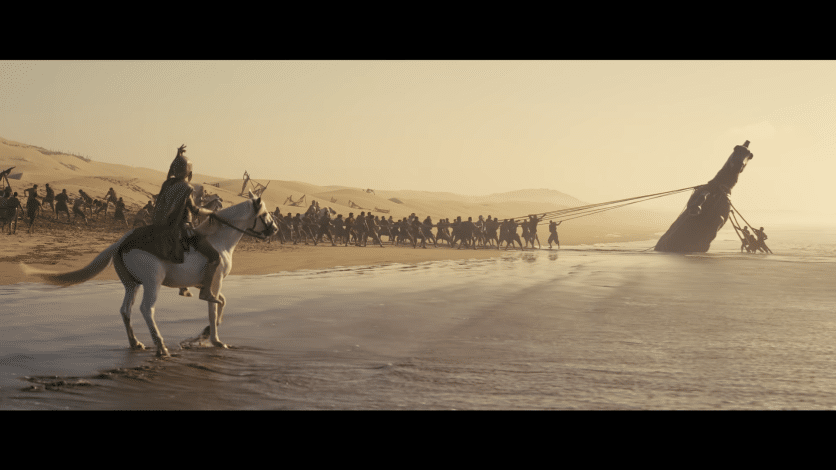
Why are opinions flying about “The Odyssey?”
The newest movie from Christopher Nolan will challenge his ability to craft action-packed epics that capture his audiences’ imaginations. The title that claims this controversial spot is “The Odyssey,” premiering globally on July 17th.
Many have spoken their opinions about the upcoming movie, ranging from overwhelming excitement to wary distaste. Most of these opinions come from fans of Nolan or fans of the original “Odyssey” text who use the movie’s trailers and promotional material to theorize about its quality.
But before anyone watches Nolan’s interpretation of “The Odyssey,” it’s a good idea to return to the story that inspired it. Homer’s “Odyssey” immersed countless readers in its vivid imagination across nearly three millennia. What should we, as an audience, remember when we finally sit down in theater seats, the lights fade, and the anticipated movie begins? Before forming any opinions about Nolan’s product, we should consider the story he is telling.
Homer, the original author
Christopher Nolan’s “The Odyssey” is only the newest addition to the wardrobe of “Odyssey” interpretations. But who wrote the original story?
As it turns out, this is a question historians have been debating for centuries.
Homer is considered the author of “Odyssey.” But historians and scholars continue to debate whether Homer was a real person, and how the poems attributed to him were written.
“Odyssey” was most likely written between the 8th and 5th centuries BCE in Ancient Greece. It could have first been an oral poem, a story told aloud by poets who recounted and improvised lines from memory. But the “Homeric Question” has never been answered. Was Homer one person who wrote both “Iliad” and “Odyssey?” Or was it a traditional oral tale, told by many poets? And where in Greece did Homer live?
While no one can answer these questions, it’s important to remember that “Odyssey” is an ancient story, no matter who wrote it, or how. It has survived millennia of cultural changes, and artists from all eras have told it in new ways.

Some fans of the original “Odyssey” claim that Christopher Nolan, as a modern director with many popular movies under his belt, will not be able to render the story properly. But Nolan is only the most recent artist to attempt and hold Homer’s mythical mantle. The best way to discover your own opinion on the matter is to watch the movie while understanding where it comes from.
What is “The Odyssey” even about?
Homer’s two major epic works, “Iliad” and “Odyssey,” form one continuous story. While it is debated whether Homer wrote both stories, they follow one man, Odysseus, the king of Ithaka, and his journey through war and across the seas.
“Iliad” is a precursor to the events in “Odyssey,” and necessary to understand the character’s motivations.
In “Iliad,” Odysseus and his fellow Akhaians (a united group of Greeks) make war on another Greek city, named Troy. The Trojan War lasts ten years and, in the end, Odysseus and some of his men survive the brutality.
Their reason for fighting? Helen, wife of Menelaus, queen of Sparta, the most beautiful woman in the world. The Trojan prince named Paris either convinced Helen to come with him to Troy, or abducted her. (Versions of this tale can vary.) The Akhaians, led by king Agamemnon, fight to free Helen and restore their honor.
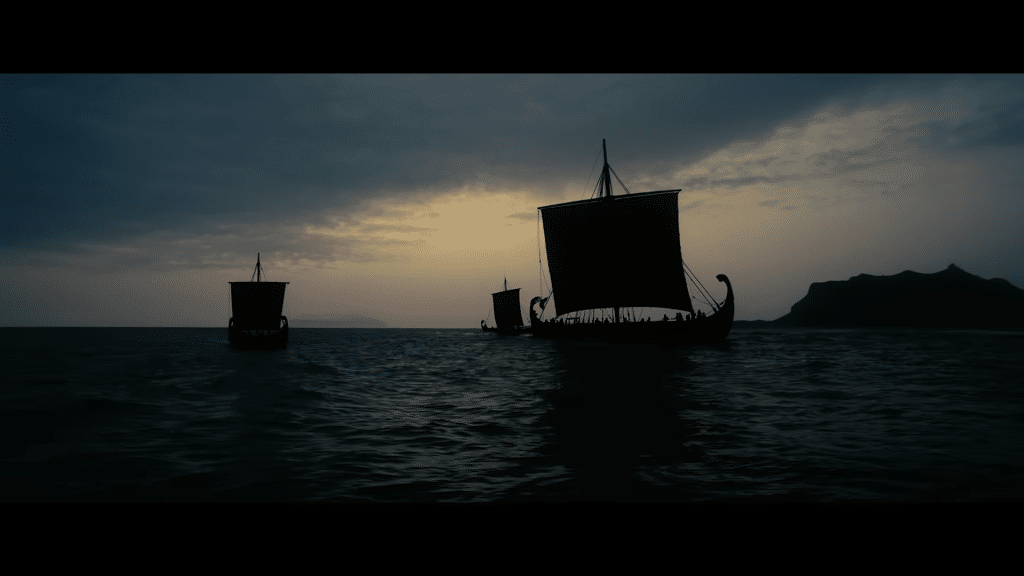
After ten years of fighting, the victorious Akhaians are weary and return home. However, for one of them, Odysseus, his journey to Ithaka is just as long as the war, and just as dangerous. This journey, mainly held in ships and on islands, is the main action of “Odyssey.”
But “Odyssey” isn’t only about a veteran’s desperate attempts to reach home. During Odysseus’ absence, a fleet of greedy suitors has filled his estate and pester his wife and son. They wish to marry Odysseus’ wife, Penelope, and take over Odysseus’ kingly wealth. Odysseus’ son, Telemachus, resents them, but he has no hope that his father will ever return.
Unknown to Odysseus, who seeks only familiar faces and lands, his family believes he is dead, and slowly succumb to the suitors’ selfishness.
This is how “Odyssey” begins. From here, gods and monsters will cross Odysseus’ path, guiding him toward home or pushing him further away. And all the time, Odysseus and his men must wrestle with the sea.
Who is in “The Odyssey?”
Christopher Nolan has teased many actors and their roles in “The Odyssey.” But who are they representing in the story?
Major characters
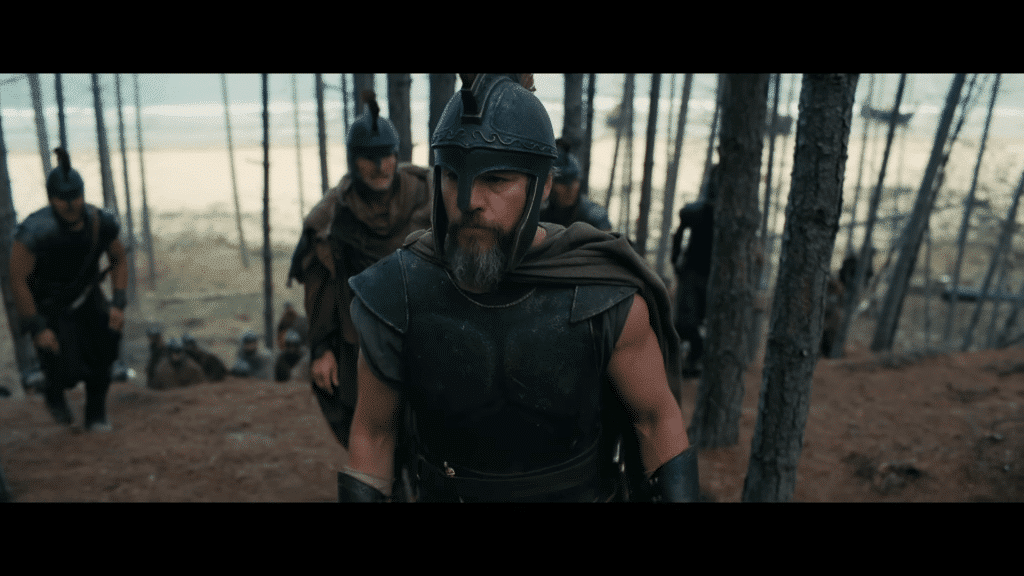
Matt Damon is Odysseus, the king of Ithaka, and main character of “Odyssey.” He is innovative, intrepid, and improvisational. The gods regard him as an opponent worth observing, despite his mortality. Because of this, when Odysseus makes enemies of Poseidon, god of the sea, it is Poseidon who creates many of his obstacles. Other gods support Poseidon or Odysseus, helping or preventing the man from reaching home.
In the original text, Odysseus often recounts his own journey across the seas to those around him. This was a literary device used to explain Odysseus’ troubles from his own perspective. In the movie, Nolan may handle these speeches with flashbacks or reorder the events in the story to show Odysseus’ journey chronologically.
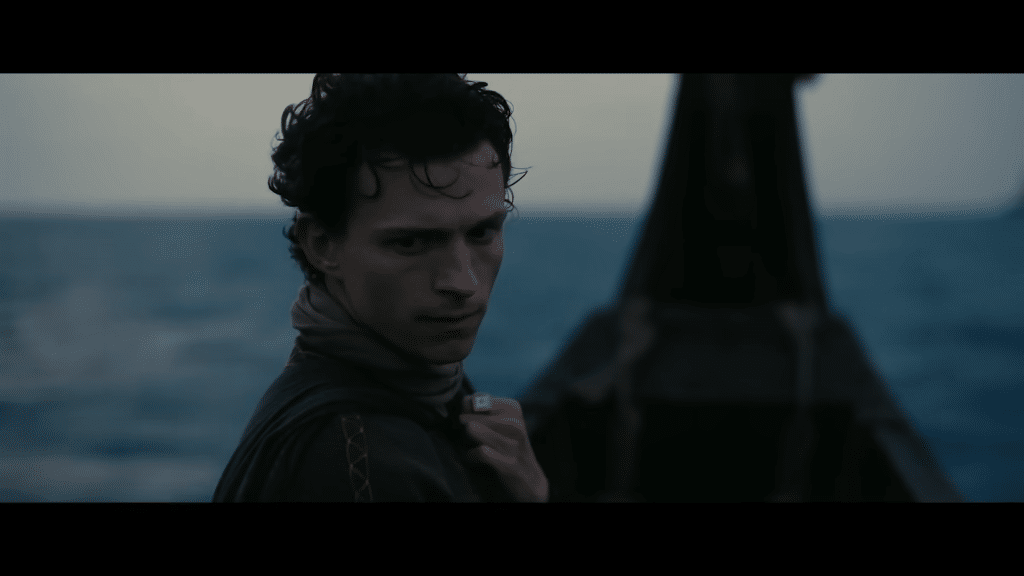
Tom Holland is Telemachus, Odysseus’ son. He is brave and has his father’s qualities, but nothing has tested him. The absence of his father weighs on him heavily, and he becomes furious at the suitors invading his home.
Once Athena invigorates him to search for news of his father, Telemachus takes his charge with strength and spirit. He secretly leaves Ithaka with a crew of sailors. But when the suitors discover he has left, they prepare an ambush to kill him on his return.
Anne Hathaway is Penelope, Odysseus’ wife. Crafty and intelligent, she is faithful to her husband, but weary at his long absence. The suitors pester her daily to marry one of them and, seeing no sign that Odysseus will ever return, she begins to crumble to their demands. But she still has fight left in her, and deceives the suitors at every turn, delaying any action they may take.
When she learns that Telemachus has left, she becomes disconsolate, thinking she may lose both her husband and her son.
Zendaya is Athena, daughter of Zeus, god of wisdom and war. Throughout Odysseus’ journey, Athena secretly helps him pass obstacles and meet people who will serve his ends. She does this by disguising herself in various forms, sometimes as a child and sometimes as Odysseus’ closest acquaintances, to whisper advice in his ear and influence events.
Athena and Zeus talk between themselves about Poseidon’s hatred of Odysseus, and Zeus tasks Athena with assisting Odysseus in passing obstacles that may kill him. They respect Odysseus as someone who can stand against the gods, and they want him to see his homeland and family again.
Lupita Nyong’o is Helen, wife of Menelaus and “captive” of Troy. Whether Christopher Nolan represents her as an unwitting abductee or a victim of Paris’ convincing will have a major effect on her character. Perhaps Nolan will begin with one assumption, and twist the audience’s reaction throughout the movie. For example, the audience may think Helen was abducted for most of the movie, only to discover she left willingly; or the other way around.
Notably, Lupita Nyong’o is also listed as playing Clytemnestra, wife of Agamemnon. Although Clytemnestra doesn’t play a large role in “Odyssey,” the story does tell her backstory. When Agamemnon returns from Troy with another woman as his prize, Clytemnestra murders them both.
Minor characters
Robert Pattinson is Antinous, one of Penelope’s young suitors. He is brash, overconfident, and disrespectful. Considering Pattinson is a major actor credited with a role as a suitor, it is reasonable to assume he will be the main competitor for Penelope’s hand in marriage and conflict with Telemachus.
Evan Shafran plays the only other listed suitor.
Ryan Hurst is Mentor, Odysseus’ old companion. His name has become as commonly used as his role. In Odysseus’ absence, he helps steer Telemachus in the right direction. Even Athena takes his form to pass on important knowledge.
Jon Bernthal is Menelaus, king of Sparta, husband of Helen. He plays an important role in both “Iliad” and “Odyssey.” When Telemachus comes to him, seeking news of Odysseus, Menelaus informs him what he has heard: that the sea-nymph Calypso has imprisoned Odysseus on her island for many years.
Benny Safdie is Agamemnon, king of Mycenae and commander of the Akhaians. When Odysseus seeks to hear the words of the dead, he speaks to Agamemnon’s ghost. Agamemnon suffered tragedy at the hands of his wife, explored in Aeschylus’ play “Agamemnon.” He gives Odysseus important information about the suitors and advises him to come home secretly, to ensure Penelope remains faithful.
Samantha Morton is Circe, an enchanter on an island Odysseus visits. She entices half of the crew into her home, where she transforms them into pigs. Odysseus must engage in trickery to deal with her magic and leave her island without becoming enticed himself.
Charlize Theron is Calypso, a sea-nymph and daughter of the god Proteus. When Odysseus lands, alone, on her remote island, she keeps him there for several years. Without hope of escaping, he stays until the gods arrive to change Calypso’s mind.
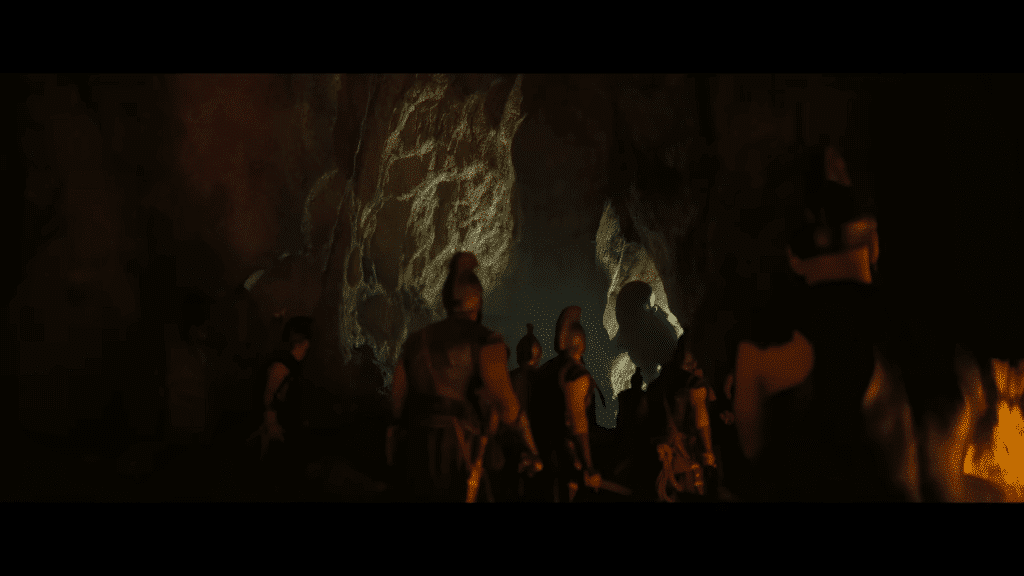
Bill Irwin is Polyphemus, a giant Cyclops and one of Poseidon’s sons. When he traps Odysseus and some of his crew in a cave, Odysseus must find a way past the monster. The actions he takes cause Polyphemus to pray for Poseidon to trouble Odysseus’ passage.
Himesh Patel is Eurylochus, one of Odysseus’ crewmen. He often counters Odysseus’ opinions, but Odysseus shoots down his thoughts so Eurylochus doesn’t sway the actions of the entire crew.
Click here for the full cast list!
Missing pieces
Many theories exist online among Nolan and “Odyssey” fans about what will appear in the film. Some reasonable guesses can be made regarding characters not listed in the cast. And some included characters tell us more about the film.
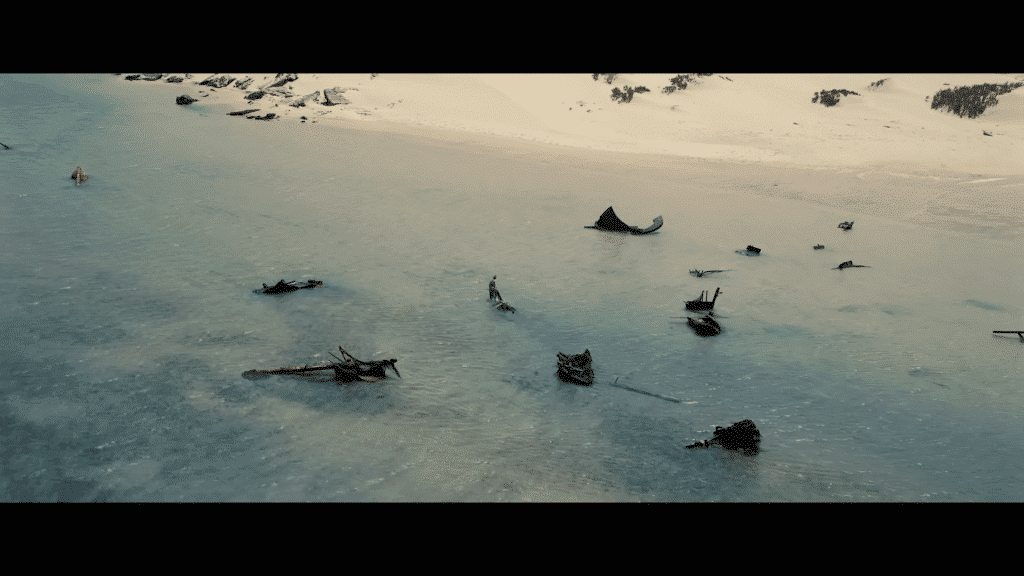
A few gods aren’t accounted for in the cast. Zeus plans Odysseus’ return with Athena and talks with Poseidon about punishing the man. Poseidon himself is constantly aggravating Odysseus and throwing obstacles in his way, like hurricanes and stormy waves. Hermes is also an important god: he works with Athena to assist Odysseus.
Removing any of these gods entirely would alter the plot, but Christopher Nolan may have replaced Zeus and Hermes’ actions with Athena’s. Removing Poseidon entirely would be implausible, considering he is Odysseus’ opponent throughout the story. However, Nolan could represent Poseidon as an unseen threat, as he would appear to Odysseus, instead of a divine figure.
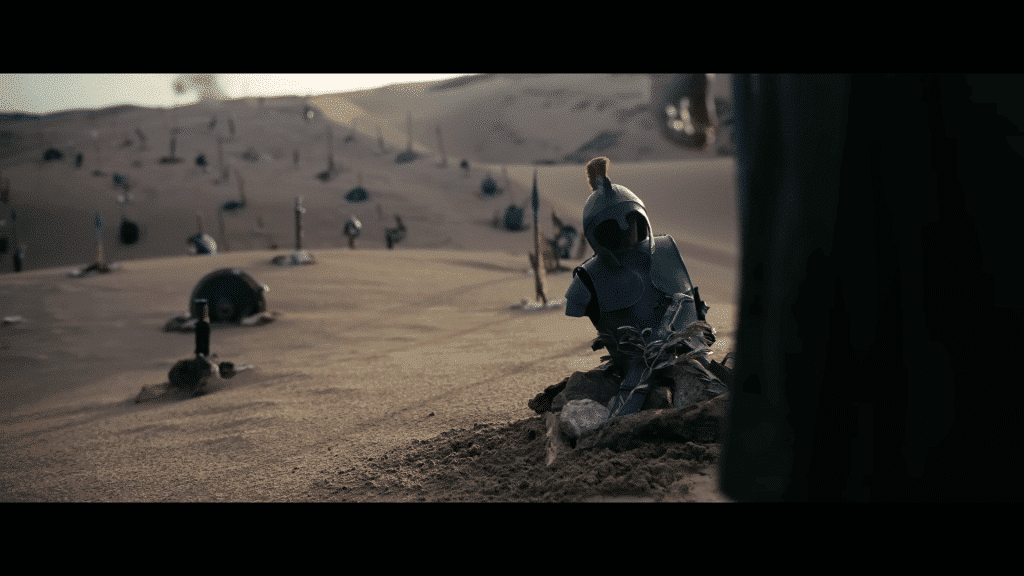
An actor who has a role that doesn’t appear in the original “Odyssey” is Elliot Page, who plays Sinon. Sinon was an Akhaian warrior in “Iliad” who led the Trojan Horse into the city, filled with Akhaian soldiers ready to ambush the Trojans. While “Odyssey” does mention the Trojan Horse, the entire scene does not appear in the story. Since Nolan has included Sinon in the cast list, it is plausible that the movie will contain the Trojan Horse and other flashbacks to the Trojan War.
For more “Odyssey” mythology, check out our Greek God quiz.
A unique twist
Nolan has never handled a classical work like “Odyssey” before. But his last movie, “Oppenheimer,” was an adaptation of a modern book, “American Prometheus.” “Oppenheimer” was a massive box-office success, proving Nolan can transform existing concepts into his signature style.
Fans have theorized about how Nolan will make “Odyssey” his own. Artists have already adapted “Odyssey” in many forms, not all of them direct interpretations.
For example, “O Brother, Where Art Thou?”, a movie by the Coen Brothers, is a loose adaptation of “Odyssey.” Even “The SpongeBob SquarePants Movie” bears a resemblance to Odysseus’ journey.
All of Nolan’s movies revolve around a general theme: time and its manipulation. “Memento” features a main character who can only remember the past fifteen minutes of his life, and Nolan displays this with non-linear time jumps. “Oppenheimer” is split into two perspectives, one in Oppenheimer’s past and one in his present.
Will “The Odyssey” continue the theme of time? The details hidden in the casting point toward yes. Some actors are credited as the “young” versions of other characters, and some characters, like Sinon, only appear before the events of the story. It seems most likely that Nolan will tell Odysseus’ story with multiple perspectives at different points in time. Some will be set in Odysseus’ past, during the war, while others will focus on his family, and others still on his adventures.
Adapting an ancient story like “Odyssey” into a movie that can capture modern audiences is a monumental task. But other directors have handled this difficulty before, and Nolan has proved he can manage complex storylines.
No matter what Christopher Nolan includes from the original story and what he changes, “The Odyssey” will be an epic tale told how he wants to tell it.
For more books adapted into upcoming films, see the wonderful article by Stefan Pantic!
Featured image credit: The Odyssey | Official Trailer, Universal Pictures