How many of you have been told to live in the present and forget the past? The context can vary, but the past is still important. Let’s remember the forgotten queens and celebrate how their actions impacted the way we live in the 21st century.
In October 2024, Regina by Emily Murdoch Perkins was published by The History Press. The author speculates about the queens who could have ascended the throne if historical events happened differently. She also brings back to life female historical figures that have not been celebrated enough.
With an average of 4.4 out of 5 star rating on Goodreads, Regina seems to conquer us all. Whether you are a history fan or not, this book is a journey through time and space. It will make you question what took you so long to read it.
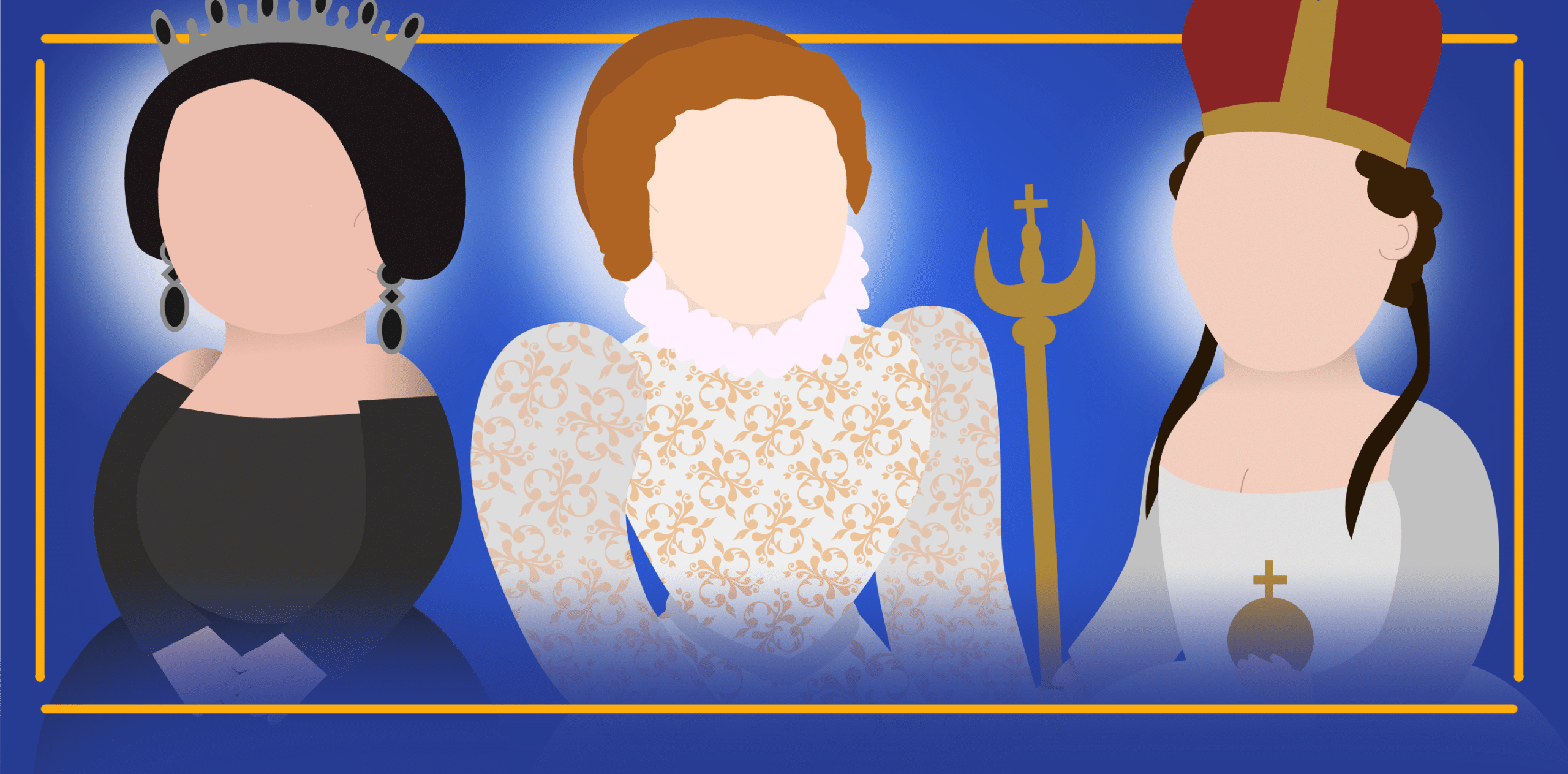
Other than living in a castle and staying by the side of a king — or being the mother of one — what makes these women potential queens? Queen Victoria and Queen Elizabeth, are two of the most well known legendary figures. But what happened to their daughters, Vicky and Anne, and many other descendants from monarchs before them?
Is History Really Exclusive?
In the introduction of the book, the author declares that British history is “a plethora of princesses, most of whom the average person could not name, who presumably married and loved and hated and died.” That is not taking into account the kings who are recognized more often than powerful history female figures. This raises a question: Is history really exclusive?
Many discard it as a long list of names and dates. Yet, history is beyond our general knowledge. It is the story of the evolution of humankind — of our past and where we come from. It is not just for those who choose to learn about the past.
Journalism student Bethan Croft thinks that:
“You have to have some privilege to learn history. […] Learning it and what goes on is important to help you understand people.”
Expanding on Bethan Croft’s statement, a professor of public history from the University of Manchester stated: “You can’t understand the world without history.” He also discussed the importance of having history courses at university to make the subject more accessible.

This is exactly what Emily Murdoch Perkins does with her book Regina — she imagines what could have happened.
The author is a real social media queen. By posting on TikTok and Instagram, she tries to reach as many people as possible and from every kind of background and age. Funny posts about her writing and books in general certify that there is no need to be an expert on the subject to read her pieces.
@emilymurdochperkins 😭 #authorsoftiktok #historytok #booktok ♬ original sound – Emily E K Murdoch, author
What is The Book About?
As much as she hypothesizes about the queens who could have been, Emily Murdoch also shares her research on historical facts and then piles them into theories.
“Instead of Henrys, Edwards, and Richards, we’d have Eleanors, Isabellas and Marys.”
The burning question that the author asks throughout the whole book is “What if it were daughters and not sons who inherited the throne?” Early deaths, repudiation, and so many other reasons prevented these great historical figures from wearing the crown.
Women throughout history have had to fulfil their duty as wives to earn the respect of their people. Bearing a child, especially a boy, made them more respectable. And yet, Margaret, daughter of Henry III, is just one of many examples of a long line of royals who gave birth to a future king and were not widely known.
Back in 750 AD, at the Mercian court, “women were just as valuable, just as educated, [and] just as powerful as the men,” the author reveals. This shows that, even though things have changed over time, there was a moment in history and especially in certain places where women and men were considered equal. What happened?
One section of the novel tells the history of Æthelflæd (pronounced: Ethel-Red), daughter of King Alfred the Great, Edith in 978 AD. Her and myriad other royal women were denied the opportunity to rule their country. The difference they made though is invaluable.
Murdoch’s novel gives insight on laws that allowed women to pass on their inheritance. Henry I, for instance, “ensured heiresses would inherit just as heirs.” It was all a strategy to ensure that the title was held by a royal instead of fighting over the lands. However, it still enabled women to hold some sort of power 00 even if they were not officially called queens.
Is This History Book Accessible to Everyone?
The answer is yes, anyone can read it. The conversational tone of the book makes it widely accessible.
For those who do not have as much knowledge about the historical events that Emily Murdoch Perkins discusses, there are footnotes and sources to look up.
Even though the author gives a strong feminist take on history, it still concerns everyone, because that is what history is. There are specific points of view and perspectives, but it is up to us to create our own ideas.
The simple language also helps the reader focus more on the storytelling. An example is this comment about Estrith the Dane:
“A woman who disposed of a husband rather more violently than Edith, who founded a dynasty on a matriarchal line, and made a point of commemorating her husband’s murder by building a church. What a woman.”
The Launch of The Book And Beyond
The launch of Regina at Hatchards Piccadilly was a “conversation between Emily the author, and one of the booksellers,” according to Laura Hunt of The History Press. As Emily Murdoch Perkins talked about her book, 25 people showed up to see “what inspired her and how writing non-fiction was different than her background fiction.”
According to the author, to be a queen is “to lead, break new ground, and take others along with you.” Toward the end of the book, she also mentions the queens who changed the course of British history. She briefly refers to Queen Victoria and Queen Elizabeth II.
Emily Murdoch Perkins celebrates these incredible women in her writing, as do numerous shows and films. Murdoch Perkins is acutely aware of the importance of the media in the historical field. For example, The Crown is one of the most watched TV shows. But she directs her attention to lesser-known figures to fill gaping holes in the historical record.
If you liked this article, check out more stories from Trill Mag: