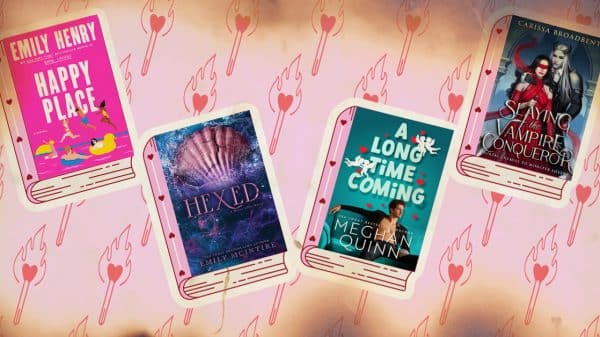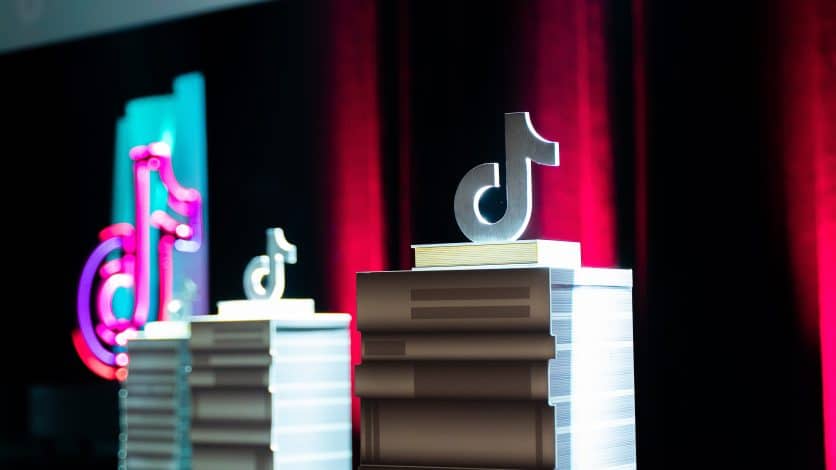
Gone are the days of needing to ask your librarian or take BuzzFeed quizzes to find out which book you ought to read next. All you have to do is open up TikTok, teach the algorithm a bit about yourself and your preferences — and bam: BookTok will come to your rescue.
“BookTok” refers to a TikTok subcommunity where readers can discuss, recommend and dissect their favorite novels. Tens of millions of posts under the BookTok hashtag promise a constant stream of content across the app’s literary umbrella. Apart from simply providing a digital safe haven for bookworms, BookTok has had its real-life effects on the literary world. According to several retailers such as Barnes & Noble, up to 30% of total book sales can be credited to BookTok.
The effects aren’t purely communal or economic. Emotional attachment to literary characters is far from new, but it’s reached a whole new level. BookTok users tend to latch onto literary portrayals of love and intimacy rather than exploring the real-life sensations for themselves. There’s no question as to whether modern-day literature has altered young adults’ perception of love. The only question: Is the shift for better or worse?
Why does romance dominate?
What began as an innocent way to share one’s favorite novels quickly grew into something far bigger. For example, a subsection entitled “DracoTok” — an entire side of TikTok where Harry Potter fans create edits and fanfiction rewrites of Draco Malfoy — has driven some users, desperate for human connection, to attempt to “shift” realities to be with the fictional wizard. “DracoTok” served as an early manifestation of how deeply readers can connect to fictional love interests, largely because they’re struggling to connect with real-life alternatives.
Like all social media platforms, TikTok feeds off of user engagement. Our attachment to our phones never truly faded to what it might have been pre-COVID. Consequently, the average young adult spends far more time on TikTok than is healthy. Our reliance on TikTok has moved past seeking entertainment. Now, many rely on TikTok to fill emotional gaps.
Six years after the start of the pandemic, BookTok has only leaned deeper into its aestheticization of romantic tropes. Of course, BookTok wasn’t the only e-subcommunity to offer human connection when we couldn’t seek it in real life. While readers have always turned to fiction as a means of escapism, BookTok has expanded upon this with added visuals of literature’s fan-favorite characters. Now, fictional characters aren’t only collections of words. They’re coming to life in drawings, fan-casts, and AI renditions.
Moreover, TikTok’s intense algorithm works to push parasocial relationships with book characters. When TikTok notices that a specific subject catches a user’s attention, they push a thousand more videos of that same subject in an effort to keep said user engaged. Romance naturally segues into cheap emotional payoff, and repeated interactions with such content spark further algorithmic amplification. If you spend enough time with someone — even a fictional character — you may end up finding it a more accessible alternative to a long-term, interpersonal human relationship.
The upside: Raising the bar
When you’re surrounded by sleazy frat brothers and atrocious Hinge profiles, it can be easy to settle. But BookTok’s doing one thing well: It’s teaching us how to raise our standards.

BookTok’s most beloved MMCs (male main characters) generally possess several highly-coveted character traits. They display strong emotional intelligence. They uphold standards of consent and bodily autonomy. Their devotion to the protagonist is unwavering. They consider intimacy to be an equal exchange. And most vitally: Their love is a durable safe haven rather than a fleeting forest fire. While reading these books, readers know they’re walking toward a happy ending.
Of course readers would choose to escape the drama of their own love lives in favor of modern-day fairytales. Women can self-insert into the minds of the female characters they’re following. These female characters don’t need to wonder whether they will be able to wade through difficult relationship patches, because a fight on page 200 will surely be resolved by an earth-shattering “I’m sorry” kiss on page 210. They don’t need to question whether he feels the same way, because he tells them in every other sentence that he’d move mountains for them.
Fairytale endings show us what love looks like when our counterpart puts in the effort. It’s difficult to step outside of that world, only to encounter a mediocre relationship. And that’s a good thing.
We deserve better than the bare minimum. We know that love can feel like fireworks, so we shouldn’t resign ourselves to embers. In the wise words of Taylor Swift, our presence shouldn’t simply be tolerated: It should be celebrated.
But raising our standards only works when we know what we really want. The aforementioned basic traits are ones that we should notice. We should appreciate the things we value in fictional characters and then search for them when seeking a real connection. Yet there’s room for lethal error when we take it too far.
The downside: Toxicity as romance
A common trope in romantasy novels — the sub-category that defines the intersection between romance and fantasy — is possessiveness that borders on obsession.
There’s an all-too-common quote that seems to pop up in these novels: “Touch her and die.” In a wartime fantasy circumstance where the protagonist’s life is at stake, the comment is swoonworthy. In a real-life situation where a boyfriend grows verbally or physically violent just because another man asks for his girlfriend’s phone number, the devotion becomes dangerous.
Being protective and being possessive are two very different things. It’s important to feel safe with your partner and to know you can trust them to take care of you. But to be trapped in an iron-fisted grasp and to feel as though you have no way out means that you are in an abusive situation.
Another toxic trope softened by romance novels is love-bombing. The Beast might have won over Belle’s heart by gifting her a library, but that doesn’t erase the fact that he kept her prisoner. Fictional boyfriends may buy their lovers’ affections, but your real-life boyfriend cannot and should not.
Similarly, novels that trend on BookTok frequently favor trauma bonds between love interests. A trauma bond occurs when two or more people carry each other through a difficult period. Though TikTok users associate tragedy with love, it’s vital to remember that love can and should grow in gardens rather than graveyards.
When characters face life-or-death situations, romance typically moves faster than it otherwise would. While fictional love stories can move quickly to serve the plot, real life love stories require patience, nurturing and time. Just as you should take your time reading a good book so as to let it truly marinate, you should let romance manifest naturally.
Fantasy vs. reality
For better or worse, TikTok’s algorithm will always favor extremes — and that’s not exclusive to BookTok. (You’ll notice that it’s never the mediocre singers that go viral. It’s the stars-to-be or the ear-splitting atrocities.) Likewise, we’ll never see advertisements for realistic characters. We will always see the men who speak in soliloquy or blow the world up just to make the female main character smile. We are subject to larger-than-life stereotypes that threaten to absolve us of a fair perception on real-life romance.
But we can’t place all the blame on the authors or even the algorithm. Fiction is meant to be a playground to tap into life experiences that we wouldn’t otherwise be able to. There’s no harm in kicking our feet when Kaine Ferron (Alchemised) murders thousands of people in cold blood simply to find Helena Marino, or screaming into our pillows when Augustus Waters (The Fault in Our Stars) flies Hazel Grace Lancaster to Amsterdam within two months of knowing her. We just need to apply our critical thinking skills to make sure we understanding the line between fiction and reality. We can immerse ourselves in the romance stories we read, so long as we remember just that: They are only stories.
In Conclusion
In the heart of what many call the “loneliness epidemic,” it’s easy to latch onto intensity when it feels so rare. Seeking comfort within the pages of a romance novel doesn’t have to be an unhealthy habit if we can consistently identify the differences between love vs. obsession, devotion vs. possession. Feel free to remain comfortable in the arms of your book boyfriend — just remember to close the book every once in awhile.