Long before many readers even reached the final chapter, screenshots from Atmosphere by Taylor Jenkins Reid had already begun flooding TikTok slideshows, Goodreads reviews, Reddit discussion boards, and Instagram story reposts. The reactions all sounded strikingly similar despite coming from entirely different corners of the internet. This novel is deeply emotional, touching readers in ways that linger long after the last page.
Readers described staying awake until three in the morning because they “physically could not stop reading.” Others claimed the novel “emotionally destroyed” them in ways they could not fully articulate. One viral review read, “I feel like this book understood parts of me I have spent years trying to ignore.” Another wrote, “I have never in my life cried that hard at the end of a book.” Those reactions have become increasingly common in modern online reading culture, especially within BookTok communities, where emotional devastation has almost become its own literary genre.

Readers no longer simply ask whether a book is entertaining or well-written. Instead, they ask whether it made people cry, whether it left readers emotionally hollow for days afterward, or whether it felt “too real” to process normally. Taylor Jenkins Reid’s Atmosphere appears perfectly positioned to become the latest novel to dominate that emotional conversation online.
Why Atmosphere Resonates Beyond Its Story
On the surface, the novel sounds cinematic and expansive, centered around NASA’s space shuttle era and filled with themes of ambition, sacrifice, and emotional isolation. The setting itself naturally carries emotional symbolism because space represents aspiration, distance, loneliness, pressure, and the terrifying burden of greatness. Yet what readers seem most obsessed with is not the technical setting or even the historical backdrop. Instead, the emotional core of the novel has become the primary focus of discussion online. Readers are not purely talking about the plot. They are talking about how the book made them feel about themselves.

Across social media platforms, many readers describe seeing their own lives reflected in the protagonist’s perfectionism, emotional repression, and quiet fear that achievement alone may never bring fulfillment. The novel has quickly transformed into something larger than a bestselling release. It has become an emotional mirror for readers trying to make sense of exhaustion, pressure, and loneliness in their own lives.
That distinction is what separates Atmosphere from many other heavily marketed literary releases. At a time when Gen Z conversations are dominated by burnout culture, emotional numbness, unstable futures, productivity anxiety, and fear of wasted potential, the novel arrives at an almost painfully relevant moment. The emotional reaction surrounding the book says just as much about contemporary culture as it does about the story itself. Readers appear desperate for fiction that articulates emotions they struggle to express directly. For many young readers, books are no longer only forms of escapism. They are becoming emotional validation systems.
What Atmosphere Is Actually About
Although much of the early marketing understandably emphasizes NASA, the space shuttle era, and the novel’s historical setting, Atmosphere functions far more as an intimate emotional character study than a traditional historical drama. At its core, the novel is about the emotional cost of ambition and the loneliness that often hides beneath outward success. The protagonist exists within a world where excellence is not encouraged but expected, and that pressure slowly begins to shape every aspect of her emotional life.
The novel’s space-centered setting strengthens these themes in particularly effective ways. Space has long served as a symbol of ambition, exploration, and human achievement, but it can also represent isolation and emotional distance.


The farther characters reach toward extraordinary accomplishments, the more disconnected they sometimes become from their personal lives and emotional needs. The immense scale of space contrasts sharply with the intimate emotional struggles unfolding throughout the story, creating a powerful tension between external success and internal loneliness.
One of the book’s greatest strengths is the way it explores internal conflict with remarkable emotional subtlety. Rather than relying entirely on dramatic twists or highly theatrical moments, the novel allows emotional tension to build gradually over time. Silence becomes emotionally loaded. Conversations feel incomplete in realistic ways. Loneliness lingers quietly beneath seemingly ordinary interactions like the vast voids of our galaxy. Stars are very beautiful, yet the vast voids are lonely.

The Emotional Questions at the Heart of the Novel
Taylor Jenkins Reid demonstrates a deep understanding of how emotionally repressed people often communicate indirectly, avoiding vulnerability while simultaneously craving connection. Thematically, the novel repeatedly returns to questions that resonate deeply with younger audiences.

What happens when someone spends their entire life striving for greatness only to discover that success cannot eliminate loneliness?
If personal worth becomes entirely tied to productivity and achievement?
Or when someone becomes so emotionally exhausted that they no longer recognize themselves outside of performance and ambition?
These questions explain why the book has connected so powerfully with readers navigating similar anxieties in their own lives. While the NASA backdrop adds grandeur and symbolism, the emotional stakes remain grounded in deeply human fears surrounding identity, purpose, and emotional isolation.
Why Readers Feel So Personally Connected to the Novel
One phrase appears constantly throughout online conversations surrounding Atmosphere: “gifted kid burnout.” The phrase has become a kind of cultural shorthand for an entire generation raised to believe that intelligence, ambition, and achievement would naturally lead to fulfillment and stability. Many Gen Z readers grew up being praised for academic success, productivity, or high performance, only to enter adulthood during periods shaped by economic instability, emotional exhaustion, uncertainty about the future, and overwhelming pressure to constantly optimize themselves.
The popularity of discussions surrounding gifted kid burnout demonstrates just how widespread these feelings have become. Across TikTok, Reddit, YouTube, and other online platforms, countless young adults share stories about growing up with high expectations only to find themselves struggling with anxiety, exhaustion, or uncertainty later in life. Many describe feeling trapped between who they were expected to become and who they actually are.
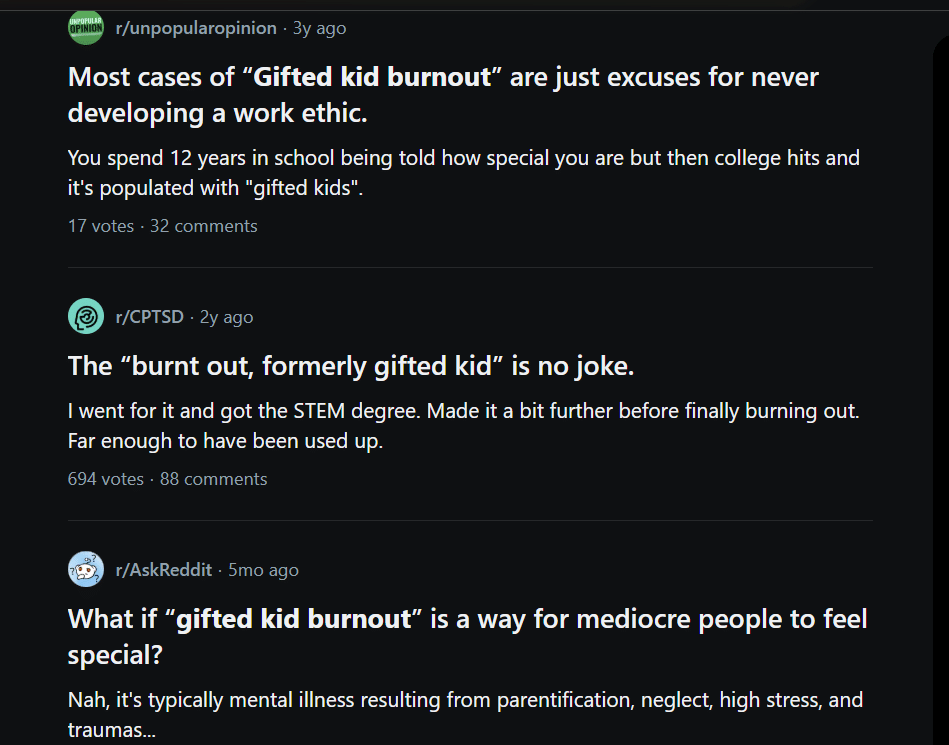
Readers online repeatedly describe feeling “seen” by the novel because it articulates anxieties they struggle to verbalize. The protagonist’s exhaustion is not portrayed as laziness or failure. Instead, it emerges from the relentless pressure to matter, succeed, and justify one’s existence through constant achievement.
The Cost of Curated Identity
By creating environments built around constant comparison, social media has only intensified these anxieties. Every accomplishment becomes publicly visible, while every perceived failure feels magnified. Careers, relationships, appearance, creativity, and emotional stability all become forms of performative identity online. Within that environment, emotional numbness becomes increasingly common because people feel pressured to maintain outward functionality regardless of their internal emotional state. Many people want likes and friends online to show how they are accepted in society.

Social media often encourages people to become curators of their own identities, carefully selecting which aspects of themselves are visible to others. Successes are highlighted, struggles are minimized, and vulnerability is frequently filtered through language that still feels controlled or presentable. Over time, this creates a disconnect between public identity and private reality. The pressure to maintain that disconnect can become emotionally exhausting because it requires people to constantly perform versions of themselves that feel more polished than authentic.
That emotional repression is one of the novel’s most powerful themes. Many readers connect to Atmosphere because the protagonist’s loneliness does not come from physical isolation alone. It comes from emotional self-containment. She struggles to communicate vulnerability because vulnerability threatens the carefully constructed identity she depends upon for stability.
The Search for Emotional Recognition
One reason Atmosphere has generated such intense reactions is that many readers no longer approach fiction primarily as a source of entertainment. Increasingly, books function as emotional mirrors. Readers are searching for stories that help them identify feelings they struggle to articulate on their own. This shift helps explain why so many online reactions focus less on plot details and more on emotional recognition. Youtubers online have been giving their takes on the novel, and there have been many different yet similar reactions.

Readers frequently describe books using phrases such as “I felt understood,” “I felt exposed,” or “I felt like the author was reading my diary.” These reactions suggest that literature is increasingly serving a therapeutic role within contemporary reading culture. The emotional impact comes not from dramatic plot twists but from the unsettling recognition of seeing one’s own fears reflected through fiction.
This dynamic also helps explain why emotionally resonant books often inspire stronger loyalty than purely entertaining ones. Readers may forget the details of a thriller within a few months, but they often remember books that helped them understand themselves. When a novel becomes connected to a reader’s identity, the relationship extends beyond simple enjoyment.
The Rise of Emotionally Exhausted Fiction
The overwhelming response to Atmosphere is not happening in isolation. Instead, it reflects a much larger literary trend that has increasingly defined online reading culture over the last decade. Emotionally exhausted fiction has become one of the internet era’s most dominant literary categories, particularly among younger readers searching for stories that reflect feelings of loneliness, uncertainty, yearning, and emotional fragility.
Novels such as Normal People, My Year of Rest, Blue Sisters, Tomorrow, and Tomorrow, Cleopatra, and Frankenstein, and A Little Life became internet phenomena not because they offered comforting escapism, but because readers emotionally identified with their vulnerability, repression, instability, and longing.

Importantly, many of these novels resist traditional emotional resolution. They rarely offer clean, comforting conclusions where characters fully heal or suddenly discover emotional clarity. Instead, they embrace ambiguity and emotional messiness. That ambiguity is part of what resonates so strongly with younger readers living through periods marked by instability and uncertainty. Readers are not just looking for entertainment. They are looking for emotional recognition and reassurance that their fears, loneliness, and exhaustion are shared by others.
The Intersection of Reading, Identity, and Mental Health
In many ways, contemporary reading culture has become closely connected to broader conversations surrounding mental health, emotional awareness, and self-reflection. Readers frequently discuss books using therapeutic language, describing stories as healing, validating, comforting, or emotionally transformative. Fiction increasingly functions as a tool for self-discovery, allowing readers to explore feelings they may struggle to identify within their own lives.
Books have always helped people express aspects of their identity, but social media has dramatically intensified that relationship. Social media is transforming the way Gen Z readers are approaching novels. Reading is no longer a private activity that ends when someone closes a book. Instead, it often becomes part of a larger online identity.

A person’s bookshelf now functions almost like a personality profile. Readers communicate values, emotions, interests, and aspirations through the books they recommend and discuss online. Certain novels become associated with specific emotional experiences, and readers often use those books to signal aspects of themselves.
Atmosphere fits naturally into this environment because its themes align with anxieties that many readers already discuss online. Conversations surrounding burnout, perfectionism, loneliness, and identity have become central topics across social media. The novel provides a framework through which readers can explore those concerns collectively.
How Book Tok Turns Sad Books Into Cultural Events
BookTok accelerated this trend dramatically by transforming emotional reading experiences into highly visible online performances. Crying reaction videos spread quickly across social media. Annotated passages become aesthetic slideshows. “Books that destroyed me emotionally” recommendation lists dominate recommendation algorithms. BookTok is changing the publishing industry.

Readers do not merely consume these novels privately anymore. They process them publicly, using social media as a space for collective emotional discussion. That transformation has fundamentally changed the relationship between literature, identity, and internet culture.
Modern publishing increasingly understands that emotional virality can drive commercial success more effectively than traditional literary criticism. A decade ago, publishers relied heavily on newspaper reviews, bookstore placement, and formal publicity campaigns. Today, emotional reaction culture often matters far more.
When Emotional Reactions Become Part of the Product
Publishers have adapted to this shift rapidly. Contemporary book marketing frequently centers around cinematic trailers, emotionally loaded quote graphics, aesthetic visual branding, and influencer-driven emotional testimonials. Many campaigns now intentionally position novels as experiences readers must emotionally survive rather than just enjoy novel.
This raises an important question: are readers responding to genuine emotional depth, or are they responding to expectations created by marketing?
When readers approach a novel expecting devastation, they may experience the story differently. Emotional anticipation becomes part of the reading process. This does not mean emotional reactions are artificial, but it does suggest that publishing and internet culture increasingly shape how readers engage with literature before they even begin reading.
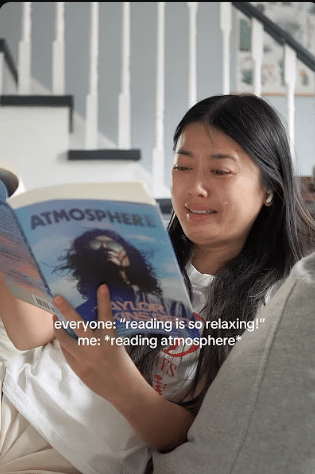
At the same time, internet culture rewards visible emotional vulnerability. Publicly posting about a book that “destroyed” you emotionally can itself become a form of identity signaling online. Emotional sensitivity becomes performative as well as authentic. That dynamic does not invalidate readers’ emotional experiences, but it complicates them.
In many ways, BookTok has blurred the line between personal reading experiences and social participation. Books become communal emotional events rather than solitary artistic encounters.
What the Novel Does Brilliantly
One of Atmosphere’s greatest achievements is its emotional realism. Taylor Jenkins Reid demonstrates a strong understanding of how loneliness often operates beneath the surface of seemingly successful lives. Rather than portraying emotional struggles through dramatic breakdowns alone, the novel captures quieter forms of suffering that many readers recognize immediately.
The pacing deserves significant praise as well. Emotional tension develops gradually rather than relying on constant revelations. This restraint allows readers to inhabit the protagonist’s emotional reality more fully and makes key moments land with greater force.
Perhaps most importantly, the novel understands that achievement and happiness are not interchangeable. Many stories treat success as the ultimate resolution to personal conflict. Atmosphere repeatedly challenges that assumption. It asks whether accomplishment can truly satisfy emotional needs and refuses to offer simplistic answers.

Where the Novel Might Frustrate Some Readers
Despite its strengths, Atmosphere will not work equally well for everyone. Some readers may find portions of the novel emotionally repetitive. Themes of loneliness, ambition, and emotional repression recur frequently throughout the narrative, occasionally creating a sense of emotional circularity.
Others may argue that the novel risks romanticizing emotional suffering. Contemporary literary culture often elevates melancholy as a marker of depth, and some readers may feel that the book occasionally lingers too comfortably within sadness rather than interrogating it.
The book’s immense online popularity may also create unrealistic expectations. When readers encounter endless posts describing a novel as life-changing or emotionally devastating, the actual reading experience can struggle to match the surrounding hype. This phenomenon affects many viral books, and Atmosphere is unlikely to be an exception.
Why This Novel Matters Beyond Its Plot
What makes Atmosphere particularly fascinating is that the story itself may be only half of the phenomenon. The other half exists in the reactions. Readers are using the novel as a language for discussing burnout, perfectionism, vulnerability, emotional exhaustion, and the fear of wasting one’s potential. In that sense, the cultural conversation surrounding the book becomes almost as significant as the narrative itself.
This shift reflects a broader transformation in how people engage with culture online. Increasingly, individuals use media consumption as a form of self-expression, curating aspects of their identity through the books, films, music, and creators they publicly support. A novel can become a shorthand for a particular emotional experience or worldview. When readers post highlighted passages, create reaction videos, or recommend books to others, they are often communicating something about themselves as much as they are discussing the work itself.
In many cases, sharing a book online becomes a way of saying, “This is how I feel,” without having to articulate those emotions directly. Atmosphere lends itself especially well to that kind of identification because its themes of ambition, loneliness, self-doubt, and emotional exhaustion mirror concerns that many readers are already discussing across social media platforms.
Books increasingly function as emotional identity markers. They allow readers to communicate who they are, what they fear, what they value, and what they are struggling to understand. Online reading communities transform those individual experiences into collective conversations.

Literature is no longer just for entertainment. It is increasingly functioning as emotional community-building. Readers gather around shared emotional experiences, finding connection through stories that articulate feelings they struggle to express on their own.
Final Verdict
Whether Atmosphere ultimately becomes Taylor Jenkins Reid’s defining work remains to be seen, but its early reception already reveals something important about contemporary reading culture. The novel has arrived during a moment when many readers feel exhausted, uncertain, and increasingly disconnected from traditional ideas of success. Its themes of ambition, loneliness, identity, and emotional repression speak directly to anxieties that dominate modern online conversations.

For readers who appreciate emotionally introspective fiction, character-driven storytelling, and novels willing to explore difficult emotional truths, Atmosphere largely earns its reputation. It is thoughtful, emotionally intelligent, and frequently moving. More importantly, it demonstrates why emotionally resonant fiction continues to dominate online reading culture. People are not directly looking for stories that entertain them. They are looking for stories that help them understand themselves.
That may be the real reason Atmosphere is becoming the internet’s next emotional obsession. It is not just telling readers a story. It is giving them a vocabulary for feelings they were already carrying long before they opened the book. In an era defined by burnout, uncertainty, and constant pressure to perform, that kind of emotional recognition carries extraordinary power. Whether readers come away remembering the NASA setting, the relationships, or the novel’s most heartbreaking moments, many will likely remember something else as well: the feeling of being understood. And in today’s online reading culture, few things are more powerful, or more shareable, than a novel that makes readers feel genuinely seen.