


One week ago, a new report showed that the Trump administration had cut 4,000 jobs from the Department of Justice. This included 7% of the Federal Bureau of Investigation (FBI), 6% of the Drug Enforcement Administration (DEA), and 38% of the National Security Division, which fights terrorism. Days later, Trump faced his fourth assassination attempt.
Instead of revisiting his decision to cut law enforcement agencies, he demanded a ballroom. While this may come as a surprise, given Trump’s reputation as a “tough on crime” president, it follows a long trend of promising to keep Americans safe while developing policies that do the exact opposite.
A story of safety
In all of Trump’s presidential campaigns, one of his key policies has been promising to make America safe from crime. In 2016, this included calling Mexican undocumented immigrants “drug dealers, criminals, and rapists,” and claiming that, because “Islam hates us,” America had to ban all Muslim immigration. Conveniently, he framed himself as the only person who could deal with these threats. He claimed his opponent, Hillary Clinton’s use of the phrase “radical jihadism” (as opposed to his demonization of all Muslim people, most of whom are not terrorists), illustrated that she was too weak and dishonest to lead America.
“We will defeat Radical Islamic Terrorism,” he said in a campaign rally. “Anyone who cannot name our enemy is not fit to lead this country. Anyone who cannot condemn the violence of Radical Islam lacks the moral clarity to serve as our President.”
Later in the campaign, Hillary did use the phrase “radical Islamism” (“Islamism” describes a politicized version of Islam), and Trump described it as her caving in to the strength and truth of his phrase. He tweeted, “I have been hitting Obama and Crooked Hillary hard on not using the term Radical Islamic Terror. Hillary just broke- said she would now use!”
In his 2020 race against Joe Biden, America was grappling with one of the most high-profile, violent instances of police brutality in its history – Minneapolis officer Derek Chauvin’s murder of George Floyd, a 46-year-old Black man – in May of that year. The case drew attention to the fact that African Americans are disproportionately more likely to face unjust treatment from police.
Following this tragedy, many liberal activists called to defund the police. The idea was unpopular, as it struck many Americans, regardless of their views on George Floyd, as unrealistic.
Trump’s campaign seized the opportunity. It worked to tell voters that, because liberals were too soft on crime, they wouldn’t be safe in Joe Biden’s America. Before July 2020, he had spent very little on criminal justice ads. But that summer, when protests for police reform were at their peak, the tone shifted. Now, the streets were unsafe, and only funding the police and getting Republicans in office could guarantee America’s safety. In one ad, meant to represent the future under Democrats, a family dialled 911. A robotic voice tells them, “You have reached the 911 police emergency line. Due to the defunding of the police department, we’re sorry, but no one is here to take your call.”

In 2024, this rhetoric reached a fever pitch. By this point, his campaign ads suggested, Americans were no longer fighting to keep the streets safe. The mentally ill and the homeless, as well as undocumented immigrants, had, apparently, already taken our streets. Trump suggested that only drastic measures, like “one rough hour” of policing, the return of execution by firing squad, rebuilding large-scale mental institutions, and a “deportation task force,” would protect America from rampant crime. In reality, statistics from that year suggested crime had decreased by 3%, and the murder rate was falling dramatically. However, at the time, Americans believed crime was increasing.
The reality, however, is quite different.
Political and criminal
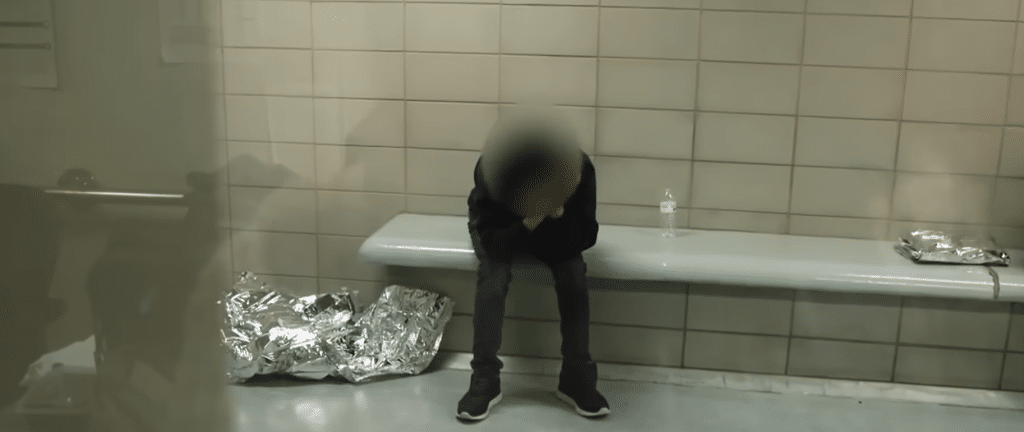
In the 2024 campaign, Trump was particularly adamant that undocumented immigrants were a danger to the country. He repeatedly described them as criminals and dangerous animals, and even claimed they “were eating cats and dogs.”
However, undocumented immigrants do not actually commit many crimes. In fact, studies show undocumented immigrants are 37% less likely than citizens to commit crimes. Trump also focused on two crimes in particular – human trafficking and fentanyl smuggling – that his policies may actually enable. In addition to slashing 70% of the State Department’s anti-trafficking force last year, Trump’s draconian ICE policies may make it easier to exploit victims.
Roughly 72% of U.S. trafficking victims are immigrants, and traffickers often use immigration laws to exploit them. This can include stealing identity documents, or exploiting the fact that certain types of visas require immigrants to either work at a specific job to keep legal residency or marry an American citizen to gain citizenship, to get them to do what they want. When being an immigrant in Trump’s America is so dangerous, these tactics could be even more effective. As ICE policies have become more streamlined, ICE agents are no longer required to do things like proactive victim identification (seeing if there is evidence that an undocumented immigrant might be the victim of a crime), and have deported people with pending U and T visas. This is not only unjust in itself, but also means that it will be harder to investigate traffickers, and harder for other victims to step forward.
Additionally, ICE’s expanded power and limited oversight have enabled agents to sexually assault women and children.
And the fentanyl crisis? Citizens actually smuggle in the vast majority of fentanyl, since they face less scrutiny at the border. The false message that undocumented immigrants are bringing it in just works to their advantage.
Moreover, this focus on deporting all undocumented immigrants shifts focus away from the ones who are dangerous. In Trump’s first week of his second term, he rescinded an Obama-era Executive Order that prioritized deporting noncitizens who had committed violent crimes. His administration also released noncitizens with serious criminal records at twice the rate of the Biden administration.
How Trump enables crime

Beyond this, Trump’s general character, actions, and policy positions do not reduce violence. Although crime rates declined in 2025, the Vera Institute, a nonprofit researching crime, warned that Trump should not get credit. It cited several Trump policies, including $800 million cuts to the Justice Department, as well as funding cuts to evidence-based violence prevention strategies, as things that would make crime worse. It’s also worth noting that, throughout Trump’s terms, his hateful rhetoric has been correlated with violent crimes against Muslims, Asian Americans, women, and transgender people.
Trump has also been incredibly willing to release dangerous people who support him, such as the Tate brothers and the January 6th rioters. As long as criminals swear allegiance to him, their crimes don’t seem to matter.
Trump also repeatedly referred to social security programs as “waste,” and strived to defund them. However, these programs provide massive benefits to public safety. State Medicaid expansions decrease crime and reduce the number of criminals who re-offend within a year by 11%. SNAP, which helps low-income families secure food, is similarly associated with reduced recidivism, as well as reduced intimate partner violence.
However, Trump has cut $1 trillion from Medicaid, and, during a government shutdown, withheld SNAP benefits from Democratic-led states.
Even Trump’s proposals for harsh punishments might not reduce crime. For example, he has advocated for using the death penalty against child rapists. While this may seem reasonable on its face, it is a problem for two reasons. Firstly, it is unconstitutional. The Supreme Court has ruled that the death penalty cannot be used in non-homicide cases. Secondly, experts warn that this would make children less likely to disclose abuse, because, generally, this type of abuse comes from friends and relatives they care about. Furthermore, such an increase in punishment removes any incentive for the abuser to leave their victim alive.
At the same time, Trump has also advocated for using the death penalty on drug traffickers while defunding harm reduction programs that help people addicted to drugs wean off by taking smaller and smaller doses in a controlled environment. This approach ignores the reality that people addicted to drugs often cannot quit on their own, and that, without other options, these people will become more dependent on their dealers- and potentially more willing to protect them than they should be.
Broadly speaking, 88% of criminologists believe that the death penalty is not an effective deterrent. 91.6% also believe that increasing the frequency of executions would not make it a more effective deterrent.
Like many of Trump’s crime policies, increasing the use of the death penalty is based on a desire to punish, not to promote safety. Those who support his policies take it for granted that punishing criminals always helps victims, and rehabilitation always enables them to harm victims, but that is not true.
Friendly fire
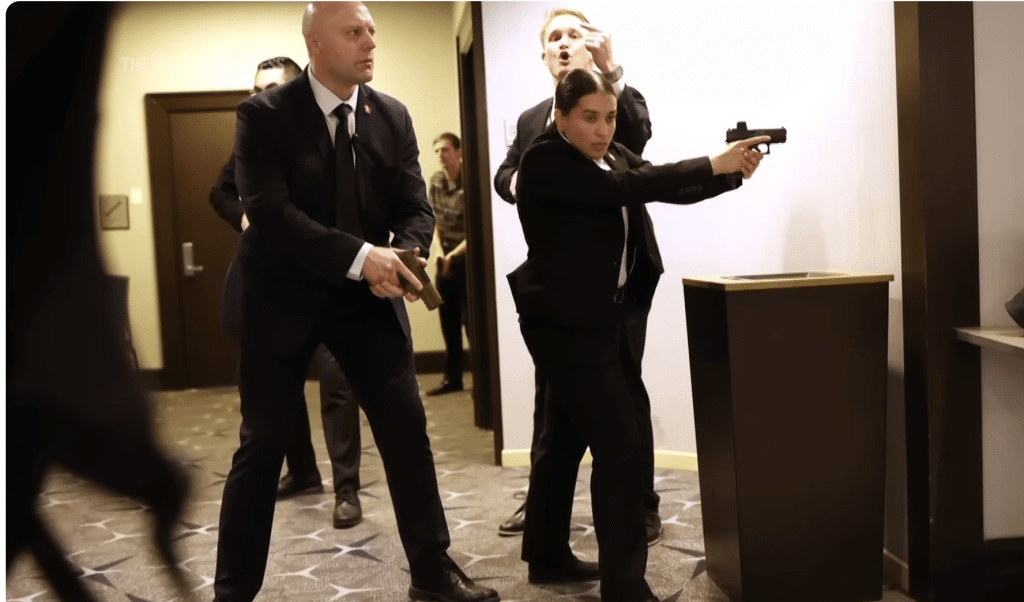
The manifesto of Cole Allen, who attempted to kill top government officials at the White House Correspondents’ Dinner last week, is an interesting read. Not because it is well-written, or because his motivations are particularly complex. It’s interesting because, despite the gravity of the situation, it’s… quirky. He begins it with, “Hello everybody!” There are several one-liners, like “I apologize to my parents for saying I had an interview without specifying it was for ‘Most Wanted,’” and that security has “metal detectors out the wazoo.” He also signed it under the name “Cole ‘coldForce’ ‘Friendly Federal Assassin’ Allen.”
Allen also writes objections and rebuttals, as if he’s talking to someone who wants him not to commit this crime. As this hypothetical person, he writes, “As a Christian, you should turn the other cheek.” He responds by claiming that turning the other cheek is for when you are harmed, but “Turning the other cheek when *someone else* is oppressed is not Christian behavior; it is complicity in the oppressor’s crimes.” His other answers are variations of the same thing. Summed up, he argues that what his leaders do reflects on him, so he must put an end to it.
It reminded me of Marvel, Mission Impossible, and James Bond movies. All of these movies feature a strong man with a lethal weapon and a heart of gold. This man feels pained by the suffering of others and uses his strength to do what everyone else is too weak, foolish, or complacent to do. Occasionally, he’ll give the audience a cheesy joke to remind them that he’s the good guy, even if he’s dangerous.
Both Trump and his would-be murderer portray themselves as the lone hero who can fix the world. For Trump, at least, it worked. When Trump talks about combating crime, it unifies things American culture is drawn to – masculinity, individualism, and punishment.
While masculinity is not harmful in itself, men may commit crimes to “prove” their masculinity. Trump and his supporters have likened him to a father, protecting and disciplining America, glorifying his administration’s violent, illegal actions. Allen argued in his manifesto that he wanted to kill Trump because Trump is a rapist, and his administration enables rape and abuse at ICE detention centers. While he might have meant this genuinely, it still comes off as chauvinistic and irresponsible. Killing one high-profile rapist does not protect women. If domestic violence spikes when the husband’s team loses a football game, a successful Trump assassination could have led to much worse. Either he did not realize this, or, ultimately, did not care.
This is also an individualistic mindset. While individualism is not inherently wrong, cultural overemphasis on personal responsibility can make people less empathetic to community members. Additionally, the need to take care of one’s problems alone, without community, may explain why America, even compared to other nations with high gun rates, has the world’s most “lone wolf” murderers. Indeed, Allen’s manifesto suggests he wanted to wash what he felt was blood on his hands. It seems less like he was fighting on behalf of those around him, and more fighting to save himself.
And this brings us to punishments. America has some of the harsher sentences in the Western world for varied reasons, including the legacy of the War on Drugs, crime coverage in the media, and certain religious beliefs. Both liberals and conservatives often call for “tough on crime” laws with the belief that they will make the country safer. However, the reality is that both long sentences and severe sentences do not actually decrease crime or reduce recidivism. Prisoners become desensitized to prison. They learn strategies from each other. Trump has always advocated for punishment, and Allen’s attempted execution of Trump was supposed to be a punishment for Trump. But neither America’s crime nor its rising fascism will be solved by punishing a few bad people.
Although many voters seem drawn to Trump because of his approach to crime, this is dangerously misguided. Many of his policies could inspire desperate people to commit crimes, prevent victims from speaking out, or both. Trump, and what he represents, will only make America less safe in the long run.












Frank Sterle Jr.
May 14, 2026 at 3:05 am
President Donald Trump largely is a goof, yet many fans admire(d) him as some sort of genius that resists/challenges the Deep State, etcetera. And there’s “the swamp” that Trump claims he’ll drain — although he himself is a part of it. Since both Trump administrations kowtow(ed) to big fossil fuel, mostly via the recklessly significant loosening of environmental protections, he, far from genuinely trying to “drain the swamp”, actually wallows in it.
A revelatory review (by Geoff Olson, 01/10/2018) of the book The American Deep State: Wall Street, Big Oil and the Attack on U.S. Democracy notes that the book’s author describes big oil CEOs and lobbyists in the U.S. as being a notably large part of the American Deep State. Therefore, it would be a large part of the national Capitol’s swamp that Trump claims has corrupted D.C. and, ergo, was supposedly seeking to destroy him and his presidency.
And then he wades even deeper into the filth by siding with big-money military industrial interests and Netanyahu’s Israel in un-provokedly bombing Iran last summer and again now. … Maybe Trump, himself, doesn’t really know what he’s trying to accomplish with attacking Iran.
Meanwhile, Trump’s lame and immoral idea of creating peace is compelling one side or party that: “You’re not holding any cards.” However, human beings, both individualistically and collectively, want to feel a sense of self dignity, and therefor Trump’s you’re-not-holding-any-cards likely won’t work.
And similar to the source of Iran’s sovereignty predicament, the deadly invasion of Venezuela and kidnapping of its leader and his wife by Trump’s U.S. was/is about oil, more oil, and even more oil. Greenland’s sovereignty is/was also threatened. It is blatant foreign-policy immorality and criminality.
.
“This notion of a supranational deep state does not seem to be far-fetched to me, though I remain agnostic about rumors involving the [Donald Trump first-term administration’s] Offal Office. I certainly don’t buy the alt-right notion that Trump is playing ‘four-dimensional chess’ against the deep state. The six-time bankruptee would probably lose at checkers to a nine-year old and tweet that he whipped Garry Kasparov.”
—Geoff Olson, “A Deep State of Confusion”
Frank Sterle Jr.
May 14, 2026 at 3:10 am
The man largely is a fool, yet many fans admire(d) him as some sort of genius that resists/challenges the Deep State, etcetera. And there’s “the swamp” that Trump claims he’ll drain — although he himself is a part of it. Since both Trump administrations kowtow(ed) to big fossil fuel, mostly via the recklessly significant loosening of environmental protections, he, far from genuinely trying to “drain the swamp”, actually wallows in it.
A revelatory review (by Geoff Olson, 01/10/2018) of the book The American Deep State: Wall Street, Big Oil and the Attack on U.S. Democracy notes that the book’s author describes big oil CEOs and lobbyists in the U.S. as being a notably large part of the American Deep State. Therefore, it would be a large part of the national Capitol’s swamp that Trump claims has corrupted D.C. and, ergo, was supposedly seeking to destroy him and his presidency.
Meanwhile, Trump’s lame and immoral idea of creating peace is compelling one side or party that: “You’re not holding any cards.” However, human beings, both individualistically and collectively, want to feel a sense of self dignity, and therefor Trump’s you’re-not-holding-any-cards likely won’t work.
.
“This notion of a supranational deep state does not seem to be far-fetched to me, though I remain agnostic about rumors involving the [Donald Trump first-term administration’s] Offal Office. I certainly don’t buy the alt-right notion that Trump is playing ‘four-dimensional chess’ against the deep state. The six-time bankruptee would probably lose at checkers to a nine-year old and tweet that he whipped Garry Kasparov.”
—Geoff Olson, “A Deep State of Confusion”