
The underground has always been hip-hop’s most exciting space. It’s where risks are taken, identities are formed, and new sounds are born before they ever touch the mainstream.
But lately? A lot of it has started to feel the same.
Scroll through SoundCloud or TikTok, and you’ll hear it immediately: Distorted rage beats, dark aesthetics, and artists building entire identities around mystery and detachment. It’s a formula that once felt fresh, but after years of repetition, it’s begun to blur together.
Enter Slayr.
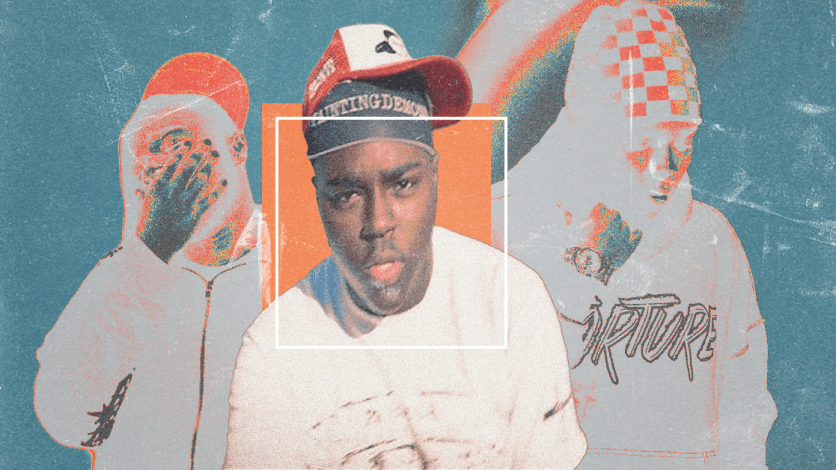
At just 18 years old, the Philadelphia artist is building a cult following, and more importantly, he’s challenging what the underground is supposed to sound and feel like in 2026. With his most recent projects like Half Blood in 2025 and its deluxe version, released earlier this year, Half Blood (Bloodluxe), Slayr isn’t just making noise. He’s shifting the conversation around what “real music” in the underground can be again.

From Philly to the underground
Slayr’s rise didn’t happen overnight. He started making music at just 12 years old, slowly developing his sound long before the attention came. By 2020, he had begun producing his own beats, placing himself directly inside the early evolution of the rage subgenre as it was taking shape.
That timing matters.
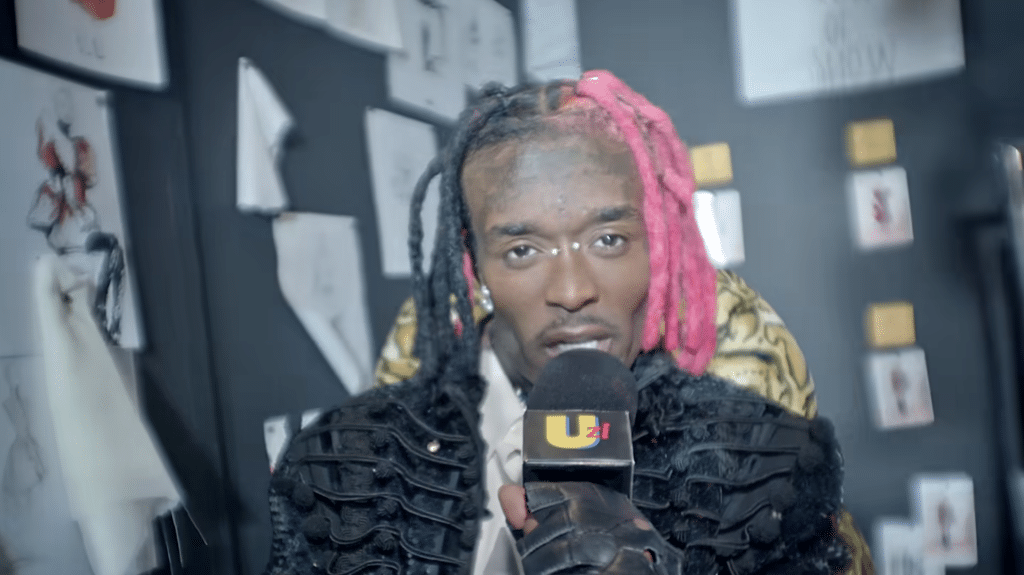
While many artists jumped onto rage once it became popular, Slayr grew alongside it. He wasn’t just following a trend; he was part of the generation shaping it. Coming out of Philadelphia, a city with a deep-rooted musical identity and home to his biggest musical inspiration, Lil Uzi Vert, he brings a sense of individuality that feels intentional rather than manufactured.

That early start also shows in the music itself. There’s a level of care, structure, and progression in his songs that separates him from artists who treat releases as disposable. For example, “Toxic,” officially released on Half Blood (Bloodluxe), is a snippet that has existed within his core fanbase for a while. Upon its official release, not only was a beat switch included, like many songs do nowadays, but a full breakdown was also included. This puts the song into a completely different context and transcends genre.
There are many other examples of songs by Slayr that innovate within the genre, such as “Brain Fog,” “Paint A Picture,” “Died and Came Back,” “Love Blur,” “Sloppy Joe,” and “The Sky” (all featured on either Half Blood or its deluxe version). Notably, nearly all of the songs on both of these albums transition cohesively from one song to the next, instead of feeling like a collection of songs with no musical connection. Instead of chasing quick attention through individual songs or riffs, Slayr’s catalog feels like it’s being built over time with purpose.
Why Slayr feels so different right now
The irony of the underground is that it’s supposed to be unpredictable.
What once felt experimental became formulaic.
The same blown-out 808s, the same vocal inflections, the same stylistic choices began appearing everywhere, creating a kind of creative ceiling. At the same time, the rise of TikTok and algorithm-driven discovery shifted how music was made. Songs became shorter, more repetitive, and often built around a single viral moment rather than a full listening experience. For many artists, the goal went from longevity to circulation.
That’s where the sense of staleness comes in.
Slayr’s emergence pushes directly against that. His music feels brighter, more emotional, and, most importantly, intentional. While he still taps into high-energy and even darker tones at times, it comes across as range rather than repetition. Even in his song “Flashout Freestyle,” which is a mosh pit song through and through, he raps, “Do something different, **** the repetition, I don’t settle.” Keep in mind, this song comes after two songs on Half Blood (Bloodluxe) that are completely different. One of them includes a fully vocalized intro and a dubstep outro. Instead of leaning into intimidation or ambiguity, he leans into expression.
There’s melody. There’s structure. There’s actual evolution within songs themselves, which is something that’s been missing from a lot of quick-turnaround underground releases.

From SoundCloud to Rage: A New Evolution
To understand Slayr, you have to go back.
His sound draws from the late-2010s SoundCloud era, which brought emotional vulnerability and melodic experimentation to hip-hop. Think artists like Trippie Redd, Lil Uzi Vert, and Juice Wrld, who weren’t afraid to be raw, chaotic, or genre-blending.
Then came the “rage” era around 2020. Heavy synths, blown-out 808s, and high-energy production took over, pushing the underground into a new sonic direction, figureheaded by Playboi Carti with his avant-garde, “Whole Lotta Red.”
Slayr serves as a bridge between those two worlds.
He keeps the energy of rage, but brings back the emotion and musicality of earlier SoundCloud artists. The result is something that feels both nostalgic and forward-thinking, almost like a reset button for the genre.

A post-Covid generation of artists
To really understand why Slayr’s approach resonates, you have to look at the environment he came up in.
Artists of his age didn’t just grow up online. They were shaped by a period of isolation during the COVID-19 pandemic, where creativity became something intensely personal. Without traditional spaces to collaborate or perform, many young artists turned inward, experimenting with sound and identity in more self-directed ways.
That influence is still showing up now.
There’s a noticeable shift among younger artists toward blending emotional openness with digital experimentation. Slayr shows a perfect example of that balance. His music carries the high-energy DNA of rage, but it also brings back a sense of raw feeling and progression that connects more directly with listeners.
In that way, he not only represents a new, unique sound but also stands for a generation that values authenticity over image, even in a genre that has increasingly leaned into aesthetics.
More than aesthetic: why fans are tuning in
Part of Slayr’s appeal isn’t just the music… It’s the persona.
In a space where artists often build mystique through distance or darkness, Slayr does quite the opposite. His presence feels genuine, playful, and human. Whether it’s through online interactions or his early appearances on Twitch platforms, he’s built a connection with fans that feels natural. Ever since the ball dropped in 2026, it genuinely feels like there is never more than a few days that pass before he goes on someone’s livestream and makes songs live and from scratch for his fans to see and experience in real time.
That authenticity matters, especially right now. After years of algorithm-driven viral moments and fast fame, listeners are starting to crave something more real. A catchy snippet may bring people together, but music that actually sticks is rare, and where true communities form.
Slayr delivers that.
The new underground isn’t just SoundCloud anymore
Another key part of Slayr’s rise is where it’s happening.
While SoundCloud remains a staple, the modern underground exists across platforms, and Twitch has become one of its most important spaces. Slayr’s early appearances on livestreams like Song Wars in 2024, hosted by Twitch Hall-of-Fame PlaqueBoyMax, helped introduce him to a wider audience in a way that feels Gen-Z uniquely. He more recently won a Song Wars segment in March 2026, which included many rising stars from the underground, like Tezzus and 1300SAINT.
These platforms aren’t just for promotion and seconds of fame, they’re for a broad and lasting community.
Fans don’t just listen to the music; they watch it get made, debated, and discovered in real time. That creates a different kind of connection, one that feels more immediate and more personal. Slayr’s presence in those spaces helped build a fanbase that is invested in the artist’s progress as an individual.
That authenticity carries over into his music, reinforcing the idea that he’s not just an artist being pushed by an algorithm with a passive following, but one growing and sharing that growth within a culture.
The TikTok effect: why he still stands out
Yes, Slayr is gaining traction on TikTok and across social platforms. Clips of his songs circulate, edits get made, and his fanbase continues to grow.
But what’s interesting is why.
While many underground artists rely on short, viral moments, Slayr’s music, once again, encourages full listens. His songs aren’t built just for snippets; they’re built to evolve, and they feature transitions between songs that make his records cohesive. That’s a big reason why listeners stick around instead of moving on.
Not everyone gets it: that’s the point
Of course, not everyone is on board.
Part of Slayr’s image (more playful, overall less aggressive, and less focused on traditional “toughness”) has drawn criticism. Some listeners dismiss his aesthetic as being too soft or even akin to a “GameStop worker,” especially in a genre where image often plays a huge role.
But that reaction says more about expectations than it does about the music.
The underground has long been tied to ideas of rebellion, but those ideas can become restrictive when they’re repeated too often. By stepping outside of that mold, Slayr challenges what an underground artist is supposed to look and act like.
And in doing so, he opens the door for something new.
The 2016 cycle is happening again
There’s been a lot of talk online about the “2016 aesthetic” coming back. Old photos, old sounds, and old energy are in.
But this isn’t just nostalgia, it’s a cycle.
Music, especially in the underground, moves in waves. When things become oversaturated, there’s always a push back toward authenticity. Toward feeling… Toward experimentation that actually means something.
Slayr represents that shift.
He’s not copying the past; he’s pulling from it to move forward. And in doing that, he’s becoming a symbol of where the underground might go next.
What this means for hip-hop right now
Hip-hop as a whole has been in a weird place recently. Numbers fluctuate, debates about “falling off” pop up constantly, and no one can quite agree on what the future looks like.
That’s why artists like Slayr matter.
They don’t just follow the direction of the genre; they help redefine it.
If the past few years have been about aesthetic and energy, this next phase might be about substance, structure, and staying power. Music that actually lasts instead of going viral for a while.
Why you should press play
If you’re tired of hearing the same recycled sounds, Slayr is worth your time.
His music blends genres, plays with structure, and actually builds something within each track. It feels less like content and more like craft. And in today’s underground scene, that’s rare.
The bigger question isn’t whether Slayr will keep growing; it’s how many artists will follow his lead.
Because if this shift continues, the underground might be on the verge of becoming exciting again.