

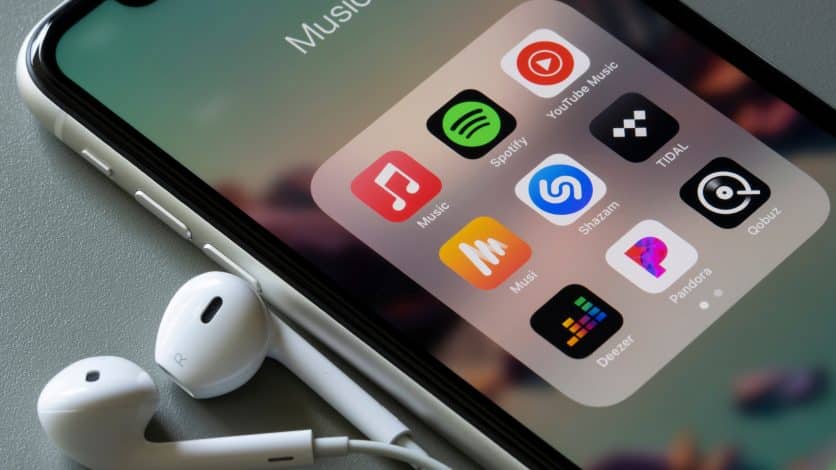
Streaming music gives us the freedom of listening to what we want, when we want. Whether you’re putting on study music for a productive session or getting ready for the day with your morning playlist, music can play a very important part in our routine.
Given this fact, people take their listening seriously. It isn’t just about what you listen to, it’s also about how you listen. Listeners want a seamless experience that lets them enjoy their music without unwanted distractions. Yet, finding the right fit isn’t so simple.
With so many services to pick from, choosing the best one requires careful consideration. You have Spotify, Apple Music, YouTube Music, and so many more, each offering its own unique user experience. How should you decide where to put your playlist?
Music streaming drama
As much of a luxury as it is to be able to stream all of your favorite songs from anywhere, it comes at a cost that no one wants to pay. For this reason, when Spotify decided to raise its monthly base subscription to $12.99/month from $11.99/month, which was already more expensive than its competing platforms, it got a lot of heat for it.
@ivangtv This might be the end of Spotify since they keep raiding their prices #spotify #music #streaming #foryou ♬ original sound – IvanGtv
A wave of disappointed Spotify listeners has started looking at other options, which has opened up a complicated debate across the internet: Which music streaming service is the best? You may be inclined to think that whichever platform you currently use is the correct answer. Maybe that is the best option for you, but it’s only fair to look at all the options one-by-one first. Some may surprise you.
Spotify
While they are currently behind in the race, Spotify does have some redeeming qualities that might keep it afloat. The paid plans are expensive compared to other services, but the app is free to use. Granted, constant ad interruptions aren’t pleasant. Even so, this gives Spotify an edge over its most notable rival, Apple Music, which requires a subscription to use. If you don’t mind the ads or simply don’t want to pay to stream music, Spotify is still a very legitimate option.
Extending your playlist is fun and easy on Spotify. Their algorithm does a great job finding songs you’ll like. If you’re anything like me, you always enjoy discovering new music to put on your playlist. I still listen to some of Spotify’s recommendations even years after the brief time I spent on the platform.
Of course, we need to address the elephant in the room. People want uninterrupted listening, and as of March 1, Spotify is one of the most expensive music streaming platforms for ad-free music. Time will tell if the price stays at $12.99/month or if a decrease in usage will prompt a response from Spotify’s management team. In the meantime, many users are better off finding cheaper options.

| Pros | Cons |
| Offers free tier (with ads) | Premium subscription more expensive than its competitors’ |
| Strong recommendation algorithm | |
| Very accessible and highly compatible with many devices |
Apple Music
There are many music streaming services other than Apple Music to choose from for the same price of $10.99/month or cheaper. Why is this the popular choice right now?
Apple Music had been the undisputed second-place music platform behind Spotify for years. Naturally, when Spotify no longer worked out, most people gravitated towards the next best thing. Additionally, Apple has the majority of Spotify’s popular features, even their coveted Wrapped listening summary, which Apple shows year-round, rather than just in November.
However, it goes deeper than that.
Spotify caught a stray from Apple Music. Not only did this viral tweet gain them cool points on social media, but it also marked the unofficial start of the grand music streaming debate, which you can see unfold in the comment section.
One recurring argument is how much each platform pays artists, with Apple Music commissioning over twice as much despite being cheaper on the listener’s end. Others come to Spotify’s defense, claiming Apple Music has worse recommendations and lacks a “don’t play this song” feature.
Generally, Apple Music is the favorite over Spotify, but why choose Apple Music in general? The platform is heavily praised for its audio quality. Headphone users get an immersive listening experience on Apple Music with surround sound and high-resolution audio that other services struggle to compete with. Keep in mind that audio quality can only be as strong as your listening device allows, meaning this is only noticeable with high-quality headphones.
Being an Apple service means that Apple Music has the ability to easily integrate features and graphics with the iPhone. For instance, I used to set some of the songs in my Apple Music library as my alarm. In terms of aesthetics, some more popular songs even have animated lock screen visuals to accompany the cover art. Apple Music is designed to be as immersive as possible for the listener.
One of Apple Music’s main weaknesses is its recommendations. Its algorithm has a difficult time figuring out the listener’s taste and making suggestions accordingly. This platform is not the best for finding new music. It also has no free tier whatsoever. You’ll have to pay a subscription fee if you want to use this service.
| Pros | Cons |
| Lowest price of the mainstream music streaming services | Does not offer a free tier |
| Rich audio quality | Weak recommendation algorithm for discovering music |
| Built-in integration with the iPhone |
YouTube Music
YouTube Music has a healthy balance of features from both Spotify and Apple Music. They offer strong song recommendations, quarterly listening recaps, and a free tier (with ads). It also has a very wide catalog due to its affiliation with YouTube. You have better chances of finding indie music on YouTube Music than any other platform. They even added a feature that plays a song at random as a nod to Google’s “Feeling Lucky” easter egg.
There’s just one catch. The Premium subscription is $13.99/month. Well, sort of.
It isn’t that YouTube Music is expensive; it’s that it comes bundled with YouTube Premium, which is an ad-free subscription to YouTube.
This makes the service a hit-or-miss. YouTube Music is my current choice for music streaming. I spend enough time on YouTube, both as a creator and a viewer, to justify the extra $3/month for a two-in-one subscription service. This won’t be the case for everyone.
Google does allow users to buy YouTube Music Premium by itself, but it may be more sensible to go with Apple Music if you only want ad-free music for a more immersive listening experience.
| Pros | Cons |
| Offers a free tier (with ads) | Most expensive option for ad-free music streaming |
| Comes bundled with YouTube Premium | Less immersive than Apple Music as a standalone service |
| Very wide catalog of songs |
TIDAL
We’ve now drifted away from the mainstream platforms dominating the music debate. TIDAL is yet another music streaming service owned by Apple. It may seem redundant, but the two platforms are designed for different audiences.
Whereas Apple Music is made for the casual listener, TIDAL focuses on the artists. Not only does the platform allow users to upload their own music, but artists also receive a larger revenue share on TIDAL than any of the mainstream services. If you want to support the artist, the best place to listen is on TIDAL.
Another advantage of TIDAL is its superior sound quality. Apple Music has sharp audio quality, but if you really want crisp sound, look no further than TIDAL.
This is the choice for listeners who value paying artists for their work and can appreciate unrivaled audio quality. If you’d prefer a more pleasant user experience, Apple Music is still probably the better choice.
| Pros | Cons |
| Tied with Apple Music for lowest subscription price | Free tier is very limited in functionality |
| Strongest audio quality | Less pleasant UI (compared to Apple Music) |
| Highest commission rate for artists |
Amazon Music
Much like YouTube Music, Amazon Music caters to those who already have an Amazon service, Amazon Prime. However, this model is worse than YouTube’s for one major reason.
Amazon Prime does come with Amazon Music, but users can only listen in shuffle unless they pay extra for the service. YouTube offers an unrestricted version of YouTube Music with a Premium subscription.
Unfortunately for Amazon Music, not much makes them stand out above the competition. Amazon products, such as Alexa, integrate well with it. They also pride themselves on having a wide music catalog. However, for the average music listener, Apple Music or YouTube Music would do the job for a better price.
| Pros | Cons |
| Comes bundled with Amazon Prime | The bundled version of Amazon Music is limited in functionality |
| Offers a free tier (with ads) | Premium subscription more expensive than Apple Music’s |
| Built-in integration with Amazon products |
Musi
Last but not least, we have a platform that may be even more controversial than Spotify, given its history. Musi is a free iOS app that lets users stream any YouTube content as long as they are connected to the internet. The app’s ad-free status raised some concerns about its legality, which remains unclear. Apple eventually removed Musi from the App Store in 2024, and the app has been gone since.
If you are one of the 66 million people who downloaded Musi before its removal, you lucked out. The app is still fully functional despite being publicly inaccessible. This means entirely ad-free music streaming for a one-time payment of $6, which is unheard of in 2026.
Musi has a catalog even wider than YouTube Music’s, a customizable appearance, and more features than you would expect out of a free streaming service, like crossfade and a sleep timer.
Unfortunately, it might be too good to be true. As someone who used Musi exclusively for years before its removal from the App Store, I can attest that the app is safe to use. However, Musi has been in a lawsuit with Apple since 2024. It is unclear what may happen to the app if Musi loses.
| Pros | Cons |
| Free to use, with a one-time $6 payment to remove all ads | Only compatible with iOS devices |
| Widest catalog of any music streaming service | Questionable legal status |
| Doubles as an alternative to YouTube | No offline streaming |
Still lost?
Most of these platforms offer a free trial for new users. If you aren’t sure about any of these, sign up for a trial and try it out yourself. None of them is one-size-fits-all. It’s the subtle differences between them that will ultimately sway you one way or another.












Wanda Mosley
March 10, 2026 at 10:37 pm
Great observation 👍🏾 and explaining the difference between them all.