Donald Trump’s poll numbers have hit a record-term low. A new faction of congressional Republicans is standing up to him. Due to the Iran War, many Republicans are finding it harder to defend him. However, is this a sign of permanent change?
Crossing political (salt) lines
Since Trump first ran for president in 2016, non-MAGA critics, including some political scientists and psychologists, have described MAGA as a “cult.” They suggest that the devotion many supporters have towards Trump as a single leader (regardless of whether he tells the truth or acts in their best interests), and their perceived “us versus them” mentality, is no different than the blind followers of a false prophet.
However, Republicans in Congress and across America seem tired of Trump. Several key coalitions of the MAGA base are breaking away all at once. Anti-war Republicans and businesses feel betrayed by Trump’s war in Iran. The “Make America Healthy Again” movement, a coalition of health-related conspiracy theorists, is turning on him.
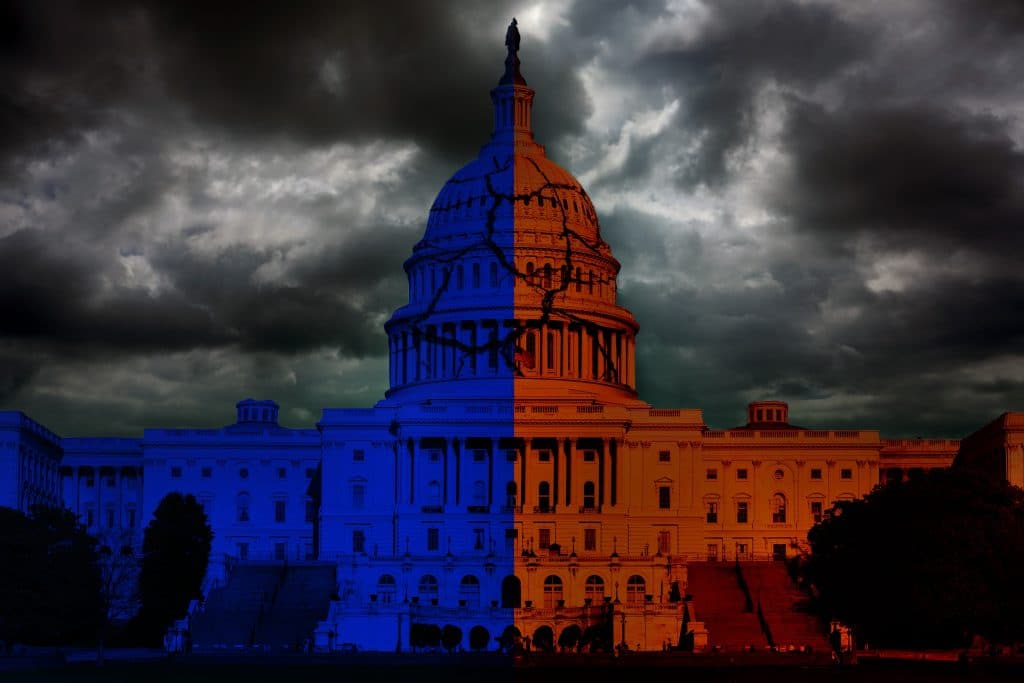
Additionally, several key right-wing personalities in and out of government are expressing disapproval with Trump’s actions, particularly with starting the Iran War, not improving the economy, and the fact that his name appears in the Epstein Files 38,000 times. Several anti-Trump Republicans, including Senator Bill Cassidy of Louisiana, Representative Thomas Massie of Kentucky, and Brad Raffensberger, a candidate for governor in Georgia, who have been defeated in their primaries, plan to be thorns in Trump’s side for the rest of their terms. After all, they have nothing to lose. They call themselves the “YOLO” or “You Only Live Once” coalition, because they know they have limited time in office and plan to make the most of it.
Conservative media personalities, such as Tucker Carlson, a former anchor of Fox News, and podcasters Joe Rogan and Candace Owens, have also expressed disappointment with the war. It might be tempting to dismiss these flashy stars as non-representative of everyday Republicans. However, given how many people on the right listen to them and how often and intensely Trump chooses to interact with them, this would be a mistake. What these people say may determine the future of this volatile, unprecedented, ever-changing Republican Party.
But is the Republican Party changing as much as Democrats might hope? And if so, are they changing for the right reasons?
Actions and words
Trump’s declining poll numbers might seem like a sign of hope. However, there are reasons to be skeptical.
In 2016, during Trump’s first presidential campaign, many viewed it as not just a long shot but a joke. And yet, it happened.

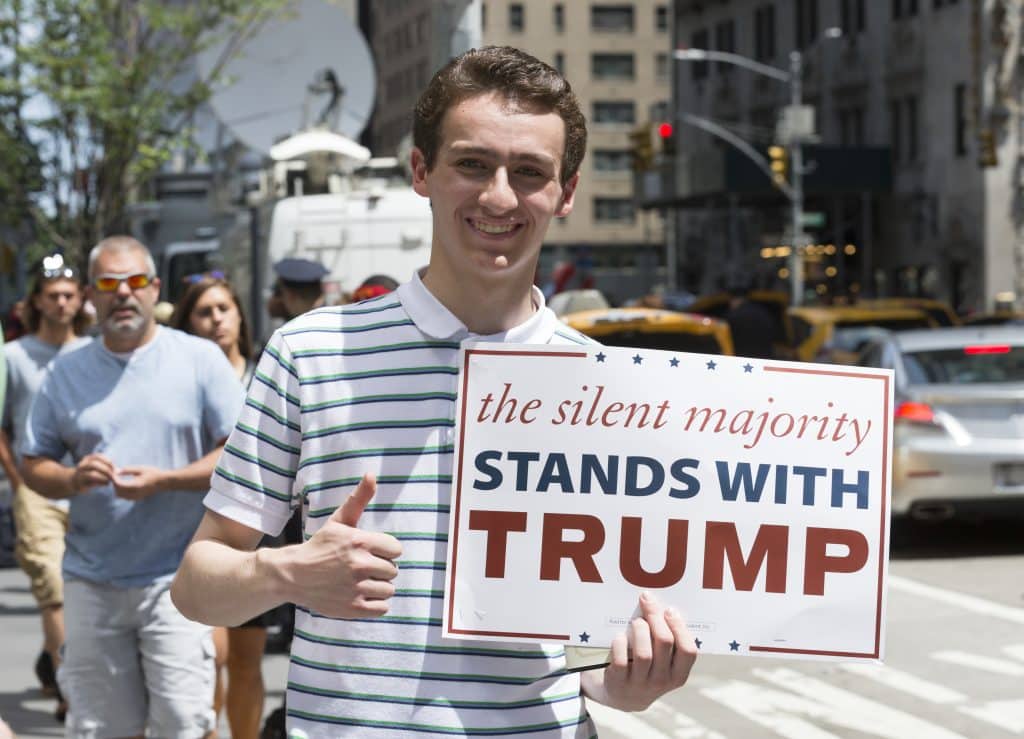
Trump had repeatedly said in speeches that a “silent majority” was with him. The phrase comes from former President Nixon. He used it during the late 1960s – a time when radical feminists, hippies, Black Power movements, and anti-Vietnam War activists were lighting up screens and imaginations – to address a more “normal” working-class population that wanted things to remain as they were.
In 2016, this silent majority was made up of people who had problems with “political correctness.” This phrase can mean many things. For Trump and his supporters, it meant prioritizing feelings and “inclusivity” over facts. For example, when Democratic politicians opposed Trump’s Muslim Ban, he argued it was a form of “political correctness” that denied the danger all Muslims apparently posed.
Most 2016 polls showed that Trump’s opponent, Hillary Clinton, was estimated to have a 71% to 99% chance of winning. However, this did not happen for a few reasons. First, many polls suffer from nonresponse bias, which occurs when the people who do not respond to polls have different opinions from those who do. Trump supporters tend to have lower education levels, which is correlated with not responding to surveys. Another problem is social desirability bias, which occurs when people give socially desirable answers rather than the truth. Experts called it the “shy Trumper” phenomenon.
These different statistics capture the same idea. While the stereotype of Trump supporters as red-hat-wearing, car-horn-blaring, die-hard loyalists exists, most are quite different. Far more Trump supporters are quieter in their beliefs because they believe they will not be taken seriously or will be demonized.
And it’s not an entirely misguided idea. Many of Trump’s biggest supporters are rural voters whom Democrats have neglected. Political scientists claim they resent minorities and Democrats because they believe Democrats prioritize “identity politics” and the whims of the elite over their issues. Many Trump supporters come from rural areas with a lack of government support, and work hard for little pay, and pride themselves on their self-reliance and sense of community. They tend to be skeptical of minorities because they believe they will take their jobs or change their town’s culture. These voters also often distrust scientists and journalists because they tend to come from more privileged, urban, and diverse backgrounds. Rural communities often perceive them as out of touch and dismissive of their culture. This made it all too easy for Trump to accuse media outlets of being “fake.”
From this perspective, their lack of responses to surveys makes sense – why speak up if you believe you won’t be listened to? If you knew your voice wouldn’t be heard, why would you respond to surveys made by the “elites” you believe are trying to contain you? And what greater act of defiance could you stage against these institutions by refusing or confusing them when they ask you questions, until they can’t know what a third to a half of the country truly believes?
So, when it seems like Trump is currently “unpopular,” take it with a grain of salt. It might be true, but when Trump supporters wrangle polling data with non-answers or falsehoods, they ironically make their own beliefs true- because, in this specific case, you can’t always trust the science.
The young are the future
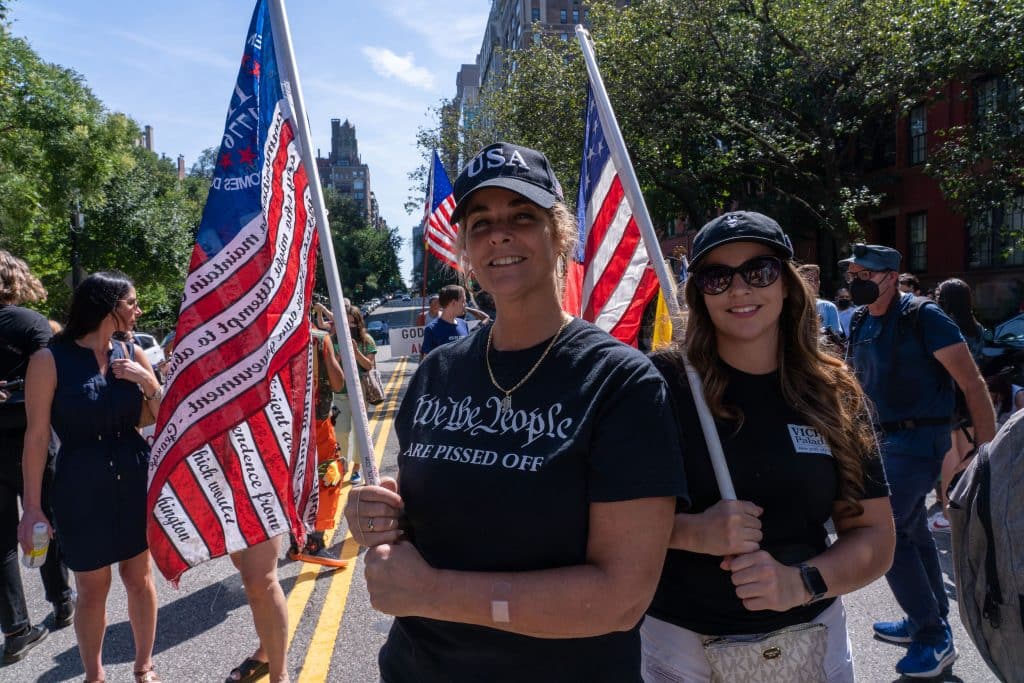
Young Republicans, including young Republican men, are among the most dissatisfied. Many believed that Democrats focused too much on “identity politics” and neglected issues important to them. These issues included the economy, anti-interventionism, and the “male loneliness epidemic.” This describes the struggles modern men face with loneliness. Generally, the phrase is used to suggest that women should date them to alleviate them of this burden. In the past few years, women have become less interested in dating men. This is due to many factors, including a “gender gap” in political ideology among young men and women, women feeling as though they have given up too much emotional labor for their boyfriends, and perceived safety risks.
According to masculinity researcher Richard Reeves, the Democratic campaign in 2024 made a costly mistake by appealing to women and saying comparatively little about men. Meanwhile, he said, Republicans successfully spoke to issues men cared about, and inspired resentment against women and Democrats.
Many young voters dislike what Trump was doing with the economy and felt his immigration measures were extreme. Because of the Iran War, many young men feel like Trump has “betrayed” them. Some have claimed that, instead of overturning a wealthy, cruel establishment, Trump became it.
What is “the establishment” that has failed them? Partially, it seems to include Israel and corporate megadonors who support the war in Iran. It also seems to include “elites” in general. But – remembering how Trump voters see “the elite” as people who support minorities at their expense – this may mean something else, too. Trump has fulfilled his promises to deport undocumented immigrants en masse and erase trans people.
What Trump has not done is provide them with the American Dream. The American Dream includes money and peace. It also tends to include a wife. Many suggest that a strong reason young men have turned to conservatism is that it creates policies that incentivize marriage. Many, including proposed bans on contraception and no-fault divorce, may keep women in marriages they do not want. But young men might not even see this as a problem. Almost a third of Gen Z men believe a wife should obey her husband. And, as opposed to older conservatives, they’re more likely to become conservative because of the “manosphere.” This refers to a collection of male podcasters and influencers, including Joe Rogan, Andrew Tate, and Nick Fuentes, who promote regressive gender roles and outright misogyny.
Not all young Republicans are aligned with the manosphere. However, the fact that the phrases “Your body, my choice” (based on a Nick Fuentes tweet) and “Get back in the kitchen” increased by 4,600% after Trump’s last victory certainly shows a connection. And the growing popularity of “softgirl” and “tradwife” trends means that some Gen Z women are on board.
Overall, Gen Z tends to be highly progressive, even more so than millennials. The growing shift towards “traditional gender values” might be the one exception. But, when a person favors a social role – and feels threatened by alternatives – that can inspire them to make dangerous political choices
Red and blue brains

According to political psychologists, liberals and conservatives tend to have different patterns of thinking. These studies are not exhaustive or perfect. Other political orientations exist, but tend not to be studied as heavily in America because they lack meaningful power. They are also not static traits: people are capable of change, both in values and in neuroplasticity. Finally, as evidenced by current Republican fragmentation, these are broad trends of thought. Not every liberal and conservative thinks the same way.
One major difference is that liberals and conservatives have different moral concerns. Liberals tend to have stronger commitments to fairness and harm avoidance, driven by person-to-person empathy. This type of morality is useful when considering how different people in the same nation can coexist. However, conservatives and other critics of liberalism see this as too individualistic to hold a society together. Instead, their morality is centered around “binding foundations”, including loyalty, obedience to authority, and socially-enforced virtues. Conservatives also, on average, have a larger amygdala than liberals, which is a structure in the brain that detects threats. They are more likely to have a high Social Dominance Orientation (SDO), the trait favoring social hierarchies. People with this trait tend to believe that there will always be “winners” and “losers.” Naturally, people with this trait want to avoid being the losers – sometimes, at any cost.
Everyone has good and bad traits, and most psychological traits are only “good” or “bad” depending on context. At worst, these traits are linked to authoritarianism. When someone who wants a firm moral foundation believes that certain members of society are not fitting that mold – and threatening the security of others – they can vote for repressive laws.
The reasons conservatives are drawn to Trump are not just because of Trump’s charisma and promises. Trump and MAGA offered a black-and-white, morally “pure,” prosperous vision of America that aligned with their values. Meanwhile, Democrats continued to push for “diversity” that conservatives found irrelevant, and used a hopeful tone in their campaign messaging that did not match the threats Trump claimed were everywhere.
Ultimately, Trump’s promises to improve social morality and safety won because conservatives felt it was needed. So, while they might genuinely disapprove of Trump, they also may continue to vote for pro-MAGA candidates – as they did in the primaries – because of the overarching promise they represent.
Joe Rogan, a conservative commentator liked by half of all Republicans, has compared Trump’s immigration enforcement to Nazism. And yet, politically, he’s not turning left. Another, Ben Shapiro, claimed that he thought Trump’s campaign speeches about tariffs were “bluster,” and tends to agree that Trump is corrupt, but still supports him. Generally, it’s because they know Democrats will erode their political agenda (their ideal of a moral, strong society), and their dog-eat-dog, winner mentality is supported by our two-party system. Even if someone disapproves of Trump, breaking away is political suicide for a voter, the same way it is for the YOLO politicians.
A precarious position
As more Republicans fall away from Trump, Democrats have been quick to seize the opportunity. Where this will go is uncertain – and, for the groups Republicans target most, potentially dangerous.
Following Trump’s 2024 election, Democrats have been more wary to support trans rights than in the past. Most recently, eight House Democrats supported a bill that would force teachers to “out” trans students to their parents. Now, as more Trumpers turn away from him, Democrats will have to make difficult decisions about how they want to regain power, and who they want to align themselves with. Since Democrats lost the popular vote in 2024, they know that they have to do something to expand their reach. Some believe that aligning with former Trumpers, including the MAHA movement and the YOLO coalition, could be the key.
However, this poses its own risks.
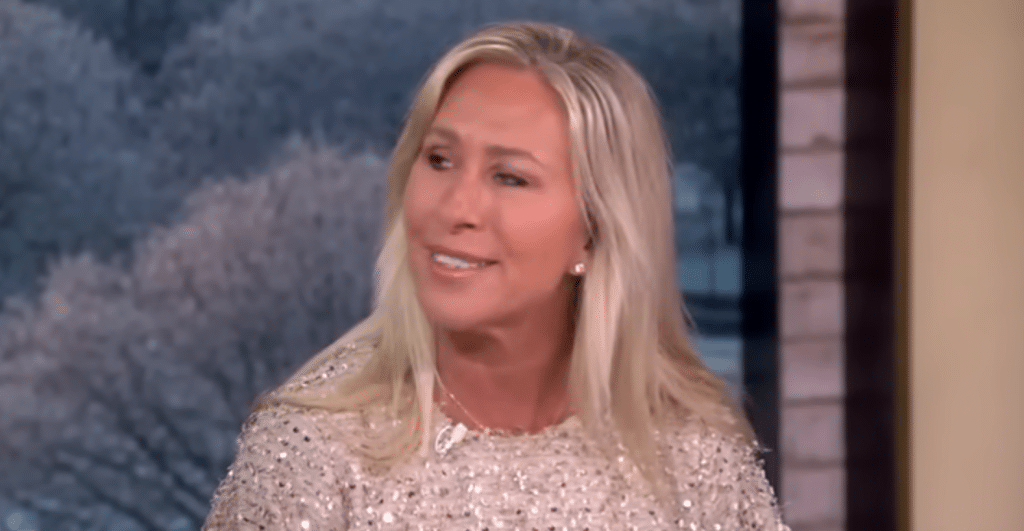
Earlier this month, Alexandria Ocasio-Cortez, a Democratic representative, warned against overcompromise when other Democrats began reaching out to former Republican representative Marjorie Taylor Greene. Greene had been a longtime Trump loyalist until she became suspicious of his handling of the Epstein files. After she criticized Trump, she received over 700 death threats and eventually retired from Congress.
Although Trump branded Greene as a “traitor”, Greene has not made any indications of abandoning him. She has a long record of racism, homophobia, and transphobia, and has harassed political opponents, including a school shooting survivor.
““I don’t think it benefits our movement…to align the left with white nationalists,” Alexandria Ocasio-Cortez said about her. “I don’t think it serves us.”
On the one hand, there is no denying that Democrats need the people’s trust. If they don’t have that, they won’t beat the GOP. On the other hand, millions of marginalized Americans – including immigrants, people of color, LGBTQIA+ people, and the disabled- are losing their rights and dignity in Trump’s second term. Is it a representative democracy if, at a voting booth, the only options are wolves or people who may throw them into the den?
Although more Americans turning away from Trump may seem like a good thing on its face, Democrats in government and activists on the street have to consider why. At the end of the day, this isn’t just about Trump. Trump enabled a wave of bigotry and became its symbol. But that does not mean the movement he began will end when (or if) he steps out of power.
While stepping to the right may be necessary for the future, it’s important to remember that there are too many people whom the right, Trumpers or not, will not stand with. In the fight to defeat Trump, Democrats should not keep their eyes on him for so long that they forget to look at who they are working with – or themselves.