The political arena has been deemed boring for decades, but what might seem quite boring is now getting the attention of the younger generations, who are now expressing their political opinions.
Which, for many years, has been particularly low, so why is that happening now?
Between the years of 1997 and 2012, Generation Z (Gen Z) was the first generation to grow up with the internet and social media, in an era with heightened awareness of environmental and social issues.
Many of the younger generation have been seen as useless, stupid, and not up to date with current affairs, coming from mainly the older generation, who simply judge a book by its cover.
However, Gen Z has been more active in politics now more than ever, driven by urgent economic concerns, such as the cost of living, housing, and the future of the job market.
They are also more willing to express their strong views now more than ever, and are constantly changing the politics we see today, so why is that?
What are local council elections?
Everyone in the United Kingdom has a local council and an MP who sits in the UK Parliament.
Local councils provide services and facilities in your area. The type of council you have, and its responsibilities, depend on where you live

Local councilors oversee the work of the council and set the strategies and priorities when you vote in local elections. You vote for councilors to represent your ward.
Types of councils are:
- Unitary authorities
- Metropolitan district councils
- County councils
- District councils
- Town, parish, and community councils
- London boroughs
Each councilor, when elected, sits for a four-year term. At the end of their term, a councilor will usually run to be elected again and sit for another four-year term.
Politics of the past – what was Gen Z’s view?
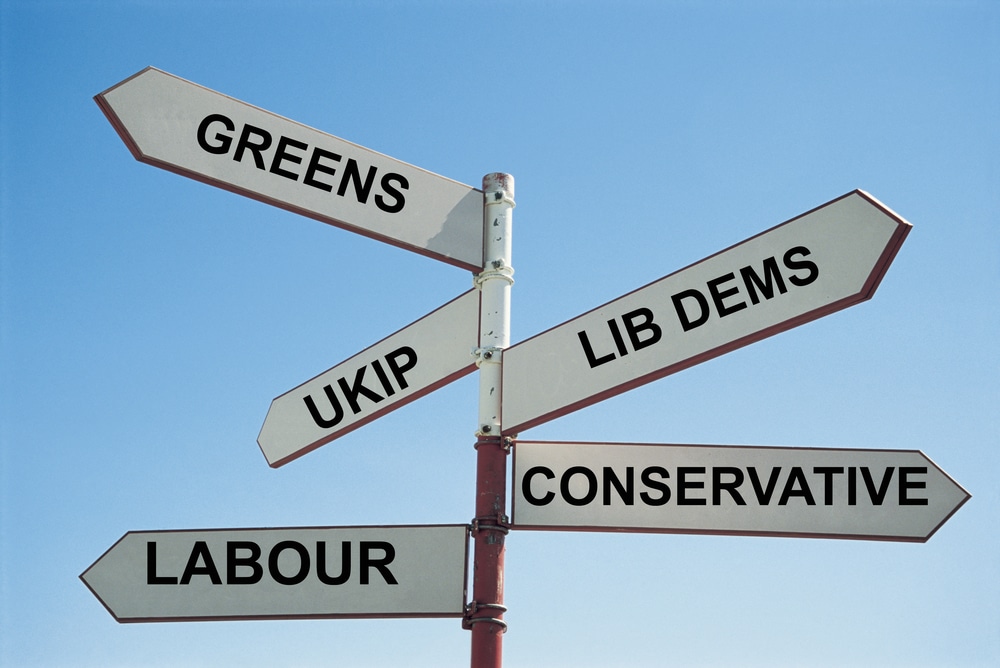
The last local council elections were held in 200 councils across the UK on May 5th 2022. England held 146 council elections, while the other 54 took place across both Scotland and Wales.
In that set of local elections, the results were:
The Labour Party won or retained control of 65 of the councils where elections were being held, including 21 of the 32 London Boroughs. This was less when these seats were up for the local election before that in 2018.
The Conservative Party won or retained control of 35 councils in England in addition to winning the new North Yorkshire county council. This is seven fewer than in 2018, and they won their lowest proportion of seats up for election in 10 years, standing at 26%.
The Liberal Democrats Party won or retained control of 16 councils, more than in previous years, including two new councils, Somerset and Westmorland and Furness, winning the party 16% of seats up for election.
There were 28 councils with no overall control.
Meaning no single political party or group has won enough seats to govern alone. In which they would need to gain over 50% of the seats available to gain control.
Youth voting outcomes
In the May 2022 UK local council elections, students and young voters, typically aged 18-24, cast their ballots overwhelmingly for the Labor Party and the Green Party.
The Labour Party had the largest share of student votes, which heavily contributed to the party taking complete control of student-occupied cities like Barnet, Wandsworth, and Westminster.
The Green Party had a major following among those who consider themselves environmentally conscious students, collecting a record of 116 seats across England especially in areas with large university populations such as Bristol and Sheffield.
During this time, the Conservative Party suffered major losses among students, as voters strongly rejected its policies. This was due to scandals such as ‘partygate’, but also the growing frustration over the cost-of-living crisis for young people at the time.
The evolution of council candidates

UK council candidates have undergone a massive transformation. What was once dominated by a demographic of retired male and partisan individuals is now host to many different candidates, and it has evolved through those who are standing for local office.
The average councilor in the past was a white male aged 59, although there have been younger candidates, there is still a way to go with age representation. Also, the backgrounds of candidates have modernized, as you are able to see many different ethnicities in local politics.
It is great to see that the proportion of female candidates has been rising, as councils used to struggle recruiting women. Also, representation has improved, with university hubs and London boroughs seeing Black, Asian, and multi-ethnic candidates coming forward.
Local council elections results 2026
After a disastrous council election for the Labour Party, Prime Minister (PM) Keir Starmer has insisted he will continue to carry out his duties as PM.
The elections took place in 136 local authorities across England, including some of the largest cities and the whole of London, with urban authorities, rural districts, and county councils also holding elections.
Labour lost more than 1,200 council seats, while Reform UK made massive gains.
Reform gained over 1,400 council seats and 14 councils, where Labour previously did well.
Because of this, the Labour Party is down significantly for seats, losing 1,498 and only securing 28 councils, 40 down from the previous elections.
The Conservatives also took a big hit, only securing 801 seats and 9 councils. The Liberal Democrats performed better than expected, gaining 152 seats, taking them to 844 won and 15 councils obtained.
Another party that performed well was the Green Party, which secured 586 seats; however, they only secured 5 councils. While 65 councils have a No Overall Control.
The future of politics for Gen Z
Although there is no definitive answer that exists about how Gen Z voted, from looking at post-election polling and interviews conducted by the top news sites (BBC, Sky News, The Times, and The Guardian), it is clear that young voters sway more towards the Green Party, the Liberal Democrats, and the Labour Party.
The younger generations outcomes
The Green Party got its massive backing in the university towns and high-density student-populated areas. As the younger generation is driven by concerns over climate change, Gaza, and local environmental infrastructure, the Greens gained a significant amount of seats backed by primarily 18-24-year-olds.
The Liberal Democrats also saw a rise in popularity on university campuses, capturing student-heavy votes and gaining many seats in Southern England and areas with large commuter student bases.
The Labour Party suffered big losses in 2022, after many students defected over national policy frustrations and the cost-of-living crisis; however, they still managed to maintain a decent amount of student votes.
So, looking at the statistics from these council elections, could this be the ultimate turning point for politics and for the political parties as to who has a chance to be the next Prime Minister?