

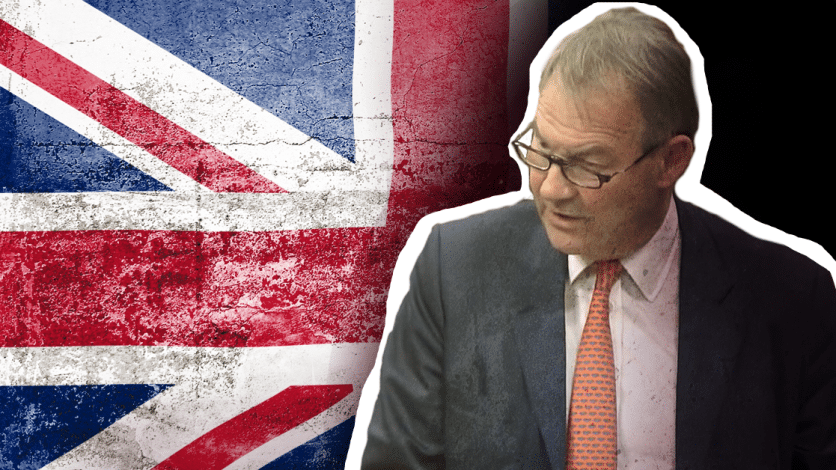
On Friday, February 13, 2026, Rupert Lowe, a British Politician and businessman, announced the launch of his political party, ‘Restore Britain.’ With a quick post on X stating:
“I am today launching Restore Britain as a national party. Join us.”
With a seven-minute video attached to the post that made his objective clear—bring Britain’s standards back. He will be finding and funding hundreds of qualified candidates who are not politicians or “failed prime ministers” to run in the next general elections. Instead, these candidates will be from diverse backgrounds to represent real communities.
The current state of Britain, with high levels of immigration, failed governance, and cultural changes, led him to be concerned about the nation’s future. Plus, the political rivalry between Reform UK leader Nigel Farage and Lowe shows no signs of stabilizing; instead, tensions between the two continue to escalate with this new launch.
Who is Rupert Lowe?

Lowe was elected as a Reform UK member of parliament for Great Yarmouth in the UK general election on July 4, 2024. Throughout his time with the Reform, he served as the business and agriculture spokesman.
However, since March 2025, he has been independent because of alleged ‘threats of physical violence’ against party chairman Zia Yusuf. The internal investigation led Lowe to be suspended, thus becoming independent.
Even so, he currently has a seat in the House of Commons as an independent member of parliament. In addition to that, he leads a local party called “Great Yarmouth,” launched back in December of 2025. Which is also now currently partnered with Restore Britain.
The First Launch
Restore Britain was initially launched as an issue-based membership organization. It was created to be a pressure group, and its primary goal was to “fundamentally change the way Britain is governed.”
One of the major issues it tackled was the “grooming gangs“. Lowe used Restore Britain to raise approximately £600,000 to sponsor a private inquiry into the matter. Since Farage strayed from the initial plan of an independent inquiry to a parliamentary inquiry.

Essentially, Lowe’s strategy was to create an “umbrella organization” that partnered with local grassroots groups. The advisory board had notable conservative politicians such as former London mayoral candidate and Assembly Conservative leader Susan Hall and the former Cabinet minister and Conservative MP Sir Gavin Williamson.
The Second Launch
Restore Britain was registered as a national party as a “full-scale restoration’’ for Britain. In attempts to bring back what Britain once was, and commit to supporting their citizens as their first priority.
It will take a distinct approach for the next general elections. Instead of relying on high-profile politicians or former prime ministers, the party intends to provide voters with a diverse range of candidates from various professional backgrounds.
For instance, science, education, the military, and business. This strategy aims to provide voters with an alternative perspective that addresses Britain’s current challenges.
Based on recent developments, Susan Hall and Sir Gavin Williamson are no longer a part of the advisory board. Since staying on the board would have likely resulted in them losing the Conservative whip or being expelled from their party.
Yet, a councillor from East Riding of Yorkshire, Maria Bowtell, was the first official representative to join the party. In addition, there have been seven council defections from Kent County Council and one from Hertfordshire, which joined shortly after the launch.
The party has seen a significant membership growth, reaching 80,000 members seven days after the launch. Ben Habib has indicated that he would consider a merger between his group, Advance UK, and Restore Britain.
Restore Britain’s Policies & Mission
Restore Britain is similar to most conservative parties because of its policies for heavy border control and mass deportations. Lowe is willing to deport millions if it means making communities safer, especially for women and children.
He has made it clear that if immigrants are here illegally, they will be removed. Since last year, the Home Office noted a total of 51,000 detected illegal entries, a 53 percent increase from previous years. On the Restore Britain official website, it notes that the entire illegal migrant population could be removed within three years or even sooner.
Furthermore, Lowe is keen on protecting British Farmers and scrapping inheritance tax. He made his point by recording on a farm and stating that farmers are the backbone of “proper Britain” because they represent values such as hard work, duty, and stewardship.
Yet, harsh taxes threaten this, since farmers have very low cash reserves even with high-value assets. The Party already has an official 16-point plan for agriculture that is centered around four main pillars: taxation, regulation, trade, and support for the next generation.
Ultimately, Lowe puts it like this:
“Restore Britain is much more than numbers on a spreadsheet it’s about who we are as a nation.”
An Ongoing Political Feud
Lowe and Farage’s relationship shifted from long-term allies to public disputes. Their relationship might not seem like a huge deal, but Lowe describes Restore Britain as a more radical alternative to Farage Reform UK.
As both ideologies started to rift apart, one of them focused on mass deportation policies. Lowe believed that Farage was “watering down” mass deportation policies at a time when they should have been more aggressive.
While Reform UK focused its efforts on criminals and illegal arrivals, Restore Britain is targeting anyone who “hates our way of life” or relies on state benefits. Farage points out that it is “beyond a point of reasonableness, decency, or morality.”
In addition, Elon Musk decided to voice his opinion because he has a connection to both parties. Musk reportedly turned against Farage and said, “he doesn’t have what it takes”. Then he endorsed Lowe in his launch post, stating, “he is the only one who will actually do it!”
The future of Britain
With fast rates of members and candidates jumping ships to join this national part may prove to be what Britain actually needs right now. Either way, it will continue to stir conflict with other conservative groups. While others plan to use it as a strategic ally.
Nonetheless, many fear how these policies will translate from paper into practice. It might be too early to tell whether or not this move will really help Britain. So, the question now is, how far will the party get in achieving its mission?