Cinema, as an art, is inextricably linked to the collective experience of sitting together as an audience in a darkened room and unitedly watching an auteur’s vision. So, why is this habit dying? And does this truly mean the “death of cinema”?
Anyone even remotely following the media industry will know that Netflix has closed the purchase of the storied Warner Bros. studio. The studio, which bears the name of the four Warner brothers (Jack, Sam, Harry, and Albert), its founders, has undergone numerous mergers and acquisitions throughout its history.
At the turn of the century, it merged with AOL, a deal dubbed one of the worst of all time. When the dot-com bubble burst, the then-named Time Warner (in affiliation with Time Magazine) spun off its AOL arm, registering a record $99 billion loss.
Still, the century-old studio stood firm. In 2018, AT&T purchased the media conglomerate, only to spin it off into Warner Bros. Discovery in a 2022 merger with the latter company.
So, it’s safe to say Warner Bros. has shown tremendous endurance through various ill-fated business maneuvers. I would argue this is a testament to the studio’s power; among the classic Hollywood studios (MGM, Paramount, 20th Century Fox, Universal, Columbia Pictures), I believe Warner Bros. is the strongest of them all.
Netflix versus Paramount
The latest developments threaten not just Warner Bros.’ future, but Hollywood’s as a whole. Some are even calling the Netflix acquisition “the death of cinema”. If you mean cinema in the sense of theatergoing, these bleak views are not entirely unfounded.
In a nutshell, CEO David Zaslav has effectively put Warner Bros. Discovery up for sale. Only two serious buyers emerged: Netflix and Paramount, the latter recently acquired by the Ellisons, one of the world’s wealthiest families.
Netflix’s offer, valued at $82.7 billion, has been formally accepted. The key caveat, though, is that it only covers WBD’s Studios & Streaming segment (Warner Bros. Pictures, HBO, HBO Max, etc.).
Warner Bros. Discovery is already in the process of spinning off its cable/linear networks, dubbing the new company Discovery Global, a significantly less valuable asset than what Netflix is buying. If the Netflix deal goes through, passing all necessary due process and regulatory hurdles, Discovery Global would remain a separate company.

Despite Netflix and WBD formalizing their agreement in December, Paramount is not entirely out of the picture. In a hostile takeover bid, Paramount Skydance is offering $108.4 billion ($30 per WBD share). Again, a significantly higher figure, but for all of WBD, not just the Studios & Streaming arm.

Larry Ellison himself has guaranteed $40.4 billion from his personal fortune towards the acquisition. However, the remaining $68 billion lacks such secure backing, at least in the eyes of the WBD board. The amount is backed by sources such as Saudi Arabia’s Public Investment Fund (PIF), the Qatar Investment Authority (QIA), and Abu Dhabi’s L’imad Holding Company.
Beyond the reliability of the backing, the WBD board has concerns about the regulatory and antitrust scrutiny foreign financing, especially from the Middle East, would entail. Even partial ownership of one of the largest U.S. media conglomerates by foreign public investment funds would raise significant national security concerns.
So, the WBD board is almost certain to reject Paramount’s hostile takeover bid. As a publicly traded company, the decision is ultimately in the hands of WBD shareholders – and Paramount must convince the majority to tender their shares by Jan. 2.
In other words, Paramount needs more than half of the shareholders to directly sell their shares to it at the agreed price ($30) – an unlikely objective. If a sizeable minority (20-30%) sides with Paramount, this would put pressure on the WBD board and give Paramount more leverage in the negotiation. Or, still, Paramount could increase its bid. If this gets nowhere, the Netflix agreement is already set in stone, so it would move forward as usual.
The death of cinema
The “death of cinema” may be too negative a moniker, but it’s hard to label it a hyperbole, especially in the long run. As my colleague Noah Gutfleisch reported, the Netflix deal could mean more than a quarter of box office revenue disappearing.
According to a Bloomberg poll featuring over 700 industry experts, Netflix is both the favorite and preferred buyer of Warner Bros. by talent. Over 50% of respondents said Netflix would end up owning Warner Bros., while Netflix’s streaming dominance was the smallest concern from talent. Only 103 respondents cited the streamer’s dominance as their primary concern in the Warner Bros. deal, while 199 pointed to the Ellisons overhauling CNN, and 143 cited Paramount’s Middle Eastern backing.
However, even the best-case scenario is far from optimal for Hollywood. The so-called “death of cinema” has been foretold many times over, but this time it seems closer than ever. Film purists still see the theatrical experience as sacred, but Netflix prefers to call movies content rather than theatrical events that merit exclusive exhibition windows.
As recently as April 2025, during the Time100 Summit, Netflix CEO Ted Sarandos stated that the classic theatrical model is “outdated.”
“What is the consumer telling us? That they’d like to watch movies at home… Driving folks to a theater is just not our business.”
While Sarandos has since pivoted following the Warner Bros. deal, saying Netflix would commit to the theatrical experience, most are still skeptical. Yes, streaming has proved to be a suitable home for more authorial projects, such as Martin Scorsese’s latest releases. However, directors like Cristopher Nolan are more purist in the sense that giving up an exclusive theatrical window would be an insurmountable barrier.
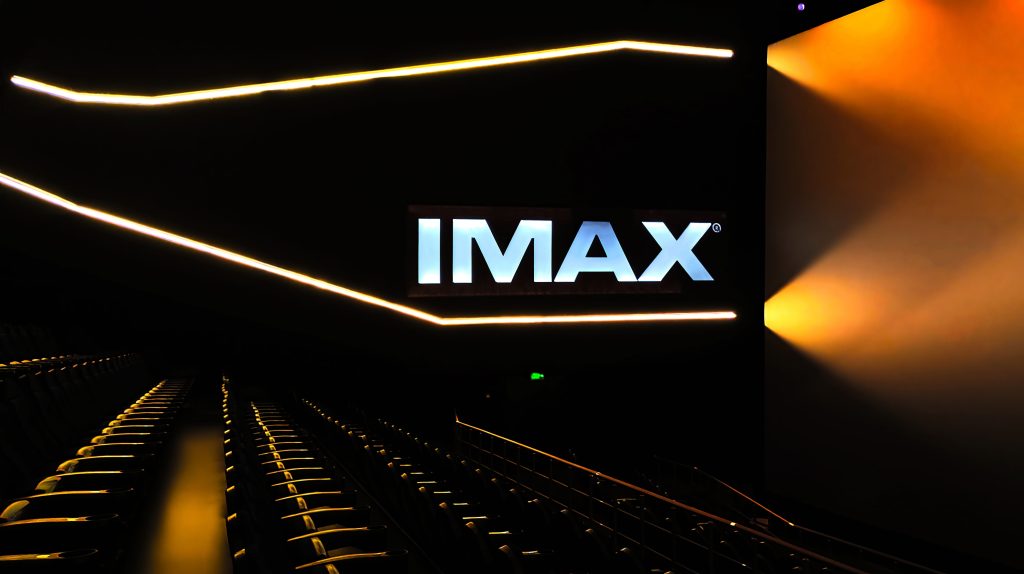
Nolan and up-and-coming directors like Ryan Coogler also see shooting in 70mm IMAX as vital, even though only about 30 theaters worldwide can show this format. Anthony D’Alessandro at Deadline has just reported that Netflix is targeting a 17-day exclusive theatrical window for Warner Bros. movies. Nolan and Coogler, frequent collaborators of the studio, would surely not be happy.
Why audiences aren’t turning up
According to a September 2025 poll by The Associated Press, only 16% of U.S. adults report seeing movies in theaters at least once a month. Reasons are varied: the predominance of streaming, expensive ticket prices, and even the growing popularity and accessibility of large-screen TVs and home theater systems.
Per data firm EntTelligence, the average cost of a movie ticket in the U.S. is $13.17, a $1.41 increase from 2022. In metropolises such as Los Angeles and New York, or in premium formats such as IMAX, tickets easily cross the $20 threshold.
This poses a financial barrier for many Americans, especially those with kids or larger families. For a family of five, a mere trip to the movies can end up costing north of $200, especially if you account for the commute, drinks, snacks, and other amenities.
If you can just as easily wait a couple of weeks for the film to come out on Netflix, why would you make the effort to see it in theaters?
People need an incentive to bring back moviegoing as a social event.
Why more large-format theaters like IMAX could be a solution
Building new IMAX theaters may seem counterintuitive given the investment needed and IMAX ticket prices. Why would audiences shell out more cash if they’re already finding current prices too expensive?
Part of the reason lies in customer satisfaction. If audiences can just wait a couple of weeks for the latest release to hit streaming, they need a reason to see it on the big screen. As mentioned, large screens and home theater systems are becoming increasingly accessible, so the theatrical experience must be extra special.
Cinemark, one of the largest theater chains in the globe, seems to share this sentiment. According to a report from Variety, Cinemark plans to add new 70mm IMAX screens in the U.S. and South America, all in time for Christopher Nolan’s highly-anticipated ‘The Odyssey’.
Most IMAX screens worldwide feature digital laser projection. As anyone who has been to one will tell you, this is already a pretty special experience, incomparable to even the best home theater systems out there.
70mm IMAX, meanwhile, adds a whole new level to the audience’s experience. Analog film may not be objectively better than digital. It may even be a matter of overly pedantic nostalgia. But it surely infuses the theatrical experience with a je ne sais quoi you won’t find anywhere else.