


What do you think of when you hear the word “classics”? Most people immediately think of long books with difficult writing and pretentious plotlines. Although this stereotype is not entirely false, countless classics are just as compelling as the books trending on BookTok.
Classic books are labeled as stories that people “must read” to completely understand the world of literature. The feeling of societal pressure rather than personal enjoyment has given an exhausting stigma to reading classics.
As a result, we tend to keep classic books on the TBR shelf and never log them on our Goodreads accounts. Yet, many of these stories have impacted the popular books and tropes that we all know and love! Classics have always been the foundation of society’s culture, and that is still the case for today’s popular media.
I’m an English student who has read nearly every seemingly pretentious book, so let me provide 10 recommendations that are worth your time.
The Odyssey by Homer (~750 BCE)
Yes, I know I’m starting with an epic poem that’s not even from this calendar era. But The Odyssey might be one of the most timeless stories. It’s a sequel to Homer’s other epic, The Iliad, which you don’t have to read to understand The Odyssey. The story follows Odysseus as he travels home from the Trojan War.
Odysseus and his crew are faced with mythical creatures and the wrath of the Greek pantheon of gods. One of the more culturally relevant sections of the epic poem is his encounter with the sorceress Circe. The minor goddess is influential in modern media and received a retelling of her own in Madeline Miller’s critically acclaimed book Circe. Circe is part of the popular BookTok genre of Greek mythology, and The Odyssey is the source material for the various retellings.
The majority of action-packed books and movies across Western history use the hero’s journey narrative structure, which stems from The Odyssey, amongst other ancient texts. Without Homer’s epic poem, your favorite series like Harry Potter and Star Wars would not exist.

Pride and Prejudice by Jane Austen (1813)
If you’re a fan of romance books or are active on BookTok, chances are you’re familiar with the enemies-to-lovers trope. Although the trope has been around since the creation of Greek myths, Jane Austen popularized and refined the device in Pride and Prejudice.
The 19th-century novel centers around Elizabeth Bennet and Mr. Darcy as their relationship moves from initial hatred to romance. The tension between the two characters is a quintessential example of the enemies-to-lovers trope.
The Regency era aesthetic that saturates the book, as well as Jane Austen’s writing style, has recently been recirculating in pop culture due to Netflix’s Bridgerton. The historical romance and pastel colors in the show reflect Austen’s love stories. The dreamy aesthetic combined with the rivalry romance solidifies the book as a lively classic to devour in your free time!
Jane Eyre by Charlotte Brontë (1847)
Jane Eyre is a Gothic novel that follows the titular Jane Eyre, a self-reliant woman who becomes a governess at Thornfield Hall and falls in love with the mysterious Mr. Rochester.
Jane had a troubled childhood in which she was constantly misunderstood by those around her. The Brontë sisters, Charlotte, Emily, and Anne, are known for churning out “sad girl literature.” This subgenre foregrounds melancholic, intellectual women who go against the grain. Popular authors such as Sally Rooney and Ottessa Moshfegh infuse their books with similar characters.
Not only did Brontë pave the way for nuanced portrayals of independent women, but her depiction of the Gothic romance persists in modern trends. Mr. Rochester embodies the brooding male love interest with dark secrets, and his presence casts a shroud of mystery around the binge-worthy forbidden romance.
Wide Sargasso Sea by Jean Rhys (1966)
Published over a century after Jane Eyre, Wide Sargasso Sea is a feminist and postcolonial retelling of the Brontë novel. It focuses on the character of Antoinette as she transforms into Bertha, Mr. Rochester’s mad wife in the attic.
In dialogue with one of the most influential classics of all time, Wide Sargasso Sea is a cornerstone of the tradition of literary reimaginings. Jean Rhys contributed to the movement of feminist retellings, where authors sought to provide voices for the voiceless. Today, historical fiction and mythology-inspired books carry on the movement.
I highly recommend reading Jane Eyre and Wide Sargasso Sea together! The complex experiences for women of different ethnicities and the subversion of various tropes across the two books will have you feeling like an intellectual without putting you to sleep.
The Scarlet Letter by Nathaniel Hawthorne (1850)
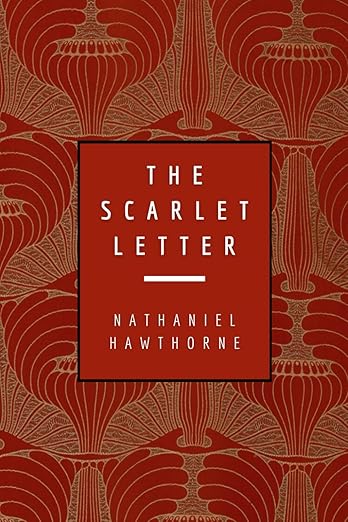
The Scarlet Letter takes readers back in time to 17th-century Puritanical Massachusetts. Although the Salem Witch Trials occurred 50 years after the events of the book, readers can see its beginnings take root through themes of misogyny and the wrongful villainization of women.
Nathaniel Hawthorne penned the book to confront his Puritan ancestry and his great-great-grandfather, John Hathorne, who was the judge during the Salem Witch Trials. The book explores the hypocrisy of religion being used as a tool of oppression with the protagonist Hester Prynne. Hester is punished for adultery because she gave birth to her daughter out of wedlock, forcing her to wear a scarlet “A” for her entire life.
The book is an engaging feminist read with clear lines of inspiration for other pieces of media that speak out against sexism. Easy A, starring Emma Stone, is a modern adaptation of The Scarlet Letter that shows how frequently women are ostracized because of their sexuality.
Little Women by Louisa May Alcott (1868)
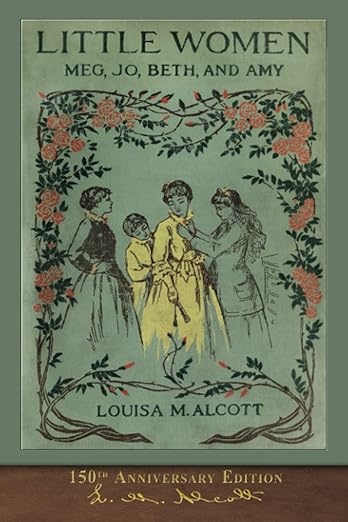
Little Women is super easy to read because of its recognizable themes and relatable characters. I’m sure at least once in your life, you’ve heard someone call themselves a “Jo” or an “Amy” based on the distinct sisters.
The coming-of-age book follows the four complex March sisters—Meg, Jo, Beth, and Amy—as they move from girlhood into adulthood. The examination of gender roles remains applicable to modern feminist discoure.
There have been 7 movie adaptations and countless book retellings of the beloved classic. Recently, Blue Sisters by Coco Mellors has been trending for its moving depiction of sisterhood. The popular book parallels the sister dynamics of Little Women and provides a fresh take.
The Great Gatsby by F. Scott Fitzgerald (1925)
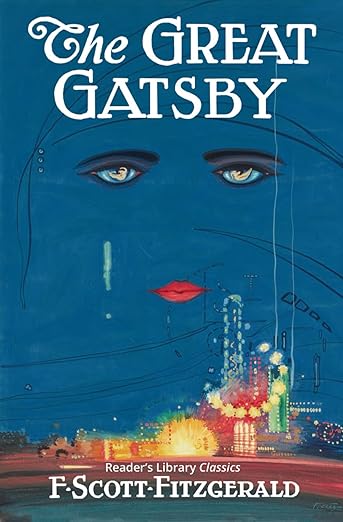
Recently celebrating its 100th anniversary, The Great Gatsby is a lively portrayal of the 1920s Jazz Age. Nick Carraway narrates the book, which begins with his move to Long Island. There, he strikes up a friendship with the elusive Jay Gatsby, who throws lavish parties with the ulterior motive of reaching his past lover, Daisy Buchanan.
The Great Gatsby is largely driven by dialogue, and with less than 200 pages, it is a quick read. The book is full of party scenes and entertaining characters, so crossing it off your list won’t be an exhausting chore.
With the advent of the 2020s, The Great Gatsby experienced a resurgence in popularity, as events and parties were themed for the book. Numerous readers go so far as to say that this book is the “Great American Novel” because it is so ingrained in pop culture.
Mrs. Dalloway by Virginia Woolf (1925)
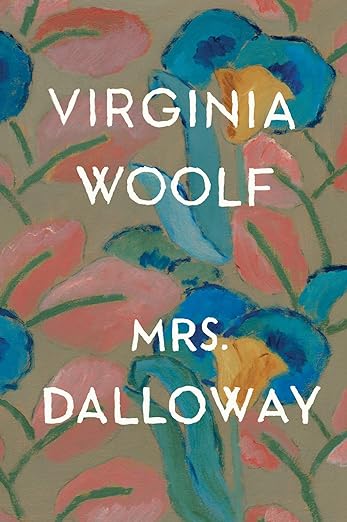
Mrs. Dalloway was released in the same year as The Great Gatsby, and they share similar themes. The two books unpack partying and social classes in the 1920s, but Virginia Woolf takes a different narrative path from F. Scott Fitzgerald. Woolf imbues her story with feminist and psychological insights that heighten its complexity.
The titular character, Clarissa Dalloway, opens the book with the iconic line, “Mrs. Dalloway said she would like to buy the flowers herself.” From there, Woolf uses a stream of consciousness style of narration that was innovative for its time. Readers access the innermost thoughts of the characters, making it an unforgettable read!
The introspective look into human relationships and societal expectations, specifically for women, sends a powerful message. The Academy Award-winning film The Hours takes direct inspiration from Mrs. Dalloway, exemplifying how the book’s themes have endured.
The Hobbit by J.R.R. Tolkien (1937)
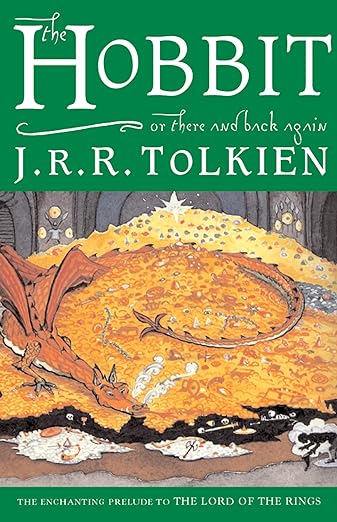
Calling all fantasy lovers, this one is for you! The Hobbit is one of the earliest fantasy books to be written for an audience of all ages. Before its release, the genre was considered immature and exclusively for children. Tolkien constructed the world of Middle-earth to popularize fantasy for a wide audience by invoking global folklore and mythology.
The Hobbit is a story full of adventure as Bilbo Baggins—a hobbit—and Gandalf—a wizard—help a crew of dwarves set out on a quest to reclaim their home from a dragon. If that doesn’t sound like trademark fantasy, I don’t know what does! In the book, Tolkien pioneered myriad magical creatures we all know and love, such as hobbits and elves.
The massive influence of The Hobbit can be seen in the modern obsession with fantasy books. Without the book, epic plotlines, immersive world-building, and the found-family trope would not be as common in today’s fantasy stories. Even BookTok author Sarah J. Maas claimed that Tolkien’s books inspired her famous fantasy series.
1984 by George Orwell (1949)
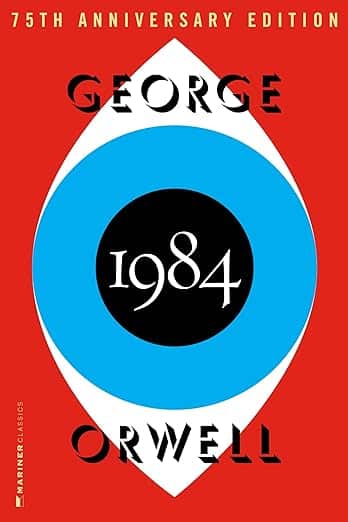
1984 made the dystopian genre famous, and it has been growing even more relevant in today’s society. Themes of government surveillance, propaganda, and loss of individualism have always resonated deeply with readers, granting the book a timeless quality.
The story follows Winston Smith, who rebelled against his totalitarian government in 1984. In this future, the right to privacy is disregarded as the government invades every aspect of life. Ironically, the book is a victim of book bans in the United States since it exposes how governments can censor and restrict information.
Books such as The Hunger Games and Never Let Me Go encapsulate the modern appeal of dystopian literature. The desire to ponder real-life anxieties through a fictional world is essential to the power of 1984. This thrilling book is guaranteed to make you rethink everything you thought you knew.
Get Out and Read!
Even as a student who loves literature, I still feel pressure to crack open a 1,000-page, densely written tome. Yet, these books should be treated as ageless reflections of storytelling, not as punishments!
I hope you use my trusted expertise and dive into the classic that has been sitting on your TBR shelf, slowly collecting dust. Classics are classics for a reason. Who knows, maybe that “boring” book from the 19th century will become your next favorite read!










Shado
April 29, 2025 at 7:02 pm
Thanks a lot for the list, will definitely check some out
Mike
April 30, 2025 at 11:46 pm
Any other book by Austen would beat Homer for readability. In fact, if you are including translations of foreign books, War and Peace or Anna Karinana move along much better than Homer. Just read summaries of Homer. As for Sargasso, it’s interesting to see that the madness in Jane Eyre is possibly mostly a culture clash with the craziness of the expatriate life in West Indies but if you haven’t read Eyre in several years you don’t see how it fits together. As for readability, again, Sargasso and Scarlet Letter are much more turgid than anything by Austen or Tolstoy.
Jerry
April 30, 2025 at 6:35 am
A Tale of Two Cities
Azem
April 30, 2025 at 2:00 pm
1984 novel by G.Orwell…I read….Jane novel…yes…
Other books I will try to read.
Okay
Nicholas Glueck
May 1, 2025 at 6:56 am
To kill a mockingbird
Mike
April 30, 2025 at 11:49 pm
Dalloway is a great book but I am not sure what Woolf is doing by inhabiting the minds of the characters is that easy for most people.
Mike Blake
May 1, 2025 at 1:26 pm
Sargasso Sea turgid? Um, not for me, and it introduced me to Rhys, a great find IMHO. Try her please. So sad!
Just reread 1984. What can I say. Make it 2025, were nearly there. So depressing.
Santos Fernandez
May 1, 2025 at 5:45 pm
List is way off.
Huckleberry Finn,
The Time Machime,
Twenty Thousand Leagues Under the Sea,The Hunchback of Notre Dame,The works of Poe,Mobey Dick,A Tale of Two Cities and a list that goes on ad infinitum
Jeffery
May 2, 2025 at 5:31 am
Clearly a woman’s list. Anything by Jane Eyre bores me.