Why are audiences so quick to analyse men’s motives, even when women are the ones living with the consequences? In many ways, centering men in cinema at the downfall of female actors is a recurring trend. The horror film Obsession has reignited that debate, as online conversations focus heavily on Bear’s psychology while Nikki’s experience often remains in the background.
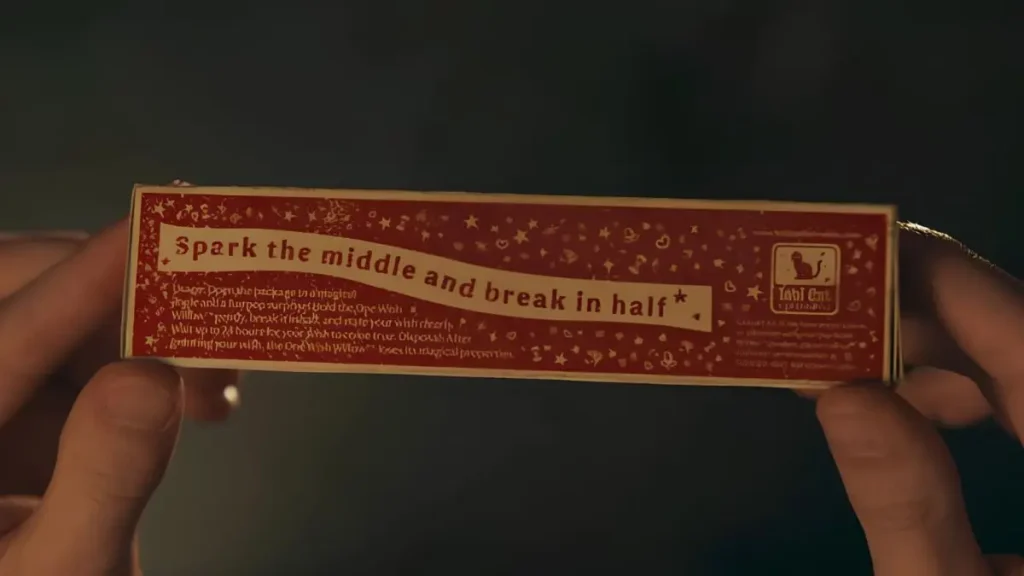
In Obsession, Bear is one of the film’s leading characters whose wish for his childhood friend Nikki to love him ends up reshaping both of their lives in unexpected ways.
Since the film’s release, TikTok, Instagram, and Reddit have been full of debates about his choices, with everyone trying to figure out what kind of person Bear really is.
After Bear’s wish causes Nikki to develop intense, overwhelming feelings for him, their relationship shifts in a way that quickly becomes emotionally destabilising for both characters. While Bear is often the focus of online discussions, his choices, motivations, and responsibility are constantly debated, Nikki, who experiences the direct emotional impact of the wish, is frequently mentioned less in comparison.
And that imbalance raises a bigger question that goes far beyond one film: why do we keep focusing on men’s motives, even in stories where women are the ones who bear the cost?

This isn’t just about Obsession. In online discussions around thriller films like Gone Girl, audiences have similarly spent significant time analysing the psychology and intentions of male characters such as Nick Dunne, while the female character’s perspective is often reframed through interpretation, suspicion, or narrative function rather than centred as lived experience.
This reflects a recurring pattern in how stories about relationships, harm, and manipulation are discussed online, where attention is frequently directed toward understanding male motivation, while the emotional impact on women is treated as secondary.
More importantly, it raises questions about how audiences assign empathy and importance in narratives involving autonomy, consent, and emotional harm.

What Obsession shows us about control and autonomy
At its core, Obsession is about a relationship that begins with familiarity and attraction but gradually shifts into something more controlling and emotionally suffocating. After Bear’s wish causes Nikki to develop intense feelings for him, their dynamic quickly becomes unbalanced, with Nikki increasingly centred on him in ways that limit her independence and shape her entire emotional world around the relationship.
What makes the film unsettling isn’t just what happens, but how recognisable the emotional logic feels. There is the slow erosion of boundaries, the reframing of control as care, and the sense that Nikki’s autonomy becomes something constantly negotiated rather than respected.
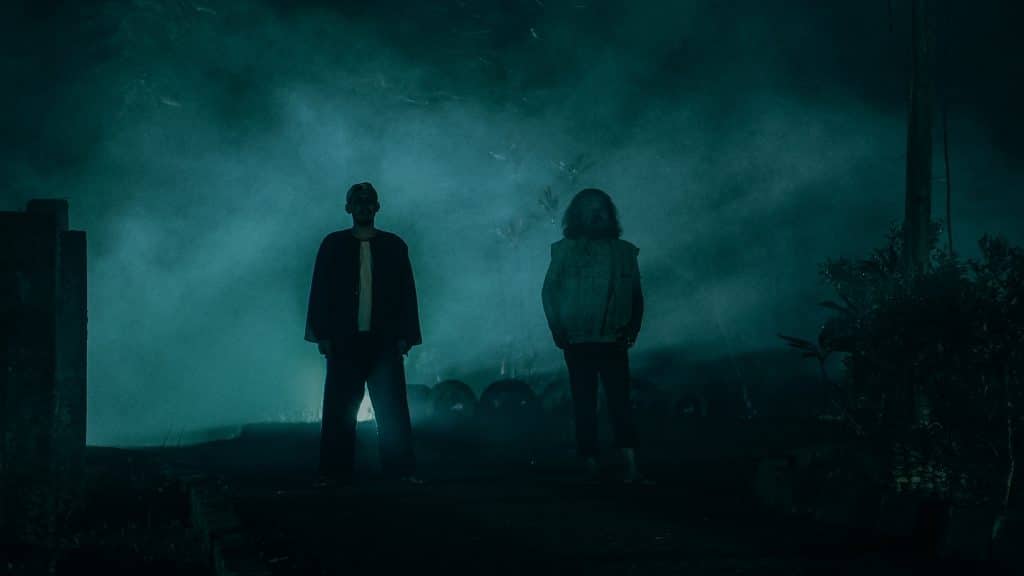
Male entitlement sits at the centre of this dynamic. Bear’s behaviour is not just individual. It reflects the persistent belief that intimacy gives men permission to control women, and that emotional attachment can blur the boundaries of consent and autonomy.
But while the film positions Nikki’s experience as the emotional core of the story, online conversations have often shifted elsewhere.
Instead of asking what it feels like to be in Nikki’s position, much of the discourse focuses on understanding Bear.
This is where the idea of the “male gaze” still feels useful, even outside academic film theory. In recent years, commentators and researchers have continued to use the term to describe how visual media can subtly centre male perspectives, shaping who gets attention and how characters are interpreted. As one contemporary overview explains, mainstream media often presents women through “a heterosexual male lens,” where they are framed as objects of visual pleasure rather than fully developed subjects with agency .
In that sense, it becomes less surprising that online audiences sometimes spend more time analysing Bear’s mindset and motivations than Nikki’s lived experience.
The imbalance isn’t necessarily deliberate, but it reflects a pattern in how viewers are trained to read stories, especially when narrative focus, camera attention, or fandom discussion naturally gravitates toward the male emotional state.
Why are we so focused on Bear?
In an interview with the Hollywood Reporter, director Curry Barker has described Obsession as a story about desire spiraling beyond intention, where the consequences of “The Wish” reshape a relationship in ways no character fully controls.
Rather than presenting a conventional villain, Barker frames the film as an exploration of how a single desire transforms intimacy, power, and identity.
Much of the online conversation has centred on Bear instead of Nikki’s loss of autonomy. Reddit threads ask whether he is “the real monster,” debate whether his actions were driven by loneliness or entitlement, and analyse his psychology scene by scene. One of the most upvoted discussions about the film focuses almost entirely on whether Bear consciously ignored Nikki’s escalating distress, with commenters dissecting his motivations rather than her experience.

That emphasis has become so dominant that some viewers have begun questioning why Nikki has been pushed to the margins of the conversation. As one Reddit user responding to debate around the film argued, “Bear isn’t the hero and only incels think that shit is true,” criticising discussions that attempt to redeem him instead of confronting the harm he causes.
The same frustration appears in criticism beyond Reddit. Emma Cieslik, writing for Ms. Magazine, argues that Obsession is fundamentally about “a man deciding he is entitled to a woman’s love, to a woman’s body, regardless of her autonomy,” yet notes that much of the online discourse has instead revolved around Bear himself rather than Nikki’s loss of agency.
In other words, the man becomes the subject of analysis. The woman becomes the setting.
And that framing doesn’t stay in film criticism. It shapes how stories circulate online.
Beyond Obsession: a wider media pattern
If Obsession feels familiar in this way, that’s because it is part of a much wider storytelling pattern.
Across popular films, television, and online discourse, we repeatedly see similar structures:
- Men who cause harm are given detailed psychological framing, backstory, and narrative depth
- Women who experience harm are positioned as the emotional consequence of those actions
- Audience discussion tends to revolve around understanding the man rather than fully centring the woman’s experience
This shows up in everything from psychological thrillers to romance narratives built around obsession or control. Even in stories where the woman is clearly the emotional centre of the narrative, discussion often shifts toward interpreting the man’s behaviour.
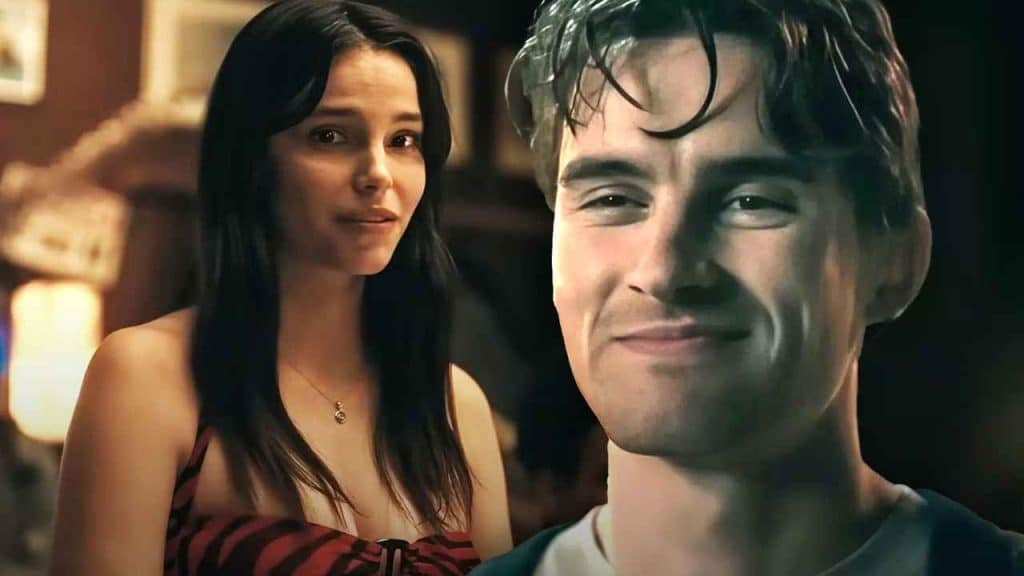
Online discourse around Obsession reflects this tension clearly. Some viewers actively challenge it, pointing out that Nikki’s experience is being overshadowed by Bear-focused analysis. Others engage more deeply with Bear’s psychology, treating it as the “main” interpretive layer of the film.
And while analysing characters is not inherently a problem, the imbalance matters.
Because it raises a deeper question: why is understanding the person who causes harm often treated as more interesting than understanding the person who experiences it?
What does this mean for how we understand harm?
The way audiences have responded to Bear and Nikki reflects a pattern that appears across film discourse and online culture: conversations often spend more time analysing the motivations of male characters than exploring the experiences of the people affected by their actions.
When that happens, the focus of a story can gradually shift. Questions about impact, autonomy, and consequence become secondary to debates about intent, trauma, or psychological complexity.
You can see this in the discussion surrounding Obsession. Much of the online conversation has centred on understanding Bear, whether he is lonely, damaged, misunderstood, or malicious. Far less attention has been given to Nikki’s experience of having her autonomy compromised and her life reshaped by someone else’s choice.

This does not mean that motives are unimportant. Understanding why people behave the way they do is often part of understanding a story.
The question is what happens when explanation consistently receives more attention than impact.
Stories help shape the frameworks through which audiences understand relationships, consent, and power. When discussions repeatedly prioritise the perspective of those causing harm, the experiences of those living with the consequences can become easier to overlook.
What does this mean for women today?
It means representation doesn’t just sit in the background of visual stories, it shapes what audiences recognise as “normal,” “important,” and “worth focusing on.” When certain perspectives are repeatedly centred and others are treated as secondary, that imbalance can carry over into how real experiences are understood and valued.
As the Geena Davis Institute on Gender in Media puts it, “If she can see it, she can be it.” The idea is simple but significant: what women and girls repeatedly see on screen influences how they understand their own possibilities, and how others perceive their roles in the world.
Audiences aren’t intentionally dismissive, but it means habits of attention are being shaped in predictable ways: whose inner lives feel “analysable,” whose pain feels central, and whose perspective is treated as the default lens of the story.
Over time, that can influence more than interpretation. It can affect empathy itself, what viewers instinctively look for in a story, and whose experiences they are most prepared to fully engage with.

Can this pattern change?
There are also signs that audiences are beginning to question how Obsession frames its characters and themes. Some viewers have argued that the film itself risks reinforcing the very imbalance it appears to critique, particularly in the way Nikki is portrayed through a familiar and polarising trope.
As one viewer put it:
“After some reflection I personally feel like Obsession leaned a bit too much on the ‘crazy girlfriend’ schtick and diluted the main themes of the film.”
Comments like this show a growing awareness that framing matters — not just in how audiences view characters, but in how a story shapes those views. When a narrative relies too heavily on sensationalised portrayals, it can distract from the deeper emotional or thematic message of the story.
That said, this kind of critique also reflects something more encouraging: viewers are no longer just consuming interpretations of characters, but actively interrogating how those interpretations are shaped in the first place.
Why does this matter?
The heart of Obsession lies a question about control, autonomy, and emotional power. But at the heart of its reception is something else: what we choose to pay attention to.
The way audiences have responded to Bear and Nikki reflects a recurring pattern in film discourse and online culture: conversations often prioritise analysing the motivations, trauma, and psychology of male characters, while spending less time exploring the experiences of the women affected by their actions.
That habit doesn’t just shape how we talk about films. It shapes how we talk about everything.
Because stories don’t just reflect culture. They reinforce it.
And if we keep centring men’s motives while overlooking women’s suffering, we risk treating empathy as something conditional rather than essential.
So maybe the real question isn’t just why we’re so interested in Bear.
It’s why we still have to be reminded to see Nikki at all.