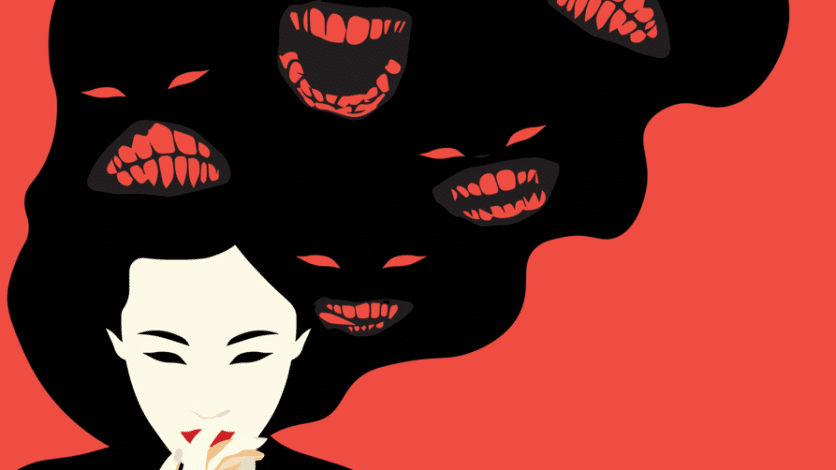
We’ve all seen how claiming (or actually having) a mental illness is treated like the trendy thing to do on the internet. We’ve seen the glamorization of EDs, anxiety, and depression. These are often treated as prerequisites for beauty or creativity. For connecting to a community of other people with whom you share a difference. Why is it normal to want to be abnormal?
“[A]s much as it is okay to not be okay, it is also okay to be okay.”
Ahuja J, Fichadia PA. Concerns Regarding the Glorification of Mental Illness on Social Media.
Anyone chronically online on Western socials could easily tell you that those socials have allowed the romanticization of mental illness like never before. The sky is blue. He who shall not be named is in the Epstein files. These are obvious facts that no one with half a mind would argue against. But still, I think it’s important to take about what this romanticization means for us. And why it is and will continue to be a problem.
In short, yes, romanticization of mental illness is problematic. And I’m going to tell you why. It minimizes the struggle of people debilitated with mental illness, while also making it difficult for them to have their issues taken seriously by others and by themselves. This is a problem because it normalizes the idea of mental illness and suggests that people actually experiencing the reality of it should be able to function at the same standard as everyone else. While also experiencing the perceived benefits associated with their illness. Think of the stereotype of the autistic savant, or the tormented artist. People, especially young people, want the perceived talent or skill associated with mental illness, while only viewing the debilitating aspects of the condition as a sort of aesthetic.
“The allure of negativity, packaged in aesthetically pleasing edits and shared experiences, captivates young audiences, blurring the lines between universal emotions and genuine mental health symptoms. Consequently, impressionable individuals may self-diagnose or adopt personality traits associated with fictional characters, leading to potential misinterpretations and worsening of existing challenges.”
Fichadia. Concerns Regarding the Glorification of Mental Illness on Social Media.
Romanticization: The basics
Now, if we’re going to talk about how romanticization of mental illness is problematic, we first have to establish what ‘romanticization’ is. Below is one concise definition that I am preferential too:
“Romanticization is the unrealistic belief, perception, or representation of something to be more desirable or attractive than it really is. Objects of romanticization are presented as idyllic, aesthetic, trendy, or interesting, while negative aspects are minimized or dismissed.”
Ndour A, Foulkes L. The romanticisation of mental health problems in adolescents and its implications: a narrative review. Eur Child Adolesc Psychiatry. 2025 Aug;34(8):2297-2326. doi: 10.1007/s00787-025-02701-0. Epub 2025 Apr 12. PMID: 40220194; PMCID: PMC12396996.https://pmc.ncbi.nlm.nih.gov/articles/PMC12396996/#CR55
This is essentially what I was getting at earlier. It’s the fantasy of struggle, without the actual consequences of enduring that pain. It’s a complete disregard of the consequences of these issues. Being the skinniest, most desirable girl looks great at a glance. Until you realize that every other ‘skinniest’ girl before you who couldn’t get past the body dysmorphia and the numbers on the scales died before reaching thirty.
The thing about mental illnesses are that they are very much physical conditions. The brain is a very important organ, after all. And the body keeps score; it can only take so much. If you put enough pressure on one part of an otherwise healthy system for too long, eventually the whole system will break down. People want the results that come with working under that pressure, without the wear and tear that comes with it. It’s the same as with any other part of the body. If an athlete overtaxes one part of their body through prolonged use for too long, they’ll have to deal with life long complications.
Why is it happening?
“When mental illness is seen as ‘tragically beautiful’ instead of what it really is–debilitating–it is harmful to us all, whether we have a mental disorder or not.”
Staci Person/Chronicle Journal
Perhaps the more interesting question, given the grim reality of mental illness, is why these conditions are romanticized. No one wants to be miserable! But everyone and their mother are depressed or suffering from clinical anxiety these days. Why are the very real and well-known downsides to mental illness considered ‘worth it’ by so many people?
I think a large part of it can be blamed on social media’s transactional and addictive nature. And overcoming adversity makes for a great story.

“[P]ersonal accounts of mental health problems [via social media] are often rewarded with praise and attention in the form of ‘likes’, comments and followers, which are powerful indicators of social acceptance. This form of reward might then lead social media users to draw an association between their own mental health problems and positive social outcomes.”
Ndour & Foulkes. The romanticisation of mental health problems in adolescents and its implications: a narrative review. 2025 Apr 12.
You see, that’s the funny thing about our brains. We understand the world through narratives we tell ourselves and are told. And conflict and resolution are the basics of the basics when it comes to making a good story. People want to be interesting, because they want people to reassure and support them. People want to be liked. Unfortunately, far too many people think that actual or perceived suffering on their part would be worth it.
‘Difference’ on a pedestal
Part of the issue might be our culture’s overemphasis on the importance of individuality. And individuality and having a strong sense of yourself are obviously important. But that doesn’t mean that difference should automatically be viewed in a positive light. Being different from other people does not automatically make you more likable or better than them. And it does not make your opinions more valuable or more right. Unfortunately, the specific sort of difference associated in popular social platforms with regard to mental illness says or implies just that.
“While traditional media has often been criticized for villainizing characters with mental illness, the new-age social media depiction of mental illness carries with it a sense of ‘creative mystique’ – painting mental illness with a glorified aesthetic in segments of society exposed to such media.”
Fichadia. Concerns Regarding the Glorification of Mental Illness on Social Media.
Exploitable difference
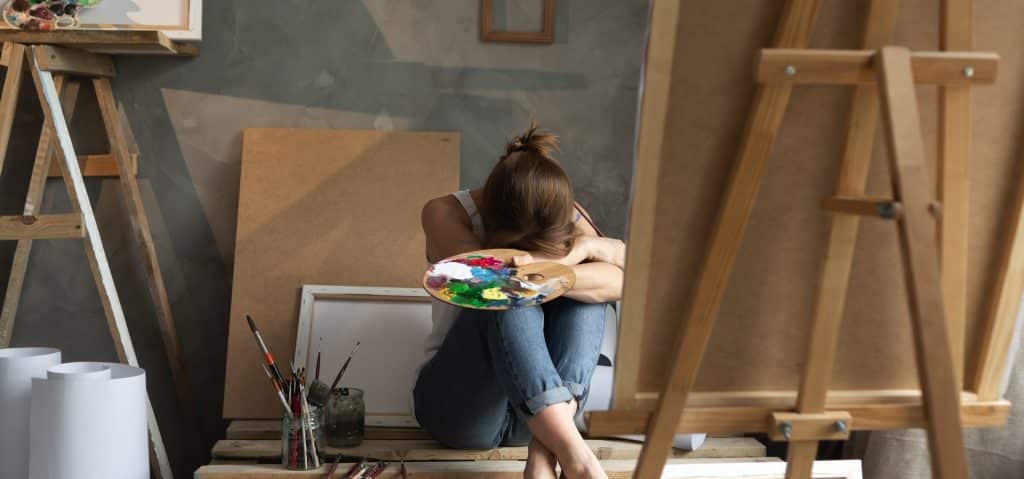
Another aspect to consider with a regard to the role of external validation is the West’s focus on production. The focus on what use someone can be to the production of goods, rather than on the person’s well-being. Just look at some of the most famous artists of all time, many of who struggled with their mental health.
“We live in a world where the preservation of art, particularly great art, is protected more than the actual artist themselves. Amadeus. Shakespeare. Van Gogh. All wondrous artists whose brilliant eclecticism shaped their respective cultures. They were also broke, wildly misunderstood and depressed.”
Lindsey Addawoo/CBC
They were not valued when they were alive because of their difficulties and ‘off-putting’ differences. But once they died, and people no longer had to contend with these complications, their work, what they could and did do for the culture and world, were praised.
“It’s hard to find a streamlined relationship between creativity and depression. The truth is that the two things are so inherently tied to one another that it’s impossible to determine cause and effect, although they do seem (at least on the surface) incredibly related.”
Zac Thompson/Huff Post
Be that as it may, don’t you think it’s wrong that we, as a society, would rather have a tormented artist than a happy artist of unremarkable art?
Normality: conflicting values
One reason for this value system might be our culture’s near hatred of the idea of conformity. It’s a little something I like to call the Stormtrooper Effect. In Star Wars, the evil faction has a functionally endless supply of identical troops at its disposal. These soldiers have no value. The audience doesn’t care or think twice when the main character carves his way through them. They are unknown, they are average, and they are punished for it.
We live in a culture that looks down on conformity, associating it with a lack of critical thinking and value. While, ironically, demanding that certain types of conformity be enforced: education, the forty-hour work week, and the creation of a family. Our culture idolizes the mentally ill for being inherently different by virtue of their struggle. But it also punishes them for not being able to ‘overcome’ it. We live in a society that (at least in part) rejects the appearance of normality while demanding it in the workforce. We can hardly blame a generation native to this dynamic for trying to conform to these conflicting ideals. After all:
“Adolescents are more susceptible to social influence than adults. … They may also be more sensitive to social reward, meaning that the social currency of likes, comments and follows are especially motivating for them. … Mimicking the romanticization that they see online might help adolescents belong to a social group, which in turn contributes to their developing sense of self.”
Ndour & Foulkes. The romanticisation of mental health problems in adolescents and its implications: a narrative review. 2025 Apr 12.
This is how they—how we—have been socialized.
Individuality, performance, and the public gaze
This idea of ‘performance of difference’ is central, I think, to understanding why the romanticization of mental illness and the resulting ‘mental illness performed as difference’ are so problematic. I feel like this quote is fairly emblematic of the issue at hand.
“There is concern that romanticization makes mental health problems appear trivial by dismissing their severity or their functional impact, which can make those who do not romanticize their mental health problems feel misunderstood and isolated. … [R]omanticization might discourage help-seeking, both in those who romanticize their mental health problems (because they feel help is not needed), and in those who do not (because they are concerned they will not be taken seriously.”
Ndour & Foulkes. The romanticisation of mental health problems in adolescents and its implications: a narrative review. 2025 Apr 12.
Obviously, if people who are comparatively mentally well feel pressured to appear more unwell than they are by their social environment to be valued, their mental health will suffer. They will not have a clear understanding of the actual difficulty of mental illness, or not take their own mental illness seriously in the event that their mental health deteriorates.
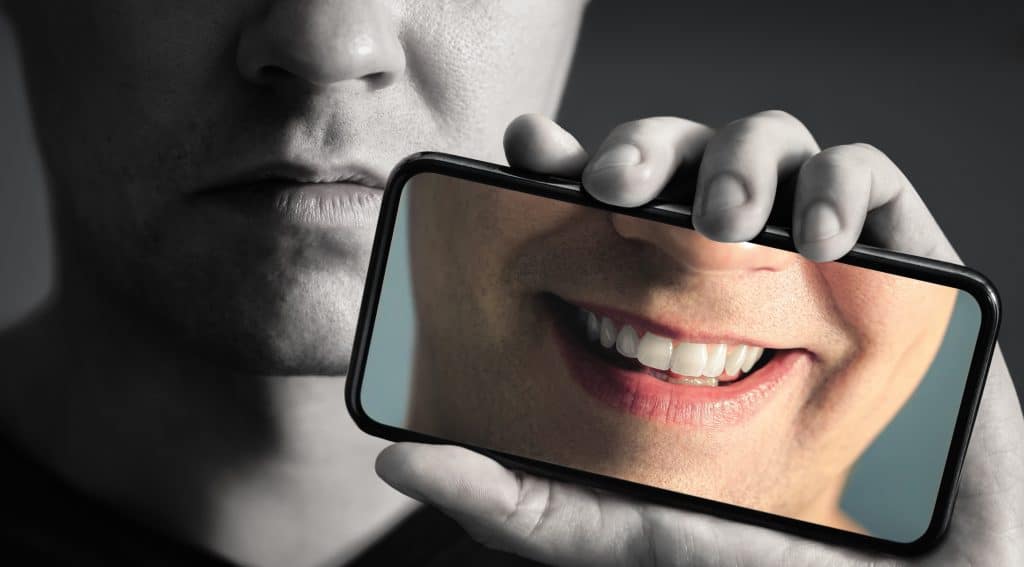
Likewise, people who have genuine mental illnesses will feel pressured to perform their illness, lest they be accused of faking it, while also feeling pressured to keep up with mentally well people. This, when paired with romanticization’s minimization of mental illness’ downsides, and exaggeration of potential ‘benefits’ will not only feel pressured to keep up, but to outperform healthy people. Though no one would ever intentionally suggest this. And what ‘normal people’ can do will naturally be embellished online.
People post perfectly curated, and (at the very least) partially inauthentic depictions of their lives. When this ‘picture perfect’ world is contrasted with the lived experiences of people with mental illness, the contrast will be even more stark.
Isolation and Imposter Syndrome
This break between what is expected of mentally ill people and their lived realities is incredibly isolating. Not to mention how it unintentionally gaslights them into believing that they might not really be mentally ill. Or that they shouldn’t be struggling as much as they are, because of what they see online and in the media.
As a creative writer (who at least one shrink has diagnosed with Mental Illness), this comment from a fellow writer really hits home.
“We, as artists, give suffering so much credit for our work. It can be difficult deciphering who or what the ultimate source of our creativity is.”
Lindsey Addawoo/CBC
I cannot speak to the lived experiences of all people with mental illness, or all artists with mental illness, but I can say that the constant reinforcement by the media of the idea that creativity is inherently connected to emotional struggle has caused me to romanticize my own struggles in the past. I think it’s messed up that how I sometimes idealize my own struggles is the norm rather than the exception. And that my creative output might be credited by some solely to my struggles.
It feels like a theft of agency, and a grotesque fetishization. In times past, people used to go to circuses to view physically disabled people. Today, they talk about how Van Gogh owes his work’s success to his mental illness, and the best musicians of today are the ones who ‘open up’ about their struggles with mental health for our viewing and judging. The pictures both these scenes paint are uncomfortably similar.
Everyone wants to be special
Everyone wants to be special, wants to feel important, like they have value, like they won’t be forgotten. The problem is that social media is telling everyone, especially young people, that being sick or disabled (physically or mentally) and fishing for sympathy is an effective way to do this. And it is. But it’s not a healthy way to go about it. You shouldn’t attach yourself to an inauthentic version of yourself. And you shouldn’t try to change yourself to be more different from others at risk to your health.
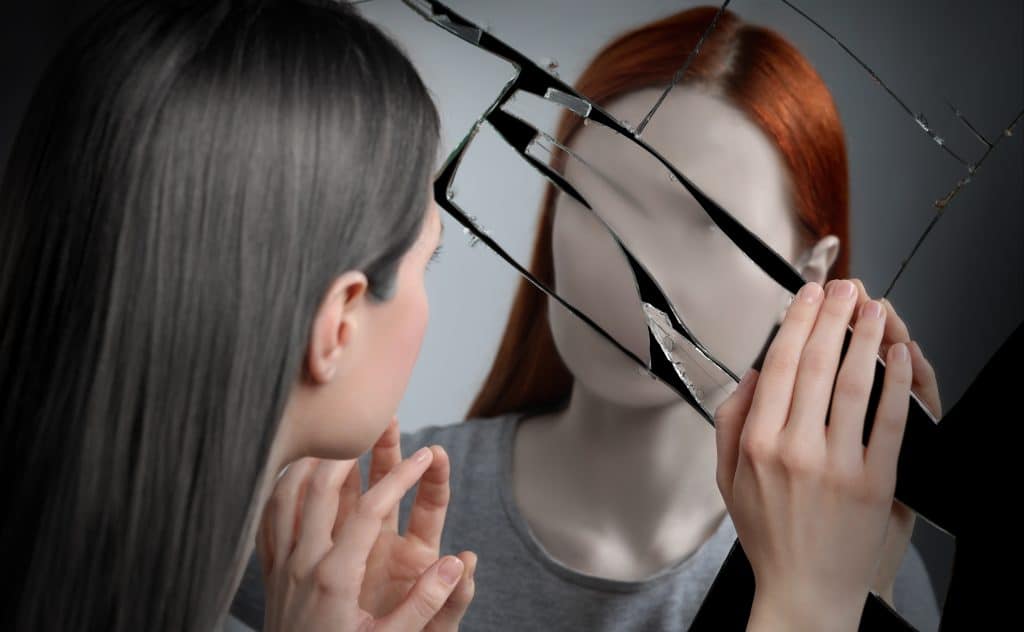
And this isn’t something that we are told on social media.
The fallout
The result of this? More and more Gen-Z and Gen-Alpha are self-diagnosing mental illness. Would so many people chose to identify as such (whether or not they are mentally ill) if mental illness were not romanticized so?
“It is worth noting that media surveys have observed that Generation Z is particularly prone to self-diagnosing mental health issues, with 30% having done so in one such survey.”
Fichadia. Concerns Regarding the Glorification of Mental Illness on Social Media.
And arguably, more and more of our generation are developing mental illness. Both as a direct result of social media use, and exposure to these pressures by extension. If we as a society held a neutral attitude towards mental illness, as opposed to the mixed positive and negative attitudes that have shaped our landscape thus far, would we have less people suffering from mental illness? Would we have mentally ill people who would not struggle as much as they currently do?
This is why the romanticization of mental health is problematic, in my eyes.