In international politics, discourse tends to prioritize places with the largest economies, strongest militaries, or highest strategic value, often leaving smaller or less influential places overlooked. The African continent has long been subject to this pattern. Since returning to the Oval Office this past January, however, Trump’s pursuit of his America First strategy has led to a range of policy engagements in Africa.
What is Trump’s ‘America First’ strategy?
When Trump first entered office in 2016, his foreign policy strategy was not at all cohesive. Those years were an opportunity for him to put some of his nationalist and isolationist ideals to the test. It started by pulling the United States out of international agreements like the Paris Climate Agreement and the Iran nuclear deal (JCPOA), and concluded with an experimental trade war with China.
These moves marked a sharp break from the liberal internationalism that had guided U.S. foreign policy since World War II — the idea that America’s security and prosperity are best protected through global leadership, cooperation, and shared institutions. Liberal internationalists viewed the U.S. as the architect and defender of a rules-based order, aligning national interests with the strengthening of alliances and the promotion of free trade. While each president interpreted these principles differently, all incorporated them to some degree.
Trump, of course, is the exception.
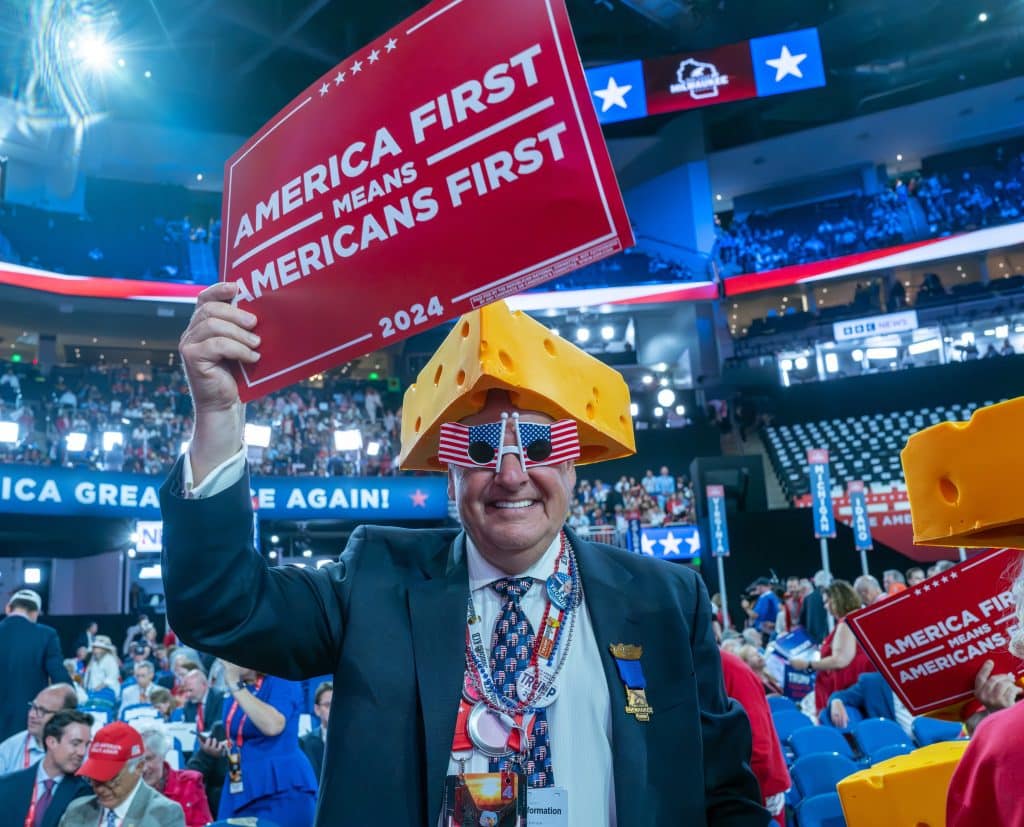
In the time since the 2020 elections, Trump’s worldview had hardened completely into a economic nationalist ideology. The focus was no longer on limiting America’s commitments abroad, but on turning every foreign policy decision into a financial or strategic calculation.
At the 2024 Republican National Convention in Milwaukee, he made these ideas clear. There would be no more free-riding, no more handouts, and no more one-sided arrangements with the U.S. on the losing end. Every alliance, agreement, and investment must directly serve America’s interests.
USAID cuts and the abandonment of soft power
When Trump entered office early this January, he wasted no time in acting upon those very campaign promises. And it began with executive orders. Among his earliest executive orders was a 90-day freeze on all foreign aid — the first step in a series of actions that effectively dismantled the United States Agency for International Development (USAID).
USAID, a branch of the State Department, had long managed U.S. foreign aid programs aimed at reducing poverty, improving global health, addressing humanitarian crises, and strengthening democratic governance. The majority of these projects were based in at-risk communities in Africa, where in 2024 alone the agency accounted for $6.5 billion of the continent’s total aid.

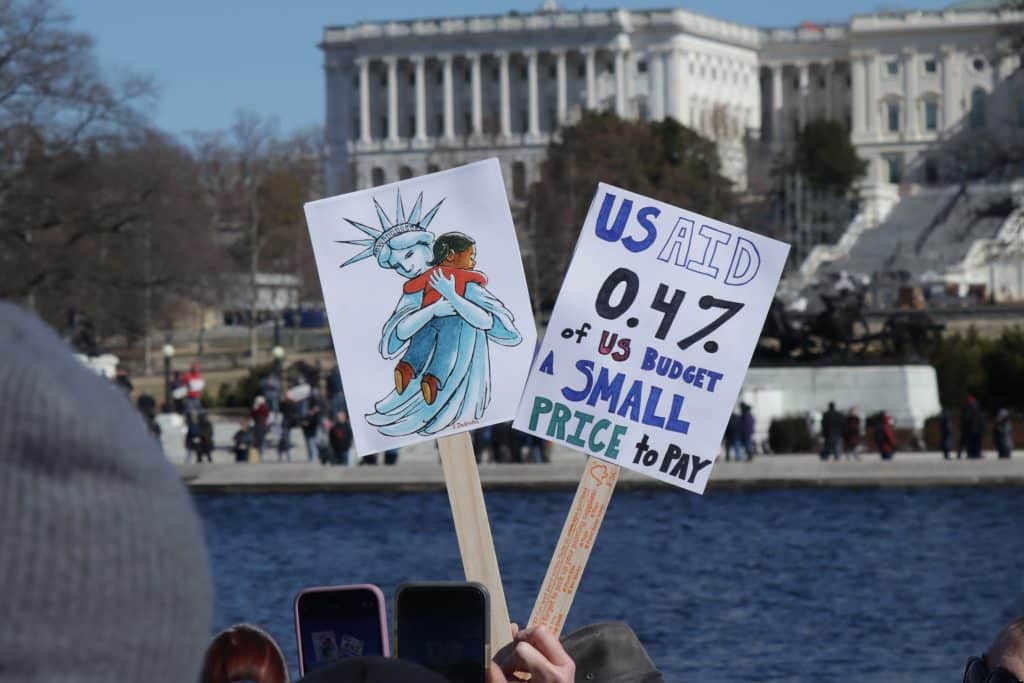
Trump justified the cuts by arguing that foreign aid encourages dependency, allowing nations to “free-ride” rather than develop self-sufficiency, offering little tangible return to the United States.
What this policy overlooks, however, is the strategic importance of soft power.
Aid should not be viewed as simple charity. It is a long-term investment in global stability and prosperity that also equates to American leverage and influence. By funding humanitarian and development programs, the U.S. not only improves lives but builds enduring relationships that pay dividends in trade, security cooperation, and international support. Africa, home to the world’s fastest-growing labor market and several of its fastest-growing economies, represents a region where such soft power is especially consequential.
Defunding USAID may satisfy short-term fiscal goals, but it sacrifices a vital source of influence precisely when U.S.-China competition in Africa is accelerating. For this reason, the administrations first policy towards Africa was a significant misstep.
Rare earth minerals and supply chain security
Still, Trump’s Africa policy is not without merit. One area of genuine strategic foresight has been the reprioritization of critical rare earth minerals, which has led to a renewed U.S. interest in the continent.
Minerals such as cobalt, lithium, and nickel are indispensable to global manufacturing, powering everything from batteries to semiconductor chips. Yet despite their critical importance, the United States has allowed China to establish near-total control over the rare earth supply chain, with roughly 90 percent of refined materials now produced under Chinese authority.
This dependence represents a serious vulnerability. If Beijing were to restrict exports or manipulate the market, it could disrupt U.S. access to essential materials and destabilize key sectors ranging from defense production to clean energy. Still, previous administrations have failed to achieve meaningful supply chains diversification.
Trump, however, has made rare earth mineral access a primary interest of his foreign policy. His willingness to work with a wider range of African leaders has opened new possibilities to secure access to such resources.
Earlier this June, the paramilitary group M23 invaded and occupied the eastern Congolese city of Goma. In response, Trump offered to mediate the conflict and provide long-term security guarantees in exchange for an expansive mineral rights agreement.
While some may question the ethical implications of such deals, the strategic logic is sound. Reprioritizing critical minerals as a national security interest strengthens U.S. supply chain resilience and begins to loosen Chinese dominance of rare earth minerals. These are outcomes that, however incremental, serve the long-term interests of the United States.
Engagement
Despite Trump’s retreat from soft power, his focus on rare earth minerals has provided the possibility for engagement opportunities with a host of new African nations.
For decades, U.S. policy limited aid and investment strictly to democratic reformers, leaving much of the continent isolated. Trump’s transactional approach upended has since upended that status quo, emphasizing economic opportunity over political alignment.
This shift was most visible at the Washington summit earlier this summer, where Trump hosted the leaders of Gabon, Guinea-Bissau, Liberia, Mauritania, and Senegal.
Ostensibly convened to promote his “Trade, Not Aid” initiative, the summit’s diverse roster underscored a new pragmatism. Guinea-Bissau, for example, is an electoral autocracy that often faces coup d’état attempts, such as the one that occurred this past Friday. Yet they are welcomed alongside stable democracies like Senegal.
Such inclusivity, while morally complex, reflects a recognition of geopolitical reality. Isolating non-democratic states has often driven them toward Beijing and Moscow. Meeting them where they are reopens diplomatic and economic channels long left inaccessible by Washington.
Intentional or not, this reengagement marks one of Trump’s most significant achievements in Africa. It broadens U.S. influence and acknowledges that, in an increasingly competitive region, active engagement with imperfect partners is preferable to outright neglect.
What to make of trump’s african policy
Ultimately, the long-term value of Trump’s policy will depend on whether it evolves beyond transactional deals into sustainable engagement. Africa is increasingly becoming an competitive theater between the United States and China. And while Trump’s approach addresses the economic dimensions of this competition, it overlooks the equally important human and institutional interests.
While a more balanced approach is ideal, this administration’s willingness to engage Africa and elevate the continent as a core national interest marks a significant break from precedent. For better or worse, that engagement stands as a rare and consequential win.