The heart of England’s once-beloved capital city has been taken hostage by criminal activity. “Rolex rippers” race unchallenged through the unpatrolled jungle, knife gangs prowl the streets, and pregnant mothers are forced to confront these lawbreakers head-on. At least, that’s the message from Reform UK’s newly announced mayoral candidate.
The Commissioner of the Met Police, Rowley, has strongly opposed this sentiment. Homicide in the capital has fallen to its lowest level in over a decade. “The results speak for themselves – fewer lives lost, fewer families shattered,” he added.
And the London homicide rate is indeed below that of many global cities. New York, Toronto, and Philadelphia all report higher homicide levels. Data from the Office for National Statistics also indicated that Londoners are less likely to be victims of violent crime than people across the rest of England and Wales. (26.4 offences per 1,000 population compared to 31.9 offences per 1,000 population). Metropolitan Police assistant commissioner, Williams, said this is “a clear sign that our approach is making a difference” and explains “why London is becoming a safer city”.
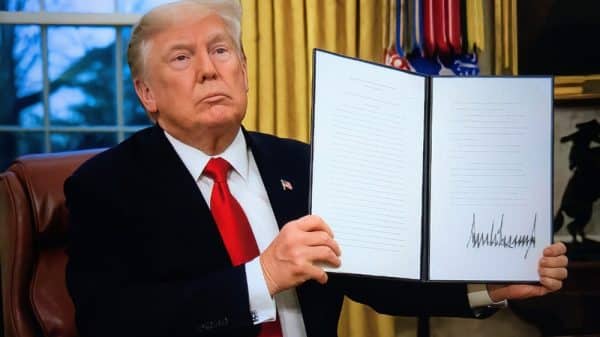
And yet, others are sceptical of this. In recent years, the city has found itself engulfed in a negative spotlight. This follows claims that it is unsafe to visit. A rape offence is reported every hour in London, according to the BBC. And news publications have been staunchly covering the rise of e-bike phone thieves since the summer months. Even US President Donald Trump has chimed in on the discussion, claiming that “crime in London is through the roof.”
Nigel Farage, the undeniably enigmatic leader of Reform UK, has revealed the party’s newest protégée: Laila Cunningham. And as part of her upcoming bid for mayor, she announced that stamping down on criminals would be a priority.
Cunningham announced an “all-out war” on London crime
“London is no longer safe,” she told journalists at a press conference.
In her 15-minute speech and the subsequent Q+A with the party’s leader, she painted a dreary image of the once much safer city that she recalled growing up in.
“Knife crime in London is up 68% since 2016,” she said, “robbery is up by more than 50% during that same period. More than 100 phones are stolen every year. And that’s just the ones we know about. And we are living through a rape epidemic.”

“London is a city where criminals operate brazenly…why not? There’s no visible policing.”
She described London as being “gripped in a crimewave”. Cunningham spoke passionately about the fears she and other parents faced sending their children to school in the country’s capital. She said Londoners no longer feel safe in their homes, much less on the streets. As Mayor, Cunningham pledged to enact a zero-tolerance policy towards criminals. Her key aims included increasing police visibility and enforcing tougher restrictions on those who neglect their stations.
According to Cunningham, “London, one of the greatest cities on Earth, is no longer safe. And that didn’t happen by accident. That happened on Sadiq Khan’s watch.”
Who is Sadiq Khan?
Sadiq Khan is the current Mayor of London, who has maintained the role for 3 consecutive terms. He has kept the city securely under Labour’s domain since 2016. But now, for the upcoming election, it seems that his position is less guaranteed because Reform UK seems to be placing the blame for London’s crime infestation at his feet.
Before introducing Cunningham, Farage said quite plainly that: “many of the things that have gone wrong in London are clearly the fault of Sadiq Khan.”
Other Reform UK party representatives have mirrored this sentiment. Cunningham spent a lengthy amount of time criticising Khan’s inability to stand up to his union pay masters, claiming “he serves them before he serves us”. She continued: “The consistent message from Khan is, it’s not my fault. He treats city hall like his own kingdom” and “rewards cronies with 6-figure salaries whilst ordinary Londoners can’t pay their bills.” This is in line with the Reform party’s overall strategy of appealing to ‘ordinary people’ who are disillusioned with the current political state.
Keith Prince, a former Conservative turned Reform member, has criticised Khan’s expansion of ULEZ. This is the daily charge for vehicles that do not meet the environmental emissions standards in London. This has particularly hit commuters living in the outer boroughs, who drive into the central city for work. Prince told crowds at a Reform rally that ULEZ was never about clean air. It was “about raising money for Khan and his pet projects”.
Public opinion:
Particularly on X, a lot of the discussions about London’s crime statistics are being tied to the Mayor explicitly.
And the Reform Party is advertising itself as the best solution to this problem. They profess to offer a pragmatic, hard-line approach that will rescue London from crime.
“For the first time in years,” Cunningham optimistically affirmed, “Londoners finally have a real alternative.”
Reform is ready to expand its London support base
Despite its relatively recent conception, the polemic Reform UK party is polling well, leading opinion polls for nearly 200 consecutive polls (averaging around 9-10%). Since receiving 4 million votes in the 2024 general election, the party has grown exponentially.
The speculated success of this party is threatening to collapse the UK’s long-established two-party system tradition. If a general election were held tomorrow, Reform UK would win outright (only now, the prospect of having an early general election isn’t as unfathomable a notion as it was last week).
And now, Reform is making a strong play for England’s capital. London’s borough elections are set to take place on May 7th; it promises to be, for all political investees, a significant test. And for Farage, a Reform-backed London Mayor would be a major confidence booster, ahead of the next UK general election.
However, it’s worth noting that, in the past, London has never been too swayed by right-wing politics. Particularly in the inner boroughs, the population has conventionally shown a visible left-leaning voting preference.
But Cunningham is keen to present Reform as a viable alternative, committed to embarking on a political campaign across all 32 boroughs. And Reform’s first major rally of 2026 (which took place in London) drew in no fewer than 2500 people.
Following the release of these new crime statistics, Reform UK has the potential to shake things up, disturbing the political norm in London. And if Reform makes gains in London, there’s a good chance this will translate to the voting slips in the next general election.