On November 4, 2025, an off-year US election day presented a new blueprint for the troubled Democratic Party. It was a rejection of President Donald Trump and Republicans at an unexpected scale. Economically-focused Democratic candidates (such as Virginia’s Abigail Spanberger, New Jersey’s Mikie Sherrill, and New York City’s Zohran Mamdani) were successful across the country.
Following those election victories, some political strategists have (finally) begun to center affordability as a potential winning issue. The rhetoric of economic populism that many media figures spurned in President Trump’s campaign platforms—albeit, a very different form than that of left-wing figures like Mamdani or Senator Bernie Sanders—is now appearing as a viable strategy for Democrats.
Accompanying this pivot to strict economics is a total rejection of culture war issues. There’s growing pressure to dispense with what the right-wing media has disparagingly labeled “wokeness.”
“Out with woke”
Democratic consultant James Carville—best known for his work on electoral campaigns—recently published a New York Times opinion essay. It’s aptly titled “Out With Woke. In With Rage.”
In this essay, Carville calls on Democrats to run on “pure economic rage” against growing inequality. He says it plainly: Americans are struggling to keep up with housing costs, student debt, and even grocery prices.
Despite his heyday in what’s now considered a “centrist political era,” Carville advocates for a number of ‘radical’ changes. These include raising the minimum wage to $20 an hour, providing universal childcare, and even making public college tuition free.
The changes that Carville calls for are increasingly popular. Of the ‘radical’ changes I listed above, the lowest public approval rating Carville cites is 63 percent for free public college tuition.
To sum up the piece, Carville says that “the Democratic Party must now run on the most populist economic platform since the Great Depression.” (Here, Carville refers to President Franklin D. Roosevelt’s New Deal, which responded to the Great Depression with economic relief programs that expanded the social safety net.)

One paragraph that I found particularly interesting, however, discusses those “performative woke politics” I referenced before. Carville writes that this woke era “has left a lasting stain on our [Democratic] brand.” He criticizes the slogan of “defund the police” and specifically references the terms “Latinx” and “BIPOC.” (Carville invokes language associated with activist voices in the party, not representing the moderate leanings of most elected Democrats.)
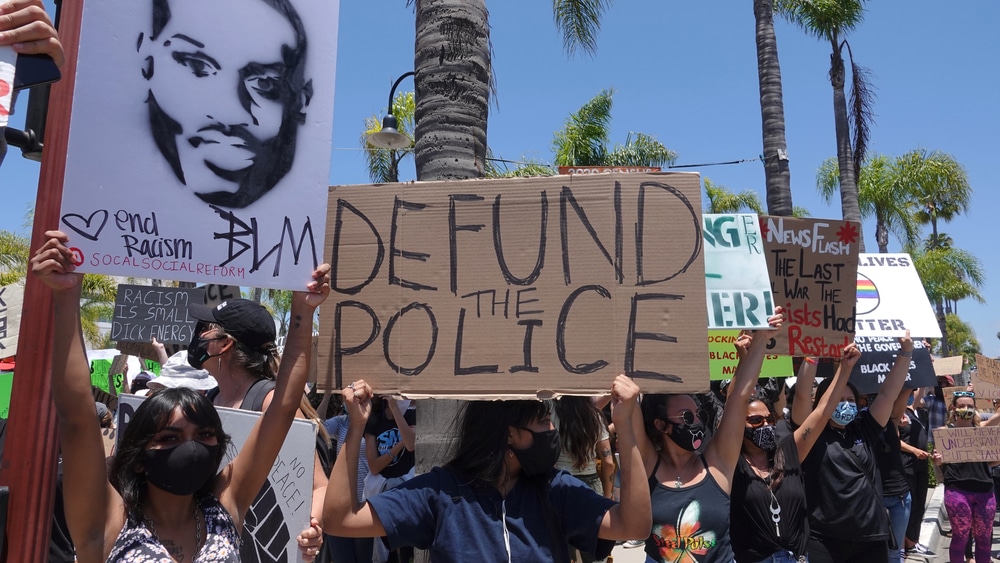
Carville warns of the growing reputation of the Democratic Party as “out of touch,” valuing social issues over economic ones.
And Carville isn’t the first commentator to suggest this dichotomy between the economy and culture. This framing has existed for decades. But, the language of contrast between “economic” issues (groceries, rent, the financial, etc.) and “cultural” ones (gender, race, identity, etc.) is a distinction we should question.
The false divide between economy and culture
The dichotomy of economy and culture is a problematic one, as history has shown these categories to be mutually constitutive. In other words, they construct each other.
A number of theorists have pointed this out. Karl Marx described this phenomenon with an economic ‘base’ that shapes the cultural ‘superstructure.’ Alternatively, Max Weber suggested that cultural values have shaped the rise of economic systems like capitalism.
Regardless of the framework we use, I think we can still see this mutual relationship in action today. Cultural notions of identity have influenced access to economic prosperity, while the state of the economy has defined cultural discourse. There are many historical examples in just the previous century.
To start, Jim Crow laws lowered the quality of life for Black Americans through intentionally underfunded public facilities. These laws had a basis in racial discrimination that persists now.
The Bracero Program funneled temporary Mexican workers into the US to fill wartime labor gaps in the agricultural industry. It subjected these workers to exploitation via insufficient wages and harsh working conditions, which remain representative of what many immigrant laborers experience today.
Finally, let’s consider the Equal Pay Act. This law, which mandates that women are paid the same as men for equal work, only passed in 1963. It still doesn’t address the wage disparities in female-dominated occupations or the unpaid domestic labor women remain expected to perform.
Economic failure can also select its scapegoats from the aforementioned groups. In times of strife, there are often media campaigns to blame welfare recipients, immigrants, people of color, and women. (When blame is directed at people receiving government assistance, it’s important to note the stereotypes of women, people of color, and immigrants on welfare. The US Census Bureau data shows that these stereotypes have varying degrees of accuracy. Undocumented immigrants generally aren’t even eligible for government assistance. Regardless, present-day economic inequality amongst these groups has historical roots.)
During the recent government shutdown, a memo on the US Department of Agriculture website blamed the loss of Supplemental Nutrition Assistance Program (SNAP) benefits on “healthcare for illegal aliens and gender mutilation procedures.”
Essentially, economics and cultural issues have been and always will be connected. This reality raises concerns about a singular focus on “economic” issues, which still carry very “cultural” ideas about who deserves economic assistance and who doesn’t. Who is “stealing” jobs and relief funds and who is being “stolen” from.
So, what’s actually wrong with the culture wars?
Maybe the real issue that Carville is gesturing towards is the lack of relevant connections drawn between the economy and culture.
For all of his gripes with “Latinx” and “BIPOC,” or even “defund the police,” Carville’s problem with language isn’t a convincing dismissal of cultural issues. We can, and (in my view) should, interpret this as an invitation to think critically about culture how it reflects the the economy.
Class (in the economic sense) links to the disparities in gender and race underlying terms like “Latinx” and “BIPOC.” It relates to the institutional disparities in who ends up victimized by the police and carceral structures. Class is also fundamental to gendered and racialized labor, which are just alternate forms of economic stratification based on cultural ideas of who deserves what.
To put it differently, all of these forms of social stratification are also class stratification. Every social classification has an economic significance.
The component that makes the current culture war discourse so unproductive and cyclical is precisely its denial of economic reality. When those with political, economic, and cultural power use the culture war to blame the marginalized, they bury deeper economic implications in a reflexive rejection of anything that contradicts the status quo.
Tax breaks for billionaires are subsumed by discourse about immigrants receiving SNAP benefits. The exploitative nature of corporations outsourcing jobs to impoverished countries with vulnerable workforces is pushed aside to blame affirmative action, DEI policies, and people of color. When women (as well as LGBTQ+ people) reject the conventional nuclear family arrangement, they face reproach for a much broader collapse of the socioeconomic order.
When capitalism is failing the majority economically, its strongest proponents shift attacks to those most vulnerable in our culture.
There’s an (economic and cultural) alternative
Ultimately, we’re all economic, cultural, and political individuals. Just as the economy will always be relevant, so will culture and politics.
Though it may seem unthinkable now, there are other ways to approach the cultural issues that make up our lives. If we abandon the rewriting of history that divides culture and economics, we can introduce a different framework that addresses both.
The imperative to focus on the economy isn’t enough. Today’s true demand is a focus on material, rather than merely rhetorical, change. The terms “Latinx” and “BIPOC” refer to inequalities that remain unresolved. While the phrase “defund the police” is continually invoked in criticism, it never happened on any significant scale. (In fact, funding usually increased.)
The proliferation of new phrases to describe old problems isn’t the Democratic Party’s issue. The real frustration is that none of these phrases seem to move beyond words.
A major point of criticism for former Vice President Kamala Harris’ failed presidential campaign was its disinterest in sweeping material changes to economic conditions. After all, it would be difficult to court corporate donors with a populist economic agenda that would jeopardize their wealth.
Simultaneously, Harris ran on the vague, unquantifiable slogans of ‘saving democracy’ and ‘protecting rights and freedoms.’ These meant little to a disempowered electorate that felt unable to afford living freely in democracy in the first place.
With wages stagnant, the pressure of inflation left many voters uninspired by Harris. While some chose not to vote at all, others became open to the economic and culture war chaos of Trump. Even Harris herself moved to the right on issues like immigration and transgender rights because of dominant, right-wing culture war narratives.
Looking ahead
Going forward, anyone who wants to win a decisive, mobilizing victory has to stop relying on conveniently empty rhetoric, whether economic or cultural in nature. That starts at having the courage to persuade, to shift the national conversation and set an effective agenda.
Adopting an economic focus on bringing prices down won’t be enough if it’s at the expense of those already scapegoated by a finger-pointing culture.
The ongoing Trump presidency is demonstrating how a corporate-dominated culture that blames the marginalized actually exacerbates economic problems. Despite his campaign promises, inflation persists and American life seems to be growing more costly. Trump’s cruel crusades against marginalized people aren’t just morally reprehensible, but also remarkably expensive.
Instead, we need a real, material commitment to economic and cultural change, because change in one necessitates change in the other.
To realize necessary economic changes, the cultural narrative must also change. For this reason, the demonization of marginalized groups can’t coexist with a pursuit of true economic equality. To get anywhere, we have to call attention to (rather than diminish) the connections that exist between the economy and culture, especially in terms of who the villains and victims of this system really are.
It’s not as simple as the strategists and commentators are making it out to be. The economy and culture aren’t oppositional forces. It’s not economics or culture. The current cultural narrative supports the current economics, and vice versa. Moving beyond the status quo requires us to adopt the political will to boldly transform both. Our efforts will only succeed if we can convince others to do the same.