Since Sudan’s independence in 1956, there have been three major civil wars. The first Sudanese civil war was a 17-year conflict between the central government and southern separatists.
The second civil war in 1983 was a 22-year conflict that approximately killed 2 million people and led South Sudan to independence in 2011.
The third major civil war is currently ongoing, with many humanitarian organizations calling it one of the worst humanitarian crises. Yet, with multiple wars taking place, Sudan is labeled as the “hidden” or “forgotten” war.
The Initial Attack
The brutal power struggle between the Sudanese Armed Forces and the paramilitary Rapid Support Force (RSF) is causing millions of Sudanese civilians to be internally displaced and for thousands to be killed.
The two sides fought over a global plan to hand power back to a civilian government—to make a democratic transition. They also disagreed on whether civilian leaders should have authority over the military. In addition, both groups were fighting to protect their large and profitable business interests.
The SAF is led by General al-Burhan, who has control over the north, the east, and parts of the center, including the temporary administrative capital in Port Sudan. Whereas, the RSF is led by Mohamed Hamdan “Hemedti” Dagalo, who controls much of the Darfur region and large parts of Khartoum and Kordofan.
The tension reached its boiling point on April 15, 2023 when heavy gunfire and explosions broke out in the capital, Khartoum. The RSF launched assaults on important landmarks such as the Presidential palace and international airport. In response, the SAF launched airstrikes on the RSF bases within the city.
The Current Challenges Sudanese Civilians Face
In October 2025 the Rapid Support Forces captured El Fasher, the capital of North Darfur and the last major stronghold of the Sudanese Armed Forces in the Darfur region.

As a result there have been reports of mass killings of civilians, sexual violence, disease, and widespread famine. The United Nations warns this civil war is worsening famine across Sudan as 21 million people face acute food shortages.
Similarly, with millions of people fleeing violent conflict, over 650,000 individuals now live in makeshift settlements in Tawila. These camps rely heavily on humanitarian groups such as the Red Crescent and the World Food Programme.
Despite these efforts, the sheer number of people in these settlements has led to severe supply shortages. Including the fund gap between the money available and the money needed to save lives. In response, the United Nations has launched its 2026 Humanitarian Needs and Response Plan, requesting $2.9 billion to help 20 million people.
Additional Non-State Actors
Additionally, despite official denials from the United Arab Emirates (UAE) and Chad, United Nations investigators have documented supply chains that funnel weapons, ammunition, and drones through these countries to the RSF.
While both nations publicly claim they are not involved in the war, evidence such as flight logs and captured military equipment suggests a deep level of external support for the paramilitary group. There have also been reports of the RSF recruiting fighters and child soldiers from Colombia.
The United Nations Limited Power
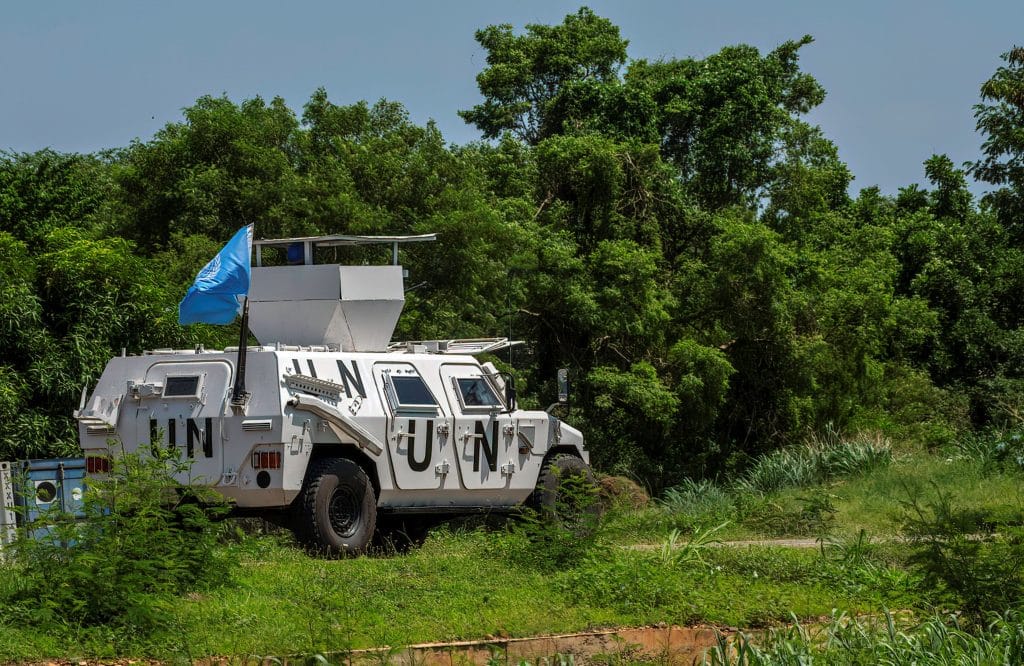
Although the United Nations is monitoring the war and ensuring the safety of civilians, compared to previous years, the United Nations has less of an impact. Since sovereignty rules prevent the United Nations from stepping in without the government’s permission, and the warring sides are refusing to cooperate.
During Sudan’s second civil war, the United Nations was able to send over 10,000 military personnel (peacekeepers) to actively monitor the ceasefire. While also launching the United Nations Integrated Transition Assistance Mission (UNITAMS). The main goal was to help Sudan transition into a democratic government.
Yet, in 2023, when the relationship between the United Nations and the Sudanese military fell, the military leaders accused Volker Perthes, leader of the UNITAMS, of interfering with their business.
So, the Sudanese government officially demands the mission leave. The Security Council then passed Resolution 2715, which shut down the mission entirely. By February 2024, all UNITAMS staff had left the country.
With these restrictions, the United Nations has to focus on humanitarian relief such as food and medical aid. However, they are also carrying out a Fact-Finding mission to document the war crimes and human right violations done by the SAF and RSF.
Renewed Genocide in El-Fasher
Through the Fact-Finding mission, the United Nation has concluded as of February 2026, the actions of the RSF in and around the city of El Fasher display the “hallmarks of genocide.”
The RSF carried out ethnically targeted killings against non-Arab communities, specifically the Zaghawa and Fur peoples.
“Is there anyone Zaghawa among you? If we find Zaghawa, we will kill them all”; and “We want to eliminate anything black from Darfur.”
The RSF has at least three underlying acts of genocide. That includes, the killing of members of a protected ethnic group, causing serious bodily and mental harm, and deliberately inflicting conditions of life to bring about the group’s physical destruction in whole or in part.
The Reason for the Lack of Media Coverage

The current conditions in Sudan make it difficult for journalists to real groundwork. As the military has been targeting journalists since the start of the war. There have been reports of more than 30 that have been killed.
In addition, 90% of Sudan’s media infrastructure has been destroyed, and newsroom have been burned down or looted. Moreover, internet blackouts in Darfur have been weaponized to make real-time reporting and communication impossible.
Even so, Sudan holds no real relevance to the United States. Major news outlets prioritize wars in Ukraine and Gaza because of their impact on global politics. As well as their ties to the United States.
So, Sudanese civilians rely on their own digital platforms such as X and WhatsApp to communicate and document their experiences. The most important civilian-led movement is the Emergency Response Room (ERR) network on Whatsapp.
It connects them to volunteer-run groups from their neighborhood. They set up soup kitchens, operate in local clinics, and organize evacuations for people trapped in conflict zones. However, the RSF and SAF monitor digital activities. And if they find anyone providing information to the outside world or working with the ERR, they are detained or beaten.