

“Gavin Newsom’s snark attacks on Trump boost his national standing,” or “Gavin Newsom trolled his way to the top of social media,” have just a small portion of the current California Governor’s recent media frenzy. With this state-known politician suddenly taking the national stage, it makes you wonder: Who is Gavin Newsom? And why is he suddenly so talked about?
Who is Gavin Newsom?
Born October 10, 1967, as Gavin Christopher Newsom. Newsom currently serves as the 40th Governor of California and has recently become one of the most talked-about figures in the Democratic Party today. His name, Gavin Newsome, has increasingly appeared beyond his home state. Polls, experts, and political analysts all ask the same question: could Gavin Newsom be the next president?

(Photo: CA Governor’s website)
He was ahead of his time
Newsom’s Mayoral term began in 2004, San Francisco. He first gained attention as a city supervisor and later as mayor. One of his most notable early career moves involved him directing city officials to begin issuing marriage licenses to same-sex couples. This move was revolutionary. Newsom pushed for same-sex marriage equality more than a decade before the U.S. Supreme Court in Obergefell v. Hodges (2015), which nationally recognized it. It was a monumental progressive push that further situated California as “the deep blue” state it is known to be.
After serving as mayor until 2011, he became California’s lieutenant governor under Jerry Brown. He held this role until his election as governor in 2018.
Since taking office, Gavin Newsome has defined himself with a bold, energetic, and unapologetic persona. He has advocated for climate action, held universal health care discussions, and expanded social programs. Many supporters often frame him as the representative of “modern California liberalism.”

He’s unapologetically out there
Newsom’s national popularity has been driven partly by his media presence and by his contrast with national Republican figures.
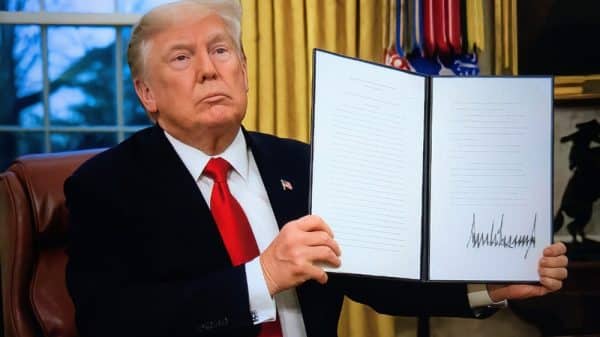
Early this year, on July 9th (2025), Newsom’s TikTok account posted a slideshow post discussing California suing the Trump Administration over the deployment of the National Guard to Los Angeles. The post’ last slide read “Find out, F**k around,” in which many users responded positively and were left speechless. Given that this post came from the official cagovenor account, and given the viral spread of memes over the internet, this post resonated with a much larger audience than just Californians.
This post was to be one of many more explicit, and proactive, anti-Trump posts that have since been garnering much support, attention and discourse in online spaces.

In addition to this, Gavin Newsom’s popular Prop 50, a proposition aimed at redistricting California in an attempt to regain 5 democratic seats lost to Texas Republican’s gerrymandering efforts, has further cemented Newsom as a strong figure for the democratic party.
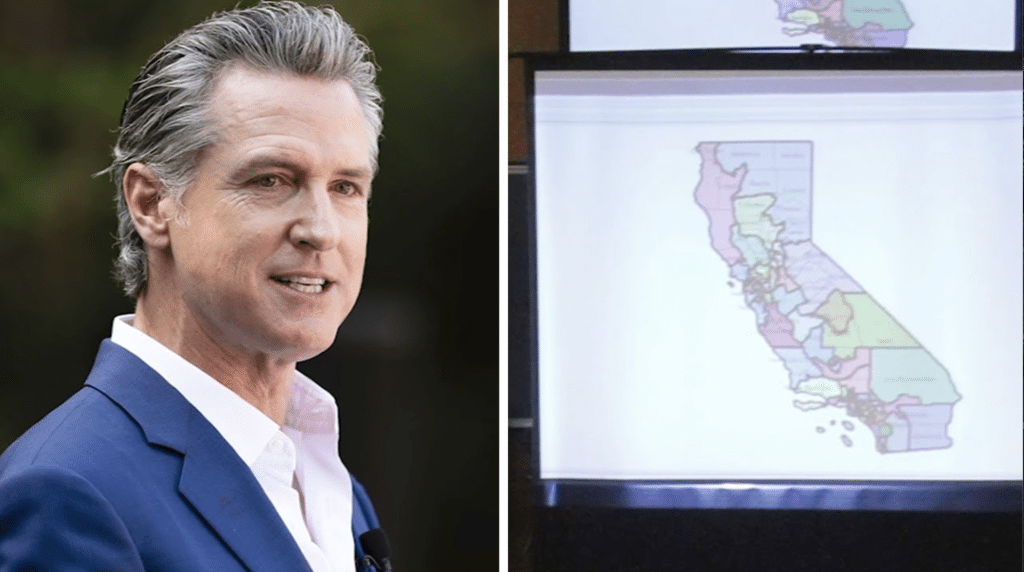
(YouTube/ABC7 News Bay Area)
Proposition 50 has proven to be one of the most expensive special election endeavors, that has only given Newsom more time on stage as millions of Americans, Californian or not, witness the unprecedented counter-redistricting efforts on full display for the country to see.
Does he really have support to be President?
While Newsom might have had some viral TikTok posts and a popular proposition, what does the actual data say?
An August 2025 Emerson College poll placed Newsom as the leading Democratic candidate for the 2028 nomination, earning roughly a quarter of likely Democratic voters. A Newsweek analysis even showed him narrowly edging out Donald Trump in a hypothetical matchup. Suggesting that Gavin Newsome’s current viability might hint at a more national playing stage in the years to come.
Additionally, what caught many speculator’s attention was when Newsom visited early primary states like South Carolina. While officially, framed as support for Democratic candidates, many have viewed these trips as early tests of his national appeal.
With a strong base of support back home in California, popular liberal politics, and viral political meme posts, Gavin Newsome has set himself in a comfortable spot for any future ambitions.
Why shouldn’t he run?
Despite his national rise, Newsom still faces sharp criticism back home. California continues to grapple with homelessness, a housing shortage, and a high cost of living, all issues that many argue his administration has not sufficiently addressed. A May 2025 Los Angeles Times and IGS poll found that over half of California voters believe he is more focused on national ambitions than local governance. With his approval rating in the mid-40s, questions are raised about whether Gavin Newsome’s leadership style would translate effectively to the national stage.
Critics also question his consistency. While he presents himself as a progressive, he has taken centrist positions that frustrate and isolate parts of his base. Many speculate these flimsy moves as an attempt to appeal to moderates ahead of a potential Presidential bid. Others point to his privileged background, coming from San Francisco’s elite social circles and family ties to the Getty fortune, as a potential weakness in connecting with working-class voters across states, if he were to run.
Additionally, Gavin Newsom’s Prop 50 has faced fierce backlash with critics such as former California Governor Arnold Schwarzenegger saying “It is insane.” As well as many other groups mobilizing to “Defend Fair Elections,” in one of the most contentious special elections to date.
Could he be President then?
Still, many Democrats view Newsom as one of the few figures capable of uniting the party’s competing wings. Observers note that Newsom’s recent moves of his cross-country trips, media strategy, and donor outreach, all resemble the groundwork of a national campaign. Politico even reports Gavin Newsome is actively shaping his public images ahead of the next election cycle.
His timing may also work in his favor. Newsom is term-limited in California and cannot run again after his current term ends in 2026, enabling him to pursue a possible 2028 Presidential bid. Backed by one of the most extensive donor networks in the Democratic Party, he could enter the race with financial and organizational advantages.
Supporters argue that Newsom’s political skill lies in messaging. He often frames California as a blueprint for progressive governance, highlighting his achievements in renewable energy, gun control, and reproductive rights. His administration’s policy record has made Gavin Newsom both a symbol of the Democratic aspirations and a contentious contender for Republicans.
What’s next for Newsom?
Whether Gavin Newsom’s ambitions materialize into a Presidential campaign remains to be seen. His future depends on several factors: California’s policy outcomes, his ability to appeal beyond the state’s liberal base, and his relationships within the Democratic establishment. For now, his focus remains on California. His increasing national activity, frequent media appearances, and pointed exchanges with Republican leaders all hint at something more.
In many ways, Gavin Newsom embodies the Democratic party, he’s bold yet polarizing, and ambitious yet strategic. Whether he runs or not, his influence is undeniable. As the 2028 race approaches in the near future, we can only ask the question: Will Gavin Newsome run for President?