A meeting between E.U. officials and Taliban leaders sparked concerns around the world after the E.U. passed a controversial deportation law that will affect refugees and asylum seekers.
A series of anti-immigrant and asylum reform laws have been passed by the E.U. this year. International organizations have been protesting these laws and advocating for refugees.
E.U. officials that voted against the anti-immigration laws have voiced their concerns for the lives of refugees as mass deportations become a reality. One of the biggest concerns is the future of Afghan refugees after the E.U.’s meeting with the Taliban.
The E.U.-Taliban meeting
European Union officials met with members of the Taliban to discuss the deportation of Afghan immigrants. This meeting took place shortly after the new deportation law was passed.
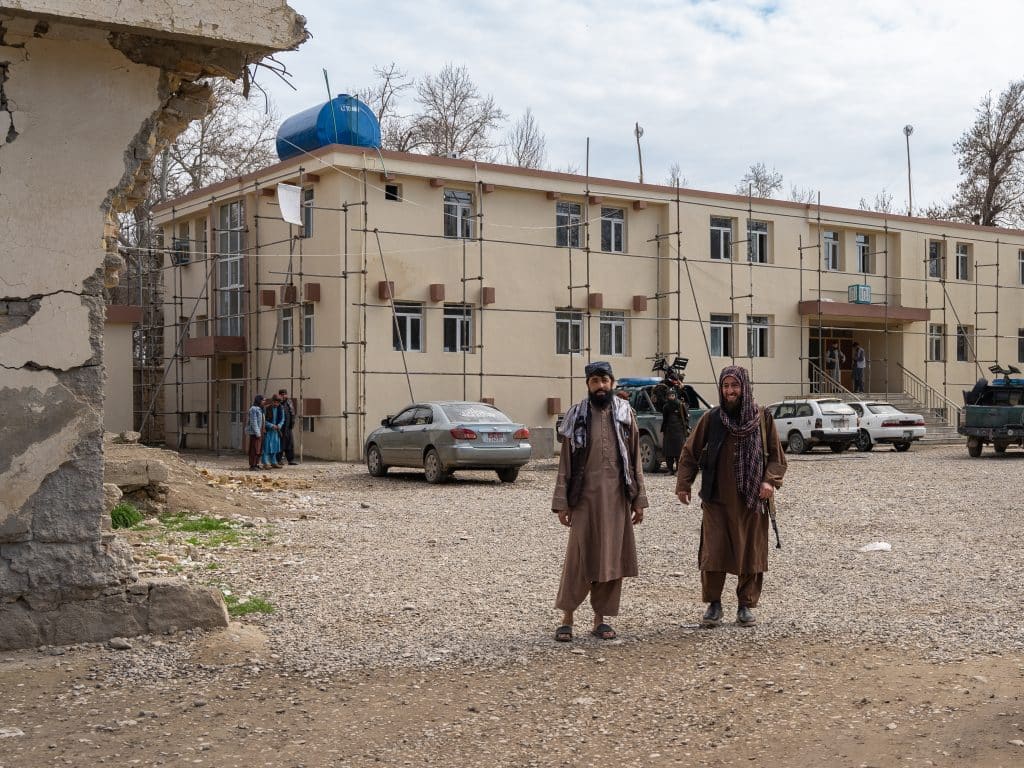
The talks focused on ways to streamline and establish a pathway to deport Afghans. It was reported that deportations would focus on those who “pose a security threat” and lack legal residence permits.
European community affairs correspondent, Ashifa Kassam, raised concerns regarding the language from the meeting.
“When European officials did admit they were having talks, they emphasized that deportations would focus on people who had committed crimes or were seen as security threats. But when the invitation letter went to Taliban officials, it referenced Afghans with no legal right to be in the E.U. That’s two very different things.”
This discrepancy in language has caused even more controversy about the meeting. Deporting people seen as threats as well as people in the E.U. illegally vastly expands the amount of refugees under threat. 20 E.U. member states supported action to start deporting Afghans despite the growing human rights crisis in Afghanistan.
The meeting solidified the deportation law as reality. The E.U.’s anti-immigration sentiments aren’t just plans anymore— they are being acted on. Other countries around the world have also shown concern about the ethicality of E.U. officials meeting with the Taliban. Some fear that the meeting validates the Taliban, even though it is still not an officially recognized government.

Leading up to the meeting
Multiple anti-immigration and deportation laws have been passed by the E.U. The increase in legislation shows that the plan to deport Afghans and other refugees has been in the works well before the E.U.-Taliban meeting.
These laws have been building as E.U. officials have voiced their concerns. Jordan Bardella, the chairman of Patriots for Europe, stated that, “There is a migration crisis in Europe. This is the most drastic legislation on immigration adopted by the E.U. since its inception.”
The new developments include implementation of offshore deportation centers and “ICE-Style” immigration enforcement by allowing officers to raid homes and detain people for longer. People detained for potential immigration violations can now be held for up to two years. Officials have also claimed the law will make it easier for mass deportations to occur.
Done deal: Mass deportations from Europe will soon become reality✈️ pic.twitter.com/rQ66WpZL3P
— Charlie Weimers MEP 🇸🇪 (@weimers) June 17, 2026
Along with making deportation easier, legislation has been passed that makes legal immigration harder. A new asylum law adds another level of screening at the E.U.’s external borders. The screening is based on home citizenship of a person and can turn them away if their country is deemed “safe enough”. This has created a new checkpoint at which a potential refugee can be turned away.
Refugees in the E.U.
Previously, the E.U. has emphasized the importance of assisting asylum seekers and refugees, as shown on the official E.U. Migration and Home Affairs website.
“Asylum is a fundamental right and an international obligation for countries, as recognized in the 1951 Geneva Convention on the protection of refugees. E.U. Member States have a shared responsibility to welcome asylum seekers in a dignified manner…”
Asylum in the E.U. – Migration and Home Affairs
However, as the E.U. honors this promise, many countries are feeling overwhelmed by refugees. In the past two years, the percentage of asylum applicants that are accepted has remained at around 40% across the E.U.

The citizenships with the highest percentage of asylum recognition are Syria, Ukraine, Mali, Eritrea, Haiti, and Palestine. Despite the growing concern for Afghan citizens, only 63% of applicants are granted asylum. The E.U. member countries that have the most refugees are Germany, France, and Greece.
Despite some politicians promoting mass deportations, others still emphasize the importance of refugee protections. Volker Turk, the United Nations’ human rights chief, stated, “The dehumanization of migrants and refugees, including in the UK, US, and many E.U. countries, is appalling, often leading also to the denial of their rights”
Effects of deportation and anti-immigrant laws
The prospect of mass deportations and restricted asylum confirmation will have lasting impacts on immigrant communities. After the E.U.-Taliban meeting, protests advocating for Afghan refugees grew.
Since the Taliban regained power after the United States and NATO withdrawal in 2021, women and girls have continued to be oppressed. Restrictions on women by the Taliban include no school beyond age 11, prohibitions on women in the job market and public spaces, and marriage laws that have perpetuated the human rights crisis.
Mass deportations will disproportionately affect women and girls who have no rights in their home country. There have been reports of refugees returning to Afghanistan and experiencing arbitrary arrest and harassment. European community affairs correspondent, Ashifa Kassam, also stated that Afghanistan is currently under a humanitarian crisis, with over 40% of its population impacted by hunger.
The EU and its member states’ plans to deport Afghan nationals are a disgrace.
— Amnesty International (@amnesty) June 24, 2026
We rallied outside the EU Commission headquarters to spread the message that Afghanistan cannot be considered a safe country. Its dire human rights situation, deepening humanitarian crisis and… pic.twitter.com/4DZypVKEth
Afghanistan is under direct threat by deportation laws, but every immigrant that is seeking asylum in the E.U. will be affected. With the establishment of detention centers and immigration enforcement officers, immigrants from all countries will be deeply affected.
The new deportation law also expands the investigative measures immigration officers are able to conduct. These measures include body, home, and personal belongings searches and seizures. This increases the concern of dehumanizing and violating the rights of refugees and immigrants.
Admist the controversy, Ilaria Salis, a MEP for the Green and Left Alliance announced a warning. She stated that migrants are the current, “quintessential scapegoats of the right wing’s vulgar propaganda… But tomorrow, if we continue at this pace, it will be the turn of more and more people. It will be the working class, activists, and dissidents – and eventually anyone who does not conform to the order they seek to impose.”