


The killing of the poor and downtrodden for the entertainment of the rich is a common trope in the media. Films like The Hunger Games create scenarios that hyperbolise the rich’s relationship with the poor. Claims of war tourism in Bosnia-Herzegovina reveal that these stories are closer to reality than one might initially think.
In the spring of 2025, Italian prosecutors launched an examination into claims of alleged human “safaris” in Bosnia. The Prosecutors alleged that wealthy tourists would spend weekends shooting at Bosnian civilians during the Bosnian War. The Serbian government (then the Federal Republic of Yugoslavia) and Serb separatist paramilitaries allegedly facilitated these trips.
The investigation comes as journalists and prosecutors expose high-profile figures for decades-long exploitation. How and why do these acts occur? What does it say about our society, as well as the global order at large?
The Yugoslav Wars
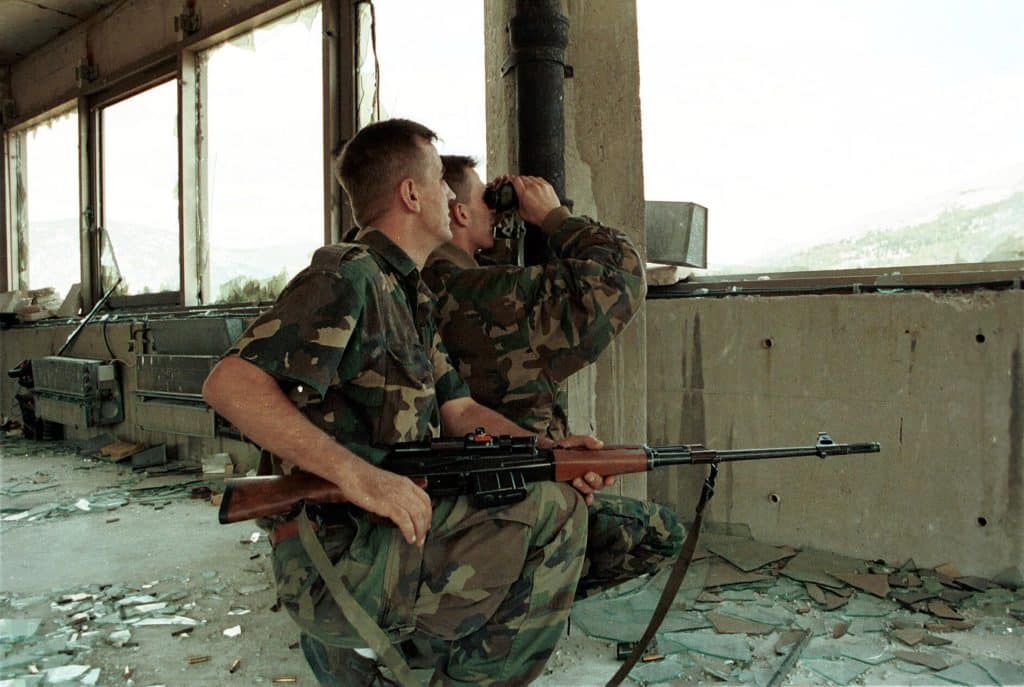
The fall of the communist bloc was hailed at the time as the “end of history”. Francis Fukuyama wrote that the collapse of the Soviet Union would usher in an era of peace and international cooperation. The reality of the situation, especially in Eastern Europe, was not so optimistic. The 90s in Eastern Europe were largely a period of great hardship. There is no clearer example of this than the collapse of Yugoslavia.
The Bosnian War was one of a series of conflicts that occurred in the Balkans throughout the 1990s, fought between the Muslim Bosniaks, the Catholic Croats, and the Orthodox Christian Serbs. The war in Bosnia became notorious for the war crimes committed during the fighting.
In the wake of the war, many Serbian leaders, soldiers, and officers were tried for violations of international law. Many of these crimes fall under attempts to exterminate the Muslim Bosniak population. These acts of extermination, committed by Serb Separatist forces, are known broadly as the Bosnian Genocide.
The most dangerous game
Throughout the Bosnian war, the capital city of Sarajevo fell under a 3 year siege by Serb forces. Snipers carried out the most brutal aspect of the blockade by targeting civilians. The Italian Investigation alleges that wealthy Italian tourists flew into Belgrade and Serb military personnel escorted them to Sarajevo. Investigators say these individuals wore hunting apparel.
A recent Al-Jazeera-produced Documentary has sparked new interest in the subject of war tourism during the Bosnian War. Slovenian filmmaker Miran Miranzupanič’s film was the subject of controversy throughout the Balkans.

The film claims that Russian, American, and Canadian nationals also took part as weekend snipers. The film also claimed that tourists would have to pay more if they had shot a child. In an interview with Al Jazeera, Miranzupanič said about the snipers
“In any case, these were powerful and wealthy enough people with a very specific psychological profile.”
Italian journalist Ezio Gavazzeni explained that the motivations of these individuals were not political or religious. Despite the sectarian aspect of the conflict, the snipers were far more interested in personal satisfaction and enjoyment.
These apolitical motivations are also in contrast with foreigners who with political and religious incentives. Russian Nationalist and writer Eduard Limonov fired machine guns with Bosnian Serb forces. There were also Greek foreign fighters, with Neo-Nazi sympathies, who participated in some of the most violent massacres of the conflict.
Follies of the rich
The resurfacing of allegations of war tourism during the siege of Sarajevo came alongside revelations regarding record mogul Sean “Diddy” Combs and deceased sex trafficker Jeffrey Epstein. What all these cases have in common is that they all consist of the rich and powerful exploiting the poor and vulnerable for their own enjoyment.
The war in Bosnia was one of the darkest chapters in Balkan history. For the people of former Yugoslavia who lived through that period, it was a deeply traumatic part of their lives and history. They were survivors. Despite all this tragedy, wealthy foreigners allegedly paid to contribute to the bloodshed.
If these individuals shot at innocent people in their own country, they would be considered terrorists. Because of the turbulent and unstable political climate of the former Yugoslavia at the time, wealthy individuals were able to use the situation to get away with murder.
In the cases of Epstein and Diddy, these were wealthy American men who took advantage of women from poorer backgrounds. Their power and influence allowed them to manipulate and control those around them. These men had access to money and to power. Epstein was a phone call away from an uncomfortable number of world leaders. The case of the Sarajevo Snipers is the same thing, only to a greater extent, because their victims were those living in war zones in foreign countries. Any government body was too preoccupied with fighting a war to hold these individuals accountable. The government also had a reason not to pursue these claims because the people of interest came from the countries that supported Bosnia.
These circumstances create a situation in which, only after 30 years since these acts occurred, Western European nations are beginning to look into these allegations. With claims of foreigners engaging in violence during the conflict, being openly circulated throughout that time period.
The victimization of the third world
The term “third world” has seen a decline in its use in recent years. The dichotomy between first, second, and third worlds emerged in the political world order of the Cold War. With the communist bloc defeated and the use of “third world” as a pejorative, many opt for alternative definitions.
However, in the context of wealthy foreign tourists going to a poor, war-torn nation like Bosnia for the purpose of sniping at the local populations, the analysis is a perfect description. The Three Worlds Theory explains the exploitative relationship between global superpowers like the United States and developing countries like Bosnia.
The Sniper Safari phenomenon is one of many similar occurrences in which wealthy Europeans and Americans travel to third-world countries to exploit the local population without consequence. The infamous “Epstein Island” was part of the US Caribbean territories. The situation in Bosnia reveals how this pattern emerged in Europe, specifically in the poorest and most economically unstable part of the region. Something about the fact attracted wealthy tourists to allegedly pursue war tourism as an activity to partake in. The factors align with the fact that the population’s vulnerabilities were hindering them.
A historic narrative
Figures such as the Sniper Safaris of Sarajevo are reminiscent of Western Europe’s Colonialist history. The exploitation of the poor by the rich on an international scale is a story that has repeated itself again and again, across Africa, Asia, and the Americas. The abuse of a local population requires that population to be seen as “the other”. The dehumanization of the Bosniaks hung on the fact that they were not only poor and disenfranchised but also the fact that they were Muslim.
Academic figures such as Eduard Said explained this process of dehumanization in the Middle East in his work on Orientalism. This framework served as the basis for Bulgarian writer Maria Todorova’s thesis on what she called “Balkanism”. The idea is that the West has historically created a narrative that frames the peoples of the Balkans as the “Other from within”. While the Balkans were not victims of British-style colonial conquest, they had been historically subjugated and dominated by neighboring superpowers.
This analysis of the Balkans, and more specifically the Muslim Bosniaks as an “Other,” set the stage for acts like the War Tourism that occurred during the turmoil of the 1990s.
Pursuit of Justice
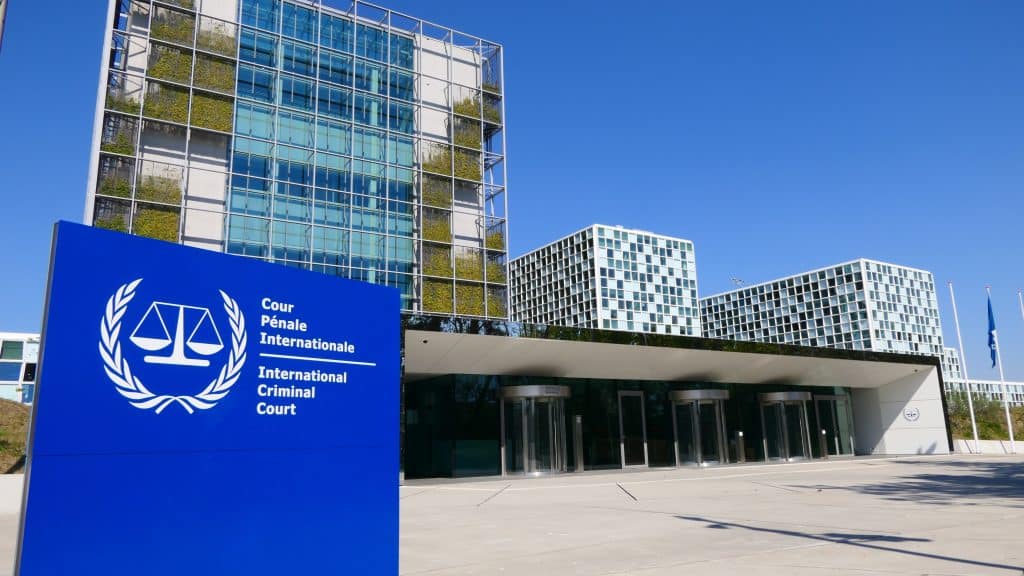
The Yugoslav wars were the basis for numerous international court cases in pursuit of transgressions that occurred throughout the period. Trials in the International Criminal Tribunal for the former Yugoslavia were happening up until 2017.
International justice is difficult. Institutions have been founded to carry out the task of maintaining world order by the letter of the law. The process of prosecuting crimes that occurred in Yugoslavia and Rwanda was marred by difficulties.
The issue is actually implementing and enforcing that law, in the context of countries with the power to refuse to cooperate. Because of these facts, the only successful international criminal cases have been with defendants such as Slobodan Milosevic, a dictator ousted from power.
Many of the alleged weekend snipers of Sarajevo live in wealthy nations. Their ability to pay for the protection and facilitation of these expeditions shows that these individuals were also wealthy. Are they wealthy enough to escape justice? Are their home countries, or even the international courts, willing or capable of pursuing these cases?














Helen Tzanis
January 6, 2026 at 1:21 am
Well done.
Love you,