The world can be unpredictable and cruel. We often struggle to understand why misfortune strikes good people, or how someone can have everything they want and still feel unhappy. Life is the ultimate puzzle when you place the pieces correctly. It can become easier than it is for most.
But what if you’ve been missing puzzle pieces since birth? The missing pieces of wealth, status, freedom, education, protection, and equality. You’d likely think you’re playing a rigged game. They tell you that if you work hard enough, you’ll get them. Finally, you’ll complete the puzzle like others.
This is the reality for Black women in America: a rigged game that demands perfection with missing pieces. Black women have spent the better part of history having to constantly hustle, endure, and demand our way to success. While reminded to remain soft, graceful, and feminine. Because that’s what we’ve been taught womanhood is supposed to look like.

But we’ve never been allowed to simply be. So, maybe being “boring” isn’t a flaw, it’s the rest we’ve been denied.
For this article, I interviewed two women, both of different ages. Foremost, to give a voice to their experiences as Black women. But also provide cohesive evidence as to what generations of women have silently been dealing with.
The purpose of this article is to educate ourselves and others on the disparities of our social and cultural structures. Things aren’t always black and white. But there is always black, and always white.
The pressure to be everything
As a young Black woman, I grew up receiving the ideology that if I became successful enough and made myself noticeable. I would be chosen. Whether that be by a job, a romantic partner, a school, etc. Despite growing up middle-class, reality began to surface that things would not be easy for me; I would have to do twice the work to get half the credit. Which isn’t even always guaranteed. While the accomplishing moments can be beautifully blissful, rock bottom is equally somber.
Socially, Black women are held to a higher expectation in Western society than other women. Partially imposed by society and internalized within our own communities. Equality is a legal obligation, but can often resonate as a suggestion within society and culture.

Black women can feel the ramifications of overworking, overextending, and the over-policing of their behavior. Often beginning in adolescence.
Many may be familiar with concepts such as “Black Excellence” or “Black Girl Magic”. For those who are unaware, the term Black girl magic is more recent. It gained popularity after emerging in 2013 when social media influencer, CaShawn Thompson, composed a tweet that included the caption, #BlackGirlMagic.
The concept of Black excellence dates back to the Civil Rights Movement as a response to systemic inequality. The official title wasn’t widely adopted until much later.
While these terms have been primarily used to uplift and encourage African Americans to excel against systemic odds, it has mainly advertised itself as either wealth, higher education, entrepreneurship, or beauty. With such rigid qualifications to be deemed successful. Could this constant grind mindset secretly be drowning us?
Smart enough to belong
Black excellence as it’s considered today is best explained in the 1903 book, “The Negro Problem” by W.E.B. Dubois. In the book, it speaks about The Talented Tenth. This emphasized the need for higher education in the Black community to develop the leadership capacity among the most able 10% of Black Americans. As a means to gain equality.
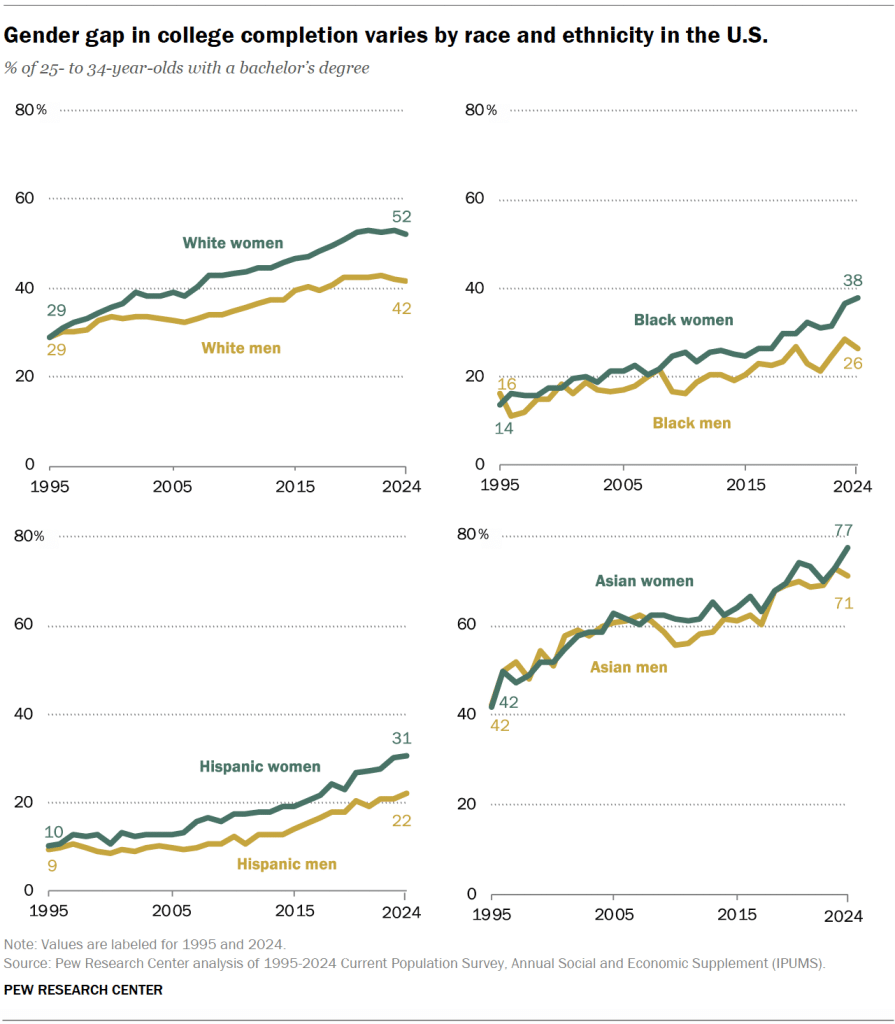
In the twenty-first century, this concept of education procurement as the dominant standard of Black success is still alive and well. In 2023, it was found that 27% of Black adults aged 25 and older, equating to 8.2 million people, had earned at least a bachelor’s degree. As of 2024, Black women outpace Black men in college completion, with 38% of Black women having attained a college degree.
The exceptional black student
You may have experienced being in an Honors or Advanced Placement class. You may also speak well, behave properly, and work hard. Then you might hear people call you “one of the good ones.” While surely meant harmlessly, oftentimes it can teach Black students that our worth lies in how exceptional we’re willing to be. The perfect GPA, perfect attitude, and the perfect representation of blackness.
When students are separated from their peers in the general student population. It produces a subculture for some black youth that leaves them feeling singled out.
Ayiana, a 19-year-old college sophomore, had this to say when asked if she’s able to be her true self around others.
“Not really, because I am quite an odd person, I love being odd. But in certain situations when I meet people, I can’t be the person I really am because people will be like, ‘Oh, you like that? But you’re black’. Like when I tell people I want to be a marine biologist, everyone is like ‘what?’. Because you don’t see many black marine biologists, much less a black woman. People tend to be skeptical, and it kind of hurts.”
While the praise is encouraging, it can also be isolating. In school, we learned that by striving for excellence, we can use it as armor against prejudice and stereotypes, protecting ourselves from these realities.
When speaking with Jasmine, a 38-year-old mother and entrepreneur. She speaks on her personal experience with the education system as an adolescent.
“Being a black person, period, if you mess up one time, you’d look at the worst consequences that happened. But because I was so good in other areas as a student, I got spared.”
This speaks directly about the fortress of excellence that high-achieving Black students put around themselves to receive milder consequences than their peers, out of fear. Perfection for protection.
We carry this armor into adulthood as we enter the workplace and navigate life on our own terms. This armor only gets heavier as life throws its punches.
Eventually, it takes its toll.
Heavy is the crown
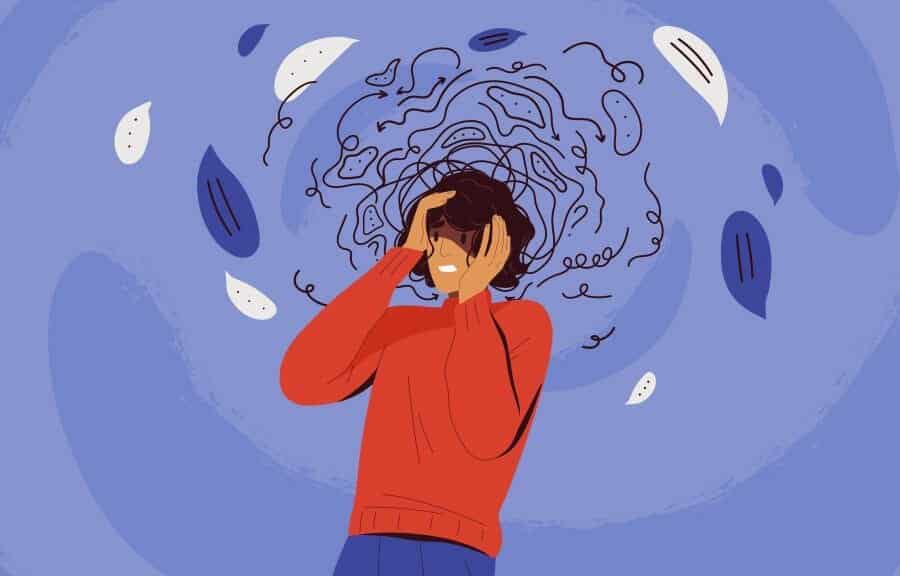
We are all familiar with the danger that high-stress situations can pose to someone’s psychological and physical health. Especially for long periods of time. Black women are too familiar.
A qualitative assessment conducted in 2022 revealed how much stress Black women are actually under.
“Black women report higher psychological stress compared with other demographic groups in the United States. This study provides insight into how the intersectionality of two historically marginalized groups (i.e., Black Americans and women) may result in unique stress experiences for Black women.”
This level of stress can come from a lack of support or isolation.
Stress is a known cause of cardiovascular diseases, along with other lifestyle factors. Such as smoking, physical inactivity, unhealthy diet, obesity, and excessive alcohol consumption. All can also be attributed to signs of being poverty-stricken with a lack of readily available resources.
Fun fact: Black Americans hold the second-highest poverty rate in the United States at 20%. Native Americans are in the lead by 2%.
Stress affects every part of your body. Musculoskeletal (muscles), respiratory (lungs), cardiovascular (heart & blood vessels), endocrine (brain), gastrointestinal (gut), reproductive (male & female), and nervous system.
Currently, 59% of Black women ages 20 and over are living with some form of cardiovascular disease. This is cause for alarm. How do Black women manage stress when a culture demands their best at all times for their own safety?
Ongoing stressors that exceed coping abilities create chronic stress, causing severe and prolonged mental and physical strain.
If stress can kill us, how can we fight it and still manage our lives?
Lowkey liberation
The answer is rest. You need to pay attention to the signs that your body gives you when it is stressed. Symptoms of stress can manifest themselves in various ways.
When stress affects every part of your body, this can resonate as symptoms like muscle tension, clenched jaw, constipation, reduced immune function, fatigue, skin problems, etc.
Trill Magazine features a more in-depth article on how to cope with stress and what symptoms of stress can look like.
Excellence is what many should choose to strive for. We strive to succeed in a system that people built to exclude us. So instead of working ourselves to the bone for outside expectations, we know that we validate our own excellence.
Nor does it require neglecting your health. Hustle culture and restricted images of Black excellence that make us push ourselves so hard. Which ties into a fear of poverty, but also reflects the state of our environment.
Economic policies must ensure that a single, stable job provides workers with sufficient income to meet their fundamental needs.
No one should have to consistently succeed to be accepted, and people should feel socially safe when they cannot.
Political activist and author, Angela Davis, once said, “I am no longer accepting the things I cannot change. I am changing the things I cannot accept.”
So take that day off! Spend time with your community! Prioritize work-life balance!
But most importantly, allow yourself to rest without guilt.