
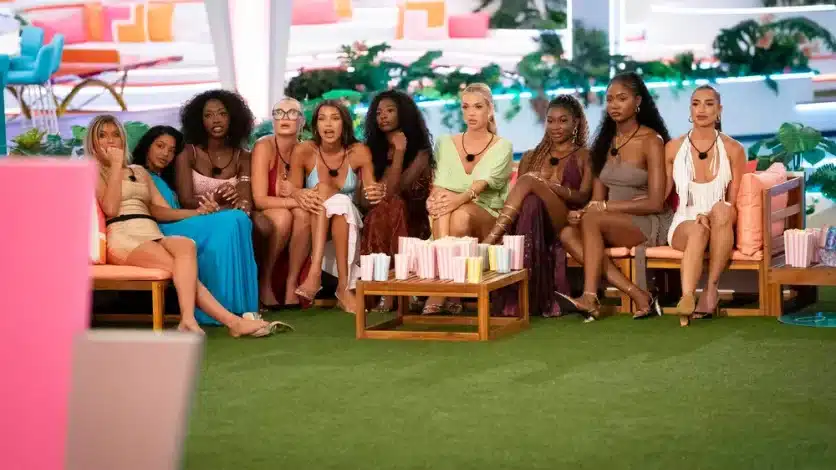
Welcome back to “Love Island USA”! The series is back for its eighth season, with new sexy singles, new love connections, and the same old discourse.
The eighth season premiered on June 2nd and is approaching its final week. While this recent installment of the series has already proven to be miles better than last season’s train wreck, showcasing strong friendships and genuine connections (Bryce and Trinity, I’m looking at you). Viewers have still brought the same debates to the conversation week after week.
Beneath the romance and drama, “Love Island USA” has evolved into a mirror of contemporary society. Exposing how viewers interact with racism, misogyny, parasocial interactions, and toxic online fandom.
When popularity comes with a price
With every season of any reality TV show, there is always that favorite contestant who steals everyone’s hearts. In the case of “Love Island USA,” that usually means a favorite girl.
Not only is there support for the season’s favorite competitor, but there is also unprecedented scrutiny. Popularity frequently results in harsh criticism and racist internet harassment for women, particularly Black women.
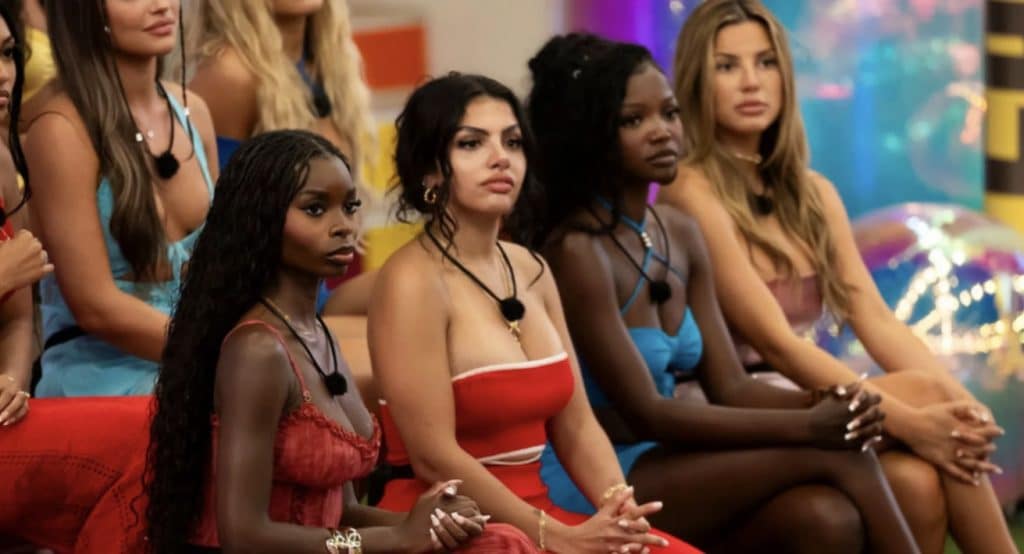
An islander from season 7 who was widely beloved by the public, Olandria Carthen, ended up being runner-up with Nicolas Vansteenberghe. The pair had coupled up the week of the finale. While Carthen was adored by a large portion of the public and went on to have a prosperous career outside the villa, her fame also led to harsh internet criticism. In addition to criticizing everything from her appearance to her makeup, viewers frequently made overtly racist remarks.
Huda Mustafa, one of her fellow islanders, also added to the mounting criticism of Carthen. Mustafa stated in a post-show interview that she felt bullied in the villa. Particularly by Carthen and another Black woman in the cast, Chelley Bissainthe. Many viewers and followers of Carthen and Bissainthe questioned the statement. Especially because they had watched Carthen and Mustafa develop what appeared to be a close friendship throughout the season. Following Mustafa’s words, several supporters made racist and abusive remarks that fueled the already-existing criticism against Carthen and Bissainthe. A few months after the finale, the “Love Island USA” reunion featured a discussion of the issue.
The internet’s double standards
Throughout the history of “Love Island USA,” a significant portion of the cast has been Black, particularly Black women. Unfortunately, there is a pattern of racism on the internet along with that representation. Even though many Black women on the series end up being fan favorites, some fans still believe they have the right to harass, criticize, and make racist comments about real individuals they only know through a television screen.

But the “Love Island” cult reflects more than just bigotry. The show also emphasizes how women are subjected to different standards than men. While men are generally excused by the notion that they are just “being boys,” female islanders who make the same decisions or errors as their male counterparts are often ridiculed and chastised.
A recent example of this can be seen in Melanie Moreno’s experience during season eight. There was a moment in the villa that affected how her fellow islanders perceived her, as well as America.
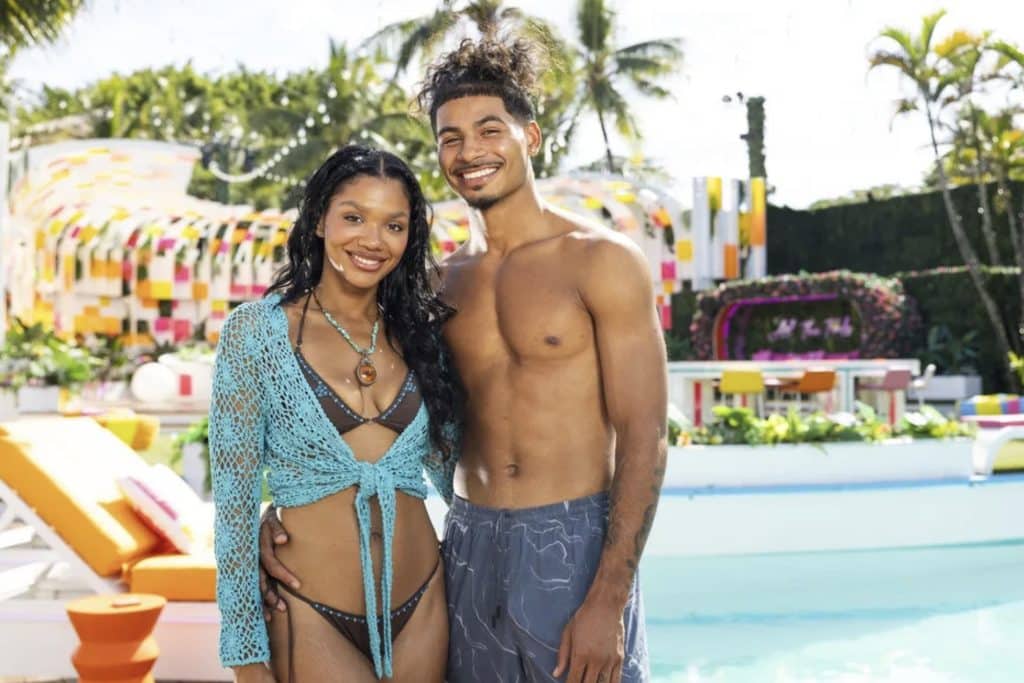
In the sixth episode, the producers challenged the islanders with a game where the women wore blindfolds and identified their partners by touching and kissing them while covered in paint, while the men remained handcuffed to a giant bed. (Yes, this was a real challenge that aired on television.) When it was Moreno’s turn, she made her way through the boys before reaching her partner, Sincere Rhea. After kissing Rhea, she continued onto the next islander, switching back and forth between the boys. In the end, the scene made for interesting television. Whether she was confused about who her partner was or simply wanted to have fun, viewers still judged her far more harshly than they judged male contestants for similar behavior.
But the subsequent response exposed a much more serious problem. Even though it was only the first week of the season, many viewers and Islanders, especially the men, viewed Moreno’s conduct as a betrayal. While fans excuse male islanders for “exploring their options” as part of the “Love Island” experience, they harshly criticized Moreno for doing the same thing and expected her to commit right away.
Moreno’s treatment exposed the broader expectations that reality television places on women beyond a single issue. Viewers often allow men more freedom to make mistakes before criticizing them. Yet, they expect female contestants to demonstrate loyalty and self-control almost immediately. Audiences judge the same behavior differently depending on who performs it.
When entertainment becomes toxic
The audience’s need to see every fight transform into a tale of redemption is one recurring theme in “Love Island” seasons. Many watchers hope that couples will face challenges, overcome them, and emerge stronger. This anticipation, in my opinion, stems mostly from the success of season six. This served as many fans’ initial introduction to the show. After Casa Amor, the winners, Serena Page and Kordell Beckham, encountered difficulties but overcame them to win the season. Because of this, many younger fans now view their relationship as the model for what a “real” and “winning” “Love Island” pair should look like.

But there is a distinct difference between a romantic dynamic that becomes toxic and two people who truly care about each other working through a trying time. Even though conflict might make for interesting television, not all struggles indicate a close bond. Drama may go too far, as demonstrated by Kaylor Martin and Aaron Evans in season six. Throughout the season, the couple stayed together. But their relationship was characterized by frequent disputes, poignant moments, and Evans consistently betraying Martin’s confidence. Yet, she persisted in winning him back. As the season went on, their interaction began to feel more like a destructive loop that went beyond entertainment than a realistic relationship problem.
Additionally, producers are starting to mirror how viewers react to these interactions. Despite being audience favorites, couples with comparatively stable and healthy relationships, like Bryce Dettloff and Trinity Tatum (my winners), frequently got less screen time this season. Instead, because conflict fosters engagement, producers placed a lot of emphasis on couples having the same disagreements throughout several episodes. But eventually, those plots grow monotonous and show how reality TV frequently puts disruption ahead of actual relationships.
Producers may promote “Love Island USA” as a dating show, but each season turns the series into a social experiment that examines viewers at home. In addition to exposing the current condition of dating, the contestants also show how viewers weaponize social media, evaluate women, excuse men, and develop an emotional attachment to strangers. The spectators might be the most important narrative of all if the villa is a reflection of society.
Perhaps the most significant plot twist is not what occurs in the villa, but rather how we respond to it. So, what kind of Love Island viewer are you?