

Social media today might tell you that there’s only one way to be beautiful in the 21st century. But we all know that’s just not true. In part because ten years ago, the media machine was telling us beauty ideals were something completely different! But more significantly, because every culture or subculture’s idea of ‘beauty‘ is different.
Now, we could go on for days about the varying beauty ideals across places and eras. But for the sake of brevity, the focus of this article will be on one sphere of beauty. One that I, as the author, am most presently involved with and historically knowledgeable about. Aesthetic body modification.
Aesthetic body modification is the permanent or temporary modification of one’s body. Specifically to better fit their or their culture’s idea of what makes a person aesthetically pleasing. This generally involves covering up, creating, or removing physical features that sit at the center of a culture’s idea of what makes someone beautiful. It can also refer to intentional changes made to a person’s body shape or composition. To obsessively control regardless of the body’s needs, in some cases. Generally done via exercise, diet, and surgical intervention, specifically to appear more attractive.
Make-Up, Painting, Bleaching, Staining, Shaving
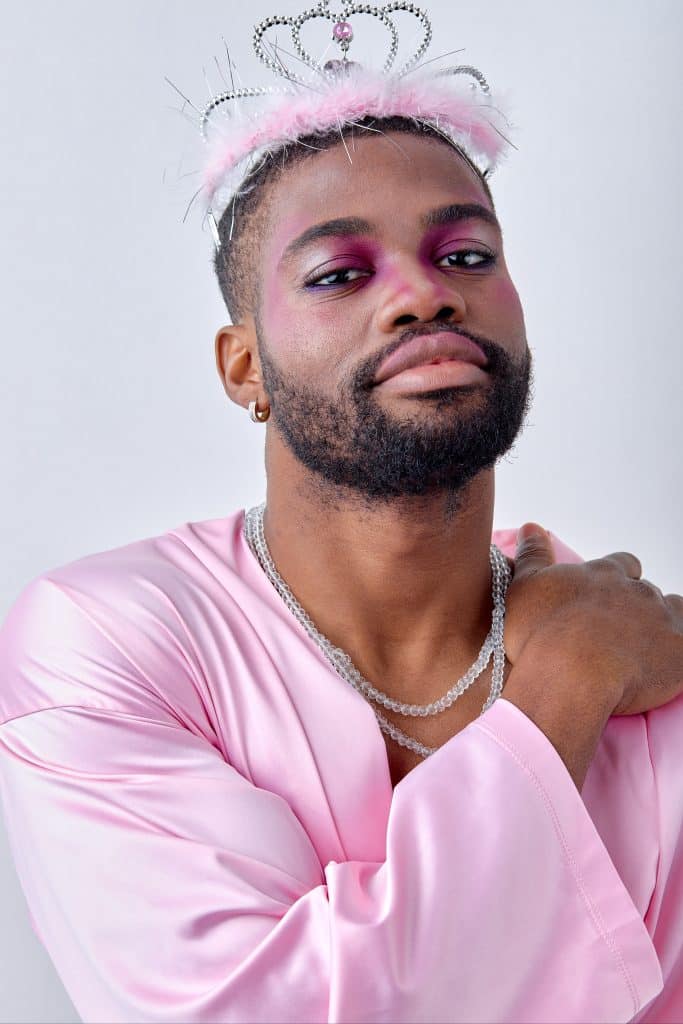
The first aspect of body modification we’ll be addressing is the most surface-level stuff. Body modification that must regularly be reapplied due to its temporary nature. This refers to the growth and maintenance of hair and nails, as well as surface visual appearance. The version of this that the Western world is most familiar with would be face make-up, hair coloring, and hair styling.
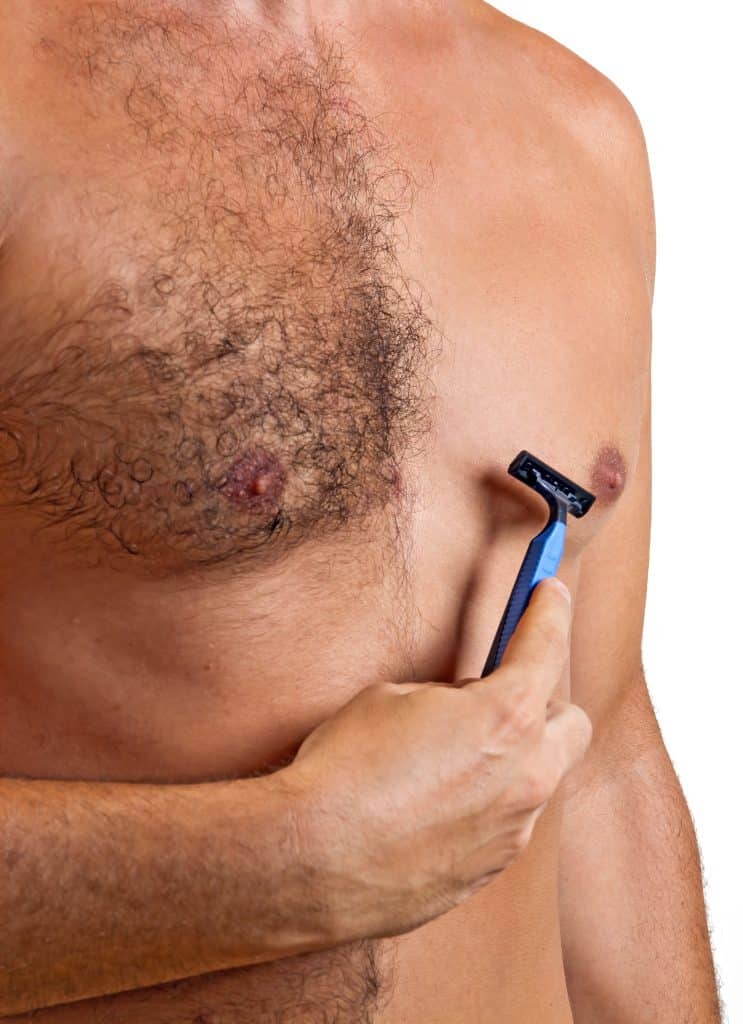
Included in that last category is the shaving of body hair. For men specifically, what’ll probably come to mind is the growing and styling of beards. For women, it is often the removal of the darker and thicker body hair that develops during puberty. Though to be entirely fair, the removal of all body hair is also something men have seen more pressure to engage in over the last two decades.
Western North American beauty standards
The beauty ideals of Canada and the United States of America, with which I am most familiar, for example, position well-shaped and separated eyebrows, long lashes, a dark and thick head of hair, white teeth, clear tanned skin, and an absence of body hair as the dominant beauty ideal.
Things we achieve with serums and supplements, plucking, shaving, and staining of hair, and teeth bleaching. Practices and ideals that have not always historically held true for the region. And which is certainly not universal throughout the world, present or past.
Contradicting beauty standards from other parts of the world
An example of a consistently practiced beauty ideal contrary to this particular set of Western beauty ideals is the popularity of the monobrow in Tajikistan. On both men and women. For them, unibrows are considered a sign of prosperity and good fortune. To the point where they are recreated using traditional staining methods or modern makeup. Specifically on individuals who do not naturally sport an unbroken line of ‘brow hair, which includes many women and children.

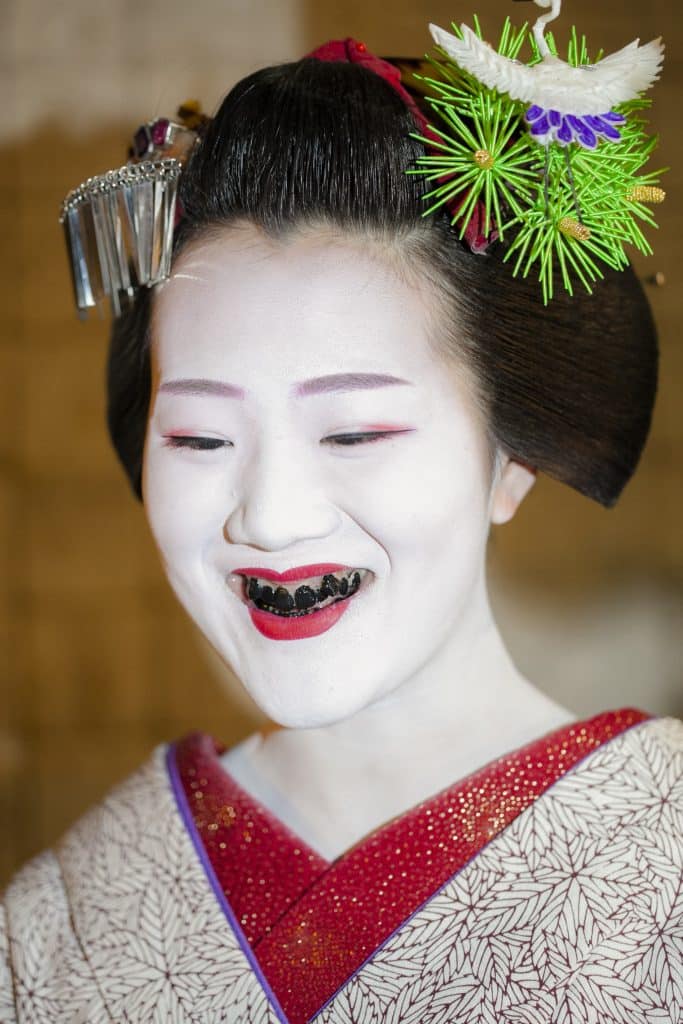
And in direct opposition to the ‘white teeth ideal’ in the West, black teeth were once considered the height of beauty in Japan. The dark colour was considered a mark of maturity and status. Historically, it was achieved through the use of a staining process referred to as ‘ohaguro.’ Today, when Japanese Geisha seek to replicate the look, it is generally done by painting their teeth with the non-toxic black paint of their choice.
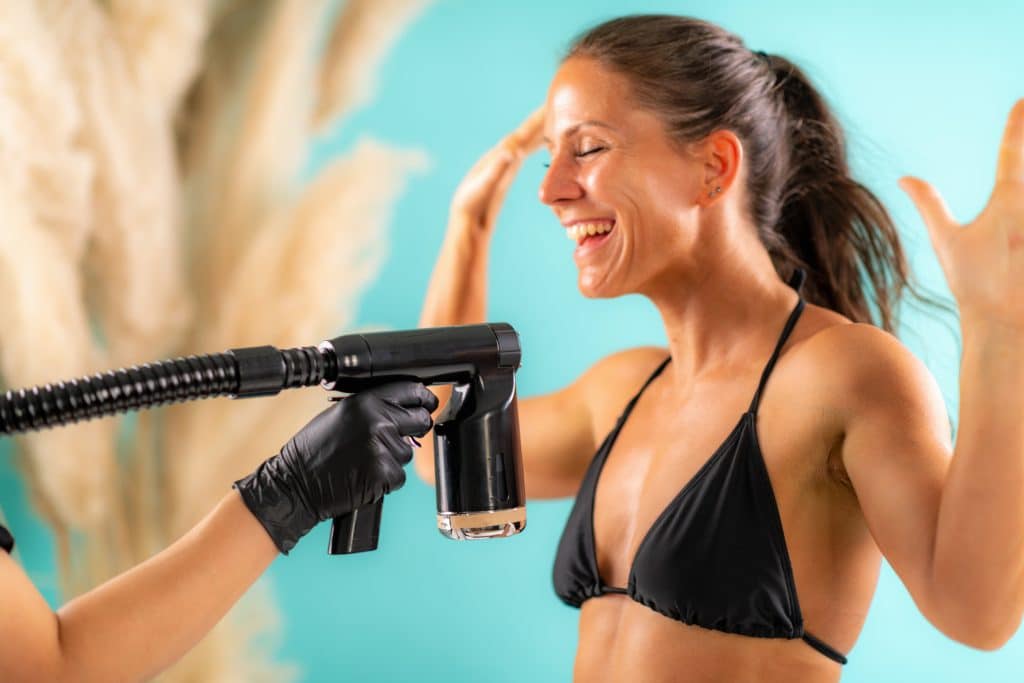
Another modern example would be the practice of using henna to create temporary tattoos across the skin via temporary stains. While this practice is most commonly associated with South Asia in the Western world, it is also practiced in East Africa, North Africa, and the Middle East. Adjacent to this, skin whitening and tanning products would also fall under the category of temporary alteration to the skin.
Tattoos, Scarification, Skin-Stretching, and Piercings
Now it’s time to look at the skin deep stuff. Literally! In the Western world, the most common form of modification to the surface flesh of the body would be the piercing of a woman’s earlobes.
Tattoos and scars
In recent decades, the Western world has begun to branch out. What would have been considered a sign of deviance or criminality half a century ago is commonly worn by a large portion of the general populace. I am speaking of tattoos, of course. The practice of creating a scar several layers of skin deep, with a needle covered in ink, which allows for the colour to heal and preserve itself within the scarred tissue. Something that is far less or far more stigmatized in other parts of the world, depending on where you are.
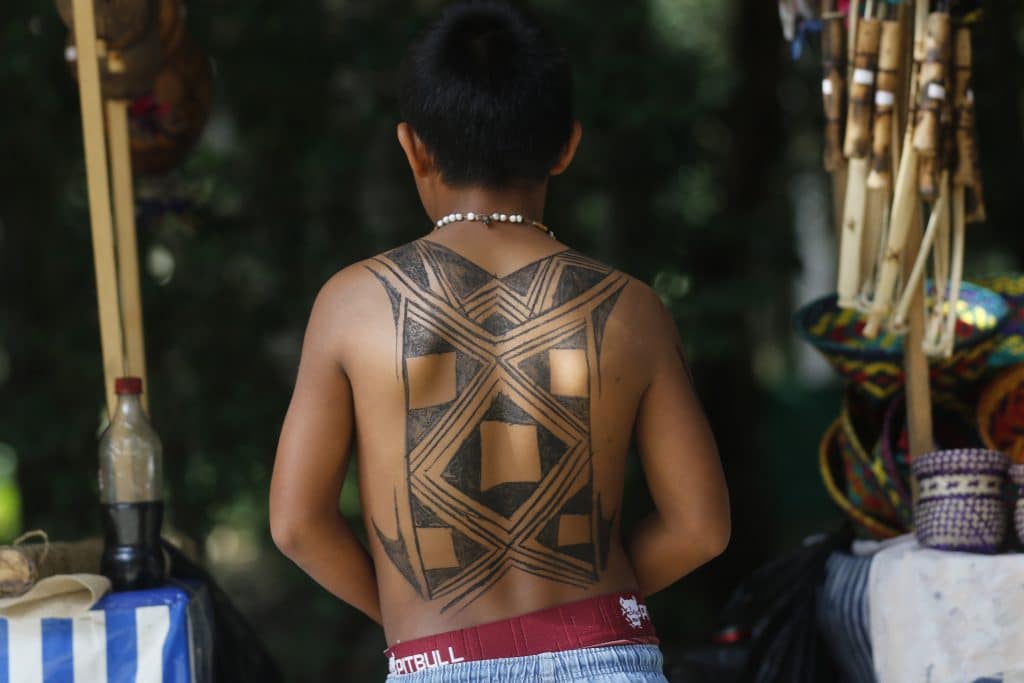
Take the many tribes and peoples around the world, both past and present. Such as the one the Brazilian boy pictured above belongs to. Tribe that uses tattoos and other skin scarring techniques to mark maturity, life events, and rights of passage, among other things. A practice that includes their child members. In much the same way that many people in the West have their infant girls’ ears pierced.
Piercing and stretching
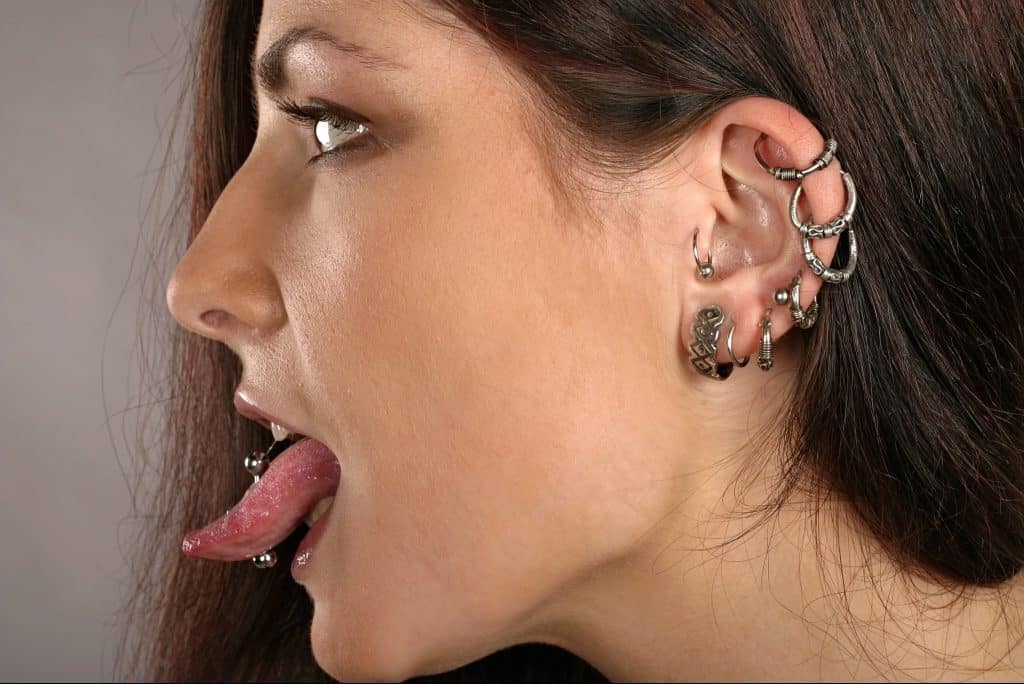
There has also been an uptick in the use and social acceptability of multiple piercings and skin stretching. For both men and women. As someone with stretched lobes and over two dozen piercings, I can say with great confidence that the practice is socially acceptable. Those with these modifications face little to no stigma, at least within the younger generations.
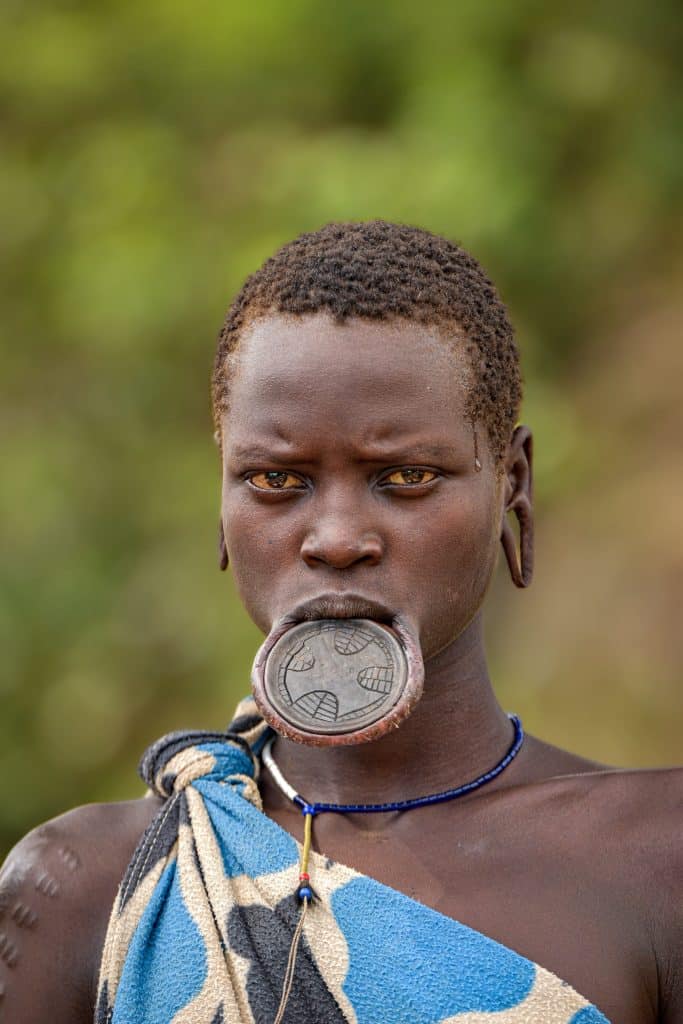
Of course, there are plenty of places around the world where body modifications like these are not just accepted, but expected. Take the Mursi tribe of Ethiopia, for example. Lip stretching and the accompanying lip discs are the norm for girls and women. Specifically, from the age of ten to after the birth of their first child, especially in the presence of men.
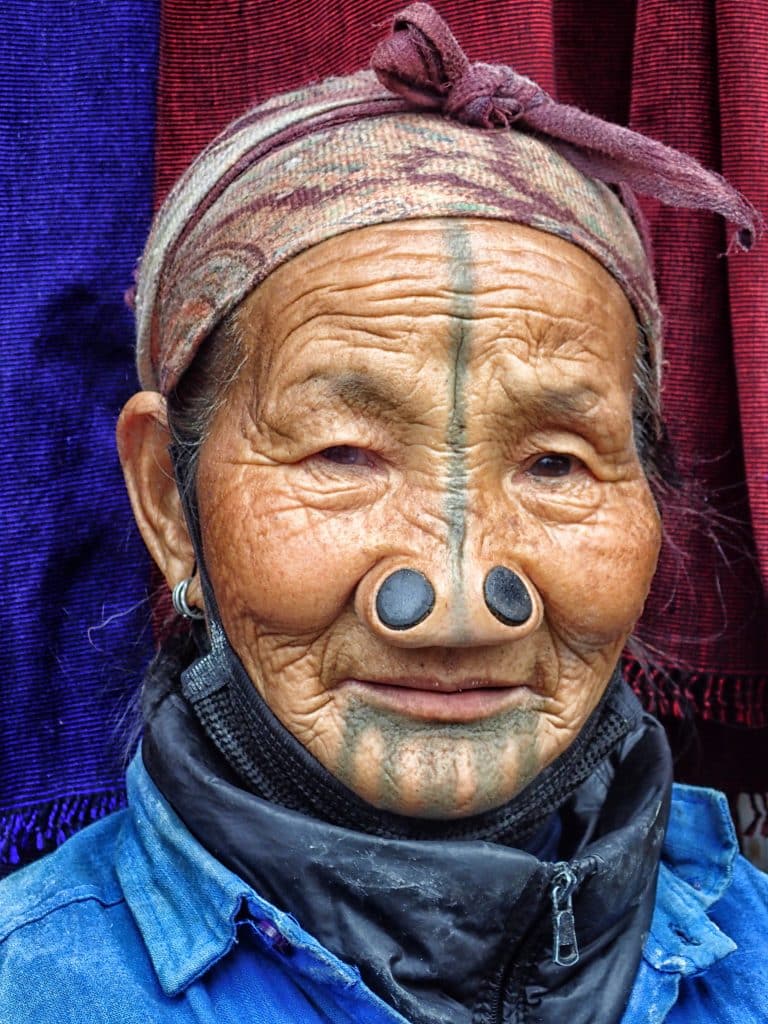
Another good example of skin (and in this case, cartilage) stretching are the Apatani women from Arunachal Pradesh in India. Who, as evidenced by the photo below, wear very distinct nose-plugs. Though this practice is less common in younger generations, it is still very much alive and well.
Life-altering beauty modifications
For our final category, we will be focusing on life-altering body modifications. This specifically refers to changes that remain functionally irreversible with modern medicine or are deadly dangerous to attempt. It will also include alterations that would prove so difficult to ‘correct’ that a person would benefit more from having the altered body part removed wholesale.
Permanent and restrictive modification
The first feature for this section is the neck rings worn by the women of Myanmar’s Kayan tribe. It involves continuously wrapping brass coils around a girl’s neck as she grows, beginning at five or six years old. Historically, it has been a symbol of wealth and beauty. Although many of the younger generation of the tribe are choosing to forgo the brass coils now.
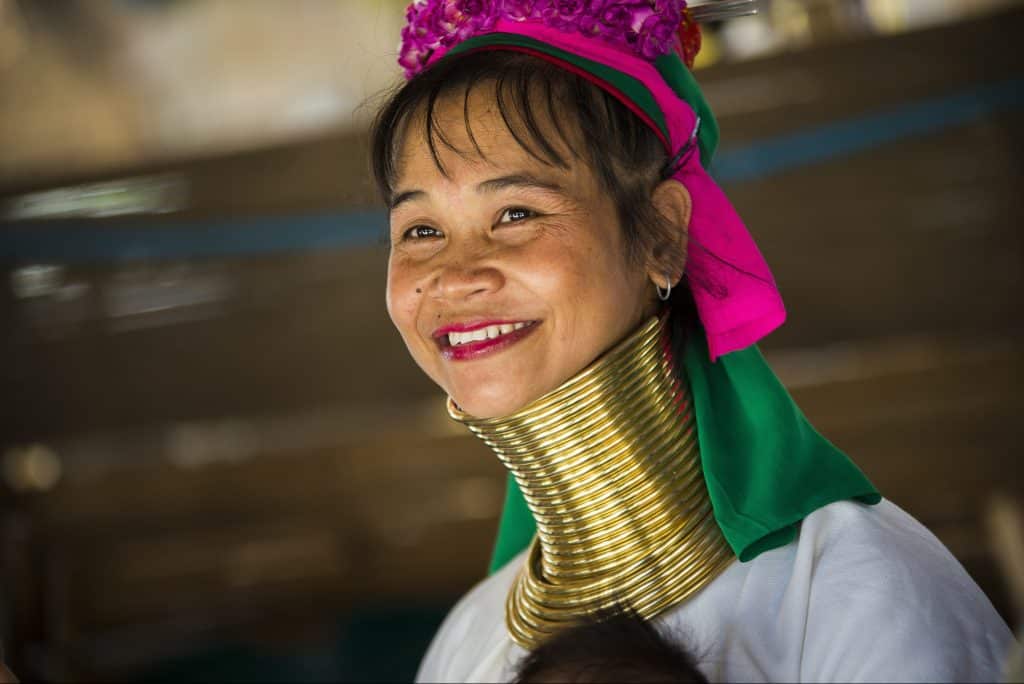
This practice has been placed here on the list because it permanently alters the physical makeup of the women who practice the tradition. The removal of the rings would likely result in them breaking their necks, and so many women never remove them. This is problematic as the rings severely restrict their movement. It makes the farm work on which they depend to make a living very painful.
Mutilation as modification
The second ‘beauty ideal’ in this section is what is colloquially called FGM. An initialism for ‘female genital mutilation.’ There will be no images of this practice for obvious reasons. This term refers to the partial or total removal of the external female genitals. Including the parts which allow women and other assigned female at birth people to experience sexual pleasure. This is thought to make a woman ‘pure’ and a good candidate for marriage. It is unfortunately practiced across Africa, Asia, and the Middle East in a variety of countries. As well as among the diaspora populations of those countries living in other parts of the world.
The third practice to make this list is foot binding. Below is an image of a Chinese woman with so-called ‘lotus feet.’ A beauty ideal that has fallen entirely out of use over the last century. Its last remaining victims have passed away over the past five to ten years.
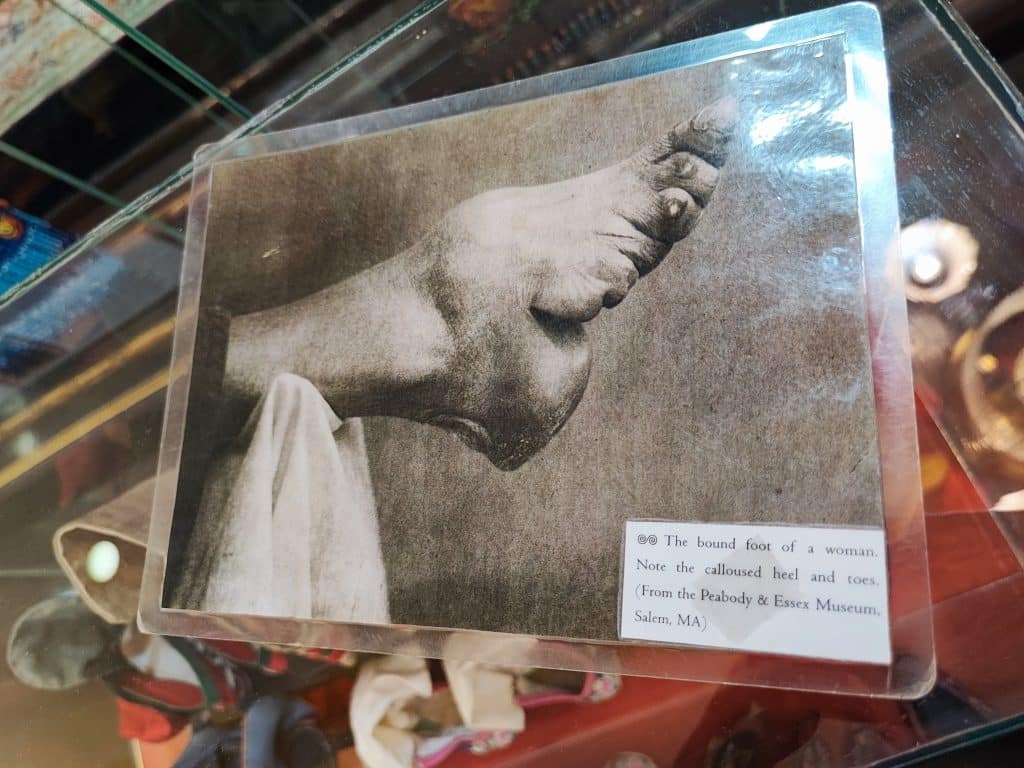
Foot binding is a somewhat misleading name for the practice. In reality, it involved breaking the feet of a young girl (generally aged five or six, although it was sometimes done earlier). After, their feet would be bound incredibly tightly, ensuring that they would heal incorrectly. The feet will not grow properly. It was not uncommon to regularly rebreak the feet on a semiannual basis until after puberty to ensure they were as small as possible. Walking on lotus feet was excruciating to the point of impossibility. If it was not outright anatomically impossible for the women to walk at all.
Extreme Western practices
Of course, it is very important to remember that extreme bodily mutilation in the name of beauty is not unique to ‘other’ cultures. In fact, I’d argue that the Western world has practices that are just as, if not more, extreme than some of the ones listed above. Think of how women in white-collar jobs wear heels so often that their tendons contract, and it hurts to walk barefoot. Take the gastrointestinal bypass, which cuts out a large part of the stomach and small intestine, for the purpose of losing weight. You’d be surprised how often that surgery is aesthetically motivated.
Or the diet culture we have. Constantly gaining and losing weight, or restricting your body from receiving vital nutrients, can permanently damage your body’s internal systems. How about our breast enlargements, our rhinoplasties, our facelifts, our shaved down cheekbones, and our plastic abs? Not all of these modifications, done in the pursuit of beauty, can be reversed. Some permanently change the structure of our bodies.
Strange beauty
In the end, no matter what your cultural ideal of beauty happens to be, I don’t doubt that your efforts to pursue it will make you bleed. After all, if the media is to be believed, beauty is never easy and is very rarely comfortable. It is only by looking at your own ideas of beauty from the same perspective you view another culture’s beauty standards that you can see just how strange and unusual your own conception of ‘real beauty’ truly is.