


This is a new kind of article. It combines the exposition of a critique of the college educational system with the real-life story of a college student.
This story is based on my life, so it’s largely autobiographical, but some events are fictionalized or simplified. Enjoy!
A small room – 9 AM
I’m not going to talk today.
I’ve just thrown off my blankets to turn off my alarm. I stand in my tiny poster-clad rented room and nothing is real for a moment. I rub my eyes.
Yesterday, a friend asked me a question that was supposed to be an innocent jab:
“And just what have you really learned?”
Initially, I brushed it off. But then I started to think about it more. What have I learned? A collection of common-sense facts, some analytical skills, limited patience. But that doesn’t answer the question.
I pull on a shirt, yawn, and stretch. After thinking about it for a while, I found the actual answer: as a student, the thing I’ve really learned is how to be a student.

I whip my door open.
Walking to class – 10:45 AM
My feet smack the pavement. I jaywalk an empty street towards campus.
This morning for the millionth time, I woke up dreading going to class. But it’s not the normal dread of having to do anything at all. It’s heavier. Closer to existential dread.
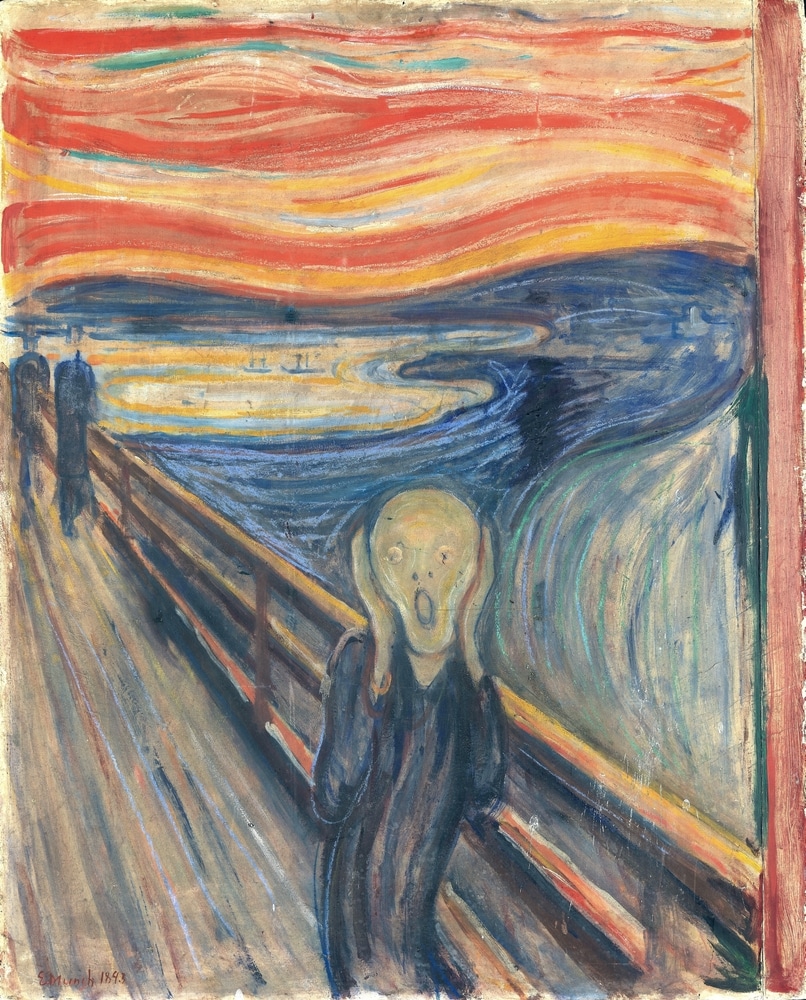
The sun is bright behind the fog.
Learning has always been satisfying to me. So it’s strange that I don’t want to go to class, where learning happens. It must be bigger than that. I blink and look back at the sidewalk below my feet.
Shit. I’m going to be late.
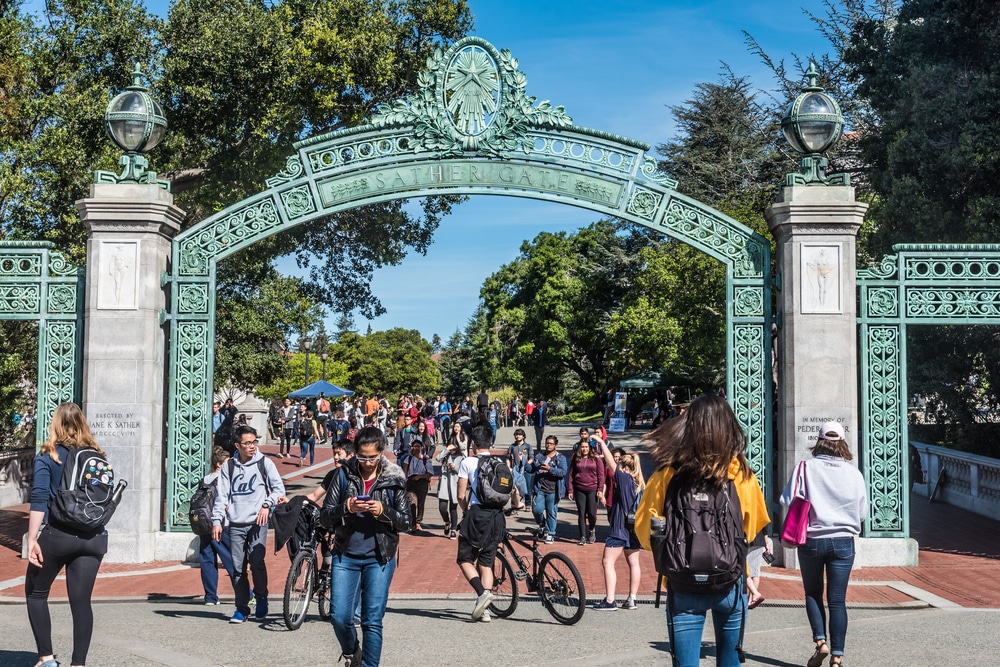
Memorial Glade, on campus – 12:34 PM
It’s warm. I didn’t listen to a word my professor said during the whole lecture. Instead, I was thinking and researching. What I found surprised me.
A survey from Strada and Gallup in 2018 reported that 58% of all higher education students (including vocational, associate’s, four-year, and postgraduate degrees) are in school for career purposes.
People are suntanning on the lawn. Others play Spikeball. A few read.
It almost seems too obvious: people go to college to get the degree they need to start their career. All these people here are alike. We love learning, but we’re really here to get a degree.
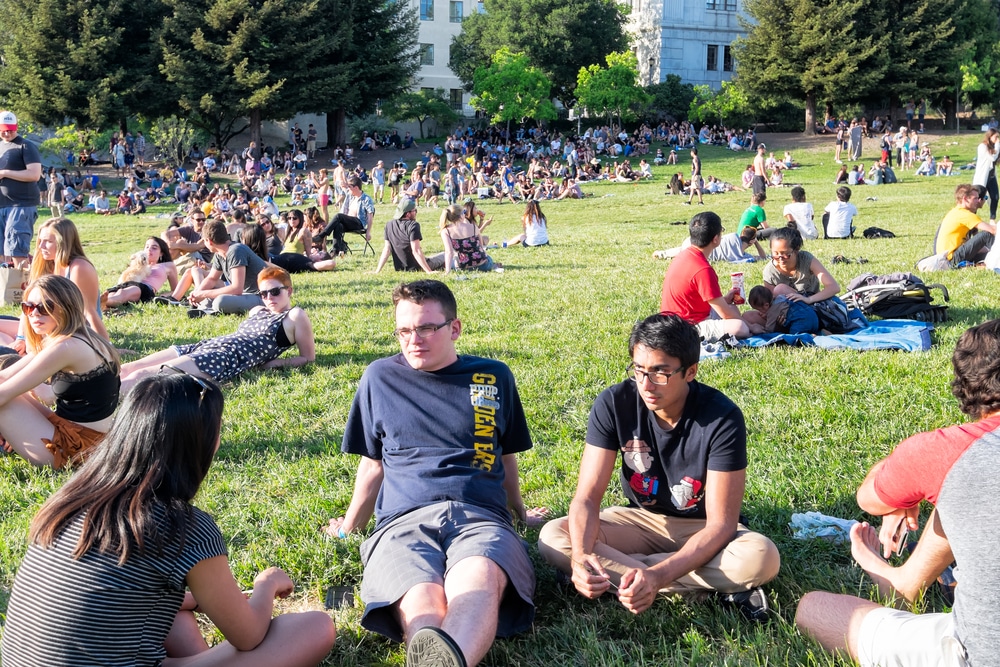
Degrees are essentially proof of your education. To get that proof, you just have to pass all the required classes.
I run my fingers through the grass. That system sounds pretty good on paper. We get to learn about something we’re interested in. And once we become educated enough in that subject to merit a degree, we can join the job market with enough proof of our qualification to get a good job. I pluck a blade of grass.
But for some reason, we still dread going to class. We can’t all be lazy. And if most of us are there to get a degree, why do we dislike the process of getting it so much?
I stand. Somewhere in that process of passing classes to get a degree, something is not quite right.
Dwinelle 219 – 3:34 PM
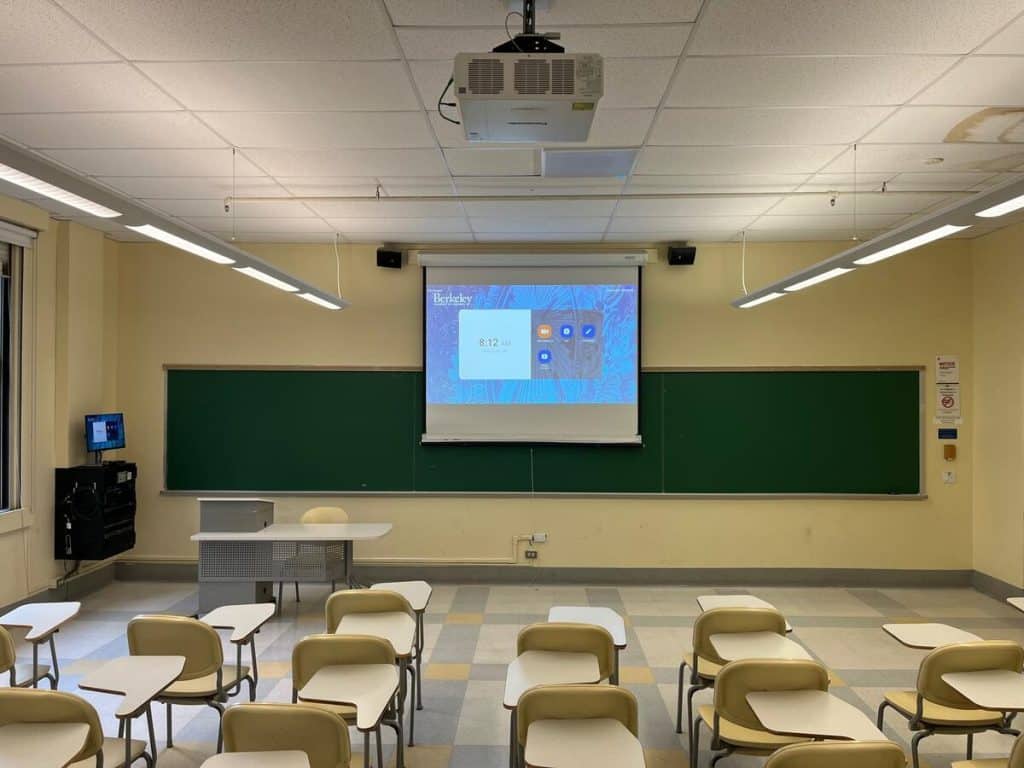
This classroom is cramped and boiling hot. I’m sitting in the back. Since I’ve finished the Wordle and Connections, I try to take notes.
“Montaigne is writing in the 1580s, so he’s operating without a modern understanding of race,” my professor says. “He’s primarily interested in the difference between… anyone?” He looks hopefully at us.
No one answers. I can see the sweat on his face from here. I feel bad for him. He’s trying his best to keep the class’s attention.
He wipes his brow and answers himself. “Savage and civilized. And that brings us to Fields’ argument—which is?”
Silence again. A few of us are completely checked out. But most of us, including me, are trying our best to listen.
Except we’re not listening to learn about Montaigne. We’re listening to learn the few details of Montaigne that will be on our exam next Monday. That’s a different kind of listening.
Finally, out of pity, a student in the front raises her hand. My poor, sweaty professor calls on her gratefully, and she starts to talk. I tune out.

In the ancient Greco-Roman world, the best education available for (assuming you were wealthy and a man) was from private tutors. Often, those tutors would actually live with their pupil’s family. Take four of the most famous men for example: Socrates tutored Plato, who tutored Aristotle, who tutored Alexander the Great.
Hm. I wipe a drop of sweat from my neck.
In his 20s, Alexander the Great overthrew the Persian Empire Obviously, he was a genius. But he was also really well educated. And not just in quantity—in quality, too. Like many rich Greek and Roman men, his one-on-one education with Aristotle must have affected him on a deep, personal level.
My leg bounces under the desk. I don’t want to romanticize ancient life. They owned slaves, were horrifically sexist, and were often cruel. Their educational system was awful, too. But those few who were lucky enough to get a private tutor, like Alexander, learned deeply.
My mom is a teacher; she’s told me again and again: you can’t teach a student who doesn’t want to learn.
But that goes the other way, too. The more a student wants to learn, for their own reasons (like overthrowing the Persian Empire), the better they’ll learn. Deeper and more personal education is better education.

Our modern education isn’t like that. Of course, it’s better because we have modern knowledge and because everybody can receive an education. We have quantity. But education doesn’t affect students as deeply as it could: we could use more quality.
I hear movement and snap out of it. People are stuffing their laptops and notebooks back into their bags. My professor cries over the noise, “Remember, next week is our first midterm!” I hurry out of the room.
Delah Coffee – 4:14 PM
My hands rest on the keyboard. Drops of moisture run down my iced tea onto the table. I take a breath and start.
If you pass all the classes your major requires, you get a degree. And most students go to college for degrees. But we still dread going to classes. Why?
It’s so simple: we have this extra system within the degree system: the grading system. Grades are supposed to be both incentives for students to learn and proof of that learning. But they fail on both counts.
The list of reasons that students to go to college which Strada and Gallup reported goes like this:
- To get a good career
- To learn (out of personal satisfaction)
- Familial or social expectations
- Easy access
- And other.
Getting good grades isn’t even on the list. And it isn’t just that survey. A study by three Canadian researchers in 2011 found the same exact thing. So did a 2013 survey from UCLA. So did a 2023 survey from Anthology.
The data suggets that grades are an insignificant incentive for students to go to college. Yet we still spend so much time chasing them. That’s because the “incentive” of grades is really just the threat of a punishment. We don’t actually like grades. We like not getting punished with bad ones.
Like the proverbial horse who can be led to the water but won’t drink, you can’t threaten students into learning. You can threaten them into working, but they won’t be working to learn; they’ll be working to avoid the punishment of a bad grade.

The problem is that the easiest way to get a good grade is to avoid taking the kinds of risks which deep, personal learning produces and instead conform to your professor’s expectations. Grades don’t create high-quality learning.
A lot of people have recognized that. There’s even a group of teachers called Grow Beyond Grades who agree with me and want to abolish grades completely. On their website, they cite a 1987 study that found that students motivated intrinsically, from their own interests, learned better.
There’s another problem with this “incentive” theory.
The truth is, it doesn’t actually matter if we have a 2.0 or a 4.0 GPA. As long as we pass our classes, we get the same degree, which means that getting good grades just feels like arbitrary task-completion. Like a hamster on a wheel.
The degree is what actually matters. Not the grades. But we still chase good grades because we’re afraid of the punishment of bad grades. Not because we like good grades. So all this work we do for grades feels totally pointless.
Even if grades did offer an incentive for students to learn, they would be redundant. Getting a degree and starting our careers are much stronger incentives to learn than getting grades. Without grades, people would still go to college.
Worse than being redundant, grades actually interfere with the kind of deep, personal learning that constitutes a high-quality education.
I sit back. The noise of the cafe is largely blocked out by my earbuds, but I wouldn’t have heard it anyways.
Delah Coffee – 5:20 PM

I take a quick sip of my iced tea. The cafe is almost empty.
People also say that grades offer a useful short-term proof of learning. But I don’t buy that. Imagine two different students applying to the same 100 jobs. One of the students has a perfect 4.0. However, due to some unfortunate circumstances, they never actually graduated and got their degree. They’ve done everything to merit a degree, but they don’t have one.
The other student barely passed all of their classes so their GPA is somewhere between 2.0 and 2.5. However, they officially graduated and have a degree.
That second student, with the degree but the bad GPA, would get a lot more job offers than the first. The valuable proof of learning—which will get you a job—isn’t a high GPA. It’s a degree. That’s the proof employers care about.
In fact, the National Association of Colleges and Employers (NACE) reported in a 2024 survey that the amount of employers who used GPA as a hiring guide fell from 73% in 2018-19 to 37% in 2022-23. And it’s only falling more.
Even in competitive sectors which depend more on GPAs (like finance), GPAs only matter for entry-level jobs. Take it straight from Chase Bank in a 2024 article:
Once you start to build up a work history, your GPA will quickly start to not matter very much, as employers tend to value work experience above all else when assessing job applicants.
– Hadiya Iqbal, Senior Associate, JPMorgan Chase
In fact, a 2012 survey from The Chronicle of Higher Education and American Public Media’s Marketplace showed that employers in “all industries and hiring levels” value a student’s professional experience more than their grades.
A degree is necessary for most jobs, but grades aren’t. Practical experience—internships, labs, extracurriculars—are the most important factor to employers.
So why do we have this grading system? It certainly doesn’t provide an incentive to learn. And it doesn’t offer any proof of qualification that matters.
I sit back. I close my eyes to escape the bright screen of my laptop. The cafe is empty. Time to go. I slip my laptop into my bag and walk into the cold night air.
A small room – 2:12 PM the next day
This is the second day of not speaking. I’m lying on my bed and staring up at the ceiling.
I rub my eyes. There will be people who want to disagree with my conclusion that the grading system is redundant, ineffective, and harmful to actual learning. I open my eyes.

The first thing a critic could say is that a good GPA alongside a degree is the best possible proof of qualification for a potential employer.
I sit up. It’s true that a GPA with a degree is more proof of learning, but because grades are such an overbearing system that interferes with deep, personal learning, the quality of learning from a college with this double “degree-grading” system is actually less than a university with no grades and only degrees.
I scratch my head. Quality over quantity, that’s the way to think about it. But then the critic might say, “Well, such a university doesn’t exist.”
I jump off my bed, stuff my wallet, earbuds, and phone in my pockets, flick off the lights, and lock the door.
On a walk – 2:22 PM
It’s hot and I’m already sweating. I’ve decided to create a hypothetical college: Hypo University. Instinctively, I head towards campus.
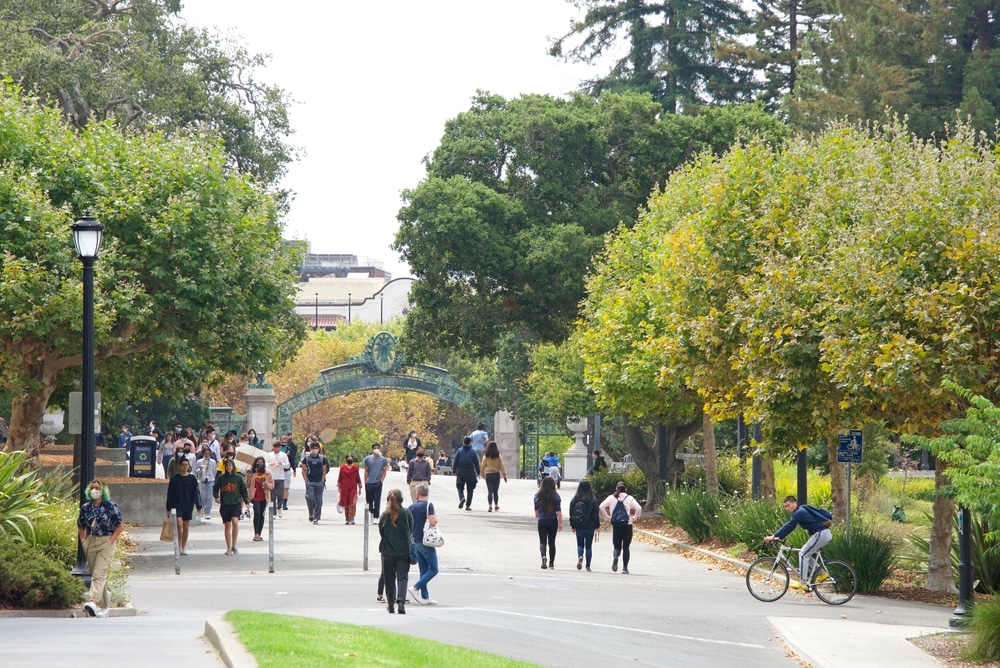
At Hypo U, everything is pass/fail: every class, exam, essay, assignment, and quiz. If you pass enough assignments to satisfy your professor, you pass the class. If you pass all the required classes in your major, you get a degree.
I cross the street. Without grades, the ultimate goal of learning to earn a degree would be much clearer to Hypo students. Their work wouldn’t feel like completing arbitrary tasks. It would feel like taking real steps towards a future career.
And because there are no grades to fear punishment from, Hypo students would take more risks and think out of the box more often. They would make more mistakes and learn from them.
I cut through a grassy field.
Students at Hypo would learn better because they would learn on a deeper and more personal level. I wipe a bit of sweat off my brow and my irritating critic voices another complaint:
M.L.K. Student Union – 2:46 PM
Ah, air-conditioning. Thank God.
In most grading systems, you fail if you get less than 70%. At Hypo, there would still be a bare minimum to be met. Just not a numerical one. And of course, if students don’t meet it, they will fail. So Hypo students won’t just coast along, do nothing, and get a degree. They will be challenged.
I find a table and sit down. A pass-fail system like Hypo would only improve things. But I can imagine a critic say something like:
“Professors depend on grades to determine who’s failing their classes, so a gradeless system would make their jobs much harder.”
Okay. I dig into my pockets, find a piece of paper and a pen, and start to write.
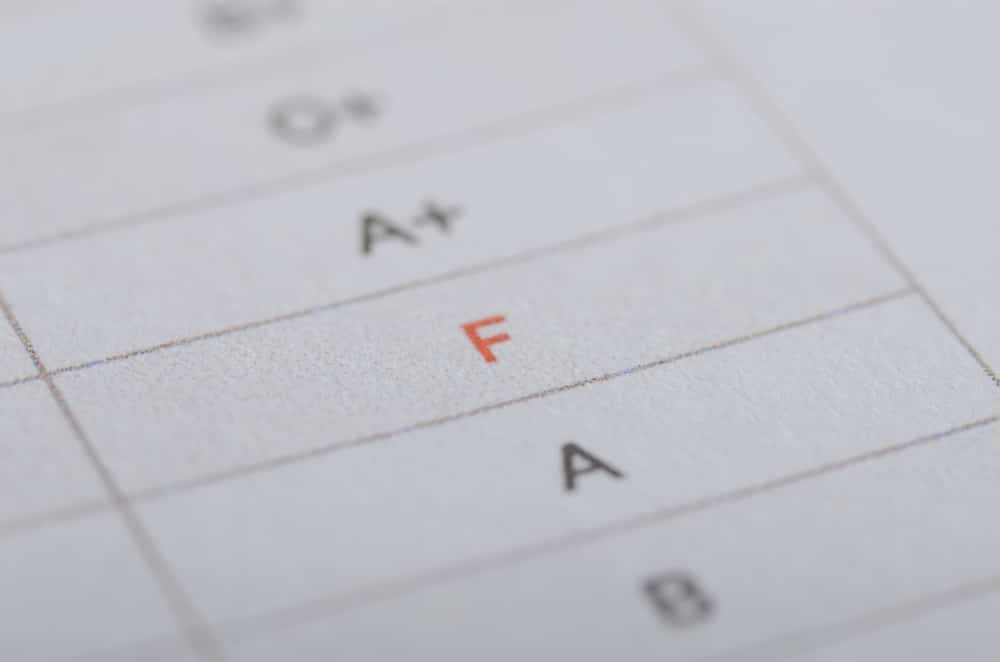
In the typical grading system, professors review students’ work and assign grades between 1 and 100 based on quality.
At Hypo, the system is the exact same, just without grades: work is reviewed and given a pass or fail based on quality.
Professors can also decide how many assignments (if any) a student is allowed to fail while still passing their class. Maybe exams or specific assignments will be mandatory to pass; maybe you only have to pass a certain majority of assignments. I sit back. That’s all up to individual professors.
But there’s another problem I can imagine:
“Without grades, it won’t be possible to tell hardworking students apart from lazy students doing the bare minimum. That’s not fair.”
This is a hard one. I tap my pen’s butt on the table.
Ah. I hunch over and write again.
The problem with this critique is that it assumes grades are the only way to differentiate between students’ skills. There are many other ways: clubs, passion projects, extracurriculars, internships, laboratory positions. So on.
Like they’ve been doing for since Alexander, hardworking students will automatically differentiate themselves. At Hypo, there will be no differentiation via grades. But that’s not a problem. In fact, surveys show that employers actually prefer extra-classroom activities and accomplishments to differentiate between students.
I need to get out of here. I grab my paper and pen and push open the door.
Sproul Plaza – 2:52 PM
I sit down on a staircase. In my high school chemistry class, there was a student who aced every test he ever took without studying. But he didn’t do any assignments, so he didn’t get a good grade.
There’s a lot of people like that. They do interesting and impressive things outside of the classroom but they’re usually counted out because of their bad grades. That wouldn’t be a problem at Hypo U.
I look down and watch an ant inch along the cement. At Hypo U, I bet professors (or teaching grad students) would provide written feedback to students about the quality of their work—their weak and strong points. Students could use that written feedback to improve, but they could also use the positive parts to stand out when applying to jobs.
I stuff the paper with my scribbled counter-arguments back into my pocket.
A small room – 5:29 PM
I’ve got dinner plans in half an hour. I kick my covers off, slip out of bed, throw on a jacket, and sit at my desk. When Martin Luther nailed his 95 Theses to that church door in 1517, Europe exploded into the Protestant Reformation.

Luther completely changed the face of European society. But he was just one man. And he only wrote 95 theses.
He also wasn’t the first person to point out the corruption or ritualistic fluff of the Catholic church: Meister Eckhart, John Wycliffe, Jan Hus, Peter Waldo, Francis of Assisi, Desiderius Erasmus, Wessel Gansfort, Girolamo Savonarola and more had all argued for church reform.
But Luther was the one who set it all off. I whip open my computer and type into Google: “European society in 1517,” then hit enter. I skim the results.
Luther’s 95 theses set Europe on fire in 1517 because Europe was ready to be set on fire.
I sit back in my chair. It’s not easy for a few opinionated people to change a society. But it’s easy for a society to change itself—especially once it wants to.

The grading system should be abolished. But it won’t be anytime soon. Even if there are Martin Luthers around right now, it won’t matter how many theses they write, because we aren’t ready to change yet.
But we may be soon. People are starting to realize the problems with a grading system. And technology is changing education already; AI is making it a lot easier for students to cheat on simple, graded assignments. That might push us into an educational crisis that would only be solved by abolishing the grading system itself. So it might not be such a long wait.
I stop writing. There are voices coming from outside my room. I close my laptop, slip on a shirt, and whip the door open. It’s a bunch of housemates.
“Hi guys,” I say.














New York Times
October 25, 2025 at 7:36 am
Wow this was so intellectual and philosophical. It really made me go places in my thoughts. Can’t wait to read the next part!!!!
XOXO
– The New York Times